
“It Didn’t Taste Good at All”|Mars Tsunuki Distillery and Jotaro Murata, a Maker in His Fifth Year
2026.10.14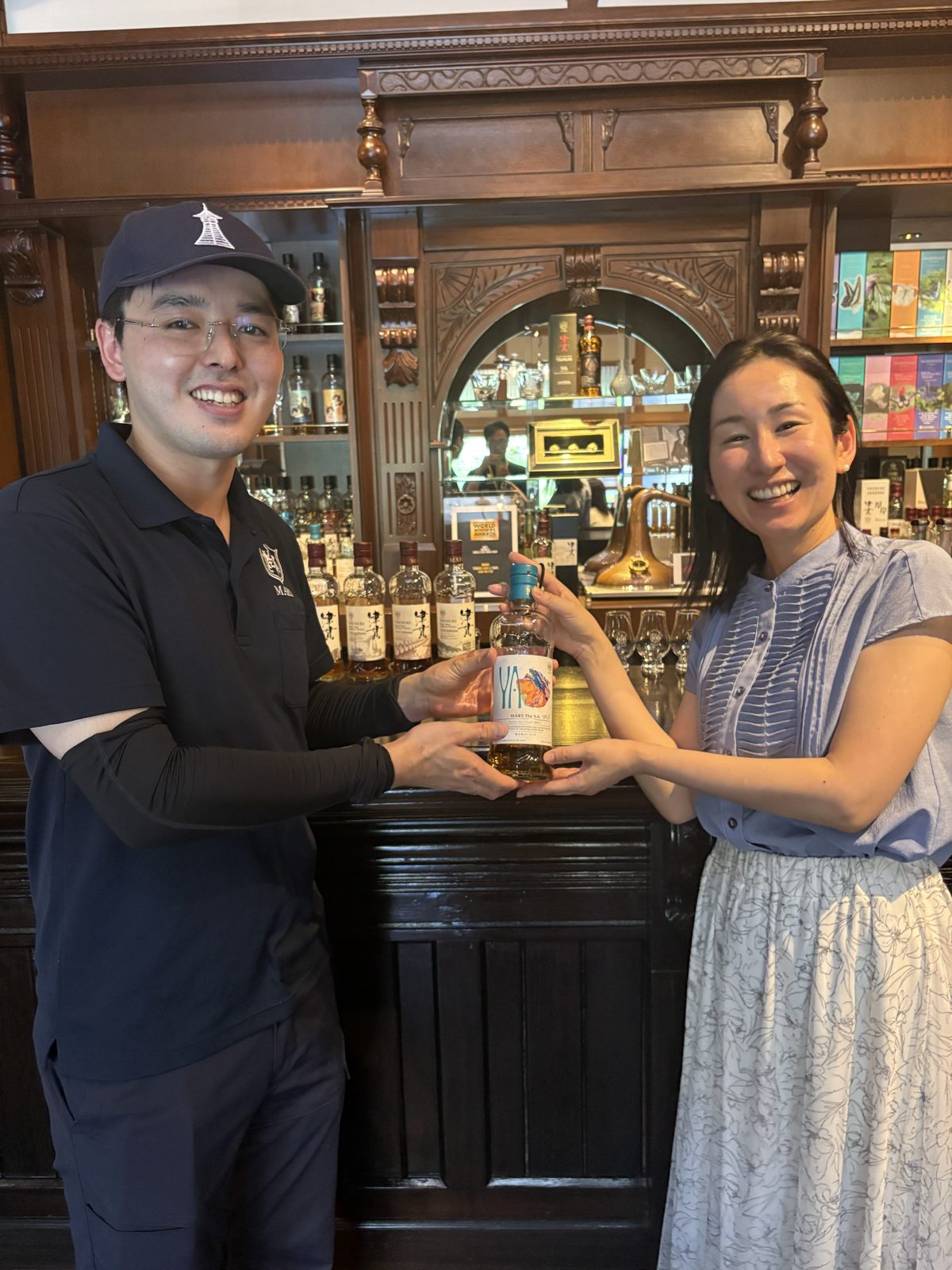
In short: A visit to Mars Tsunuki Distillery in Minamisatsuma, Kagoshima, guided by Jotaro Murata, a maker in his fifth year, born in 1999. The whisky flight at 20 that “didn’t taste good at all” and set him on this path; Hombo Shuzo’s founding ground since 1872; lactic fermentation in the Kagoshima heat; worm tubs and spring water for a “deep and energetic” spirit; the new challenge of liquid yeast; full-cask checks; a hand-fill; and the Yakushima blend “MARS The Y.A. #05” he was entrusted with. By Mika Tanimoto, owner-bartender of Bar Little Happiness, Hiroshima.
“It didn’t taste good at all. But I was shocked that whisky could taste this different.”
When I asked what led him into whisky, that was the answer that came back.
A night at the age of 20, his first whisky tasting flight. Everything began with that one glass.
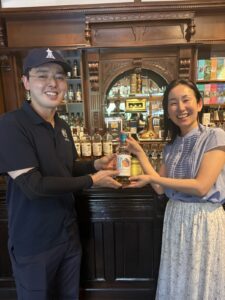
Jotaro Murata is in charge of production at Mars Tsunuki Distillery. Born in 1999, he is a maker in his fifth year with the company.
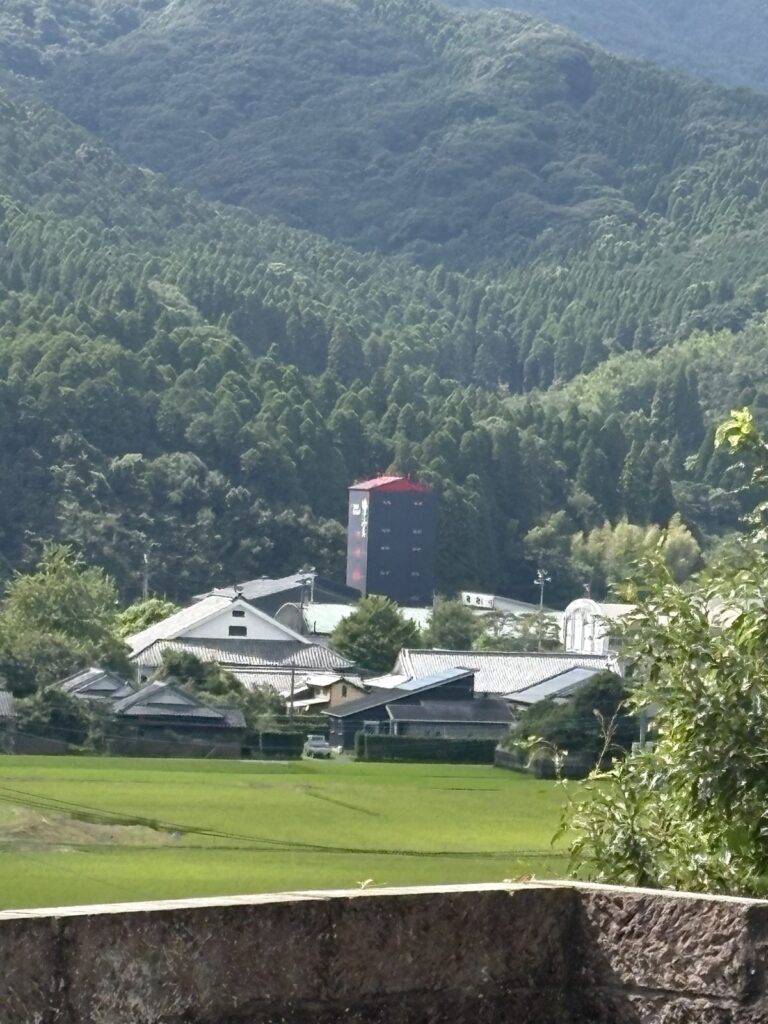
Tsunuki lies in the hills of Kaseda, in Minamisatsuma, Kagoshima Prefecture.
On this day, with Jotaro as my guide, I was given a slow walk through the distillery.
A whisky met at twenty, in the bar his father went to
He was 20, studying brewing at a university in Tokyo.
At a bar his father often went to, Jotaro suddenly found himself tasting the world’s five great whiskies side by side.
Honestly, he couldn’t call them delicious.
And yet, drinks that all carried the same name, “whisky,” were this different from one glass to the next. That was the shock.
That bar pointed him to another, where he met another glass he didn’t know.
This one, that one… there was no stopping.
“That was it, I thought. I want a job making whisky.”
He’d been drawn to sake too, but he chose a company that makes all kinds of spirits, whisky among them.
Because it looked like an interesting place, with all kinds of people.
And above all, because he loved Mars whisky, and its history.
The year he joined happened to be the company’s 150th anniversary.
With COVID, the all-staff gathering was cancelled, and a commemorative whisky was handed out instead.
“I thought, what a nice thing to get, lucky me — and drank it straight away.”
Looking back, he should have kept it, he said, and laughed again.
Tsunuki, where Hombo Shuzo was born
In 1872 (Meiji 5), Hombo Shuzo, the company behind Mars Whisky, was founded here in Tsunuki.
Mars Tsunuki Distillery opened on that founding ground in 2016.
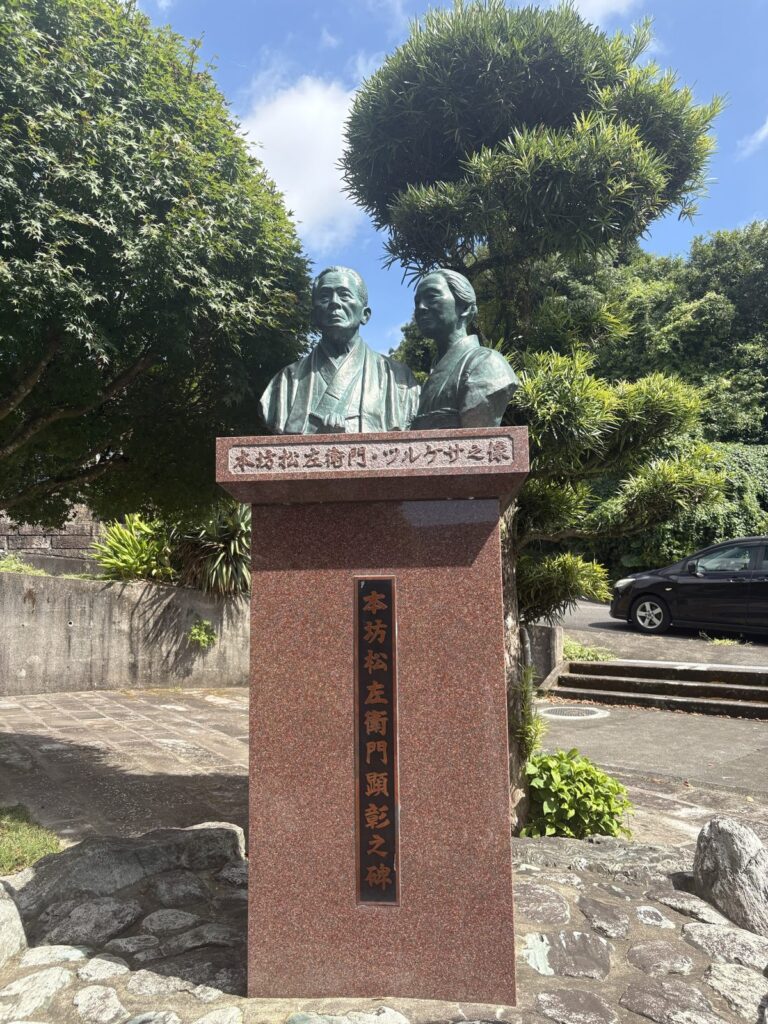
Beside the distillery stand statues of the founder, Matsuzaemon Hombo, and his wife Tsurukesa.
What the two of them gaze toward is Tsunuki.
They were designed to face that way, I was told.
The spirits-making that began on this land more than 150 years ago, the two of them watch over still.
Mars Whisky’s other, gentler face is in my posts on The Lucky Cat Choco & Luna and Solla, matured in chestnut casks.
Tsunuki is a basin, with Mt. Kurata to the east and the Nagaya mountains to the west.
Summers are hot, and the winter cold is harsher than you’d expect of southern Satsuma.
The name is said to come from its position on the road that “pierces through” (tsunuku) from Kaseda to Bonotsu, the port known from the days of the envoys to Tang China.
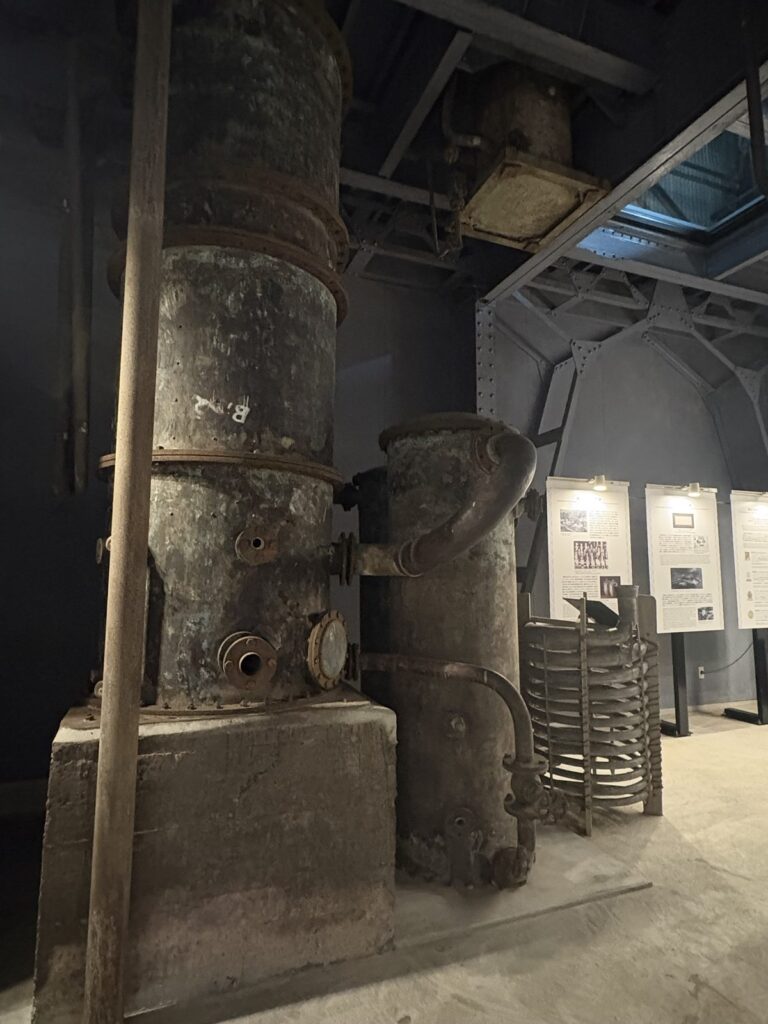
Inside the distillery, the tools of the old shochu-making days and the old stills remain just as they were.
Copper stills, I learned, grow thinner little by little over decades of use.
The time of the people who worked here remains, in physical form.
I love history kept this way.
The pot stills in the current still house are by Miyake Seisakusho. The copper is good and thick, so they have plenty of life left.
In 1931 (Showa 6), Tsunuki Station opened, and a siding ran right up to the distillery.
Freight cars carrying sweet potatoes, coal, and shochu came and went, and at its peak the Tsunuki plant alone employed about 240 people.
Tsunuki Station was called “the shochu station.”
But the age of the car arrived, and after heavy damage in the Kaseda flood of 1983, the line closed the following year.
The rails from those days still remain at the distillery.
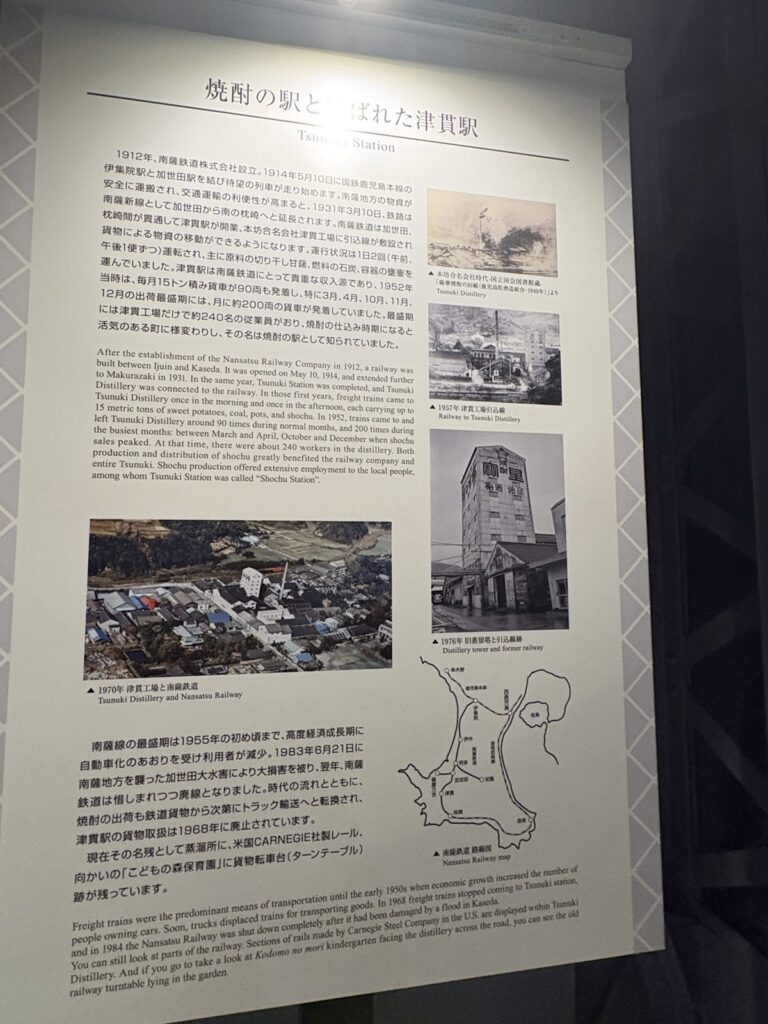
“If the train still ran from Ijuin to Tsunuki, you could reach both Kanosuke and Tsunuki by rail.”
Jotaro looked a little wistful.
I’ve written about Kanosuke Distillery, also in Kagoshima, in this post.
Meet someone playing gateball next to the closed school nearby, and chances are they once worked here.
Life on this land and the distillery have always been together.
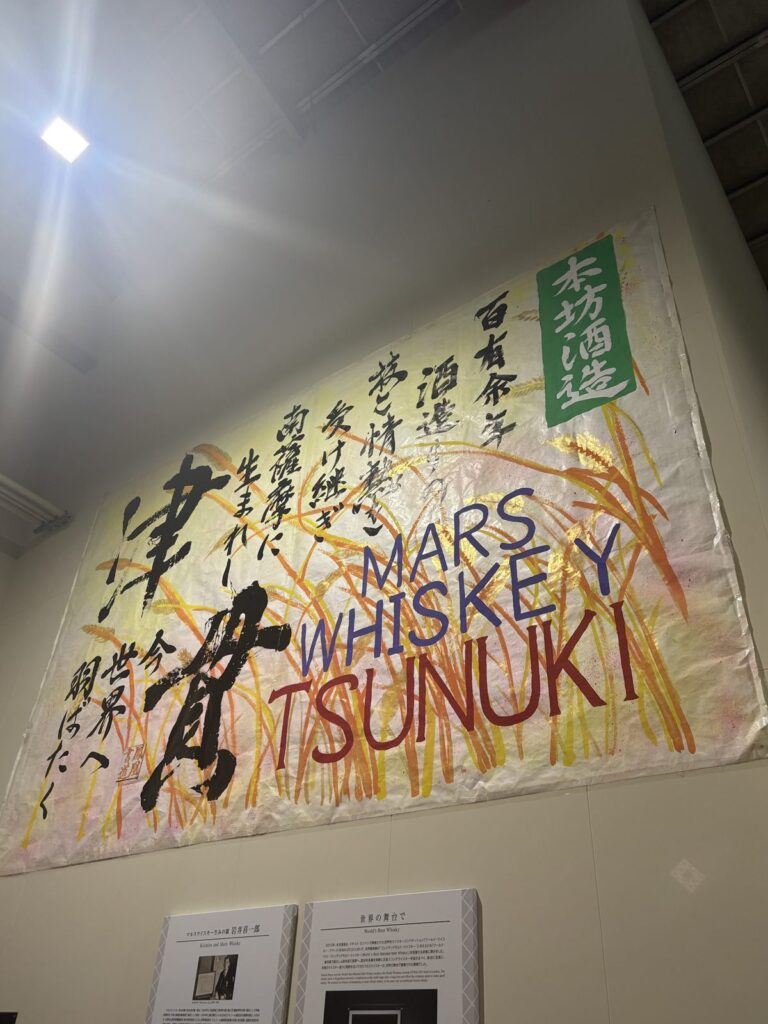
Also on display was a piece of calligraphy performed by local high school students at the annual distillery festival.
“Born in southern Satsuma, Tsunuki now takes wing to the world.”
The kids who wrote that will surely drink Tsunuki when they grow up.
Kagoshima heat, and lactic fermentation
In a Kagoshima summer, the fermentation room climbs to 36, nearly 40 degrees Celsius.
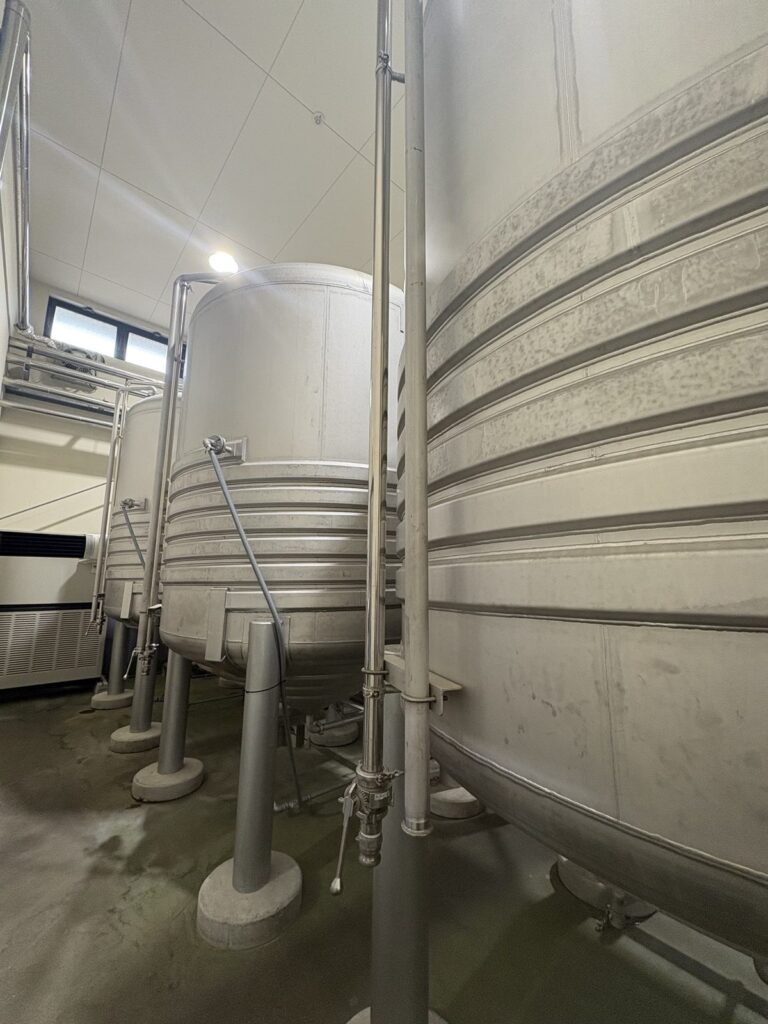
Until not long ago, there was no air conditioning here.
Now it is cooled, and cold water runs around the stainless-steel washbacks.
In this heat, wooden washbacks would carry too high a risk of contamination.
So they use stainless steel and manage the temperature tightly.
But the same pipes can carry hot water too. When they want to push lactic fermentation along, they deliberately raise the temperature.
“Plenty of alcohol, and the lactic fermentation moves forward as well.”
That, he says, is what Tsunuki values most.
Fermentation runs about 100 hours.
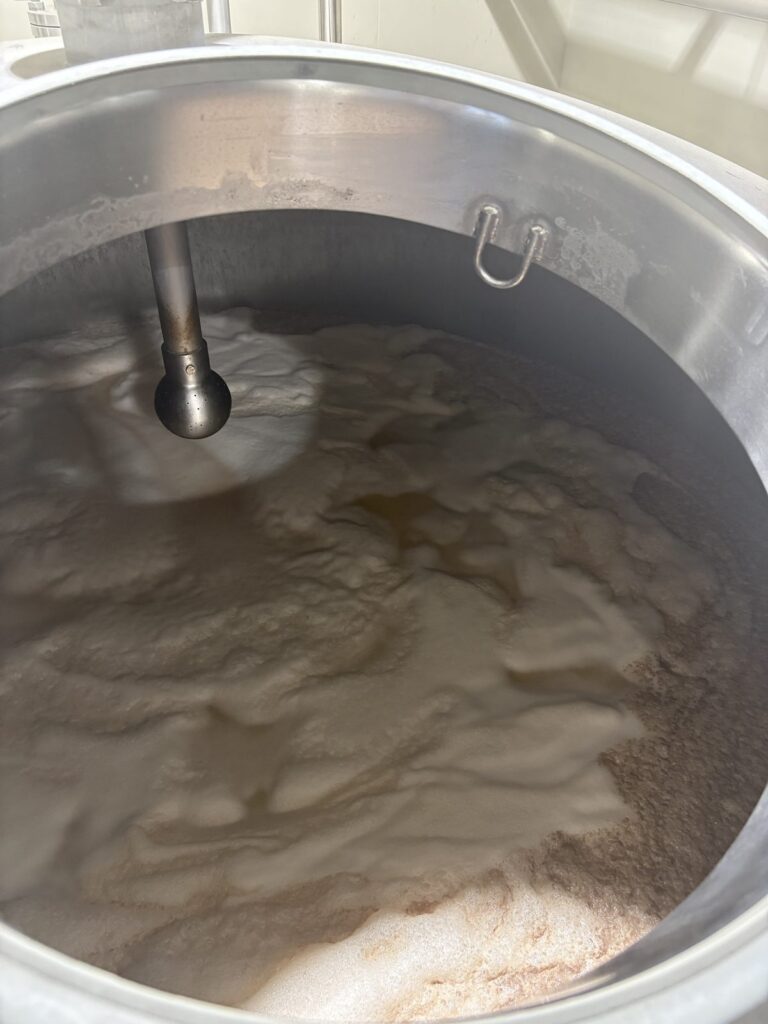
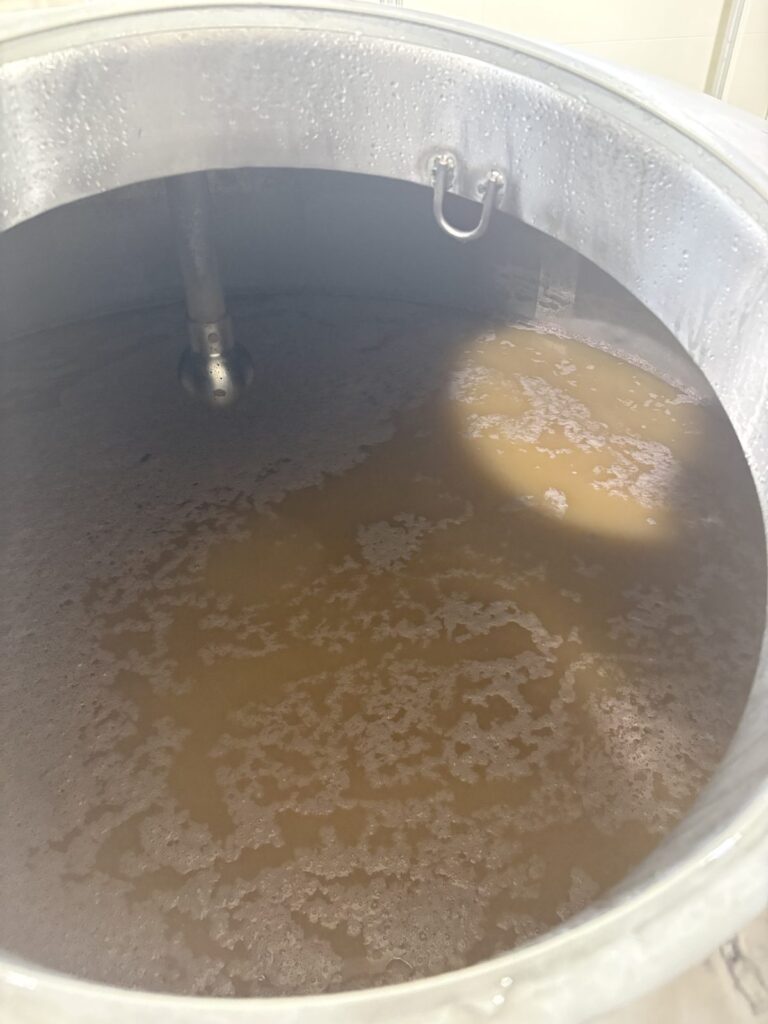
He showed me the wash at each day of fermentation.
Day 2 was in full ferment, bubbling away.
As the days go on, the foam turns creamy, and the aroma takes on sourness and a faintly milky sweetness.
The contents of the same tank show a different face every day.
Another interesting point: they deliberately make the wash lower in alcohol than other distilleries.
“If the alcohol is 7 percent, the other components are 93 percent.”
The idea is to draw out plenty of those non-alcohol components, and make the spirit more complex.
Mountain spring water and worm tubs: designed for a “heavy spirit”
Wherever we went on the tour, water was left running.
Stop it, and the inside of the pipes warms up right away.
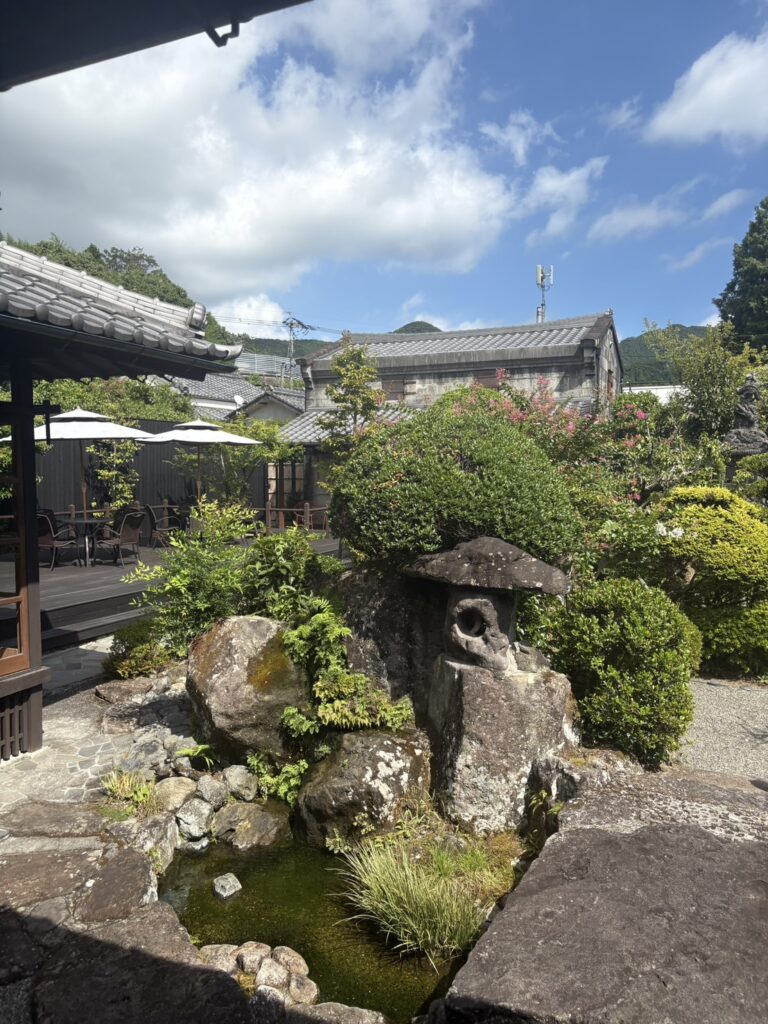
Water springs from Mt. Kurata behind the distillery, and even the ponds on the grounds hold the same water used in production.
Worm tubs for cooling need a lot of water, but there is so much here that it is never a concern.
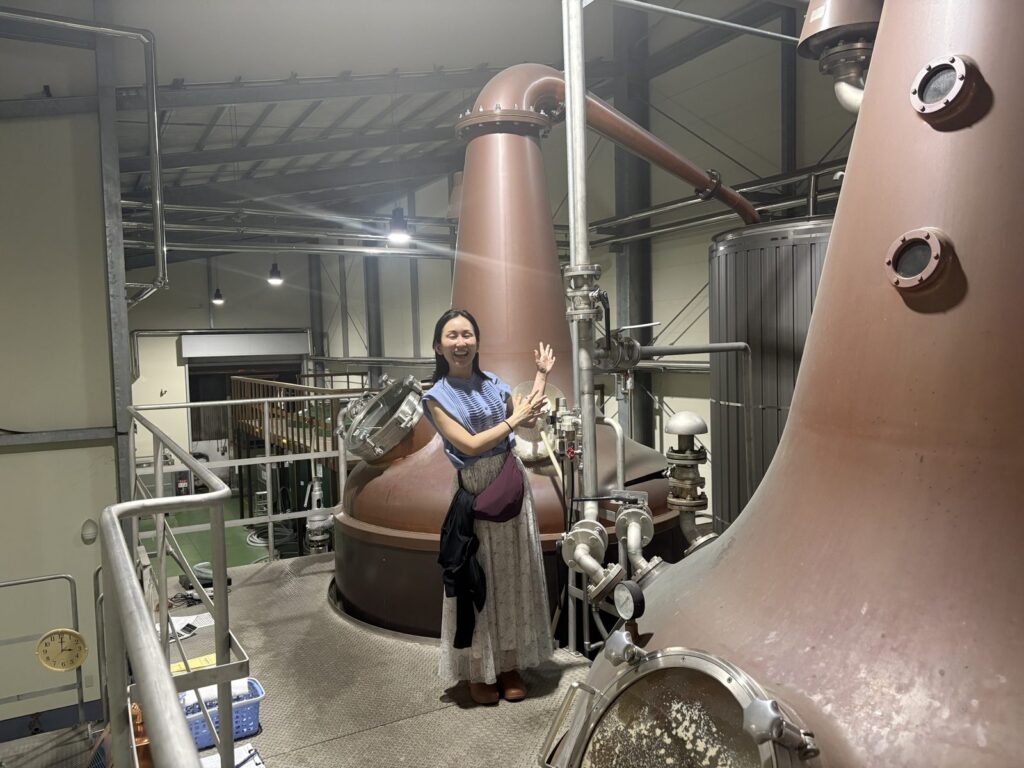
Tsunuki’s theme is “deep and energetic.”
Making a powerful spirit, true to Kagoshima.
For that, the pot stills are a shape with little reflux, and cooling is by worm tub.
At Mars’s other distillery, Komagatake, two batches are collected and distilled together, but Tsunuki runs one at a time. It was decided at the design stage, so the spirit would come out even a little heavier.
Distillation starts at 8:30 in the morning and runs until around 3:30 in the afternoon. About 7 hours, every day.
Temperatures and times during distillation were being recorded by hand, on paper.
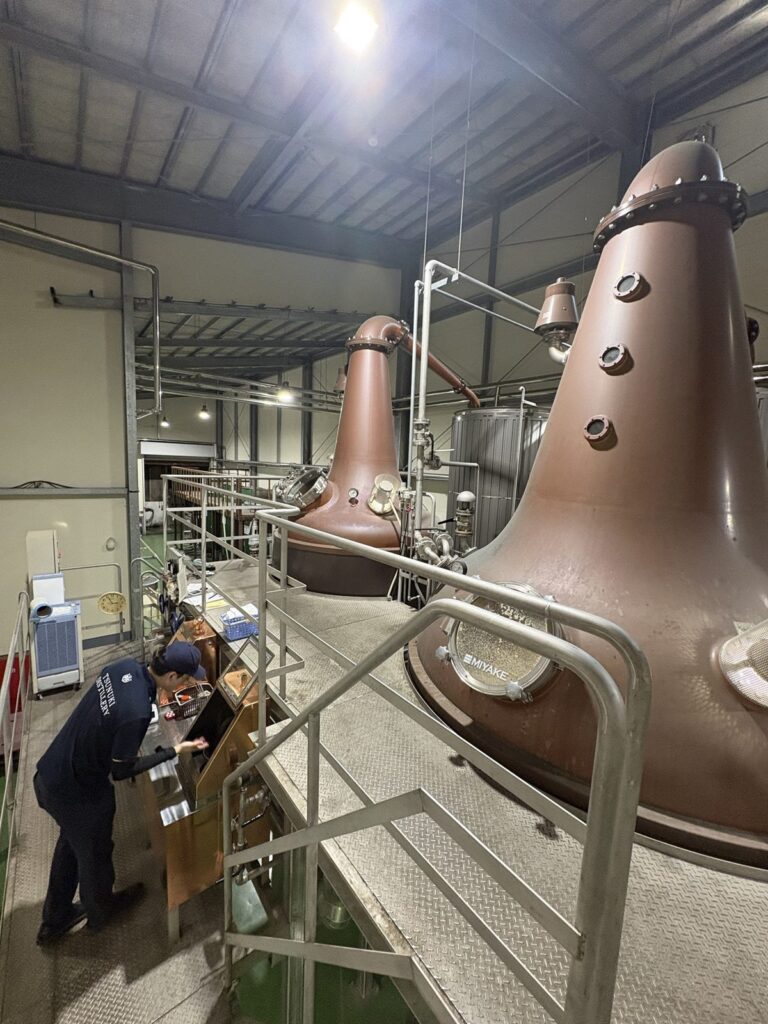
“You remember things better when you move your hands.”
So lately they are trying to make it the pattern that young makers first learn production at Tsunuki, then move to Komagatake.
Labor-intensive Tsunuki is also a place that raises makers.
Beyond heaviness: Tsunuki takes on liquid yeast
That “heavy spirit” Tsunuki has lately been taking on liquid yeast as well.
At the back of the fermentation room was a tank for propagating yeast.
It isn’t used all the time, but they run it regularly.
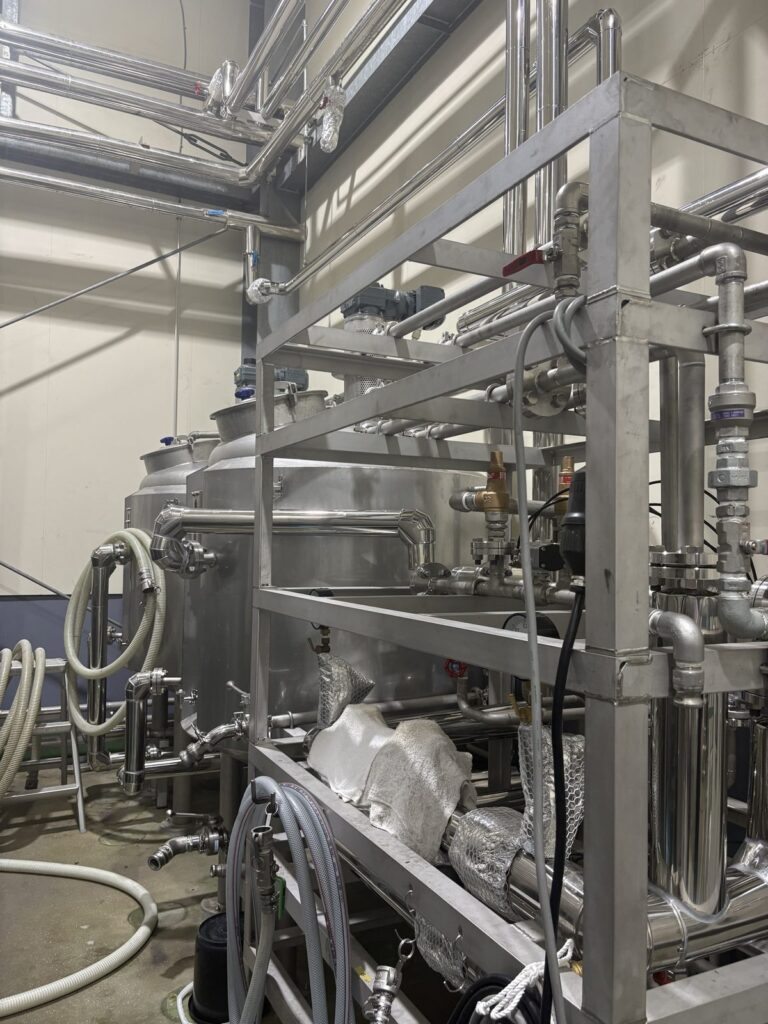
“Making different styles depending on the yeast we use — that’s what we’re putting the most effort into right now.”
At the wash stage, a juicy fruitiness is already there.
How to draw that out through the choice of yeast.
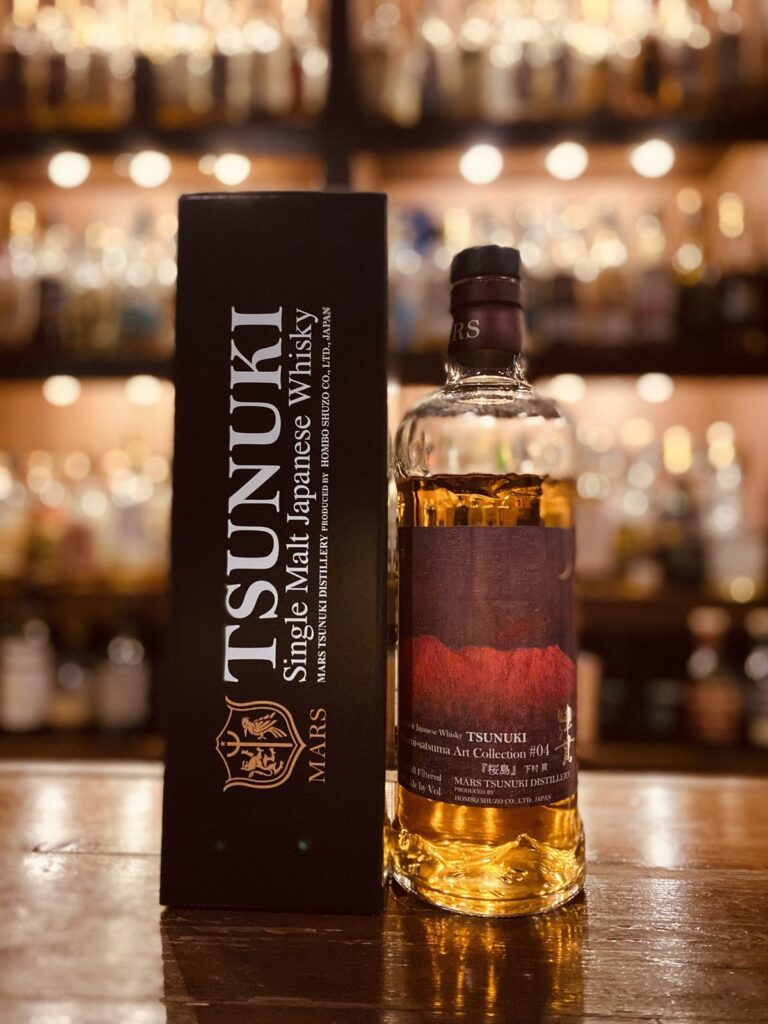
He told me that “Single Malt Tsunuki Minami-satsuma Art Collection #04” uses about 80 percent spirit made with liquid yeast.
The label is “Sakurajima” by Mitsugu Shimomura, a Japanese-style painter from Minamisatsuma. It is a bottle you can only get at Hojo, the Hombo family’s former residence.
To Tsunuki’s power, another, more flamboyant face is being added.
I can’t wait to see where Tsunuki goes from here!!
Tasting every cask, one by one
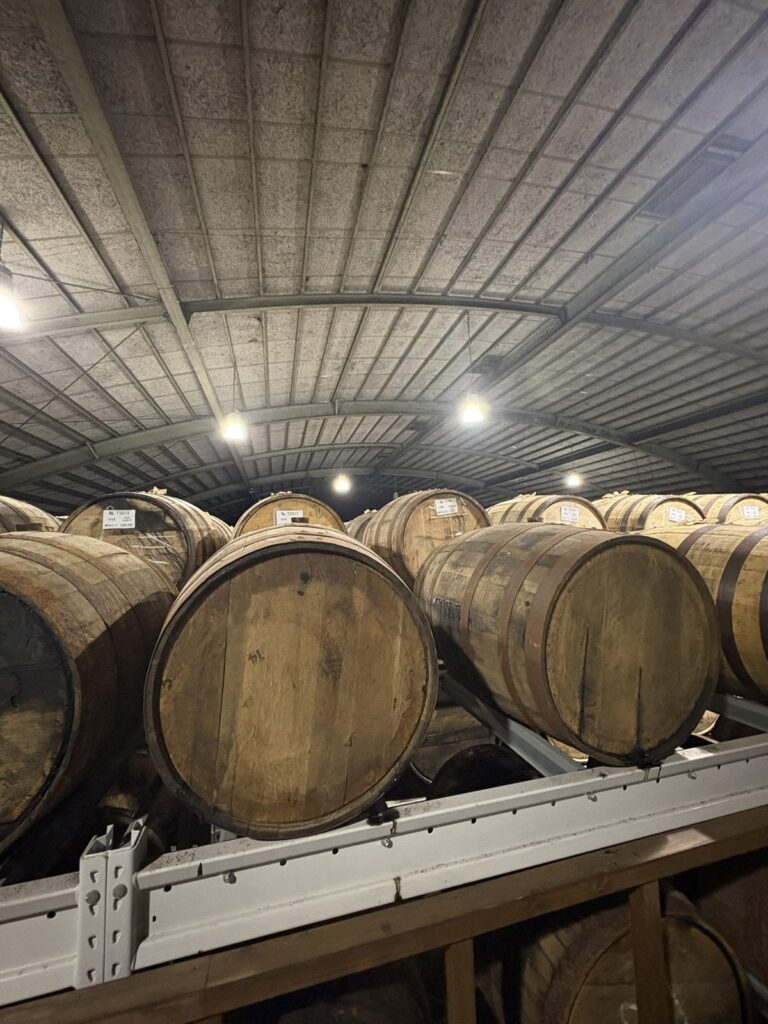
In the warehouse, casks slept packed tight.
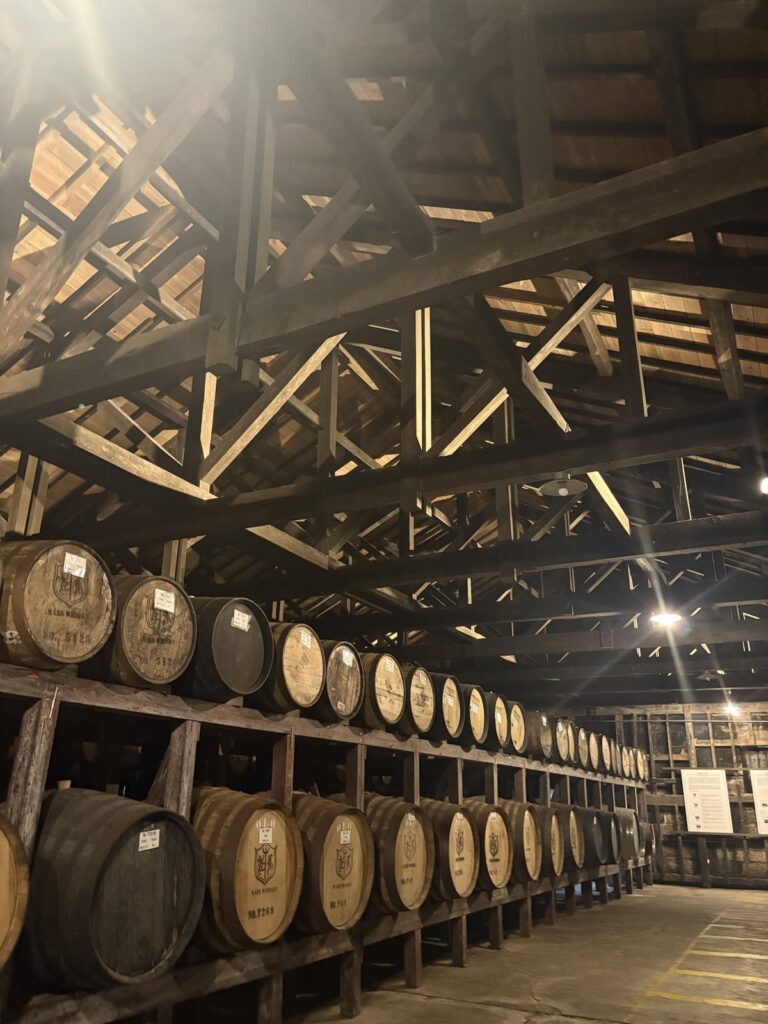
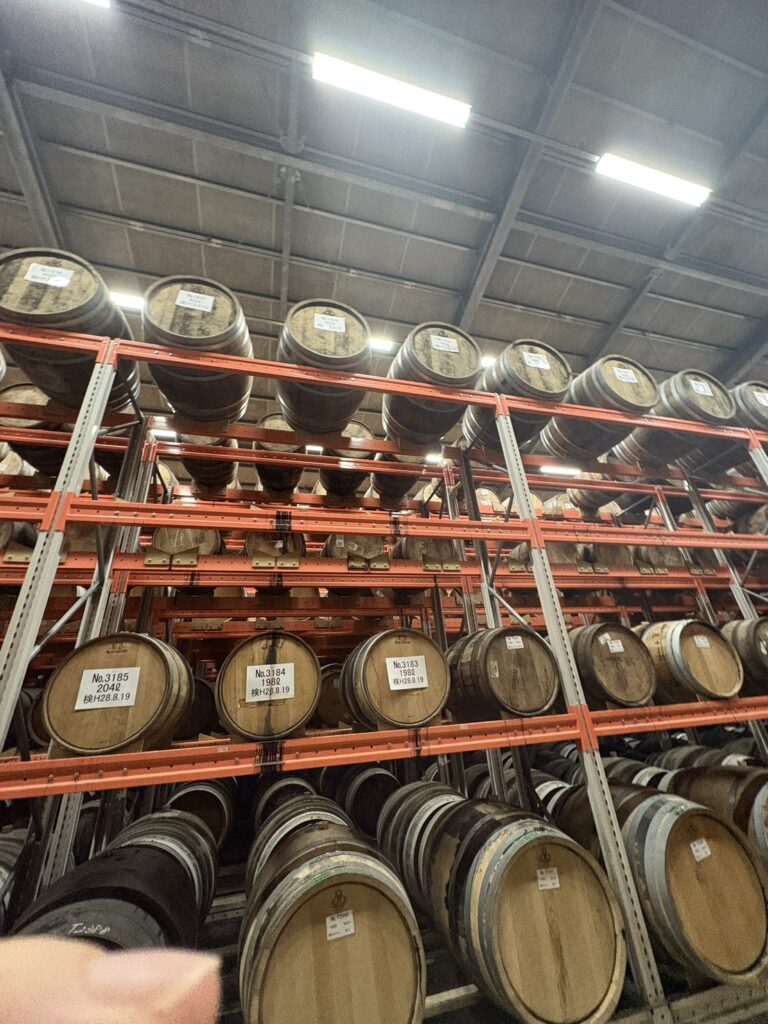
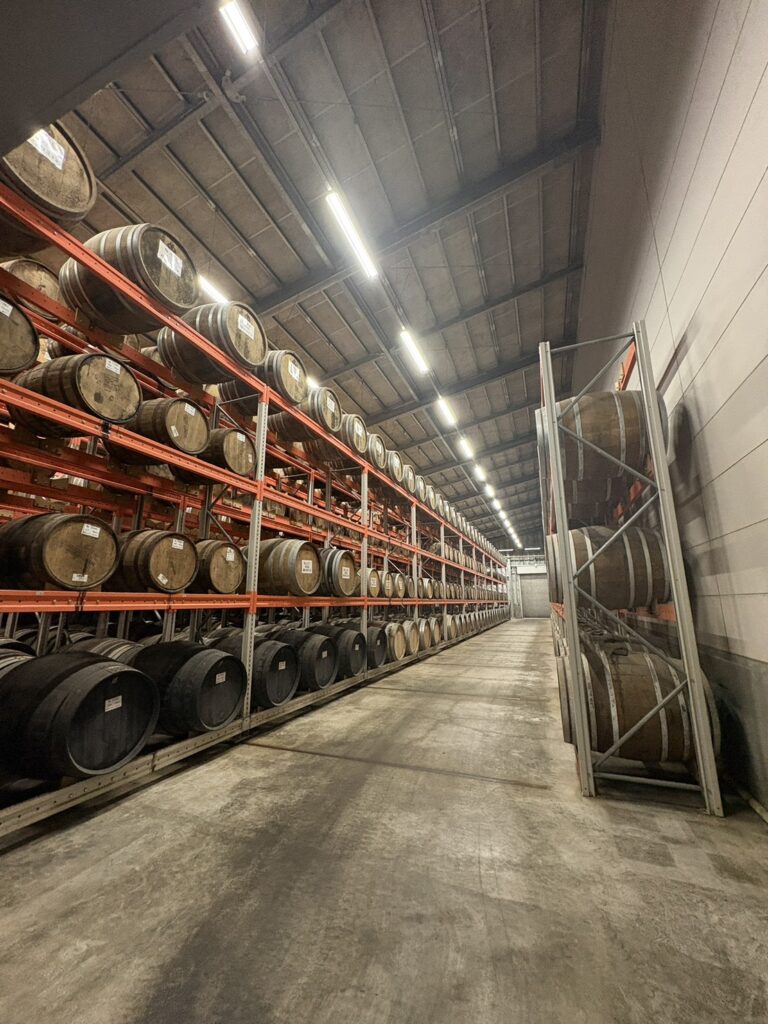
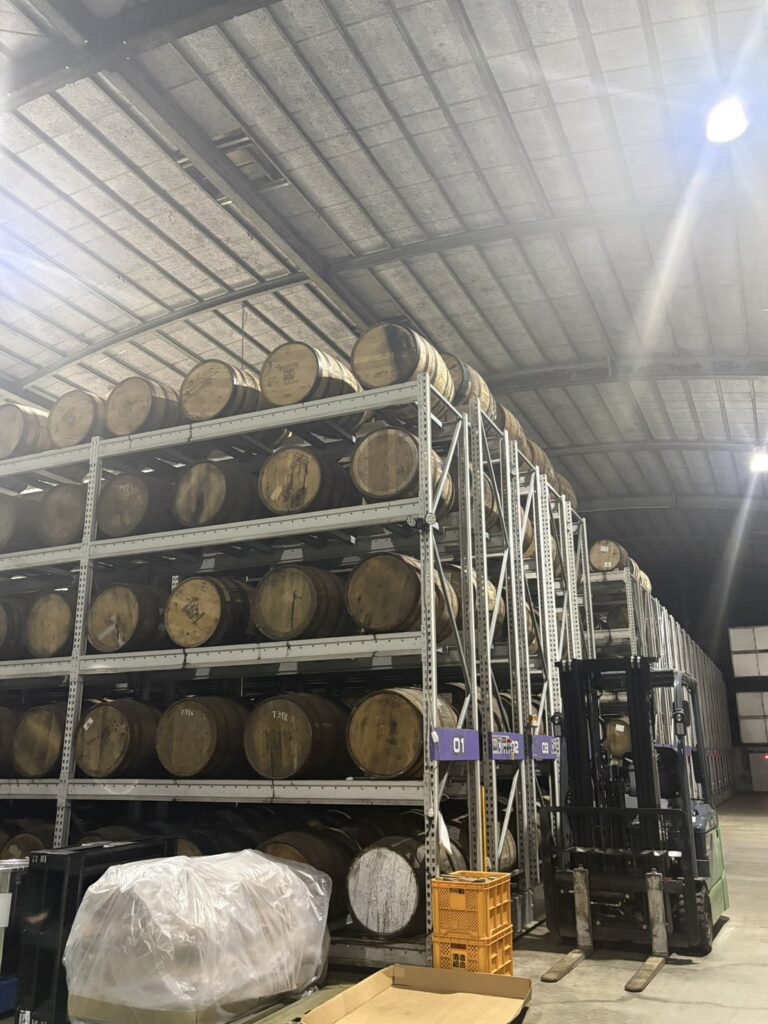
At Tsunuki they do what they call a “full cask check”: tasting every single cask, scoring it, and deciding which ones go to single cask releases and so on.
Even among casks of the same group, now and then one with a clearly different character is mixed in.
Miss it, and it stops being the taste of Tsunuki.
A warehouse without temperature control is heavily affected by the outside climate.
The higher the rack, the hotter it gets, and the faster the spirit evaporates. Recently they added insulation to the roof.
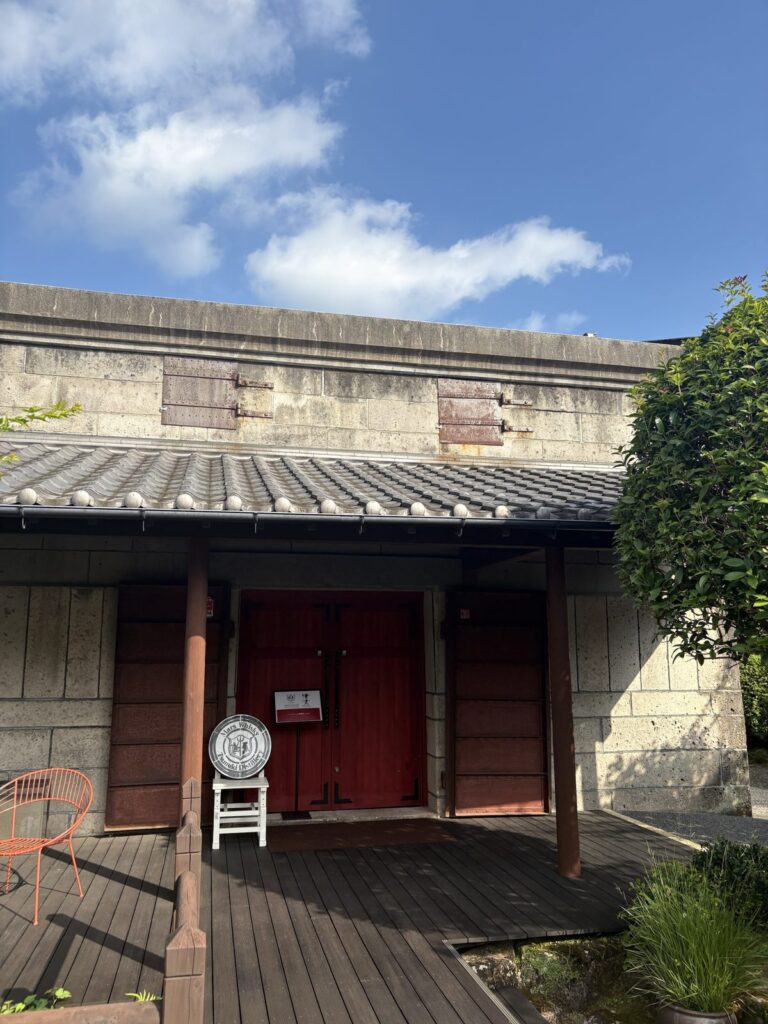
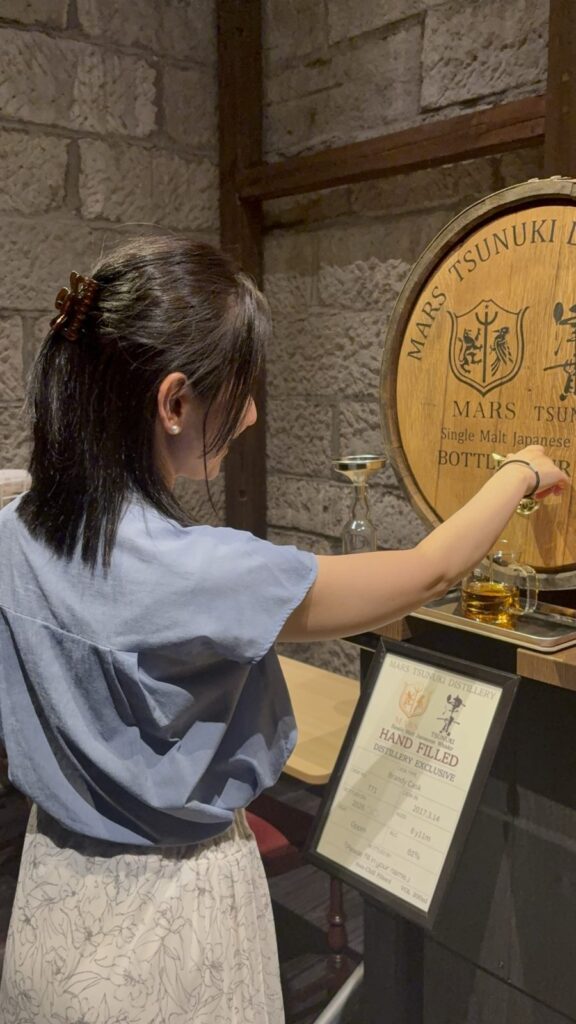
At the end of the tour, I was allowed to try a hand-fill.
From a cask set inside the stone building, you fill a bottle with your own hands.
Spirit from a brandy cask filled in March 2017, aged 8 years and 11 months.
In the “BOTTLED BY” line on the label, I wrote Bar Little Happiness.
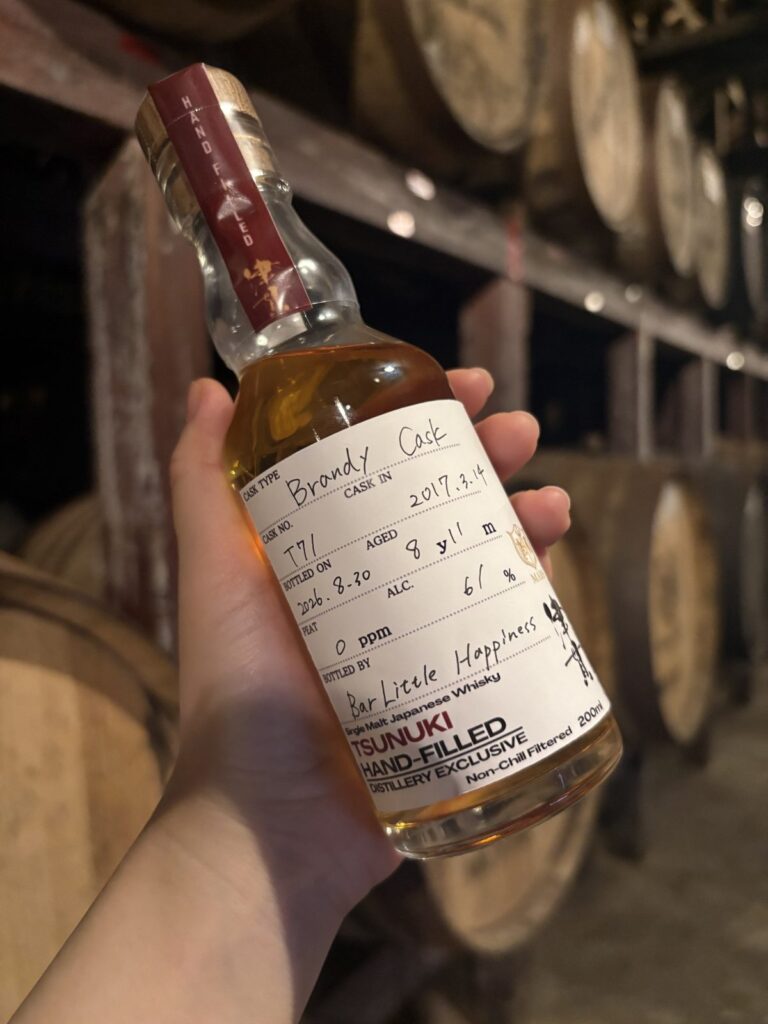
I also did a hand-fill at Ikawa Distillery.
A bottle you fill from the cask with your own hands really is special.
And soon, Tsunuki’s whisky will turn 10 years old.
Last August, heavy rain put the whole distillery area under knee-deep water.
The boiler broke, and production stopped for 3 or 4 weeks.
Some wash sat in the washbacks for 24 days.
They kept analyzing it, confirmed there was no problem, distilled it, and set that spirit aside separately.
Someday, it may come out into the world as a memory of that summer.
In his fifth year, entrusted with the Yakushima blend
Jotaro is now involved in blending, too.
This year’s fifth release in the series matured on Yakushima island, “MARS The Y.A. #05.”
He went to Yakushima himself and built it up from scratch: which casks to use, how many bottles’ worth to secure.
That year, the one entrusted with it was Jotaro alone.
From his boss, the blender Mr. Kusano: “Yakushima’s yours.”
“It was fun.”
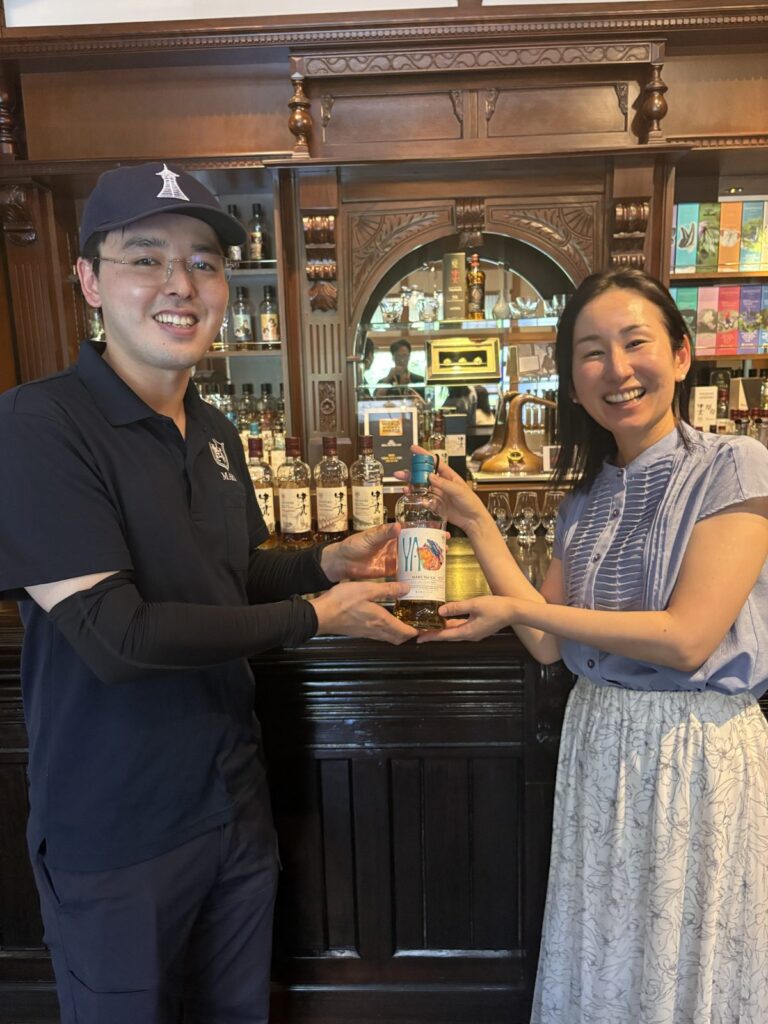
It felt like everything was packed into that one line.
Mr. Kusano himself studied shochu fermentation at graduate school at Kagoshima University and joined in 2013.
Just 3 years later, still in his twenties, he moved to Tsunuki ahead of its opening, and today, as chief distilling manager and blender, he handles both production and blending.
When Tsunuki was being built, the person in the company who drank the most whisky, and had the most passion for it, was Mr. Kusano.
He even proposed the shape of the pot stills himself, I’m told.
Hand things to people with passion, while they are young.
This is only my own guess, but I thought that might be the air that has always flowed through this place called Tsunuki.
Last year, Jotaro spent 2 weeks touring Scottish distilleries at his own expense.
He liked the system he saw there for managing casks by barcode, he told me, eyes shining.
Waiting for the Tsunuki of 4 years from now
“I’m really looking forward to seeing what kind of whisky it’s going to become.”
The spirit he made shortly after joining has, after 4 years, finally begun to take shape.
So what will the spirit being made now be like, 4 years on?
Because they are changing the way they make it bit by bit, that makes it all the more exciting, he says.
As I was leaving, he told me one more thing.
Two bartenders of his generation in Kagoshima had quit. That hit him harder than he expected.
“I don’t know the bartender’s side of things, so I’d been hoping to talk with them.”
Maker and bartender.
Two people looking at the same bottle of whisky, from opposite sides.
A young generation, absorbed in the world of whisky.
That alone warms my heart.
A story that began with a glass that didn’t taste good, one night at the age of 20.
Its continuation, I want to watch from inside the counter.
The day the spotlight falls on Jotaro is, I think, not far off.
Whisky and rum taste better when you know the hearts behind them.
Every encounter is meant to be. Welcome to the world of Rum & Whisky.
[About the author]
Mika Tanimoto
CEO, Little.m Inc. / Owner-bartender
Since 2006, I have run Bar Little Happiness, a whisky and rum bar in Nagarekawa, Hiroshima. I visit distilleries in Japan and around the world and write about the people who make the spirits. Recipient of the Hiroshima City Excellent Skilled Worker Award.
“Whisky and rum taste even better when you know the hearts of the people who make them.”
[Visit the bar] 📍 Bar Little Happiness
Rolling Nagarekawa 1F, 5-14 Nagarekawa-cho, Naka-ku, Hiroshima
Mon–Sat 7:00 pm – 12:30 am / Sun 7:00 pm – 12:00 am (closed when I travel to visit distilleries)
No cover charge, no reservation needed