
The Lucky Cat “Solla”|Why They Chose a Chestnut Cask
2025.12.02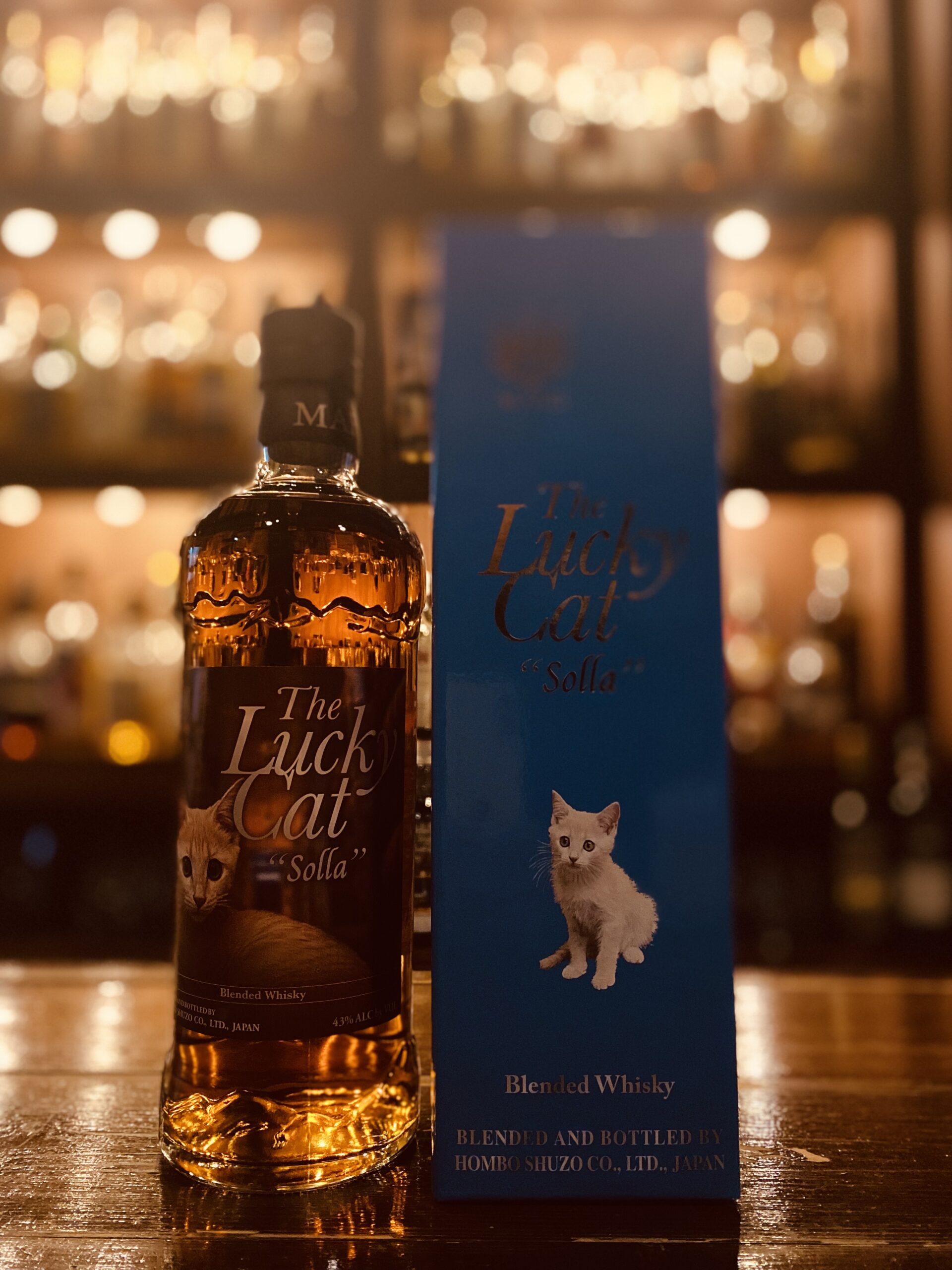
The cats on these labels are real, and they belong to the company president
This is Solla, the latest in The Lucky Cat — a limited series Mars Whisky, made by Hombo Shuzo, releases once a year.
What draws people to the series is the cats on the labels.
Each cat is a real member of the Hombo Shuzo president’s family, and each one’s character and history becomes the theme the blend is built around.
🐈 The wish in her name, and the colour of the box
Solla — from sora, the sky — was named with a wish: that she would grow like the sun shining in a wide sky.
Which is surely why her box is that beautiful, deep sky blue.
Once you know that, the bottle stops being merely charming, and you feel how much affection went into it.
🐈 Some of the cats who came before
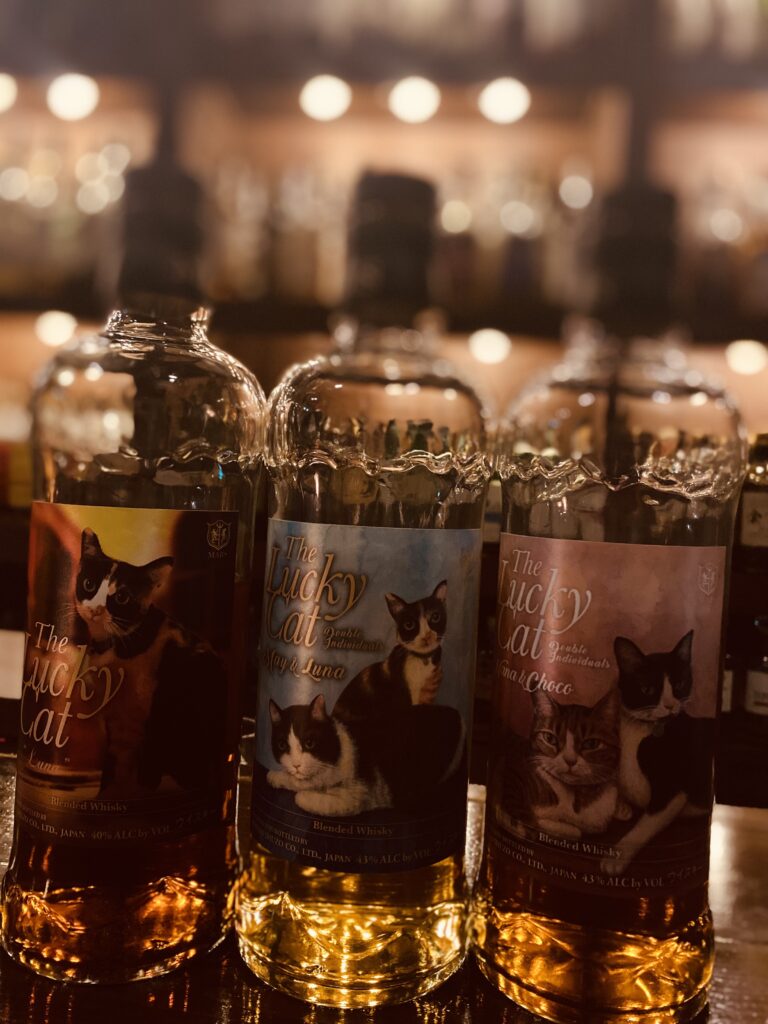
The Lucky Cat series changes the cask to suit each cat’s character — a difficult thing to keep doing. Past releases include May, Luna, Hana and Choco.
Solla is the newest cat in that line to become a whisky.
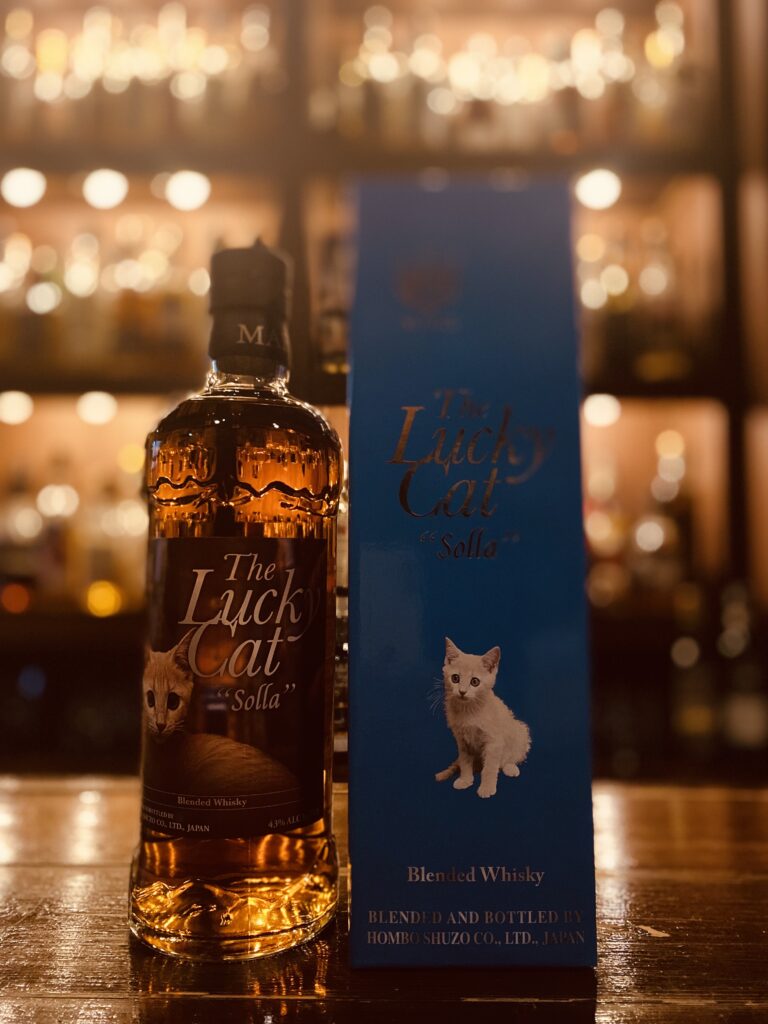
The faces printed on Solla’s box
Solla’s box carries a range of her expressions.
Looking at them, you can almost see her days.
- Head tilted: whatever she’s looking at so sweetly, I imagine it’s the person she loves most.
- Those innocent eyes: as though she hasn’t quite settled in yet, a little unsure. A face that makes you want to look after her.
- The demanding face: feed me, now. Cheeky about it. You can tell she’s still tearing around the place.
The one they chose for the bottle looks straight at you, with something slightly stubborn in it. (That’s just my reading of her, mind.)
Someday I’d like to meet Solla herself — the cat this chestnut cask was chosen for.
Where the freedom to turn a cat into a whisky comes from
Expressing a cat’s character through a cask takes a certain freedom of mind, and it’s rooted in something Mars has carried since the earliest days of Japanese whisky: a refusal to be bound by convention.
Mars traces back to Kiichiro Iwai, the man who designed the distillation equipment for the father of Japanese whisky.
That father was Masataka Taketsuru — known outside Japan as the founder of Nikka. Iwai had been his senior at technical college, and it was Iwai who received the notebooks Taketsuru brought home from Scotland, and built stills from them.
As pioneers, Mars kept taking bold decisions — moving their production base across the country — holding to one stance: for the sake of good whisky, convention doesn’t bind us.
That gene for doing things differently is what lets them take on something as difficult as chestnut maturation, and choose a beloved cat as their motif — a way of making whisky nobody else has.
Solla’s defining feature: a chestnut cask, rare anywhere in the world
The most important thing about Solla, and the most challenging by any international measure, is the chestnut wood.
Whisky is normally matured in oak.
Chestnut is considered far harder to work with, and examples in the whisky industry are extremely rare.
So why chestnut?
Two things sit behind the choice: Solla’s own character, and Mars’s ongoing search into Japanese materials.
Chestnut gives a whisky a faint astringency you won’t get from oak, alongside a sweet aroma and something particular to Japanese timber.
This difficult maturation is the blender’s answer to the question of how to bring Solla’s character forward — and it’s where Mars’s technical ability and their refusal to stop searching crystallise.
🐈 If you love cats
The Lucky Cat “Solla” brings two things together in one bottle: the story of a beloved pet, and the risk-taking of a company that helped hold up the history of Japanese whisky.
At Bar Little Happiness, I’d like you to taste Solla’s character for yourself — that fine-grained, unusual chestnut flavour.
【A note from Mika】 There’s very little published information about Solla, so a fair amount of this is my own imagining. Please take it as such.
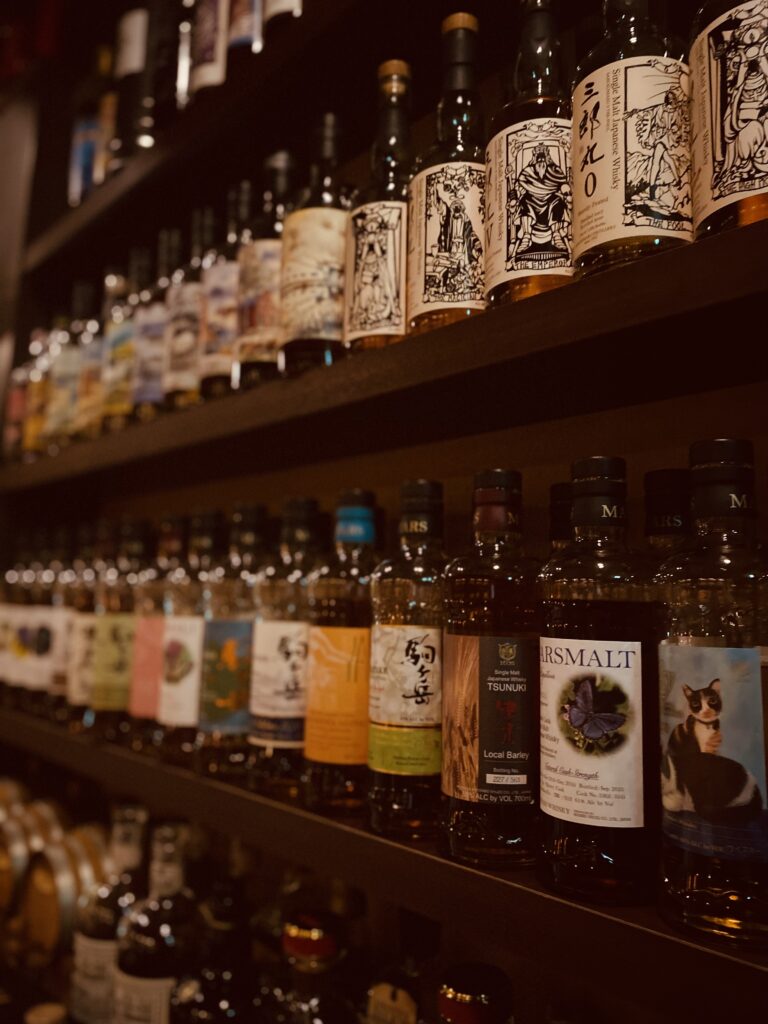
(We hold plenty of Mars Whisky here beyond the Lucky Cat series.)
About this bottle
The Lucky Cat Solla — Mars Whisky, chestnut cask, Hombo Shuzo — is available at Bar Little Happiness in two ways.
• Drink it here at the bar. I’ll pour it in front of you and tell you about it as I go.
• Take some home in a small bottle, decanted by the measure.
This suits people short on time, people who don’t drink much, and anyone who’d like a bottle to carry home from the trip.
→ 【Bar Little Happiness|A bar in Nagarekawa, Hiroshima holding the full run of Mars Lucky Cat releases】
Every encounter is meant to be. Welcome to the world of Rum & Whisky.
Bar Little Happiness — Mika Tanimoto
[About the author]
Mika Tanimoto
CEO, Little.m Inc. / Owner-bartender
Since 2006, I have run Bar Little Happiness, a whisky and rum bar in Nagarekawa, Hiroshima. I visit distilleries in Japan and around the world and write about the people who make the spirits. Recipient of the Hiroshima City Excellent Skilled Worker Award.
“Whisky and rum taste even better when you know the hearts of the people who make them.”
[Visit the bar] 📍 Bar Little Happiness
Rolling Nagarekawa 1F, 5-14 Nagarekawa-cho, Naka-ku, Hiroshima
Mon–Sat 7:00 pm – 12:30 am / Sun 7:00 pm – 12:00 am (closed when I travel to visit distilleries)
No cover charge, no reservation needed