
Ex-Ichiro’s Malt Blender Taro Okuyama Takes On Japan’s First Blending Business|Whisky Bridges
2026.10.13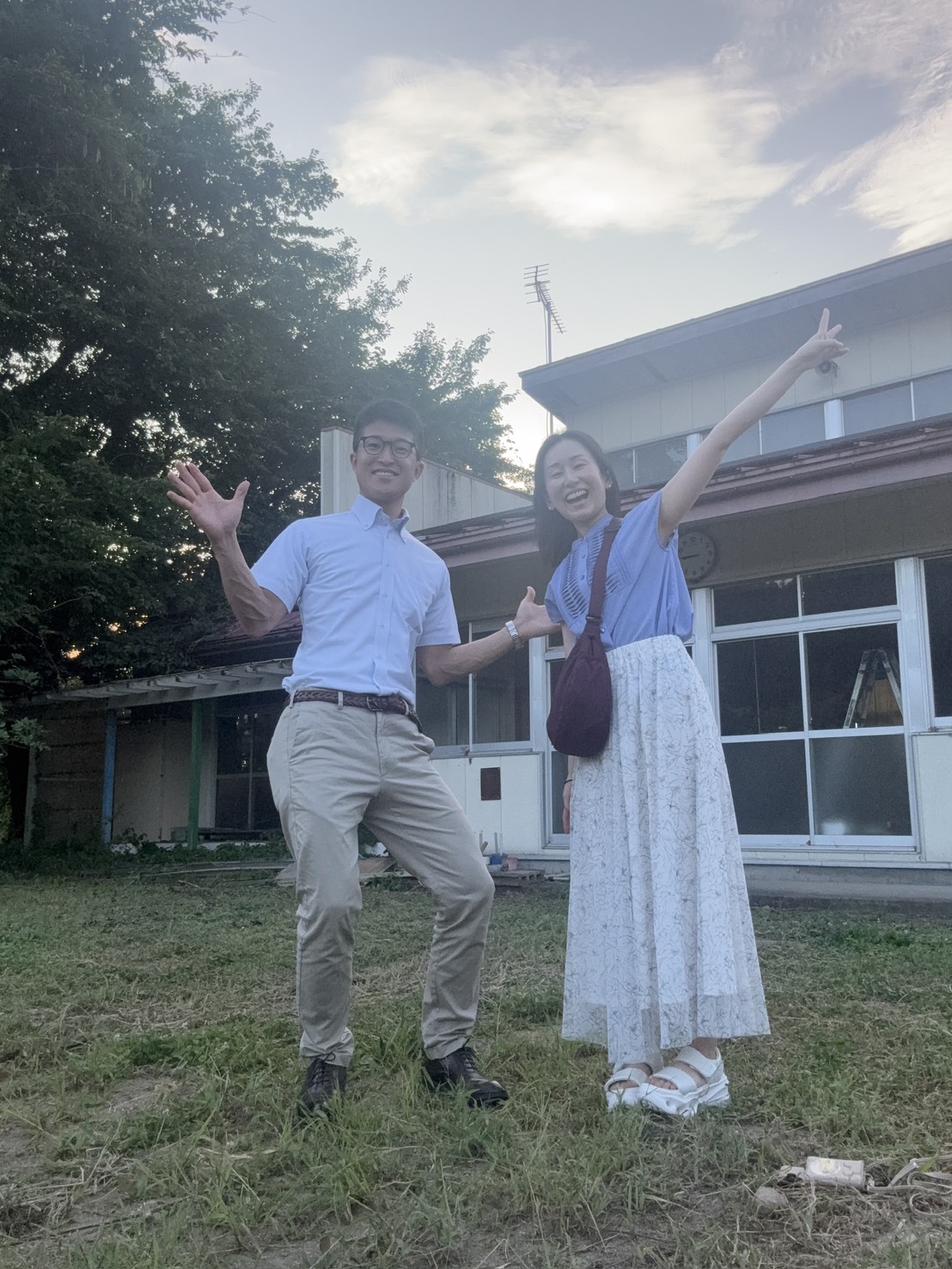
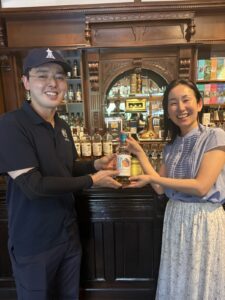
In short: Taro Okuyama, formerly a blender at Chichibu Distillery (Ichiro’s Malt), has returned to his native Iwate to found Whisky Bridges, a blending-only whisky maker with no still of its own — almost without precedent in Japan. I visited his base, the former Tsunagi Kindergarten in Morioka, beside Lake Gosho: the Maltstock night in the Netherlands behind the word “connect,” March 11, 2011, the Highland cow and Ihatov Malt logo, buying only spirit matured 3 years or more from 6 distilleries, no single-malt releases, an 8-year business plan done alone, and a launch expected in spring 2028. By Mika Tanimoto, owner-bartender of Bar Little Happiness, Hiroshima.
“I hope people can connect across every kind of wall.”
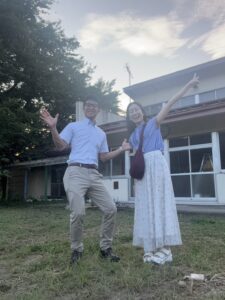
Taro Okuyama said that to me as we walked across the playground of the former Tsunagi Kindergarten.
Tsunagi, in the city of Morioka.
A hot-spring town known as Morioka’s “inner parlor,” lined with onsen inns.
In a still-hot August, I came here from Hiroshima, a journey of seven and a half hours.
A whisky maker with no still
Mr. Okuyama was a blender at Chichibu Distillery, the home of Ichiro’s Malt.
He returned to Iwate, where he was born and raised, and founded his own company.
Whisky Bridges Co., Ltd.
Buying matured spirit from several distilleries, maturing it further, blending it, and bottling it.
A whisky maker dedicated to blending, handling that entire process in-house.
Think of a business close to Compass Box in the UK, and some of you will see it at once.
In Japan, there is almost no precedent.
At an online briefing, asked whether this would be Japan’s first blending business, Mr. Okuyama answered, “I believe it probably is.”
Behind the word “connect” was a formative experience
The concept: blending WHISKY BRIDGES world.
To cross every wall, and connect everything.
Why these words?
There was a real reason.
It goes back to Mr. Okuyama’s twenties, when he was still at Ichiro’s Malt.
He took part in a whisky event held in the Netherlands called Maltstock.
Hundreds of people stay over in cottage-like lodgings.
That kind of event, I was told.
There, if you look even slightly rushed or irritated, the entire staff will scold you: “Relax.”
Here, you can forget everything. Just enjoy yourself.
Among the participants are people from Scotland’s most storied distilleries.
Yet nobody is above anyone else; it was a very equal place.
And each participant can be identified by name and country.
So you naturally know where the person next to you comes from.
In Europe, between country and country, there is history that cannot simply be washed away.
Mr. Okuyama watched people from countries with that kind of history between them sit side by side and talk about whisky as if it were nothing.
It stayed with him, he said.
The person sitting next to you might be from the other country.
And yet the two of them are just talking about whisky.
He probably wasn’t sure whether it was something he could ask.
But he badly wanted to know.
With the courage of a few drinks, he asked.
I’ve heard that such things happened between your countries — how is it, really?
The answer that came back was matter-of-fact.
We don’t think about it anymore. It has nothing to do with us.
There was nothing of what the textbooks say, no position anyone had been made to carry.
Just two people saying that the same thing tasted good.
That was when he decided, he says.
I will do work that connects all kinds of things.
Whisky can do that.
Many years later, those words became the name of a company.
Whisky Bridges.
The other starting point: March 11, 2011
The word “connect” carries one more meaning.
March 11, 2011.
The day of the Great East Japan Earthquake.
It was the time when Mr. Okuyama was about to go to university.
Is it really all right for me to go off to university in Shizuoka like this?
He remembers leaving Iwate with that conflict in his heart, he told me.
Someday, I want to be able to give something back to Iwate.
That had always been there.
What he decided in the Netherlands, and what he felt when he left Iwate.
Those two things now overlap, here in Tsunagi, Morioka.
The place name Tsunagi, which means “to connect.”
The company name, Whisky Bridges.
He feels it is fate, he said.
What the Highland cow means
He showed me the logo, too.
The symbol is a Highland cow.
That Scottish cow with the long fringe.
It expresses respect for Scotland’s whisky culture, he says.
Around it is a border in the image of a whisky cask.
Across the top, the words Ihatov Malt.
Ihatov.
The utopian Iwate imagined by the poet Kenji Miyazawa.
To use it as a brand name, he obtained formal permission from Kazuki Miyazawa, grandson of Kenji’s younger brother Seiroku.
Looking at this logo, I let out a little groan of admiration.
A company that does no distilling of its own, flying a symbol of Scotland.
But that, I thought, is exactly the point.
They don’t distill.
But their respect for the culture of whisky is second to none.
And they connect things that are far apart.
Scotland, and Iwate.
I heard the logo was completed after much trial and error since last year.
The place called the former Tsunagi Kindergarten
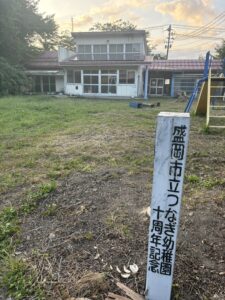
The base will be the building of a kindergarten that has closed.
On the window, a single notice was posted.
This kindergarten closed as of March 31, 2019 (Heisei 31).
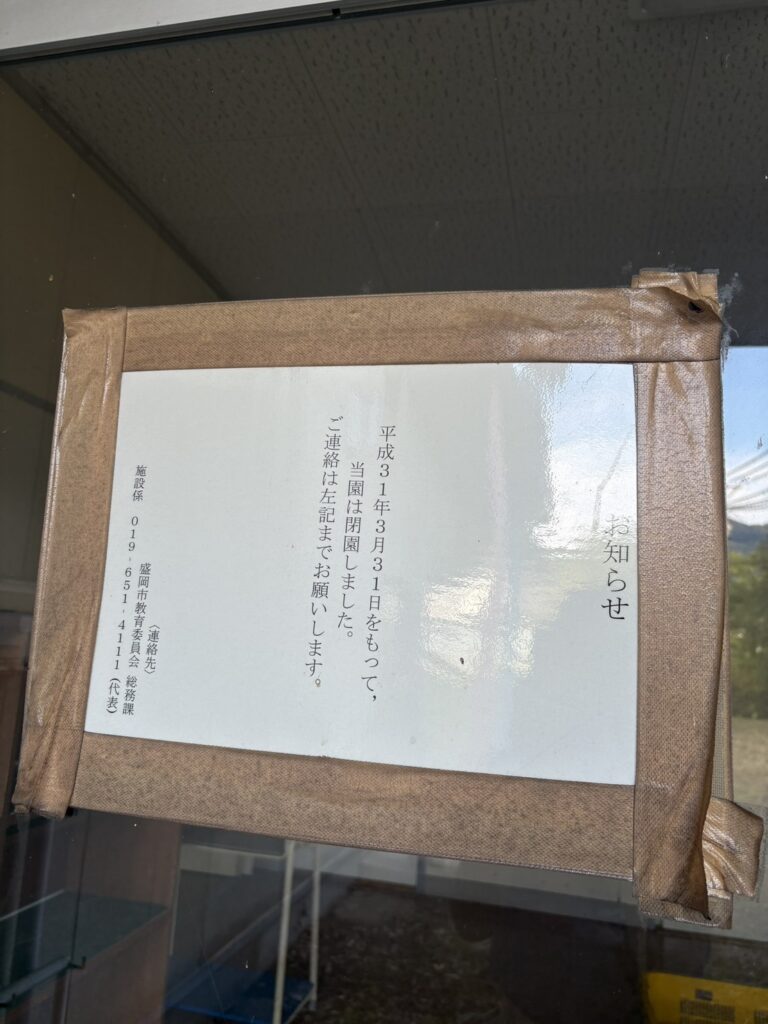
In the name of the Morioka City Board of Education, with a contact phone number.
A sheet of paper from 7 years ago, still posted there.
This will become the production base for whisky.
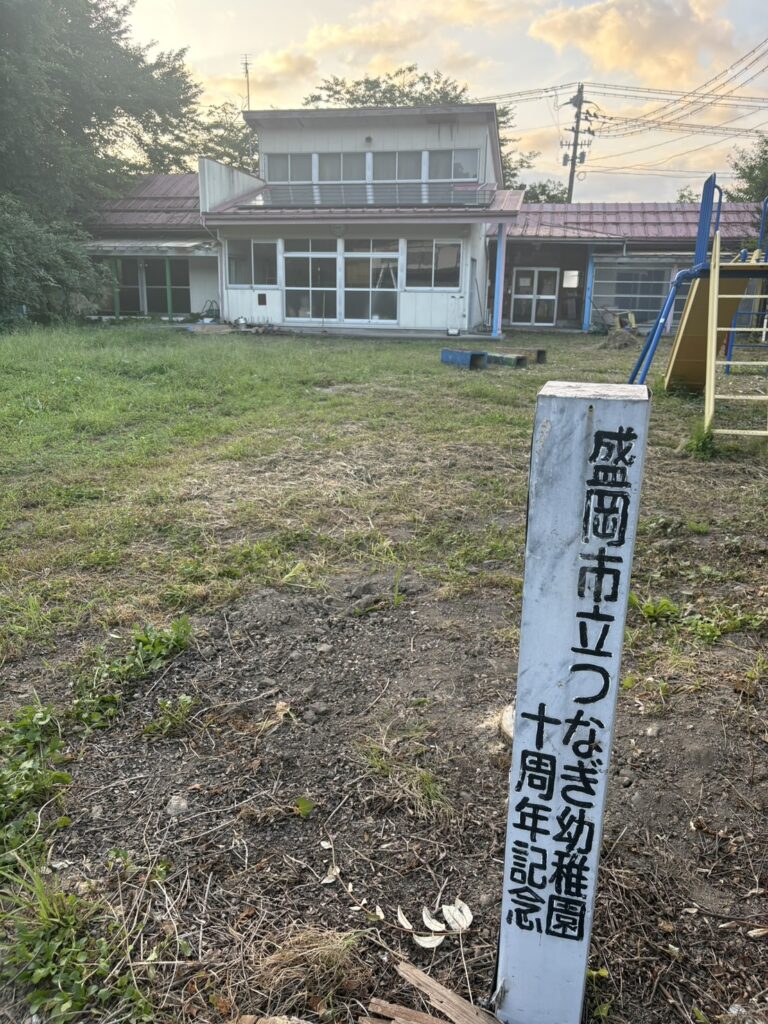
Under a contract with Morioka City, it will be renovated and named “Blender’s House Tsunagi.”
“Blender’s house” is a term Mr. Okuyama coined himself.
Because there was no word in the world for a place that is not a distillery but is devoted to blending.
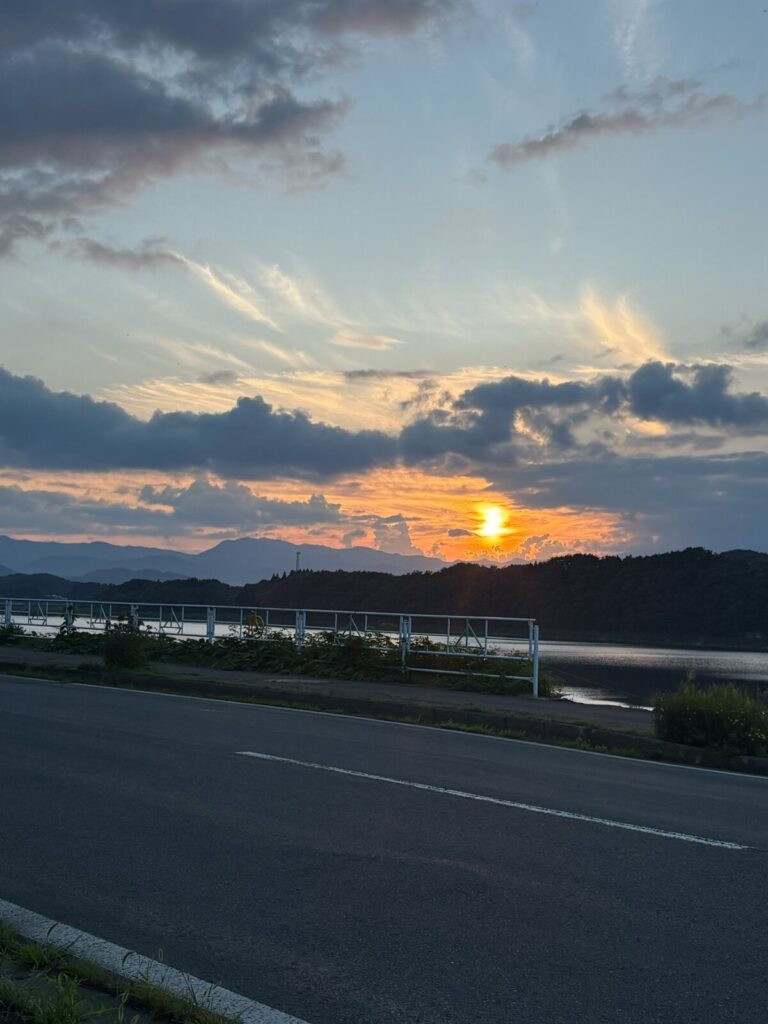
As he showed me around, what first took my breath away was the view out the back.
Lake Gosho.
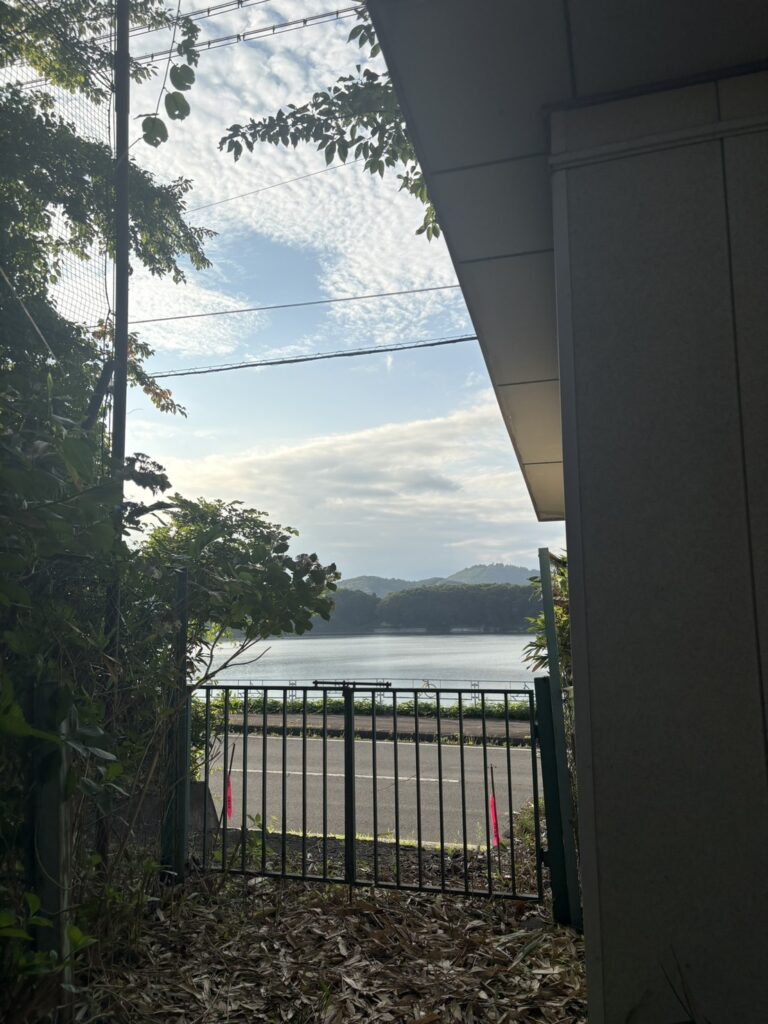
Just beyond the playground, the lake lies calm.
On a clear day, Mt. Iwate is visible beyond it.
A maturation warehouse right in front of a lake.
And beneath this land, I was told, lie buried cultural relics from the Jomon period.
Dig less than a meter and pottery marked with cord patterns comes out.
Mr. Okuyama said he had been present at the test excavation himself.
Whisky sleeping atop thousands of years of history.
There’s romance in that, isn’t there, he laughed.
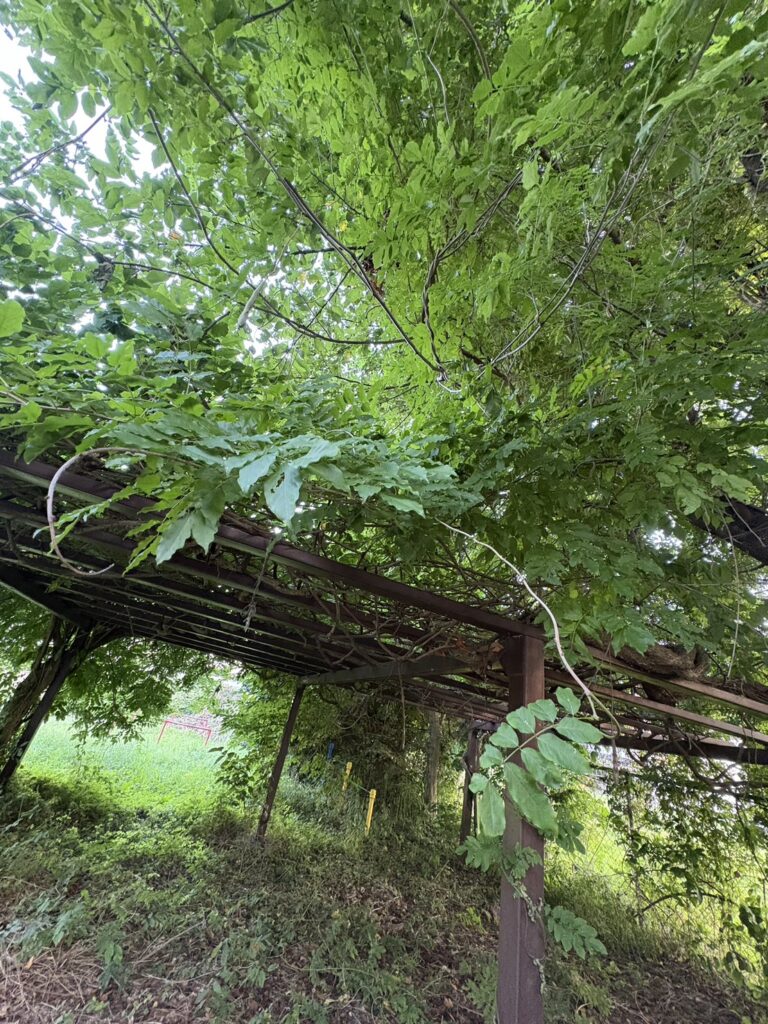
There is a great wisteria on the grounds that blooms in spring.
Beside it, a persimmon.
At the back, 2 cherry trees and 1 chestnut.
Nearby there is a shrine, and spring water flows beside it.
It carries the name “Hyakkoi Water.”
In Morioka, “hyakkoi” means cold.
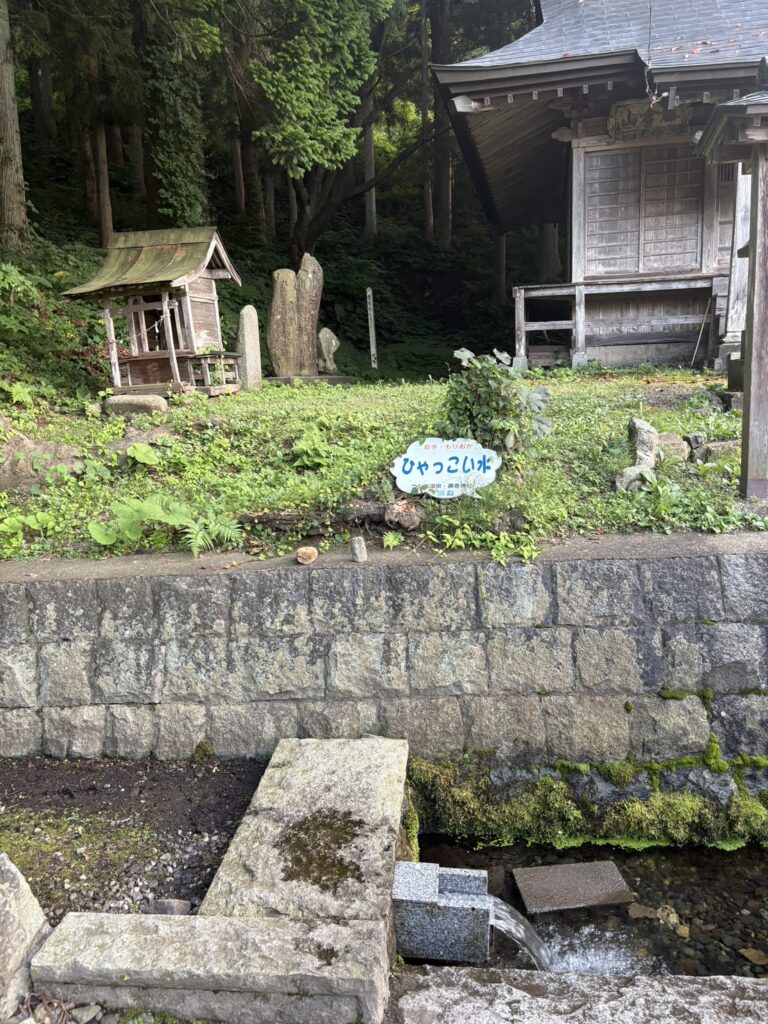
I was given some to drink.
Cold, smooth, and truly delicious water.
The same source as this water, he said, is what they will use from now on.
What “matured here for 3 years” means
There was one thing Mr. Okuyama was insistent about.
Buying spirit matured 3 years or more, not new-make.
New-make is cheaper to obtain, and easier for distilleries to release.
In business terms, that would be the rational choice.
Even so, he says he wants spirit that has rested 3 years in its own region.
Not just carrying a brand name, but the fact of having matured 3 years in that environment.
That is what he wants to use.
On top of that, it will rest at least 1 more year in the environment of Tsunagi, Morioka, before going out into the world.
He has already concluded supply agreements with 6 distilleries in Japan.
And he has decided never to release a product as a single malt.
A single-distillery release is something that distillery’s official range can do.
Since he is being given spirit from so many distilleries, he wants to blend all of it into his products.
That is his policy, he says.
At Ichiro’s Malt, he says, he learned the craft of blending by watching his seniors’ backs.
Not a manual, but feel.
It was a blending room like a sushi master’s kitchen, he told me.
From aroma and taste, they can even tell which yeast was used.
Incredible!
8 years, alone
What came across most strongly that day was that excitement and anxiety were living side by side.
He is excited.
That comes across, no doubt about it.
He had the face of someone whose ideal is at last beginning to take shape before his eyes.
But at the same time, there is anxiety.
He is building a business plan for 8 years of doing it alone, he told me.
And that he is still rewriting the plan again and again.
From taking in the spirit until the first product is released, there will be a long stretch with no income.
The warehouse holds a maximum of 200 casks.
The long-term goal, he says, is 10,000.
In his previous job, he handled 30,000 casks.
The number comes from his sense that it was that hand of cards that made the core range possible.
One by one, adding warehouses.
Everyone who starts a business probably wears that same face.
“I hadn’t seen it from that angle”
Walking through the building, I had simply assumed they would use it as it is.
How lovely! I was delighting in it all by myself.
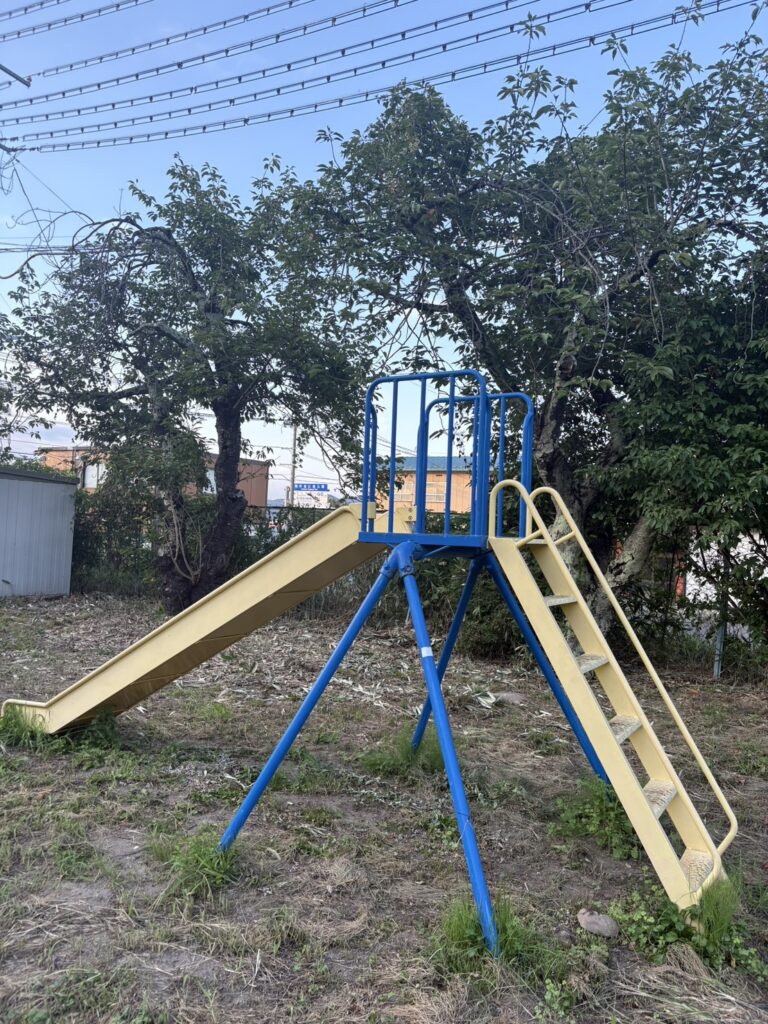
Then Mr. Okuyama told me about the renovation.
The ideal he had in mind: paint the walls white and the roof black, to give it the look of a Scottish distillery.
And to put a pagoda roof on top.
A pagoda roof is that tower-like roof that sits above the kiln where malt is dried.
He has neither kiln nor pot still.
Even so, he wants to put that shape on top.
The same feeling as the Highland cow logo, I think.
But I couldn’t help thinking it would be better left as it is.
Pictures of rabbits and flowers drawn by children.
Old glass.
The sign reading “Teacher’s Room.”
The clock.
The speaker.
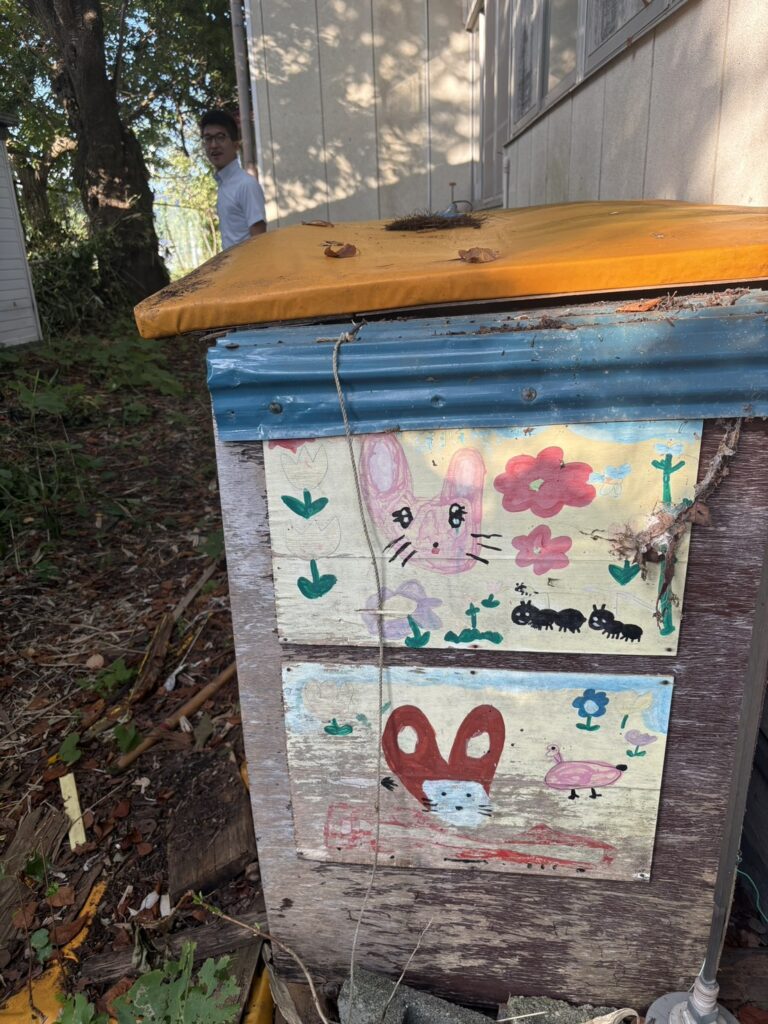
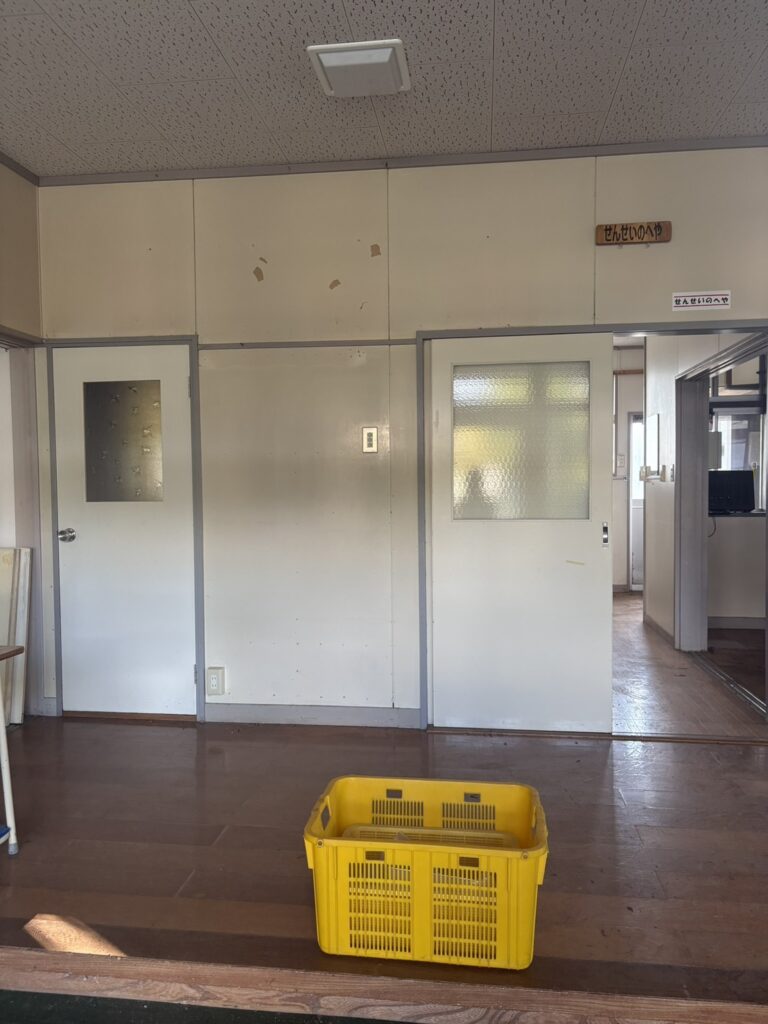
Anyone can build a new building.
But this heritage can never be made again.
It is one of a kind, I think.
When I said that, Mr. Okuyama was quiet for a while, and then he said:
“No, I hadn’t seen it from that angle.”
“I’ll go home and think about it seriously.”
Hearing the other person out properly, neither going along to please nor rejecting, but taking it home to think over.
It was the same at the online briefing.
He answered some rather tough questions one by one, carefully.
What he didn’t want to answer, he didn’t. But he took it in.
Here is someone who chooses words beautifully, I thought.
And that made me want to go and meet him.
Come to think of it, one more question came up at that briefing.
Will the cooperative relationship with Venture Whisky continue?
Mr. Okuyama’s answer was this.
In spirit, they have told him they truly support him.
But they cannot supply him with spirit.
“If you’re going to lean on Chichibu, don’t go independent.”
So he thought for himself, negotiated for himself, and reached supply agreements with 6 distilleries.
Without that push back then, none of this would exist today, he said.
At this point, my chest grew warm all on its own.
A blender they had raised this far.
Deep down, didn’t they want him to stay?
Anyone who has run a business will understand.
When someone leaves, it truly hurts.
And yet, even after he left, they keep on advising him.
Ichiro Akuto.
He really is, I think, the father of Japanese whisky today.
Isn’t that just too cool?
The ones who do it anyway
In any case, everything has only just begun, and nothing is fixed.
What I heard today will surely keep changing and being refined.
The ideal itself may not change, but the way it is expressed will.
So change is only natural.
And being shown that process is what makes me happy.
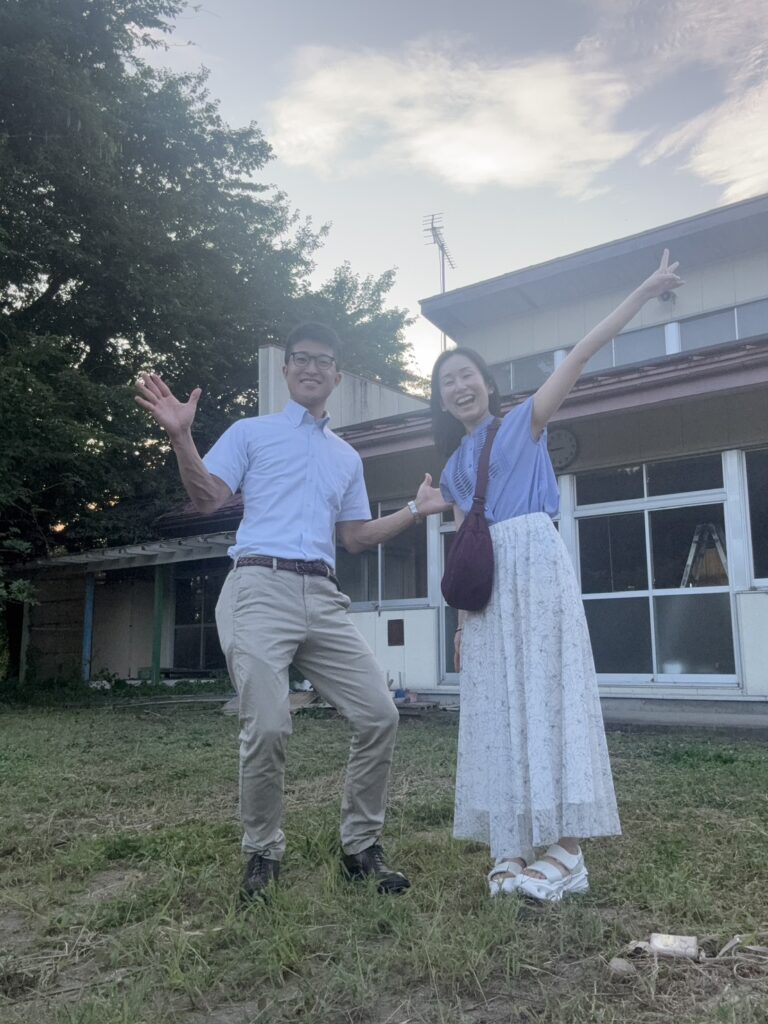
It was our first meeting, so some of the time went to introductions.
We had about 2 hours together.
It flew by, and I got through less than 30 percent of what I wanted to ask.
Even so, I was grateful to be there at this moment when it has only just begun.
These days, look anything up and an answer comes out.
So the bar to starting a business may look lower, but I actually think it has gone up.
Especially for anything that needs a large initial investment.
Most business models are easy to imitate, and now a search tells you everything.
You end up concluding it’s better not to do it.
The ones who do it anyway have a motive.
In the end, I think motive is everything.
Without that depth of feeling, better not to do it.
There is no reason to take on something you could simply look up.
And among them, there are people who chase romance.
People who are seriously trying to build the world they find beautiful.
Such people are always beautiful.
I love people like that.
Whisky tastes better when you know the hearts behind it
There is nothing to drink yet.
The launch is expected in spring 2028.
It is a business where ability, conviction, and drive count, and in the end, funding.
When it launches, everyone, let’s buy it and drink it!
Until then, how will this place change?
Which distilleries’ spirit will gather here?
I want to keep watching, the whole way.
Hoping that one day I can pour this whisky at the counter of Bar Little Happiness.
Whisky and rum taste better when you know the hearts behind them.
For Whisky Bridges’ company profile and how the business works, see this post.
Every encounter is meant to be. Welcome to the world of Rum & Whisky.
[About the author]
Mika Tanimoto
CEO, Little.m Inc. / Owner-bartender
Since 2006, I have run Bar Little Happiness, a whisky and rum bar in Nagarekawa, Hiroshima. I visit distilleries in Japan and around the world and write about the people who make the spirits. Recipient of the Hiroshima City Excellent Skilled Worker Award.
“Whisky and rum taste even better when you know the hearts of the people who make them.”
[Visit the bar] 📍 Bar Little Happiness
Rolling Nagarekawa 1F, 5-14 Nagarekawa-cho, Naka-ku, Hiroshima
Mon–Sat 7:00 pm – 12:30 am / Sun 7:00 pm – 12:00 am (closed when I travel to visit distilleries)
No cover charge, no reservation needed