
Komoro Distillery Maturation|Ian Chang on Peat, Casks and Time
2026.8.12
“All it needs now is time”
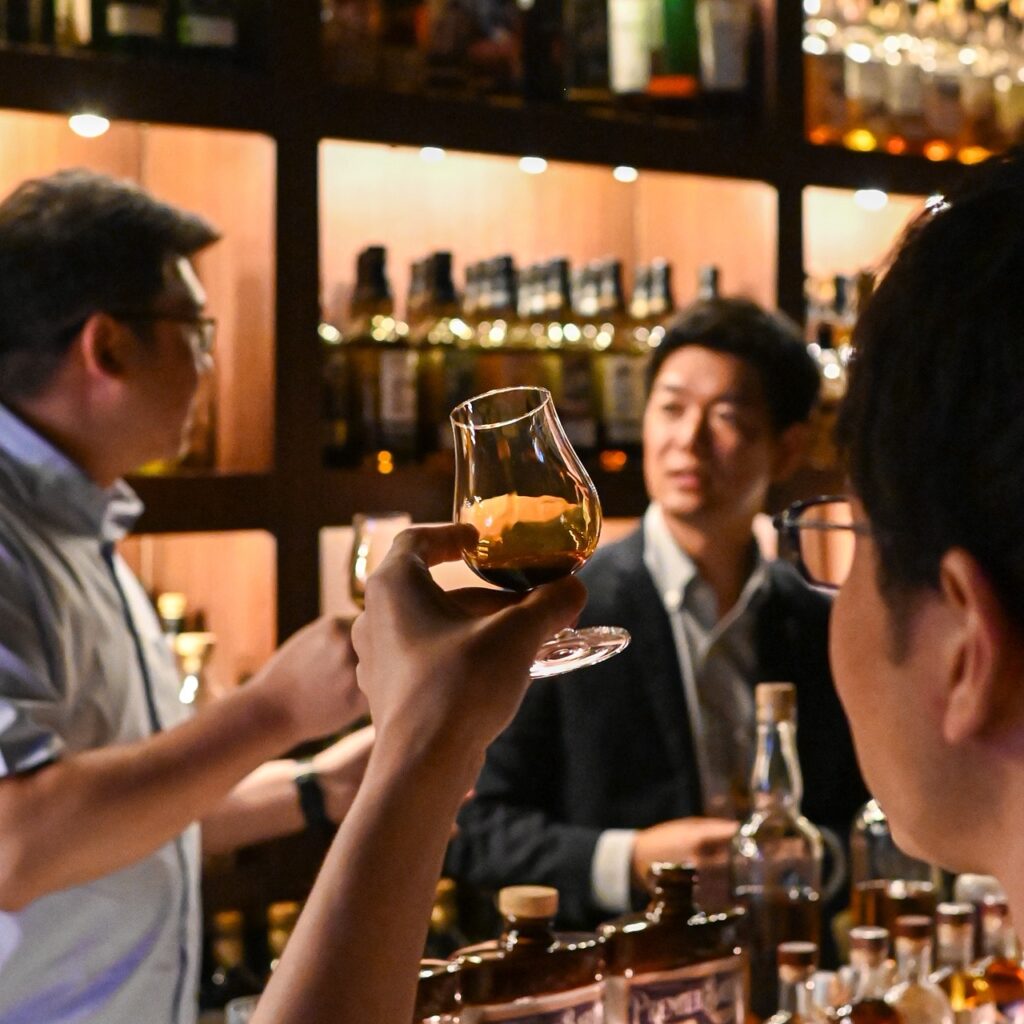
It was a new-born spirit, not yet two years old.
And yet the colour was startlingly deep.
In Part 2, I wrote about the fruit in the new make, and water that takes fifty years to surface.
This time, in Part 3, we go into what happens to that new make as it matures — maturation, peat, and a philosophy of blending.
This much colour, in under two years
An unpeated new-born.
Under two years in cask, and already a solid amber.
This November brings Komoro Distillery’s first single malt release.
This sample, they told us, shows the concept behind that first release.
Ian Chang called it the Spring New Born.
A name that celebrates this year’s spring in the Karuizawa and Komoro area.
The secret to how fast that colour comes lies in how Komoro thinks about maturation.
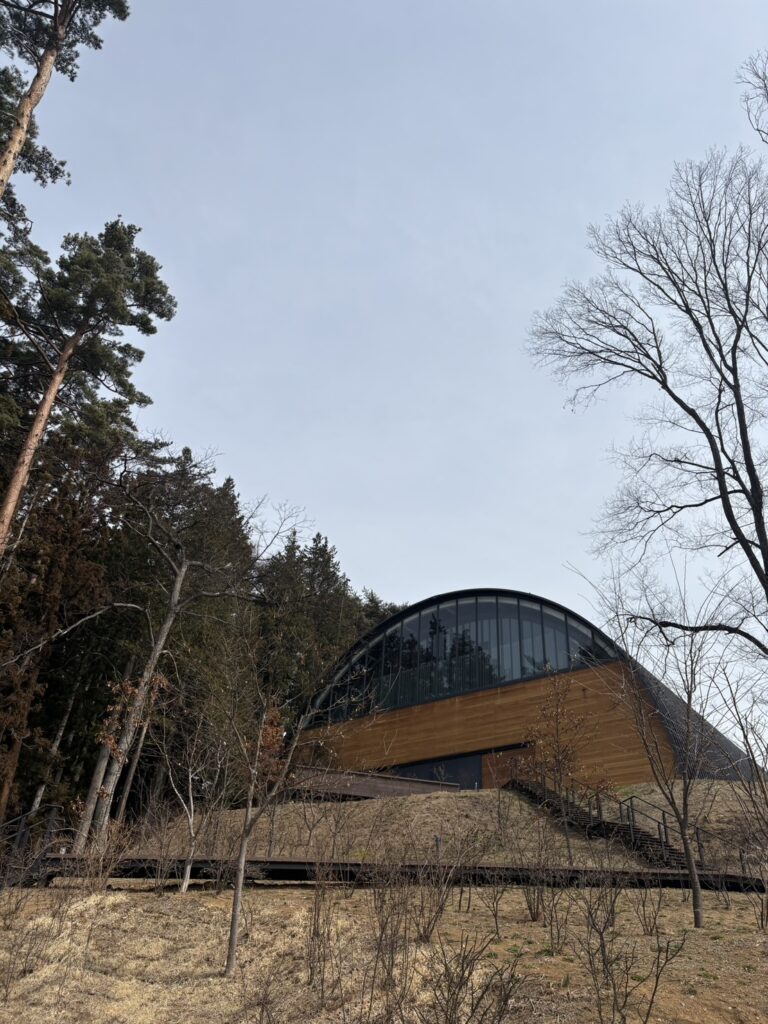
(Photographed on our visit. The maturation warehouse known as Jim Swan House, named for Dr. Jim Swan.
The building seals a forest environment inside itself, drawing as much as it can from what nature gives while putting as little strain on it as possible.
In the end, they leave it to whatever chance nature produces.)
“Summer is sandpaper, winter is oxygen”
Ian describes Japan’s climate as sitting exactly between Taiwan and Scotland.
Summers hot like Taiwan. Winters cold like Scotland — especially here in Nagano.
Having both, he says, is the key to maturation.
The hot summer works like sandpaper on the rough edges.
The cold winter pushes oxygen into the cask and grows a finer aroma.
The two take turns, and the whisky is polished between them.
So for the three months until the November release, Ian is waiting to see how much further this still slightly rough new-born will refine itself — and enjoying the wait.
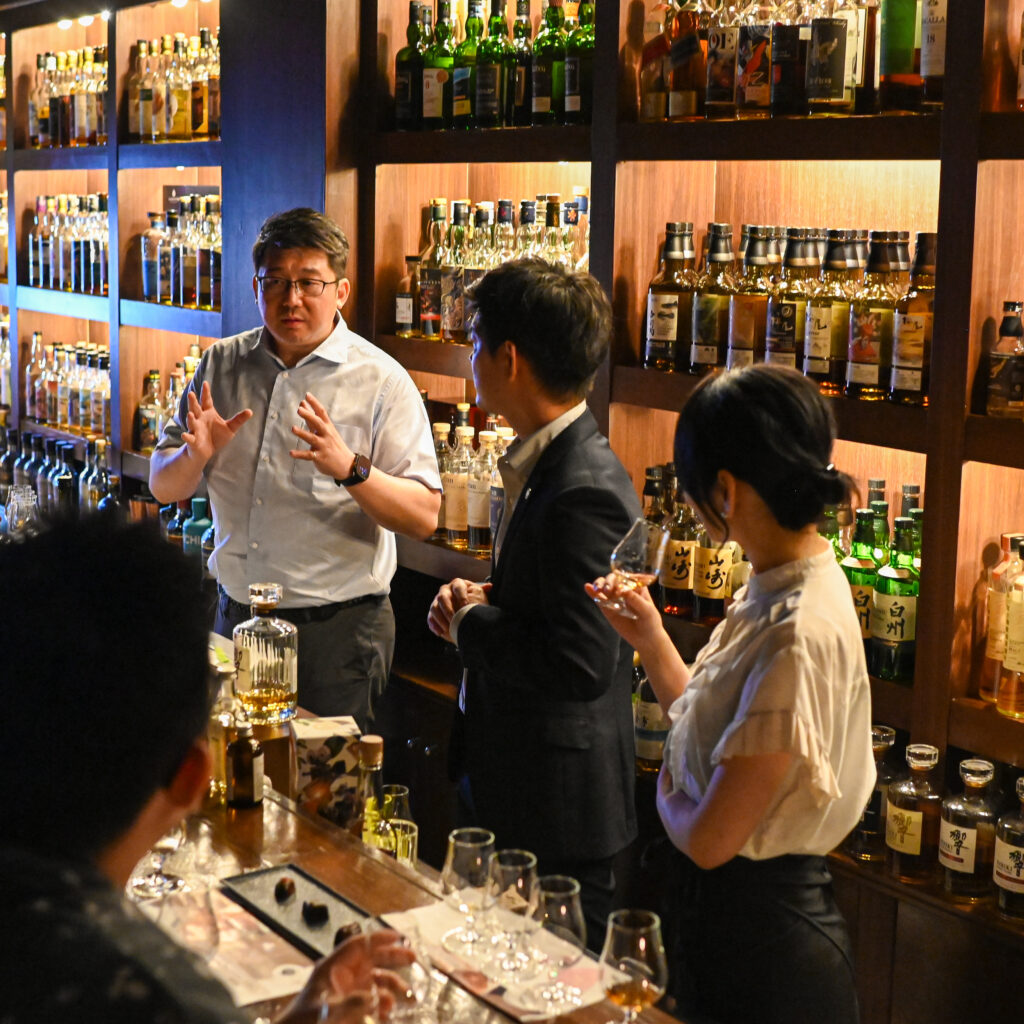
Looking thirty years ahead
There was something else Ian spoke about with real force.
This new-born isn’t yet two years old, and it has already become this.
No one was more surprised by that than Ian himself.
“In Japan too, you can build a whisky from nothing that stands beside Scotch.”
The man who took Kavalan to the top of the world is feeling that here, now, in Japan.
Komoro plans to build up through 3, 5, 8 and 10 years, and to start stating an age from 12 years.
Beyond that, they are looking at 30.
At Kavalan, he says, maturation averaged somewhere between 3 and 8 years.
Which is exactly why, at Komoro, he has settled in to take on long maturation.
Distilling began in 2023.
By the time a 30-year-old is finished, Ian will be 78.
A timescale where you may not live to check your own answer, built into the plan from the very beginning.
That is the scale Komoro is working at.
Ian has also tasted a 70-year-old whisky in Scotland.
What that glass taught him — about planting trees — I’ve written about in more detail elsewhere.
→ A 70-year-old whisky, and Ian Chang’s story of what gets passed on
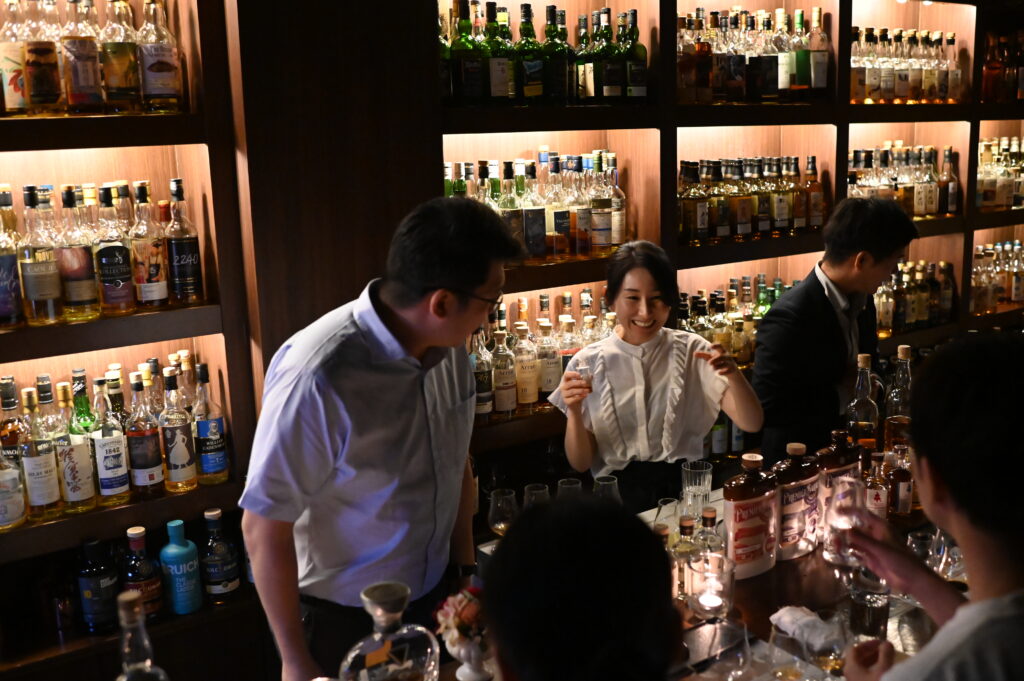
The gentle peat they burn at Christmas
Komoro distills peated spirit once a year, and only once.
From December 1 to the end of the following January — about two months.
Why then?
Because Ian’s teacher, the late Dr. Jim Swan, was born on December 25 — Christmas Day.
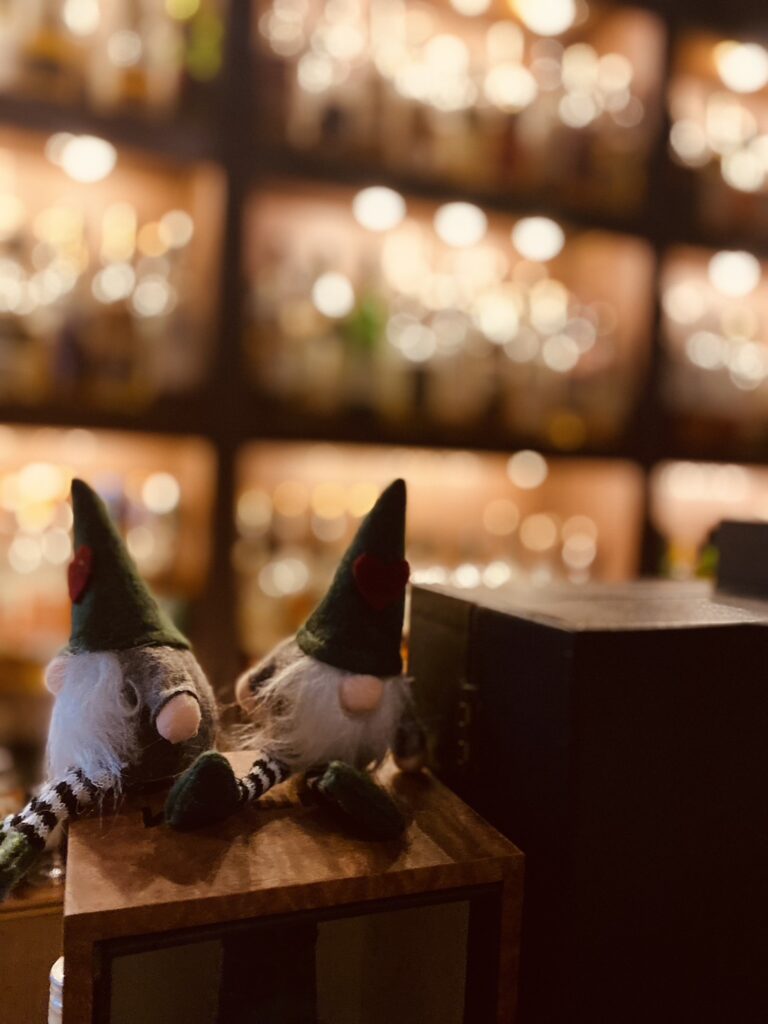
Dr. Swan loved peat used with a light hand.
So that is when Komoro burns its gentle peat.
And that is how the Christmas New Born came to be.
A glass of soft smoke, carrying his teacher’s birthday in its name.
Every Christmas, the distillery fills with the peat smoke his teacher loved.
Like a letter written in scent, sent to someone who is no longer here…
A deep respect for Dr. Swan.
There is something warm living inside it.
What a lovely decision, and what a lovely thing to name it 💛
This kind of sensibility is one reason I want to champion Komoro and Ian the way I do.
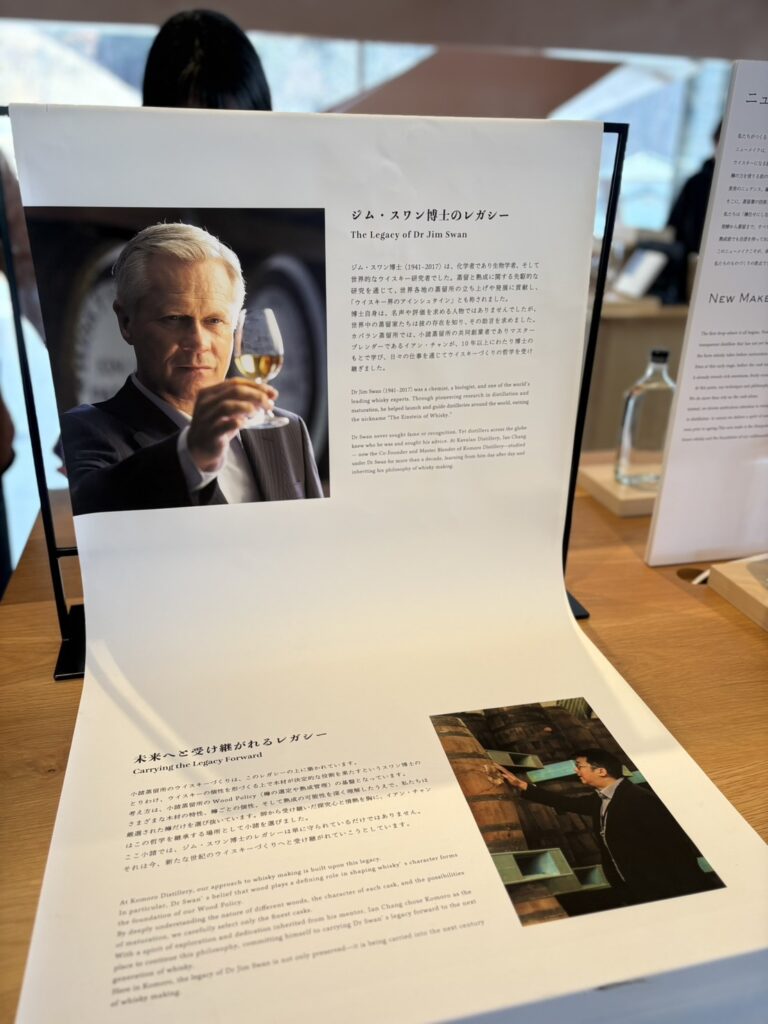
(Photographed on our visit. A panel that makes clear how deeply Ian respects Dr. Swan, and how much he still steers by him.
I’m sure he’s up there somewhere, delighted by what his student is taking on!)
Komoro’s peating is around 25 ppm at the malt stage.
From December into January, when they burn this gentle peat, the whole distillery fills with something like the smell of smoked bacon.
“It smells so good I’m hungry the entire time.”
Ian laughed as he said it.
So why keep the peat light on purpose?
Burn it too hard and the smoke buries the fruit, and the character of the distillery itself.
What Ian is after is fruit and smoke, both at once.
Soft smoke resting lightly on a sweet, fruity new make.
When Shinji Fukuyo, Suntory’s chief blender, tried the Christmas New Born last year, he was taken aback and asked how many years it had been maturing.
The answer was 13 to 15 months.
“Short of the warehouse burning down, I think this will just keep growing.”
Ian laughed again.
Harmony, through the craft of blending
The words Komoro holds onto are harmony and balance.
When Ian once asked Shinji Fukuyo what Japanese whisky is, the answer that came back was: harmony, and balance.
A whisky where everything is in harmony, the way Hibiki is.
And that harmony is reached through the craft of blending.
Asked in interviews which Japanese producer he measures against, Ian always answers Suntory.
He has genuine respect for their blending.
A whisky as balanced as Hibiki is normally built by combining several component spirits — malt and grain.
So if Komoro is aiming for harmony, will they make grain whisky too?
When I asked, he said his own passion lies squarely with malt whisky.
What Ian is looking at is how to arrive at harmony.
Mixing grain and malt is not, in itself, the goal.
The various component spirits the KDI group will go on to make.
How to bring those into one harmonious, balanced glass through blending.
That is where a blender’s ability lives, and that is what Ian is taking on.
That, at least, is how I understood it.
The sherry cask spirits
The last thing to come out that night was a special sherry, and then some.
First came a sherry of about 40 years, given to them by the people who make their sherry casks.
A PX of nearly 40 years, thick and slow as syrup.
It’s because their partner can make sherry like this that Komoro is given such particular casks.
Then Ian brought out two component spirits, in small bottles.
One was a special new-born using a small proportion of sherry cask.
The other was Komoro spirit matured two years in an oloroso cask.
We all tasted, a little at a time.
I’m not sure how rare this is to convey.
Komoro is a secretive producer, and almost never discloses its cask composition.
And here they were, opening up the make-up of the spirits themselves and pouring them for us.
That almost never happens.
How much of that the guests in the room took in, I don’t know.
But it was a genuinely rare thing, and the thought behind laying out something that special — I can’t thank them enough!!
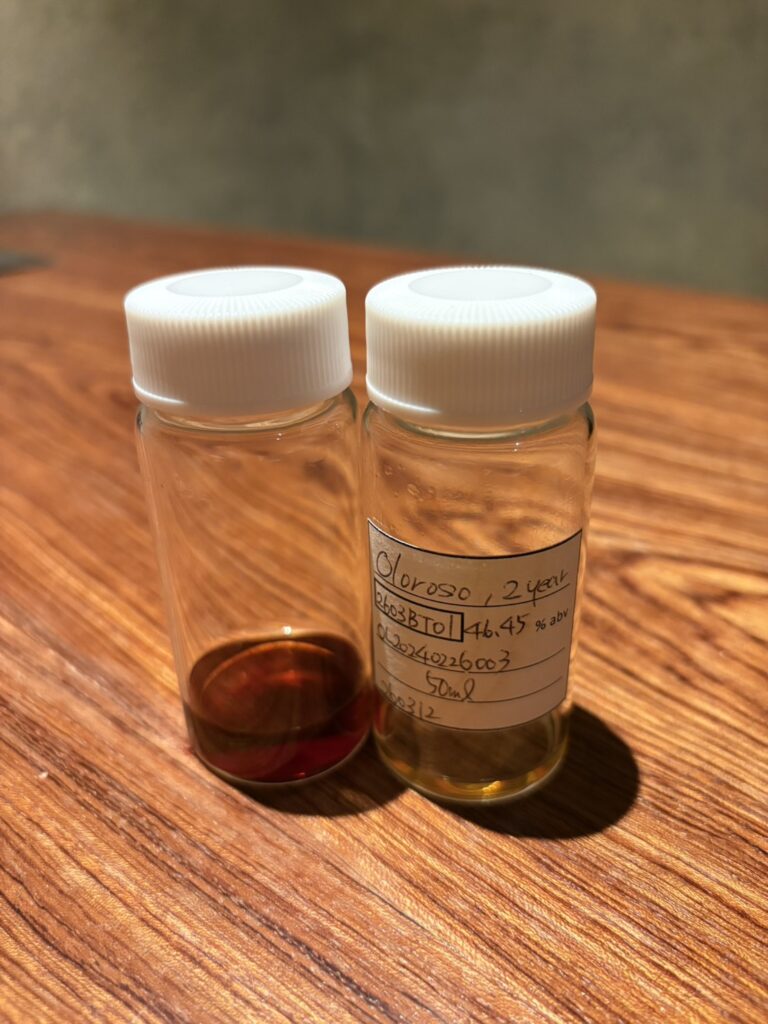
Spain now regulates sherry casks very tightly: without QR-code certification, a cask can’t be called a sherry cask at all.
This came from one of those certified casks — a glass with nothing else in it.
New make, water, maturation, peat, blending, and finally sherry.
How finely, and across how long a timescale, Komoro’s whisky is being built.
I got to taste a piece of that in a single evening.
But there’s still something from that night I haven’t told you.
The person behind all of it.
In Part 4, I’ll follow Ian’s path from Kavalan to Japan, and the philosophy behind his belief that passion matters most of all.
— The Komoro Distillery / Ian Chang tasting series —
Previous ← Part 2: Komoro’s new make, and water that takes fifty years to surface
Next → Part 4: From Kavalan to Japan — Ian Chang on passion and what gets passed on
From a tasting evening with Ian Chang of Komoro Distillery. Bar Little Happiness / Mika Tanimoto