
Legacy — What Ian Chang Brought from Kavalan to Komoro
2026.8.14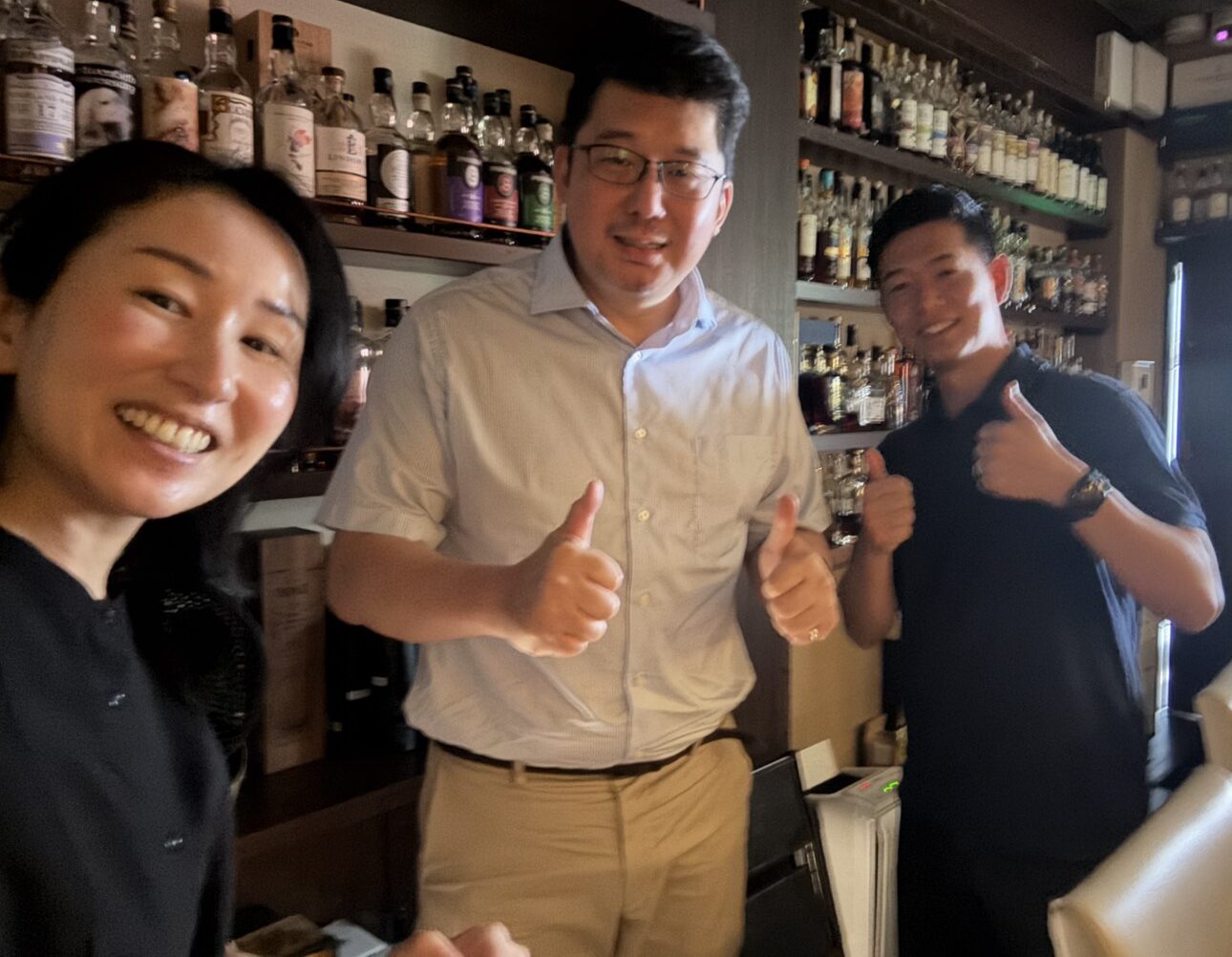
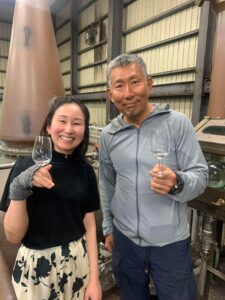
One afternoon, I sat down with Ian Chang, master blender at Komoro Distillery.
He would be hosting a tasting at my bar in July, and he came all the way to Hiroshima beforehand, wanting to meet properly first.
I had a mountain of things I’d long wanted to ask him.
Why he came to love whisky.
Why it was Kavalan.
Why he left, and chose Komoro.
The story of how Ian began — almost none of which appears in Japanese interviews.
Before I knew it, I’d abandoned the agenda entirely and was just asking him about his life.
When he finished, one word was left with me. Inheritance — what gets handed on.
Kavalan, Komoro, what he received from Dr. Jim Swan, and what he is now preparing to pass to Shibuya-san.
One line ran through everything he told me: you receive from someone, and you hand on to someone.
I want to set that story down here, in my own words.
It began by chance
Ian joined Kavalan, in his own words, by chance.
His father suffered a severe stroke while working in China.
Half his body was paralysed, and he returned to Taiwan.
Ian was doing his military service at the time, and his mother asked him to come home and look after the family.
So he looked for work near home.
Kavalan was a 20-minute drive away.
That was the entire reason he applied.
He was called to interview, and put through a series of nosing tests.
Plenty of people must have applied for that job. Why you? I asked.
He prefaced it with “I might be wrong about this,” and then said:
“I spent nine years in Britain as a student. They needed someone who could deal with people in Scotland and England, so perhaps that was seen as an advantage.”
Going home for your family.
Applying to a company that happened to be nearby.
Put like that, it sounds like a thoroughly passive beginning.
But where he landed was no ordinary place.
When Ian joined, Kavalan was still under construction.
Starting from building the distillery itself.
Nothing. Zero.
The place he’d arrived at by chance was a place where something was being made out of nothing.
That beginning from zero is what would later lead him to Komoro.
He fell in love with whisky inside a warehouse
Once Ian was at Kavalan, someone first led him into the world of whisky.
That person took him to distilleries in Scotland — Glenlivet among other great names — and showed him the working floor with the pot stills gleaming, and the inside of the maturation warehouses. Rows and rows of casks, and in he went.
“It was so romantic. Like something out of a fantasy. So I decided to go forward and never turn back.”
I think it was inside that warehouse that Ian fell in love with whisky.
I know that feeling very well.
The makers and someone like me, just a fan, are probably taken by the same view.
Without that encounter, the Ian Chang we know might not exist.
What he received from his teacher
And then came the teacher who would define his life: Dr. Jim Swan.
The first thing the doctor taught him was this.
“Whisky is alive. It isn’t like other drinks. With Coca-Cola, if you have the recipe you can make the same thing anywhere. Whisky is not like that. You have to change how you make it to suit the climate, the conditions, the water of the place you are in.”
You have to change how you make it.
You cannot carry the Scottish way over to Taiwan unchanged.
The temperature and the humidity are nothing alike.
That lesson gave Ian the inspiration that decided everything.
He had studied food chemistry, but organic chemistry — which sits at the heart of whisky — had barely come up in his lectures.
So the early days were hard going.
Dr. Swan was precisely a man of that field.
I asked him when he felt his own shape had formed.
This was his answer.
With Dr. Jim Swan, over a long stretch of time.
Roughly ten years before his own style settled.
Those years overlap exactly with the years he kept learning under Dr. Swan.
Twelve years of receiving from his teacher while shaping himself.
Across those same years, Kavalan won award after award around the world.
Because Dr. Swan was there behind him the whole time.
What impresses me most is this: after Ian and his colleagues left, Kavalan has gone on winning.
When I said so, he answered without making anything of it.
“They’re all good people. That’s why it holds steady. I learned alongside my colleagues at Kavalan, not only from Dr. Swan.”
The ability to learn. To bring others on. To properly hand on what you were given.
What Ian left at Kavalan was something that continues without him.
Letting go of a child he raised from zero to sixteen
And then, the time to graduate.
I asked how it felt when he decided to leave Kavalan.
Letting go of something you had raised with everything you had.
That cannot have been an ordinary decision.
He answered like this.
“When I left Kavalan, I was truly sad. Kavalan was something I raised from nothing — like a baby I brought up from newborn to sixteen. My wife, my mother, even my daughters, my whole family was very sad.”
A child raised from zero to sixteen.
That one comparison holds the whole weight of the years he poured into Kavalan.
Leaving that child behind, and taking his hands away.
A parting large enough that his whole family grieved it.
Casting about: “Maybe I’ll become a consultant”
After Kavalan, what he had in mind was not settling at one company, but working as a consultant.
That way he could work with many makers, and share what he knew across many distilleries.
The offers did come.
One large company invited him to build a distillery for their brand.
But that plan moved very carefully, and years on, it still hasn’t started.
Another came within reach of a signed contract.
And right at that moment, the pandemic began.
“If I had taken that one, my life might have been different. I might not be here.”
He was also, by this point, genuinely tired.
Over 200 days a year spent speaking, ten years away from home — he hadn’t even been there to watch his daughters grow.
When the pandemic came and overseas travel stopped, he admitted he wanted to rest a little.
Even so, standing still wasn’t permitted.
Trying to rest, and unable to.
With no destination decided, he began looking for his next road.
And in the middle of all that searching, Komoro Distillery arrived.
Meeting Komoro — from zero, again
“It was an almost perfect match. For me, it was a fated meeting.”
That is how Ian looks back on finding Komoro.
Other roads had been possible, and this is the one that brought him to Japan.
Speaking of it, he said this.
“Dr. Jim Swan is in heaven, always watching over me so that I don’t take the wrong road.”
His teacher is gone.
And still Ian feels the doctor guiding him, keeping his path from drifting.
What he received, I think, was never only the craft of making whisky.
The presence of his teacher may itself have gone on pointing the way.
Shimaoka-san, who leads KDI and Komoro Distillery, came originally from finance.
But he carried a fierce wish to have a distillery of his own.
He had deep connections, and the ability to draw investment.
I said, without thinking, that it sounded like Shinjiro Torii and Masataka Taketsuru — the pairing that gave rise to Suntory.
Ian laughed and said he liked that.
One person carrying the business, one carrying the making.
When two people with different roles come together, a new whisky is born…
“The president’s strength is his network. That’s why investment gathers, why it can be raised. My role is to make the whisky and to bring on the next generation. Personally, I think it’s a very good combination.”
And here, that idea of becoming a consultant bore fruit in a way he hadn’t expected.
At first, he intended to work with Komoro as a consultant too.
That way he could still work with other makers.
But Shimaoka-san didn’t want him working with other companies.
“Join us. I’ll make you a co-founder.”
He said that, and would not let Ian go.
That invitation landed exactly on something Ian had been holding deep down.
“In my heart, I also wanted to start a new project from zero. So this was a perfect opportunity.”
A consultant, involved a little with many distilleries.
That must have been an appealing road too.
But the truth was — he wanted to raise something with his own hands, from nothing, one more time.
The man who took Kavalan from zero to a global name still had that thirst in him.
From nothing, the way you watch a child grow.
Komoro was the place where that one more time could happen.
And one more thing moved him: the ground at Komoro itself.
The first thing that came to mind when he heard Nagano was that people there live longer than anywhere else in Japan.
A very healthy way of living, he thought.
Komoro Distillery sits in forest at 910 metres above sea level.
The gap between day and night is wide, and the nights turn properly cold.
Maturation moves accordingly — slowly, at nothing like the pace of lower ground.
Even for a man who knows whisky-making inside out, Komoro was a first.
So he still takes notes every day, keeps an eye on the latest papers, and takes in new knowledge hungrily.
Whisky growing slowly in a forest at 910 metres.
A stage particular enough to be worth facing from zero all over again.
Every encounter is meant to be.
The line I say to my guests all the time seemed to lie right over the road Ian had walked.
Out of all those possible choices, he arrived exactly at Komoro.
Now, the one who hands it on
Ian’s position at Komoro is different from what it was at Kavalan.
At Kavalan he made the whisky himself, hands-on, as the blender.
At Komoro he stands closer to a consultant.
A place for passing the baton of what he inherited to the next generation.
That, he says, is what Komoro is.
“When I met the president, I told him that Dr. Jim Swan’s know-how should be passed to the whisky makers of the future.”
What he received from his teacher, he now hands on himself.
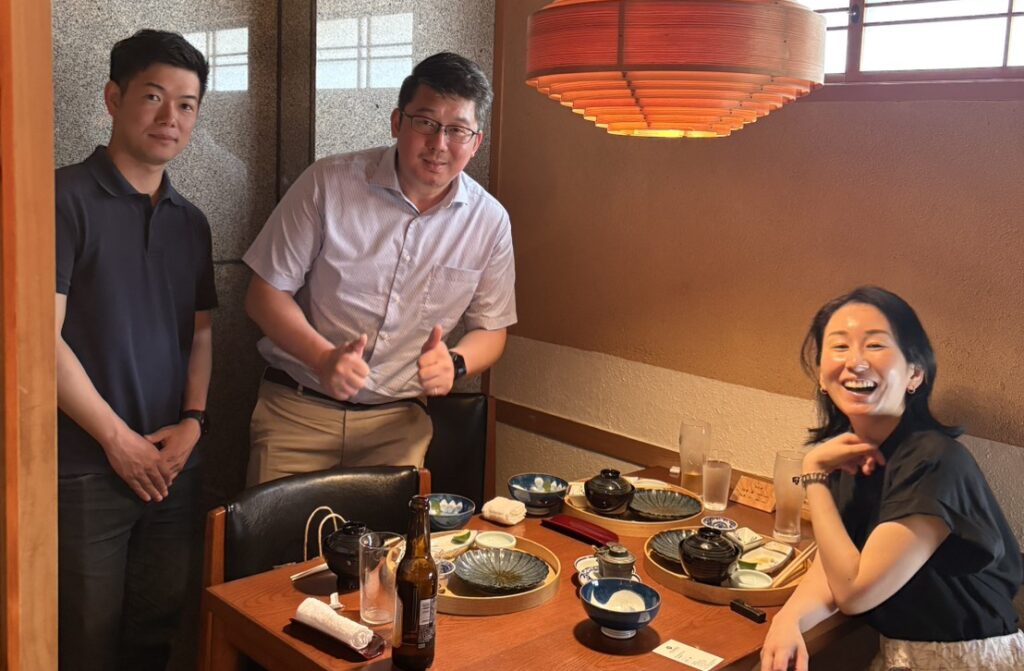
One of the people he is handing it to is Shibuya-san, who sat with us that day as our interpreter.
Shibuya-san holds a doctorate in fish immunology, and came from a world with no connection to whisky.
But across the screen of an online interview, Ian had a feeling about him.
“This person could become a very good next generation.”
And once he was in Japan, Ian put Shibuya-san through exactly the same nosing test he had taken at Kavalan.
Shibuya-san passed.
Just as Ian once began as good as an amateur, was found by his teacher, and walked the road.
Now Ian is the one who found Shibuya-san, and shows him the road.
Handing something on means passing knowledge, and just as much, finding the person you can pass it to. That moved me deeply.
KDI is now planning a distillery in Hokkaido as well as Komoro.
The Hokkaido site is said to be close to four times Komoro’s output.
What has been handed down is set to flower again, in place after place.
On planting trees
This is the part I wanted to write this article for.
Ian spoke about whisky like this.
“Whisky is the same as growing a tree. You decide to grow a tree for the next generation. When the tree grows large, people can enjoy its shade. What we are doing now is for future generations to enjoy.”
When you decide to plant a tree, you aren’t picturing yourself resting in its shade.
The one who enjoys that shade is someone you’ll never meet.
I think Ian has thought this way for a very long time.
Something happened last year that bears it out.
Visiting Glenfarclas with Shimaoka-san, their blender let him taste a 70-year-old whisky.
Seventy years. A length of time that makes the head swim.
“I will not live to see a 70-year-old from Komoro. However far medicine advances, it won’t happen. So it is for future generations to enjoy.”
That is what he said.
The blender who laid down that 70-year-old surely never made it to drink himself.
Seventy years ago, someone filled a cask for a generation they would never meet, and now, in this age, we get to taste it.
We are sitting in the shade of a tree someone planted seventy years ago.
That glass at Glenfarclas, I think, gave clear shape to something Ian had been carrying all along.
That what he is doing is planting trees after all.
Listening to this, I blurted out that it was the same for me.
Because I tell my guests the same thing all the time.
Whisky and rum taste better when you know the hearts behind them.
This whisky is a gift that crossed time — someone in the past entrusting their conviction, their intent, their stubbornness to the future — and that makes it precious.
I want people to taste all of that, whole.
Ian and I stand in completely different places.
A legend the whole whisky world looks up to, and the owner of a small bar in Hiroshima.
And still, we were looking at the same view.
Ian smiled and nodded.
“That is the same as our philosophy.”
Because life is short
When I asked what he enjoys most right now, he said: living in Japan.
Whenever he has time, he travels the country, going out to find views.
Lately he’s taken to Hokuriku, and goes almost every weekend.
His current obstacle is the language, and once production settles he wants to attend a language school in Tokyo or Saitama and learn Japanese.
There’s a line he’s been told all his life.
“Life is short. So enjoy it while you can.”
What I felt, listening to him, was that Ian is a deeply integrated person — the inside and the outside agree.
What he wants to do, and what he does.
What he believes in, and how he lives.
His intent, and his work.
Nowhere between them is there a gap, a fudge, or a strain.
He isn’t sacrificing himself for the work, and he isn’t bending his intent for the sake of a comfortable life.
Planting trees for the next generation is itself the way he is filled.
Inside and outside run cleanly through as one line.
It was the face of someone living at what Maslow’s five-stage hierarchy would call self-actualisation.
Not for a living, not for honour — the calm, steady fullness of someone doing what they genuinely ought to be doing.
He carries no contradiction, and so there’s no strain in him.
And I thought this, too.
I once wrote the following in another article.
Over that lunch, I finally understood why I’d felt that.
The respect and the integrity come from the same root.
Because there’s no contradiction anywhere in him, there’s no strain, and he can turn his respect on others directly.
From the hands of someone in harmony, a harmonious spirit comes.
How a maker is always shows up in the whisky, exactly as it is.
That Komoro spirit I was given before — its clarity, its beauty, was no accident.
On July 4
The story of Ian Chang is tied together, I think, by a single thread: what gets handed on.
Receiving from his teacher, raising it with his own hands, letting go with pain, and back to a new zero.
And now, becoming the one who hands it on.
In a forest at 910 metres, Ian is filling casks today for the next generation.
Planting trees, for someone he will never meet.
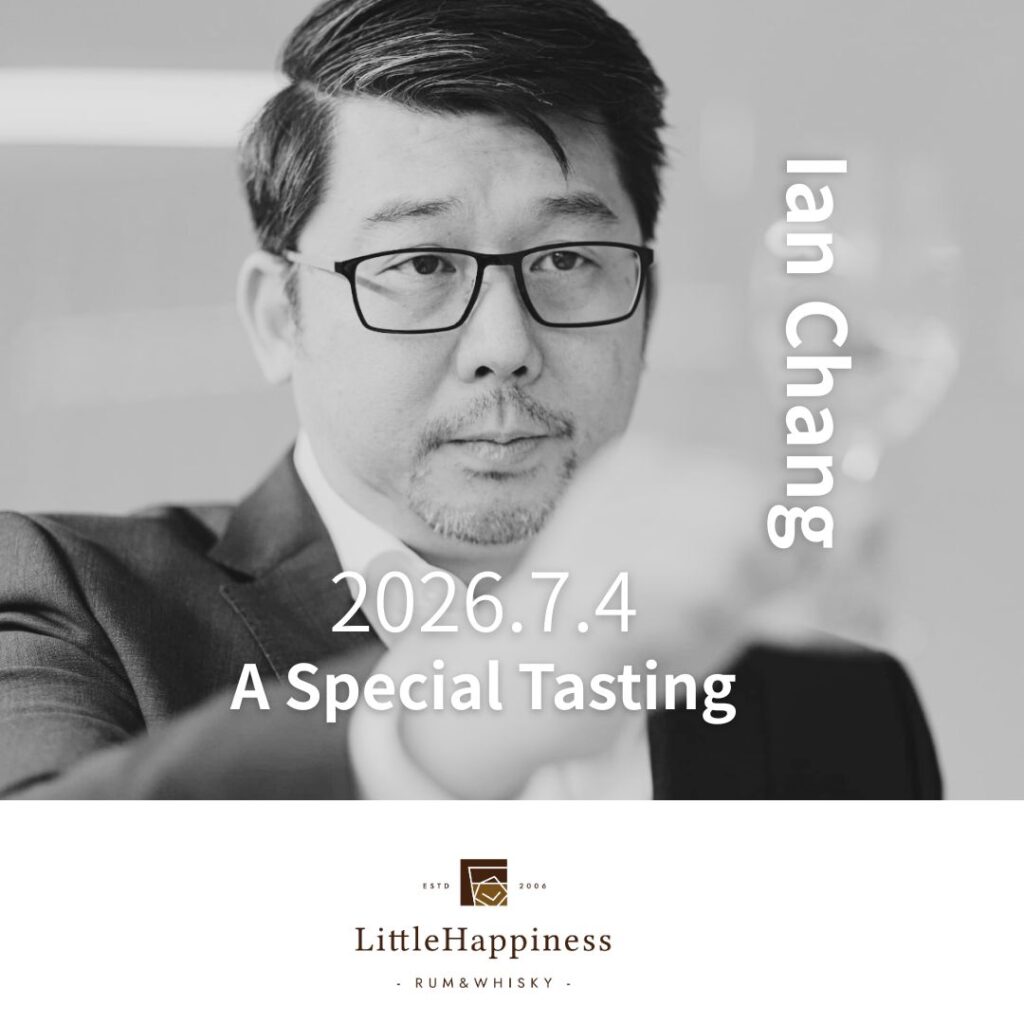
On July 4, we welcome him to Bar Little Happiness.
A night to taste the Komoro new-borns he made, with his own words alongside them.
It will be more than an evening of things tasting good.
Because a drink tastes better when you know the heart behind it!
To everyone holding one of those hard-won tickets.
Please enjoy this night to the absolute full!!
I suspect I’ll be the one whose heart is racing hardest, too happy to look after everyone the way I usually would…
Please go easy on me 🙏
And to everyone who couldn’t get a seat this time.
I’m truly, truly sorry. There weren’t enough seats.
But it’s all right.
I’ll take it on myself to write down everything this night moves in me, right here.
So please, look forward to it!!
His father’s illness, and knocking on the door of a Kavalan that happened to be near his home.
Meeting the romance of whisky inside a warehouse.
Finding a teacher in Dr. Jim Swan.
And at the end of all those roads, connecting with Komoro Distillery in Japan.
Each one looks like chance, and looking back, every one of them was a necessary part of a single line. There is a Japanese word for that, hitsuzen — the idea that something was always going to happen.
My going to Komoro, and Ian finding my blog — both look like chance, and both, I’m sure, were carried to us by whisky, and were always going to happen…
Every encounter is meant to be. Welcome to the world of Rum & Whisky.
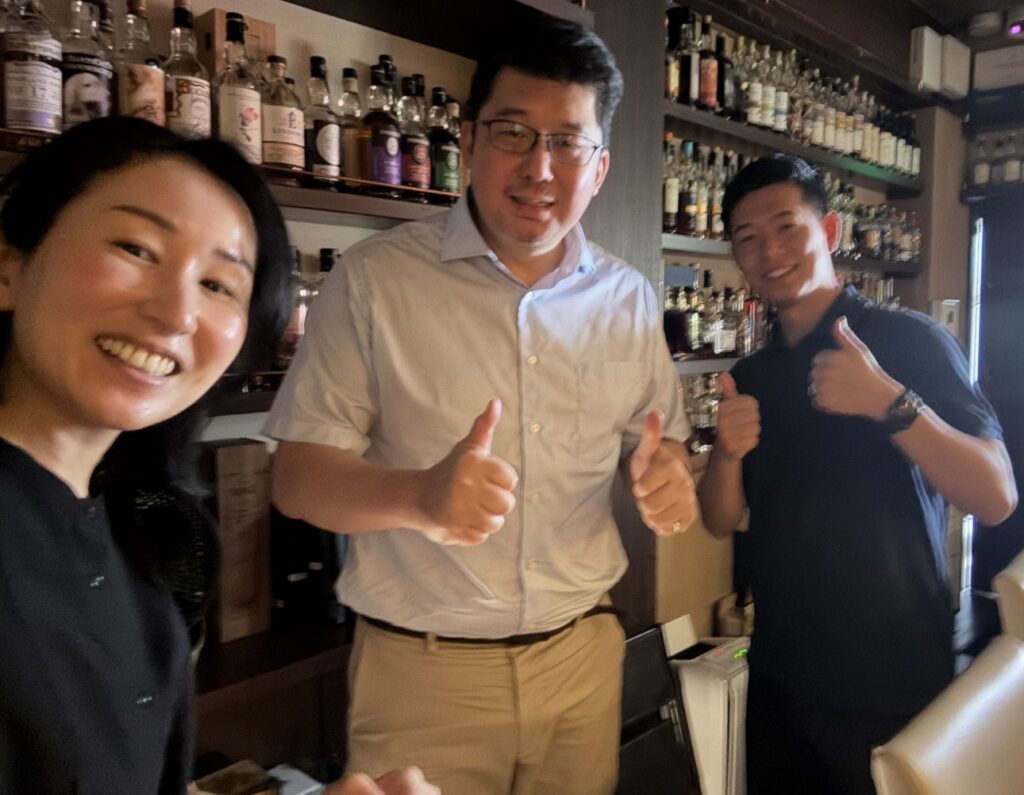
Bar Little Happiness / Notes on Whisky and Rum
Whisky and rum taste better when you know the hearts behind them.
And finally, to Shibuya-san, a blender of the future.
Thank you for translating all day, right down to the finest shades of meaning.
You must have been completely worn out.
The person who will carry what Ian passes on, and hand it to whoever comes next.
It’s thanks to you that I was able to receive these wonderful hours at all.
I’m looking forward to the day I get to drink a whisky you made 🥃
Related posts 🔗
What Kavalan is: Taiwan’s world-class whisky, and the story of Ian Chang
About the author
Mika Tanimoto
President, Little.m Inc. / owner-bartender
Owner of Bar Little Happiness, a rum and whisky bar in Hiroshima now in its twentieth year. Since opening in 2006, she has worked as a specialist in passing on what moves her about whisky and rum.
She visits distilleries around the world herself, and what she knows comes first-hand, from talking directly with the people who make the spirits. The back bar holds over 1,000 bottles, from rare and hard-to-find releases to Sakurao, made here in Hiroshima.
Enquiries via our official LINE.
📍 Bar Little Happiness
5-14-1F Nagarekawa-cho, Naka-ku, Hiroshima
Mon–Sat: 19:00–24:30 / Sun: until 24:00
(Last entry approx. 1 hour before closing)
Open almost every day of the year