A Letter to a Lost Rum: What Nine Leaves Left Behind
2026.8.14
At the foot of the Otowa mountains in Otsu, Shiga, one man built Honshu’s first rum distillery alone, and spent ten years taking it to the world.
Yoshiharu Takeuchi.
And Nine Leaves, the rum he raised, is no longer made there.
The distillery closed in 2023.
The year before it closed — in 2022 — an unlikely chain of connections let me visit.
Looking back now, I wonder whether he had already decided to stop.
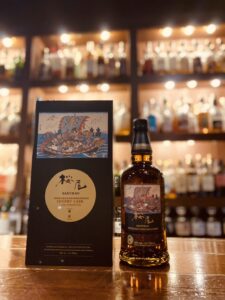
There are still a few bottles of Nine Leaves on the back bar here.
Every time I reach for one, I think of a man’s back, seen in the mountains of Shiga.
Honshu’s first rum distillery, against all odds
Say “rum in Japan” and people picture the tropics
Where do you picture rum being made in Japan?
Okinawa — Ie Island, Minamidaito, Miyako.
The Amami Islands in Kagoshima.
The Ogasawara Islands.
All sugarcane country. Rum is, by nature, made where sugarcane grows.
Nine Leaves set up in Otsu, Shiga.
Southwest of Lake Biwa, inland, in the hills. The middle of Honshu, where not one stalk of sugarcane grows.
This is where the first rum distillery on Honshu — the first on the Japanese mainland — was born, in 2013.
Why rum, and why Shiga
The answer is the water.
The distillery stands on Mount Iwama, at the foot of the Otowa range southwest of Lake Biwa. There is a mine here for feldspar, the mineral used in ceramic glazes.
Five hundred metres below that mine, from a single source, rises deep water of hardness 12 — extraordinarily soft.
Polished by feldspar acting as a natural filter, it is fine enough to be bottled and sold as mineral water in its own right.
Using water this soft as mash water is extremely rare in Japanese distilling.
When Takeuchi found this water, he decided there was nowhere else he could make it.
From car parts to rum: Yoshiharu Takeuchi
Carrying a family business founded in 1937
Takeuchi’s family firm, Takehiro Co., Ltd., is a long-established auto parts maker founded in 1937.
Through the war years and after, it supported Japanese manufacturing, supplying soundproofing and interior components to Toyota and other major carmakers — the kind of company that holds things up from underneath, known to those who know.
Takeuchi is the fourth generation. He worked in production management at a major carmaker before taking over as president of the company his grandfather started.
“Something I can see from end to end”
But at some point, he began to think this.
“I want to make something I can watch over from beginning to end. And I want to put the finished thing directly into the hands of the person who uses it.”
A car part is one piece of an enormous finished object.
There is pride in that work, but what reaches the customer is the car, not the part he made.
From that thought, he began casting about for something else to make.
And what he arrived at was distilling.
Why rum, and not whisky
This is where you see what he was made of.
“There are already many whisky makers and distilleries. Rum is drunk all over the world, and in Japan it still hasn’t broken through. That’s where I saw the possibility.”
The early 2010s, when Japanese craft whisky distilleries were beginning to appear one after another.
Rather than ride that wave, he bet on rum, which no one was doing.
That eye for the choice is exactly what set Yoshiharu Takeuchi apart.
A bloodline from Chichibu: rum raised by whisky culture
Studying under Ichiro Akuto
Having decided on rum, Takeuchi started from zero knowledge of distilling.
He gathered accounts from bartenders who had travelled the producing countries of Latin America, taught himself, and finally —
studied under Ichiro Akuto, founder of Chichibu Distillery and the man behind Ichiro’s Malt.
Any whisky drinker will understand what that means.
Ichiro’s Malt sits at the summit of Japanese craft whisky, a name collectors around the world long for. Takeuchi trained under Akuto, and learned a philosophy of distilling.
Which means the DNA of Japan’s finest craft whisky was poured into Nine Leaves, in the shape of rum.
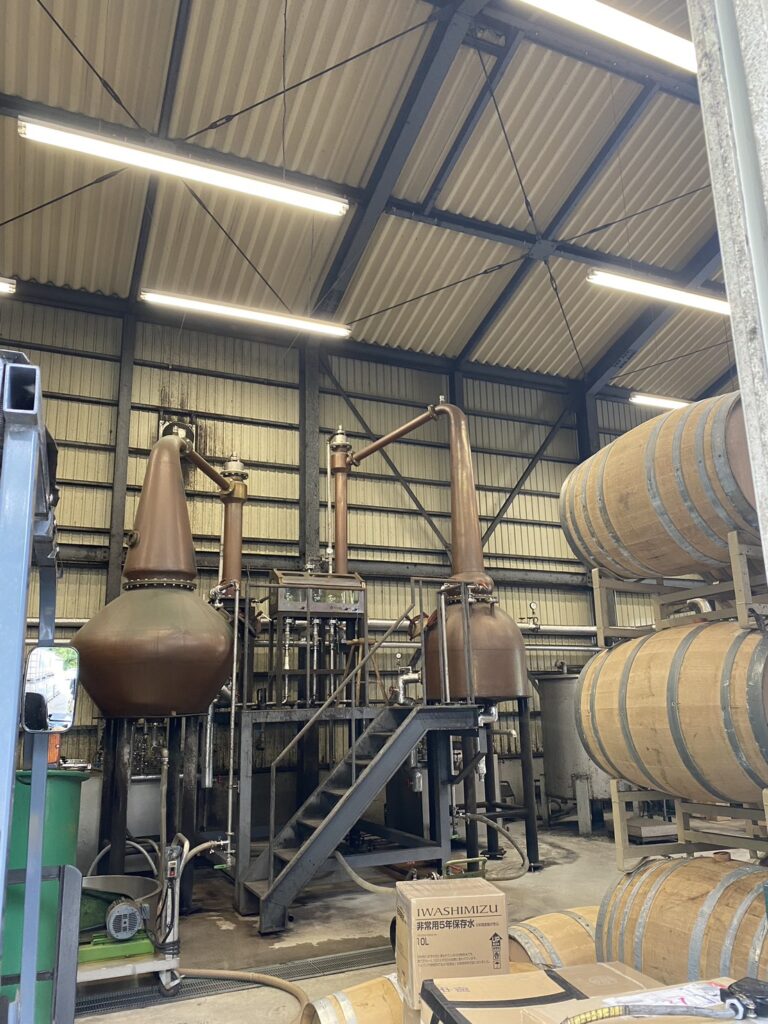
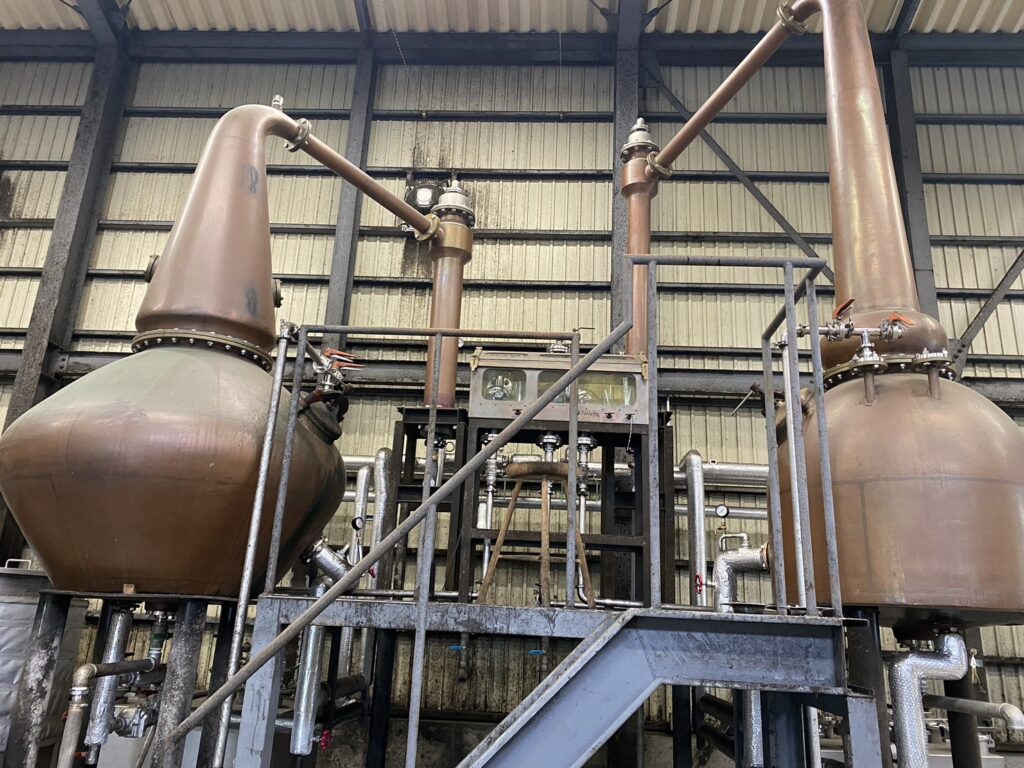
Two pot stills: one Chichibu, one Glenmorangie
The pot stills came from Forsyths, the great Scottish firm.
As whisky drinkers know, Forsyths supplies stills to the finest distilleries in the world.
And the shapes Takeuchi chose were these.
Wash still: designed after the pot stills at Chichibu Distillery.
Spirit still: designed after the pot stills at Glenmorangie.
He brought the traditional Scottish single malt method into the making of rum.
Why malt drinkers fall for this rum
The result is a rum with an entirely different face from the heavy tropical style.
The official notes for Clear read as follows.
Colour: completely clear, as the name promises. Nose: the bright, sweet aroma of the kokuto sugar it’s made from. Palate: soft, with real body. The thickness and depth only a pot still gives. Finish: short and clean. And — a faint note of ginjo-ka, the fruity aroma of premium sake.
That term is familiar to sake drinkers, and Nine Leaves may be the only rum in the world whose official notes use it.
In rum communities abroad, reviews of Nine Leaves often reach for “sake-like” or “reminiscent of Scottish single malts.”
Not the sweet, syrupy weight of a Caribbean heavy rum, but a style where the skeleton of the spirit stands forward — fine-grained and strong at once.
Whisky drinkers taste it, say “wait, this is rum?”, and fall in. That was the great pull of Nine Leaves.
Bar Little Happiness sets out to hold whisky and rum in both hands, and that is exactly why Nine Leaves mattered to me the way it did.
The materials: water of hardness 12, and kokuto from Tarama Island
Every material in a Nine Leaves rum was chosen with obsessive care.
Water: hardness 12, polished by feldspar in the Otowa range
The distillery stands at the foot of the Otowa mountains, southwest of Lake Biwa.
The water rising from beneath it has been polished by feldspar — the mineral used in ceramic glazes — and comes out at hardness 12, extraordinarily soft.
The official Nine Leaves description puts it this way.
“Ultra-soft water of hardness 12, polished by the feldspar of Shiga’s Otowa mountains.”
Even within Japanese distilling, water this soft is very rarely used for mashing. Free of minerals and microorganisms, that clean water is what held up the fineness of the rum 🥃
Sugar: kokuto from Tarama Island, Okinawa
The other lead player: kokuto, unrefined black sugar from Tarama Island in Okinawa.
Tarama is a small island in the Miyako group, known among those who know for its sugarcane and its black sugar.
Caribbean rum is built on molasses or cane juice; Nine Leaves mashed with whole, unrefined black sugar — a style rare anywhere in the world.
Takeuchi explained it like this.
“I wanted to cut out the variation and the rough notes that come with cane juice and molasses, and draw out a purer, more refined sweetness.”
Yeast: a selected Japanese strain
The yeast running the fermentation was a carefully selected Japanese strain. Fermentation ran about four days, relatively long for rum, and that too was set to draw out finer aromatics.
The world takes notice: a Japanese rum arrives
Silver at RHUM FEST PARIS 2014
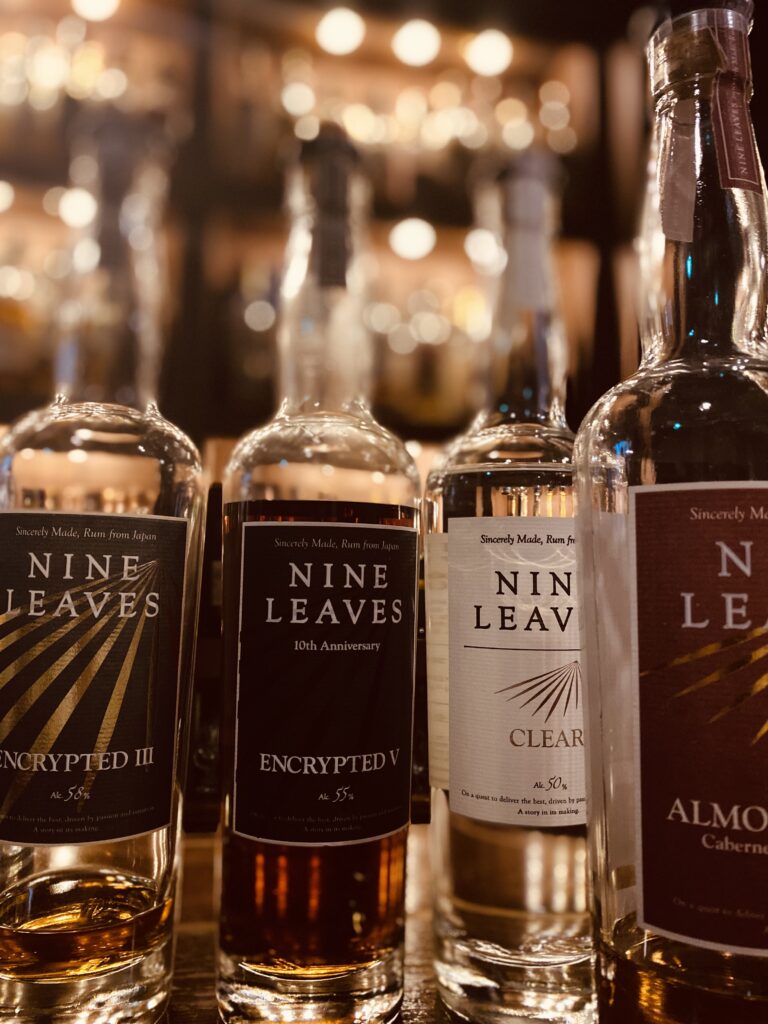
The first Nine Leaves bottle, Clear — a white rum at 50% — was released in July 2013.
Just a year later, in 2014, it took silver in the innovation category at RHUM FEST PARIS, one of the great rum gatherings of the world.
The first international award for a rum made in Japan.
Even the 50% strength was deliberate.
“Fifty per cent is the threshold at which Europe takes a spirit seriously. I set it there to send a Japanese rum out into the world.”
That choice of strength shows how squarely he had the world market in view.
ANGEL’S HALF, and ALMOST SPRING
From there, Nine Leaves sent out one compelling rum after another.
ANGEL’S HALF
A cask-matured series in American oak and French oak
Spirit that came through Japan’s hot summers and cold mountain winters
The first shipment was named “the angels’ share, shared back”
ALMOST SPRING
Finished in a range of casks: PX sherry, red wine, cabernet sauvignon
A name for the moment just before spring arrives
ENCRYPTED
Four matured rums blended, then matured again in bourbon casks
Cask strength at 58%
As the name suggests, layer upon layer of aroma and flavour
Cask types, blend combinations, maturation periods. Every one of these bottles was worked out by trial and error, by one man’s hands, and sent out into the world.
2022, the day I visited Nine Leaves
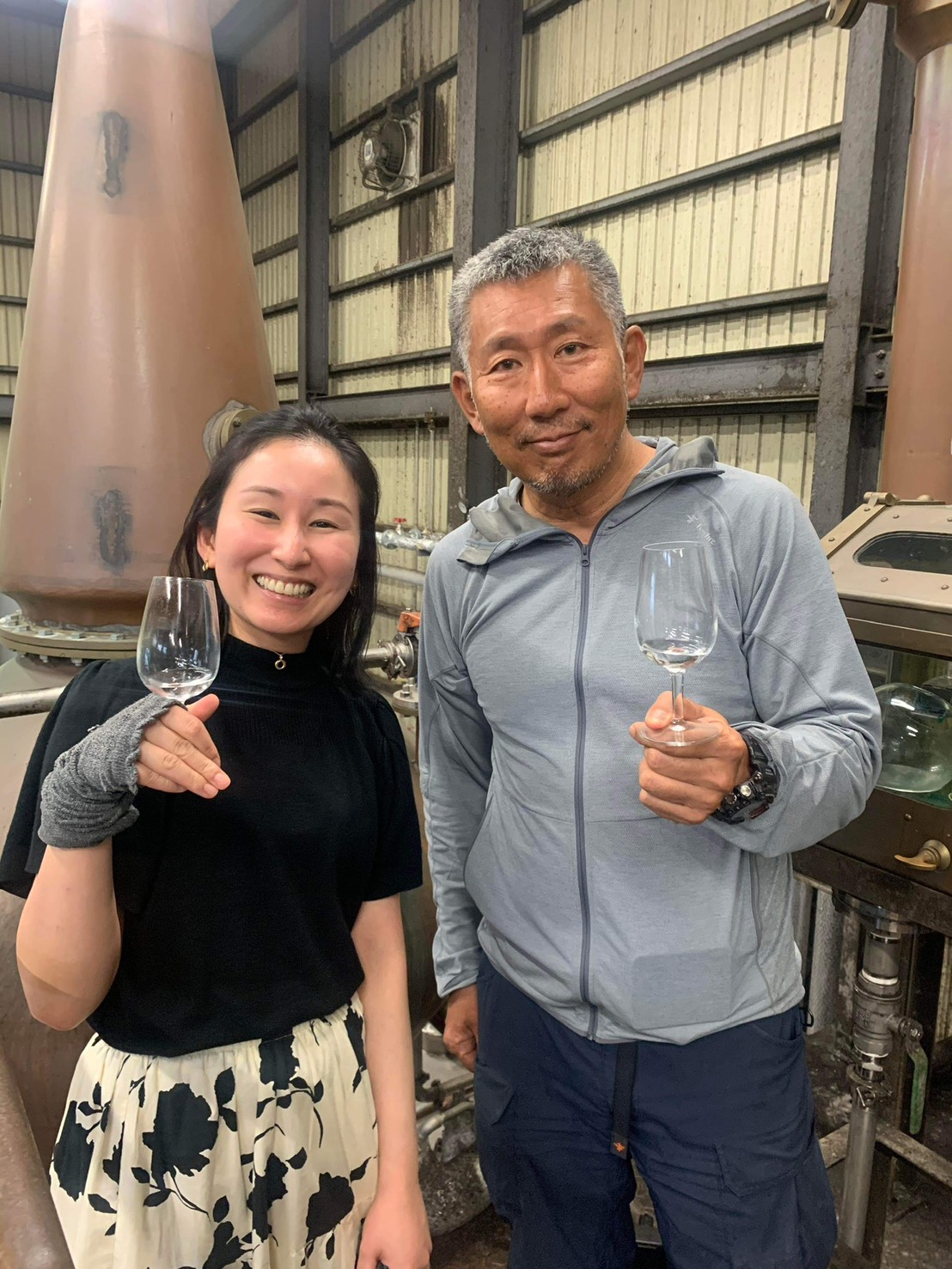
From here, let me write as myself — Mika Tanimoto of Bar Little Happiness — about what I remember.
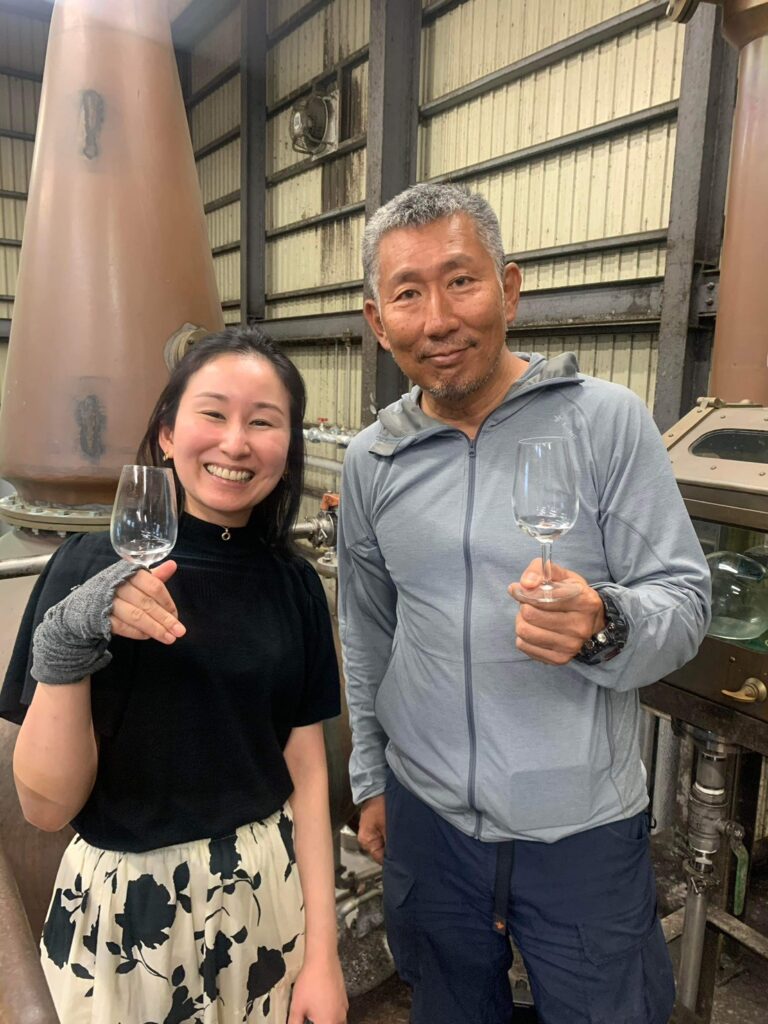
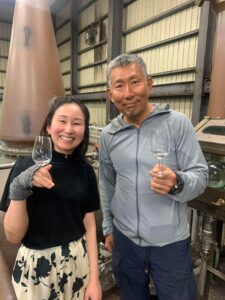
I visited Nine Leaves in 2022.
Only a year, it turns out, before it closed.
I had been turned down more than once
Nine Leaves didn’t take visitors.
Takeuchi did every part of the work himself, and there was nothing left over for showing people around.
Which is entirely reasonable.
I had asked a few times over the years, and been turned down each time.
Someday, maybe. I kept wishing it, and kept pouring Nine Leaves at my counter.
One phone call
One evening.
I was drinking with a friend who had founded a distillery here in Japan, and Nine Leaves came up.
I said I loved that rum, and that they wouldn’t have me. My friend said he’d give them a call.
And he rang Takeuchi, right there.
Probably the two of them were close enough that saying no was awkward.
Whatever the reason, that kindness got me through the door I’d wanted to walk through for years.
A connection between two people who run distilleries carried me into the hills of Shiga. I was, and am, grateful for it.
An empty distillery, and a cat to meet me
The first thing that surprised me when I got there was that there really was no one.
No guide. No one to show me round. No office staff, no staff of any kind.
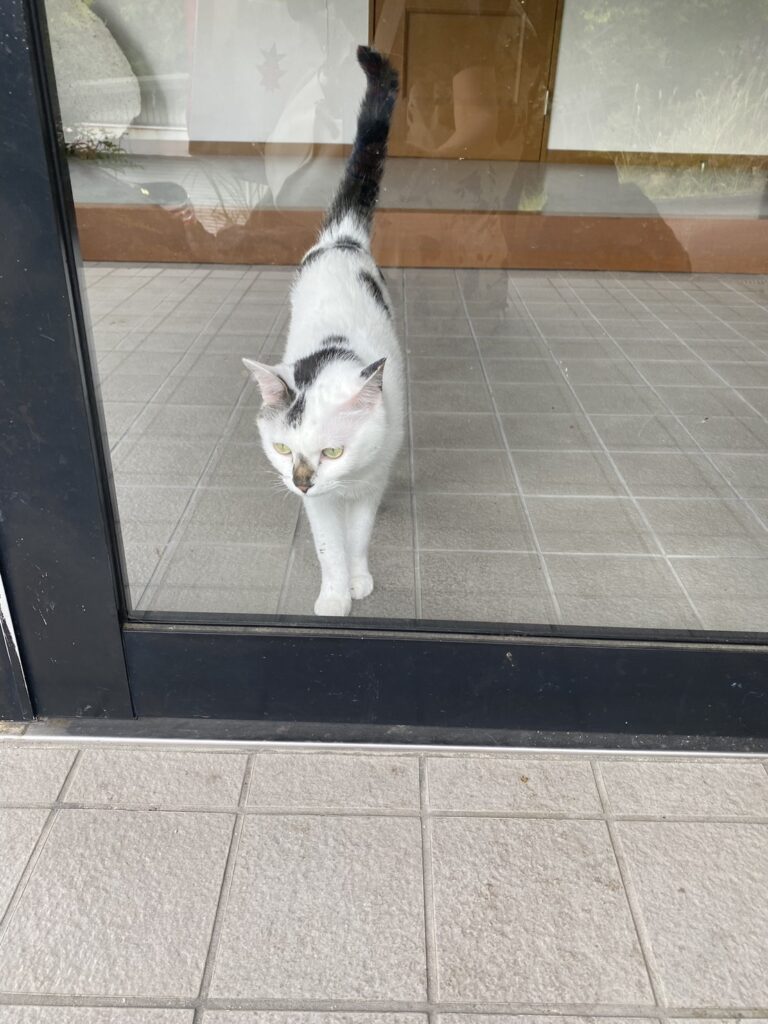
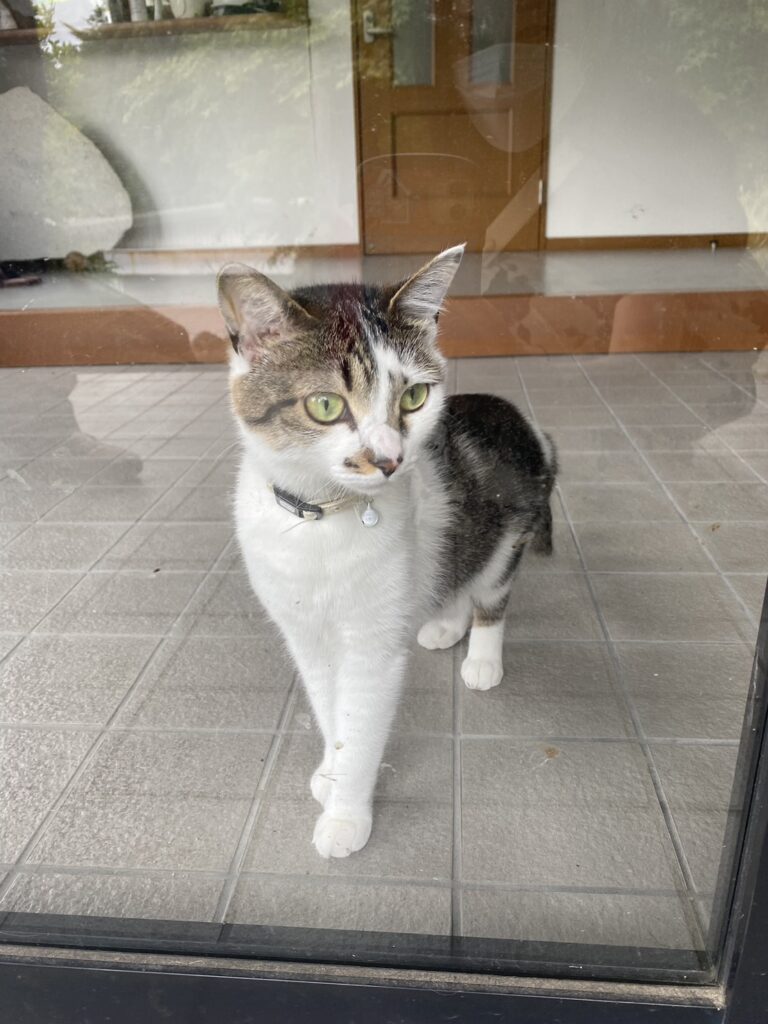
What met me was a cat.
It wandered out and stood there like a gatekeeper.
So this really is a place where one person does everything.
That was the moment it landed.
A small shrine at the edge of the grounds
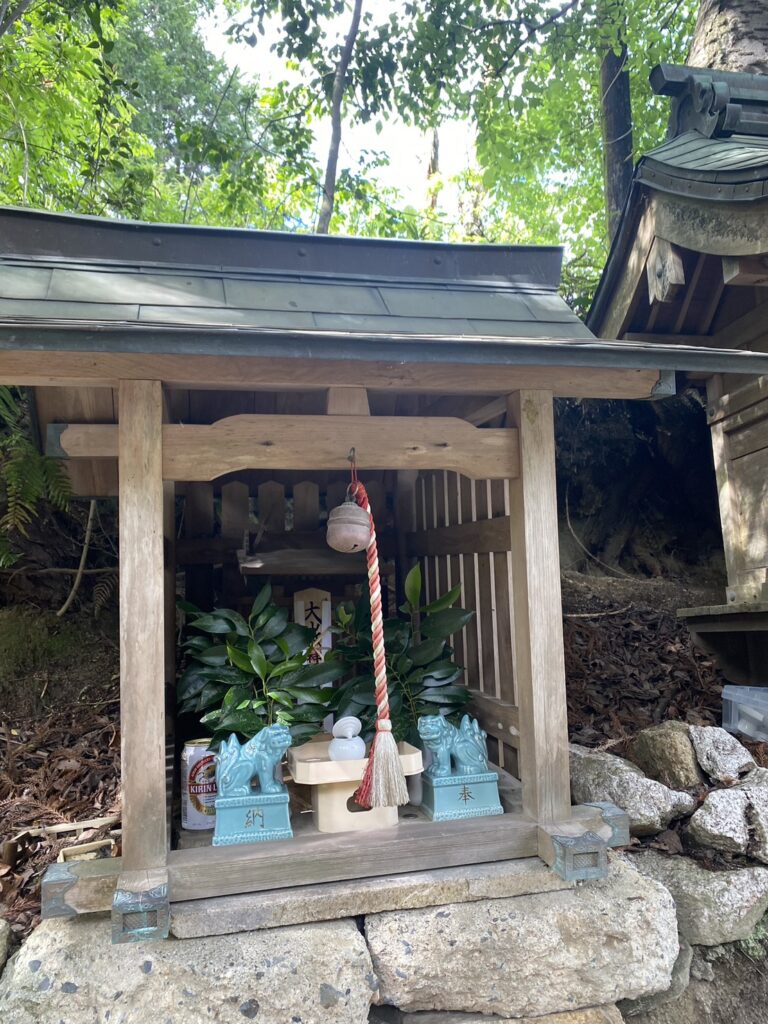
Walking the grounds, something caught my eye: a small shrine.
Places where things are made have a tradition of housing a god. In a sake brewery you will almost always find somewhere to pray to the god of brewing.
Takeuchi, carrying all of it alone, may have put his hands together here every morning and every night.
Imagining that, something went very quiet inside me.
The middle cut
And then the most startling thing of the whole visit.
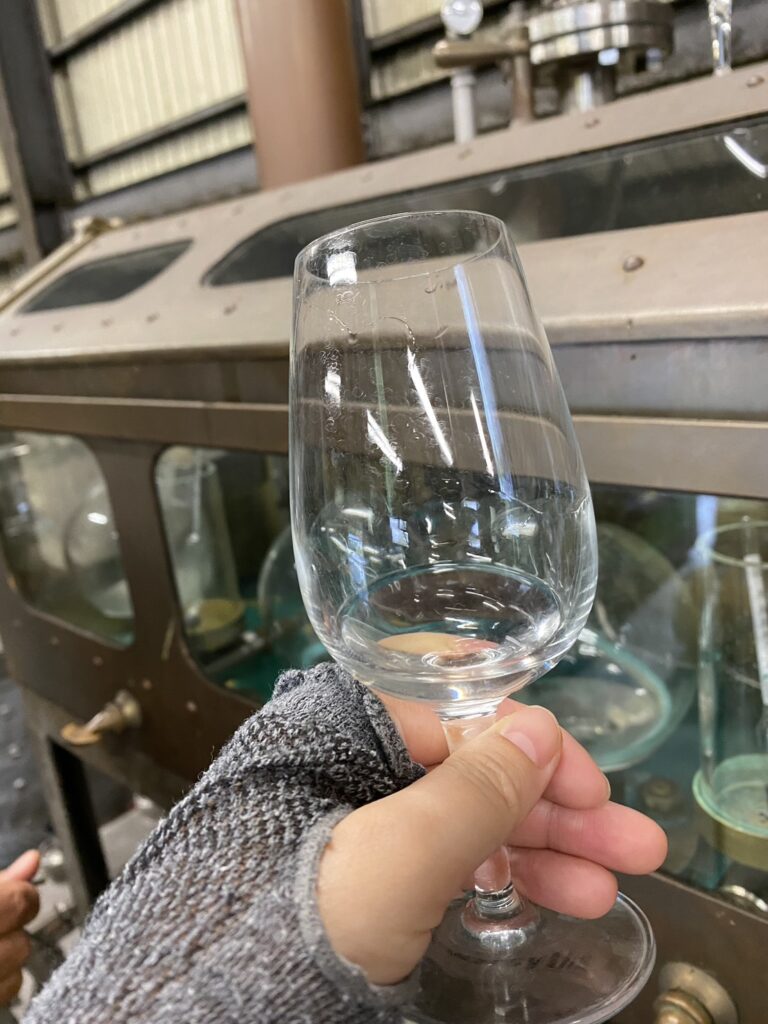
He let me taste the middle cut as it came off the still.
In spirits made on a pot still — whisky, rum — what comes off during distillation is divided:
Heads (foreshots): highly volatile alcohol, full of rough notes
Hearts (the middle): the best of it, the part that becomes the product
Tails (feints): strength drops, heavy congeners increase
— separated out along the timeline like this.
This is called cutting.
At Nine Leaves, the timing of that cut was the single most important step, deciding the flavour of every rum.
Takeuchi divided even the middle cut into finer sections, and had me taste them. I remember something like ten stages.
The further the distillation ran,
the brightness of the aroma
the thickness of the sweetness
the weight of the alcohol
the length of the finish
— all of it changed until it might have been a different spirit altogether.
The same still, the same run, and this much difference.
Astonished, I understood in my body how finely he had been judging that cut.
At rum distilleries around the world, that judgement is surely made by several people, arguing it out. Takeuchi made it alone, every single time.
Tasting through those cuts was the first time I understood what that weighs.
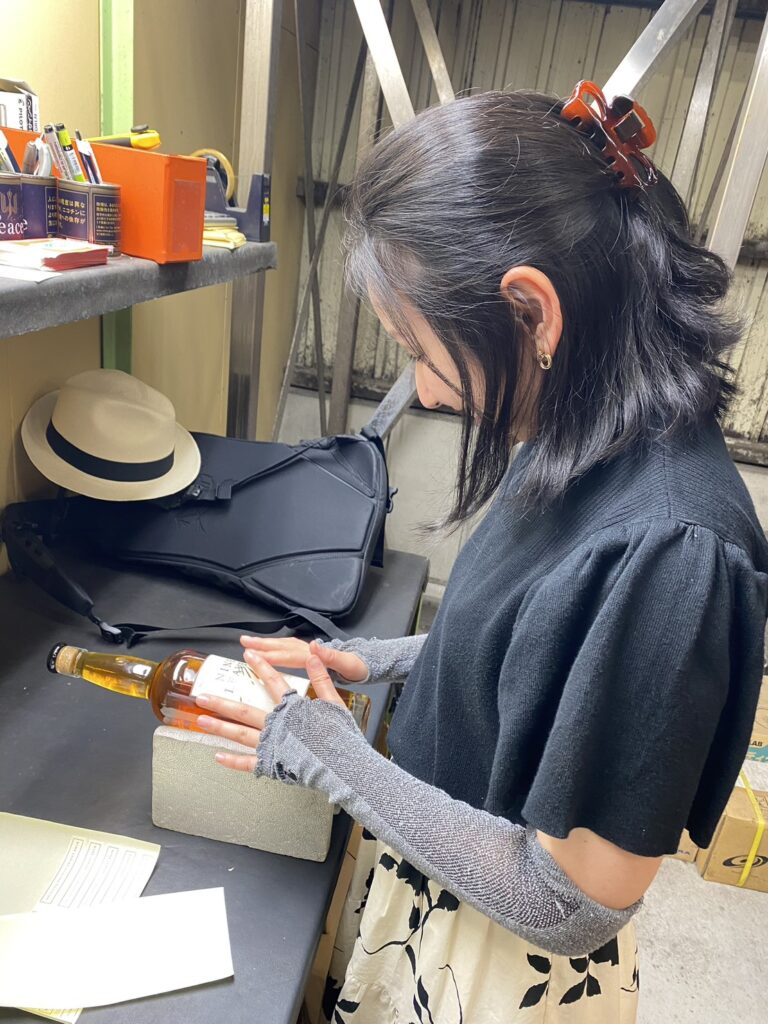
I stuck the label on myself and carried it home
At the end of the visit, he asked if I’d like to take a bottle home, and handed me one.
It had no label on it yet.
He held out the label and told me to stick it on myself, so I did, right there, and carried the bottle back to Hiroshima.
It’s still with me, one of the things I hold onto from all these years.
“Perhaps he had already decided to stop”
A year after my visit, when I heard that Nine Leaves had closed at the end of 2023 —
I looked back, and thought this.
By then, I think, he had already decided to stop making rum, and had already decided where the rum would go.
He had refused visitors so firmly for so long, and then, even for a friend’s direct call, he said yes.
Perhaps —
I have no way of knowing.
This is only what I felt, as the person who was there.
But the air of the distillery that day, the warmth of the cat, the quiet of the shrine, every drop of those cuts — all of it made a day I cannot forget and would not trade.
End of 2023: a quiet closing
Committing more deeply to the family business
The end of 2023. Nine Leaves closed, ten years after it began.
All along, Takeuchi had run Nine Leaves alongside his position as fourth-generation president of Takehiro Co., Ltd., the auto parts maker founded in 1937 that supplies Toyota.
In 2023, according to several industry sources, the family business needed more of him, and he could no longer give himself to rum.
Rum: the project that was his own dream. And a family history running since 1937, and the lives inside it.
Weighing the two, he chose the family history.
“The reasons remain partly a mystery”
The Italian firm La Maison & Velier put it this way in their own account.
“The reasons for the closure remain partly a mystery. But one thing is certain. The legacy Nine Leaves left behind will never disappear.”
There may be something there that the public facts alone don’t reach.
What we are left with are the bottles — beautiful ones, that have held rum drinkers around the world.
Velier steps in: an Italian house receives a Japanese legacy
La Maison & Velier: a legendary importer in rum
A few months after Nine Leaves closed.
It was announced that Velier, headquartered in Genoa, had bought every maturing cask Nine Leaves held, along with the final distillation.
Velier is one of the most influential companies in rum anywhere. Its CEO, Luca Gargano, is a legendary figure, sometimes called the Indiana Jones of rum.
Caroni: turning a closed distillery into a legend
There is one story above all that made Velier’s name.
Caroni Distillery, in Trinidad and Tobago.
Founded in 1918, Caroni held up Trinidad’s sugar industry for decades. The sugar arm closed in 2002, and the distillery followed officially in 2003.
Then, December 2004.
Luca Gargano travelled to Trinidad with the photographer Fredi Marcarini, and walked through the gates of a ruined Caroni.
There, led by a local Trinidadian woman, he opened the door of Warehouse No. 1 —
and found 18,000 casks, sleeping, forgotten by everyone.
Gargano bought a portion of them — about 1,600 casks — and from 2005 began releasing them under the Velier label.
This was the beginning of what became known as Caronimania, one of the great cult phenomena in the history of rum.
Casks from a ruin became legendary bottles that collectors worldwide fight over, now trading at auction anywhere from several hundred thousand to several million yen apiece.
What the alchemist of dead distilleries saw in Nine Leaves
After Caroni, Velier went on unearthing closed and little-known distilleries around the world.
Introducing Haiti’s clairin distilleries to the world
Lifting Jamaica’s Hampden from an unknown bulk producer to a cult name
Exclusive bottling agreements with the Demerara distilleries of Guyana
And this same Velier saw the same future in a closed Japanese distillery called Nine Leaves.
An ally Takeuchi called himself
According to industry reports, once Takeuchi had decided to close, he called Luca Gargano — someone he already knew — to the distillery himself, and entrusted him with everything.
The equipment, those Forsyths pot stills, was later shipped to France. The maturing casks stay in Japan, to be bottled in turn by Velier. That is the future that was settled.
I imagine what he wanted was this.
To place ten years of casks he had raised into the most trustworthy hands in the world.
The Nine Leaves still here at Bar Little Happiness
You can still taste it at my counter
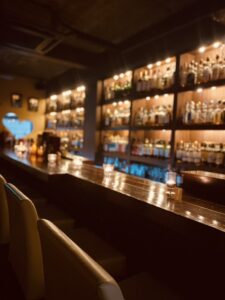
As of 2026, there are still several bottles of Nine Leaves on the back bar here.
Every one of them is a rum that will never be made again.
And the bottle I labelled with my own hands in Shiga and carried home is kept safe here too.
Epilogue: what Nine Leaves left us
Ten years, against the odds
2013 to 2023. Just ten years.
And in those ten years, Nine Leaves rewrote the history of rum in Japan entirely.
As Honshu’s first rum distillery, it overturned what geography said was possible
With a single malt method, it opened a new category within rum
One man alone produced a craft rum that stood up anywhere in the world
It proved a Japanese rum could win awards in Europe
And it entrusted its future to Velier, a legendary importer
In closing
Yoshiharu Takeuchi.
You chose to commit more deeply to your family’s business, and stepped away from making rum. I hold that decision in the deepest respect.
And thank you, truly, for ten years of showing the world what Japanese craft rum could be.
For your kindness that day in 2022, letting me into a distillery that took no visitors.
The bottle I labelled and carried home is still one of my treasures.
Nine Leaves goes on living in my memory, without question.
And through Velier, that legacy will keep reaching rum drinkers around the world, for years and decades to come.
Bar Little Happiness wants to remain one of the people who tell that story.
Whisky and rum taste better when you know the hearts behind them.
Every encounter is meant to be. Welcome to the world of Rum & Whisky 🥃
*※ This article is built from what I saw and heard when I visited Nine Leaves, from what I already knew, and from research done since. Some of it reflects my own personal view.
📍 Bar Little Happiness 5-14-1F Nagarekawa-cho, Naka-ku, Hiroshima Mon–Sat: 19:00–24:30 / Sun: until 24:00 (Last entry approx. 1 hour before closing) Open almost every day of the year
A range of Nine Leaves bottles is available to taste. And you can hear about that 2022 visit at the counter. Reservations and enquiries via our official LINE 🥃
Mika Tanimoto President, Little.m Inc. / owner-bartender
Owner of Bar Little Happiness, a rum and whisky bar in Hiroshima now in its twentieth year. Since opening in 2006, she has worked at passing on what moves her about whisky and rum.
She visits distilleries around the world herself, and what she knows comes first-hand, from talking directly with the people who make the spirits. The back bar holds over 1,000 bottles, from rare and hard-to-find releases to Sakurao, made here in Hiroshima.