
Komoro Distillery: New Make That Smells of Peaches, and Water That Takes Fifty Years to Surface
2026.8.15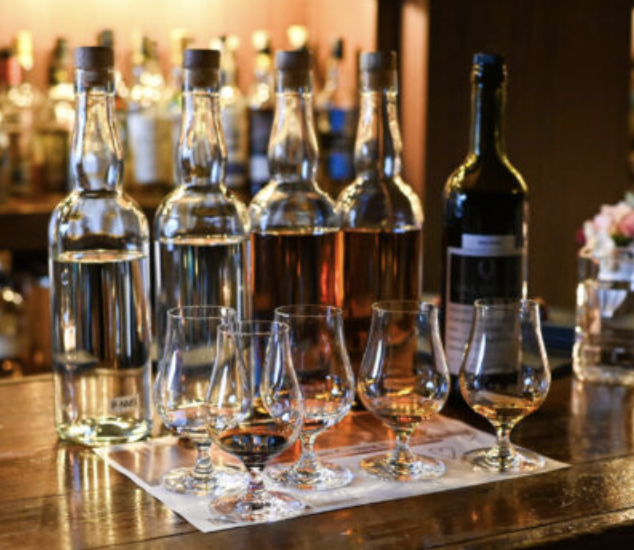
Part 1 was about the connections that made this evening happen.
Part 2 turns to the real subject — Komoro Distillery’s whisky itself, one glass at a time.
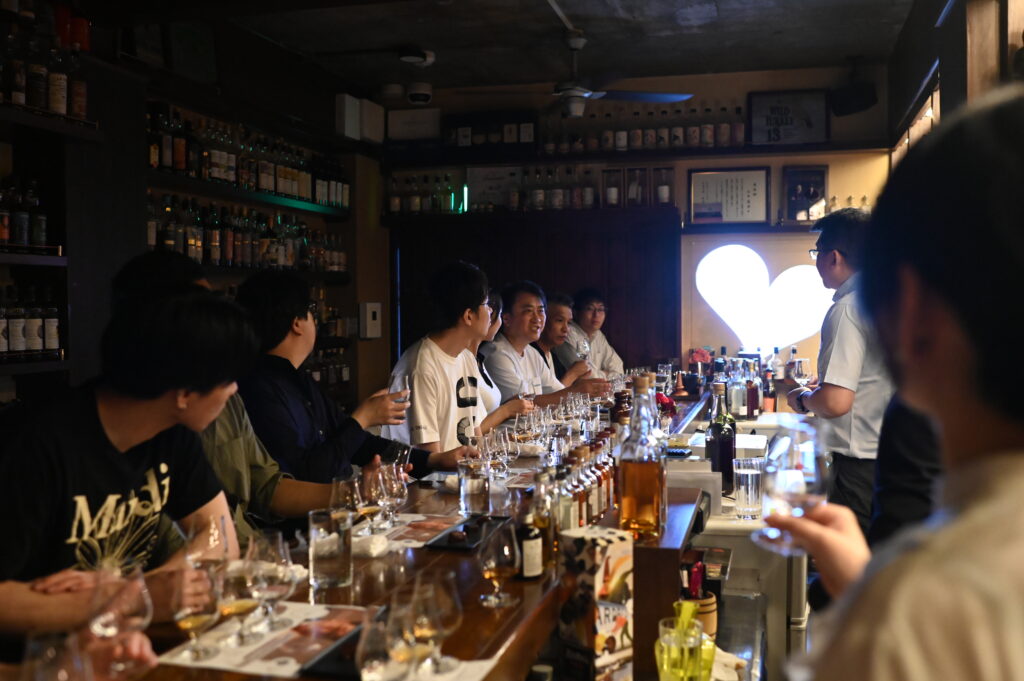
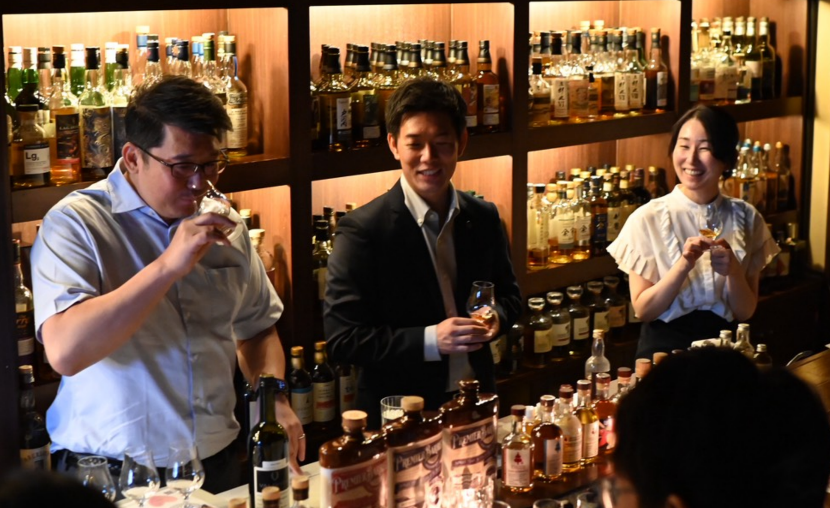
Lined up along the counter at Bar Little Happiness: unpeated new make and its matured version, peated new make and its matured version, and finally a special sherry plus two we’re keeping quiet about.
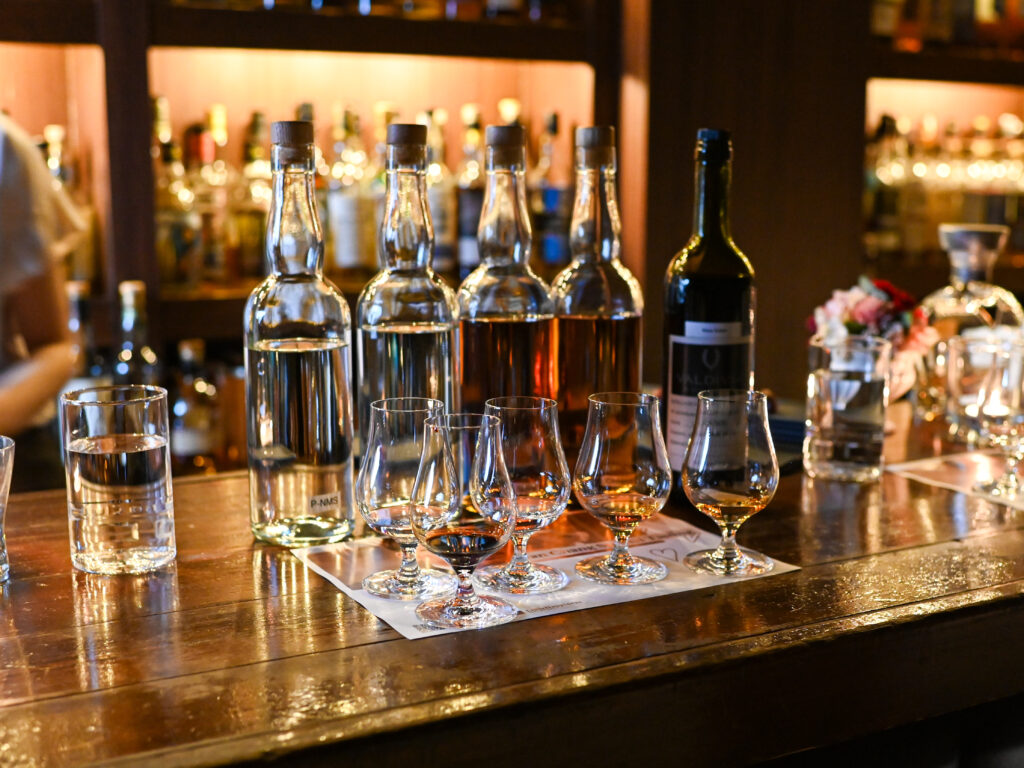
This time, the way in — the unpeated new make, and the water at Komoro.
A gentle, mellow new make
The first glass was the unpeated new make.
Reduced to 46%, with almost no alcohol bite to it.
New make often has something sharp about it, enough to catch the nose.
Komoro’s is startlingly gentle.
Ian describes it as being like ripe fruit.
Peach leads. Then strawberry. The freshness of green apple, and a citrus note like kiwi.
Hold the glass a little further off and there’s lychee hiding behind it all.
In the mouth, a toasted biscuit quality from the malt. And a sweet finish.
That sweetness is a strange thing.
Nothing has happened to it yet but fermentation and distillation. So why is it sweet?
It’s the natural sweetness alcohol carries.
Almost no sugar survives distillation, and yet there it is, faintly sweet.
The scientific explanation is that alcohol stimulates the sweetness receptors. But a distillate with no sugar in it tasting this gently sweet — that strangeness is part of what makes new make worth drinking.
Gentle enough to drink as it is, with no maturation at all. That’s Komoro’s new make.
That gentleness begins with the malt
Where does that gentleness come from?
The foundation is the malt.
Komoro sources its malt from England.
They compared several before choosing the one with the higher starch content.
Starch becomes sugar, and sugar becomes alcohol — it’s the ground the whole spirit stands on.
Choosing a malt with more starch in it. Komoro’s whisky begins with that decision, at the level of a single grain.
The peach comes from the yeast, and the fermentation
“Nagano is known for its peaches — is that what you’re aiming at?“
Someone asked that from the room. And it’s true, Nagano is peach country.

But the main secret behind that peach quality is the particular yeast Komoro uses.
Fermentation runs 72 hours. Three full days.
The last 10 to 15 hours of that are given over to lactic fermentation.
A particular yeast, and a fermentation given plenty of time.
Those two things are what draw that fruit out of the new make.
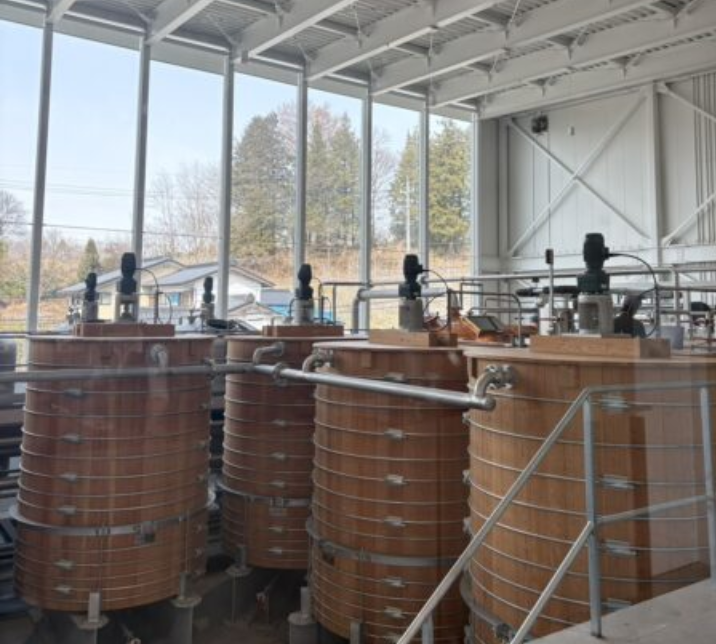
(↑ Photographed on our visit to Komoro. Wooden washbacks, with the stainless ones behind.)
The water that spent fifty years waiting for him
You cannot talk about Komoro’s whisky without talking about the water.
The distillery sits at 910 metres on the flank of Mount Asama, an active volcano rising to roughly 2,500 metres.
On his first visit, Ian saw what always sits over the summit and took it for cloud.
It wasn’t cloud. It was smoke rising off a live volcano.
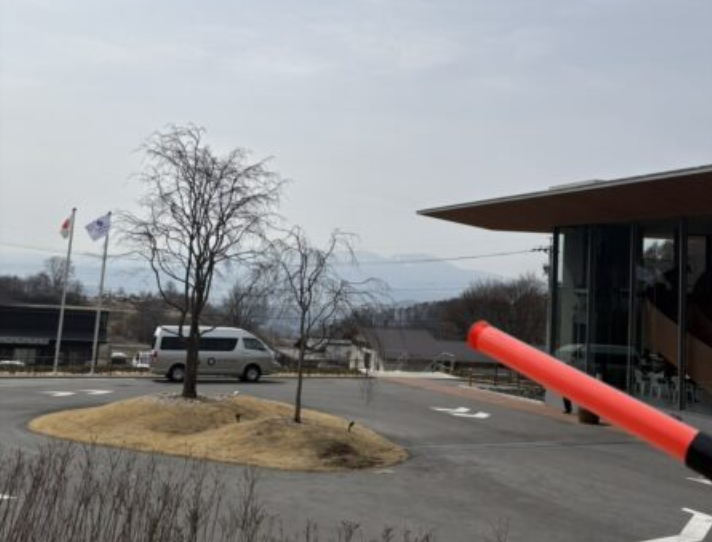
(↑ On our visit, a member of staff in the car park pointed and told us that was Mount Asama.)
Water from that summit takes about fifty years to make its way down to this ground.
Fifty years of filtering through the earth, arriving as hard water, thick with minerals.
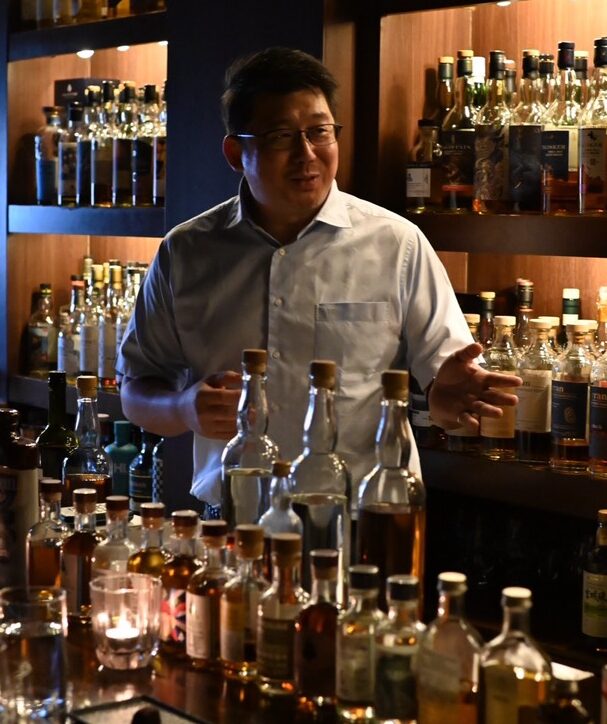
Why hard water?
Ian gets asked that often.
His answer was unambiguous. For the fermentation.
The minerals in hard water do a great deal for the yeast.
Not only the yeast — for the other microorganisms involved in fermentation, they act as nutrition, the way vitamins do for us.
So if you want to raise the level of your fermentation, you need hard water.
There’s one part of the water story I love most.
Ian came to Japan and joined the company in 2020.
He was 46 then. He’s 52 now.
The water off Mount Asama takes fifty years to surface.
“Fifty years to come through means I’m working with water from around the time I was born.“
“Maybe I was born to come to Japan.“
He said it with a mischievous grin.
As though that water had been waiting here for him all along.
The first glass of new make, then the malt, then the water.
This much story, and we haven’t even reached maturation.
And what makes Komoro genuinely interesting starts from here.
Part 3 looks at what this new make becomes once it’s been in cask.
A new-born that takes on startling colour in under two years, gentle peat burned at Christmas, and a philosophy of maturation that runs: summer is sandpaper, winter is oxygen.
— The Komoro Distillery / Ian Chang tasting series —
Previous ← Part 1: Whisky was the language between us
Next → Part 3: Gentle peat at Christmas, and a philosophy of maturation
From a tasting evening with Ian Chang of Komoro Distillery. Bar Little Happiness / Mika Tanimoto
📍 Bar Little Happiness
5-14-1F Nagarekawa-cho, Naka-ku, Hiroshima
Mon–Sat: 19:00–24:30 / Sun: until 24:00
(Last entry approx. 1 hour before closing)
Open almost every day of the year
Reservations and enquiries via our official LINE 🥃
🔗 Online shop: https://shop.little-happiness.jp/
I did hire a photographer, and almost every shot came out blurred and unusable…
If anyone out there knows how to rescue photos like that, I’d be glad of the help!