
Ryuka Ghost Series #26|Okinawan Whisky, Chosen at a Tokyo Bar
2026.8.15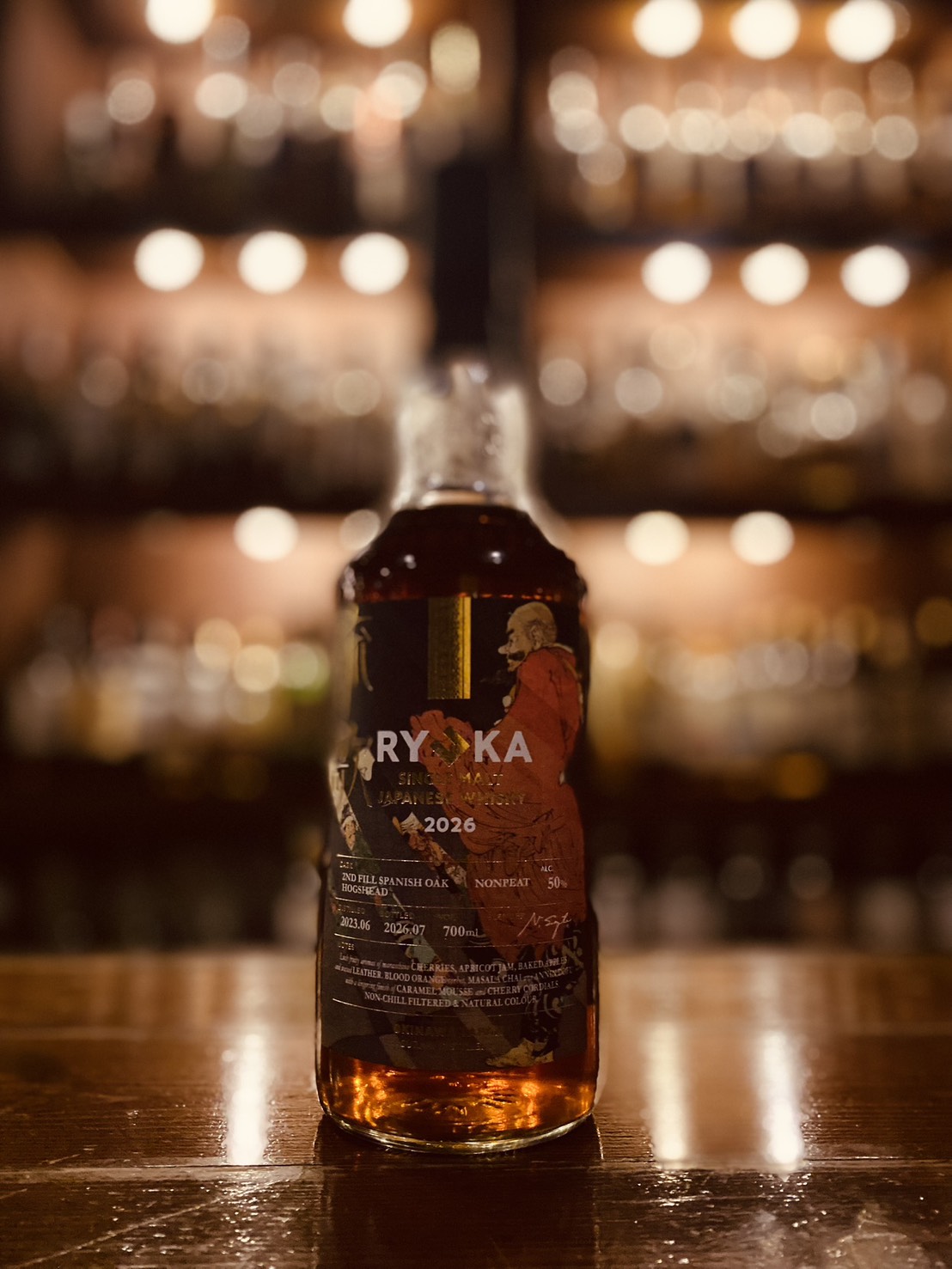
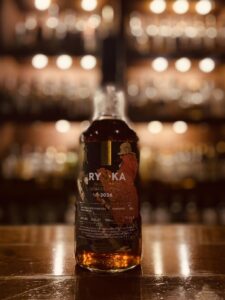
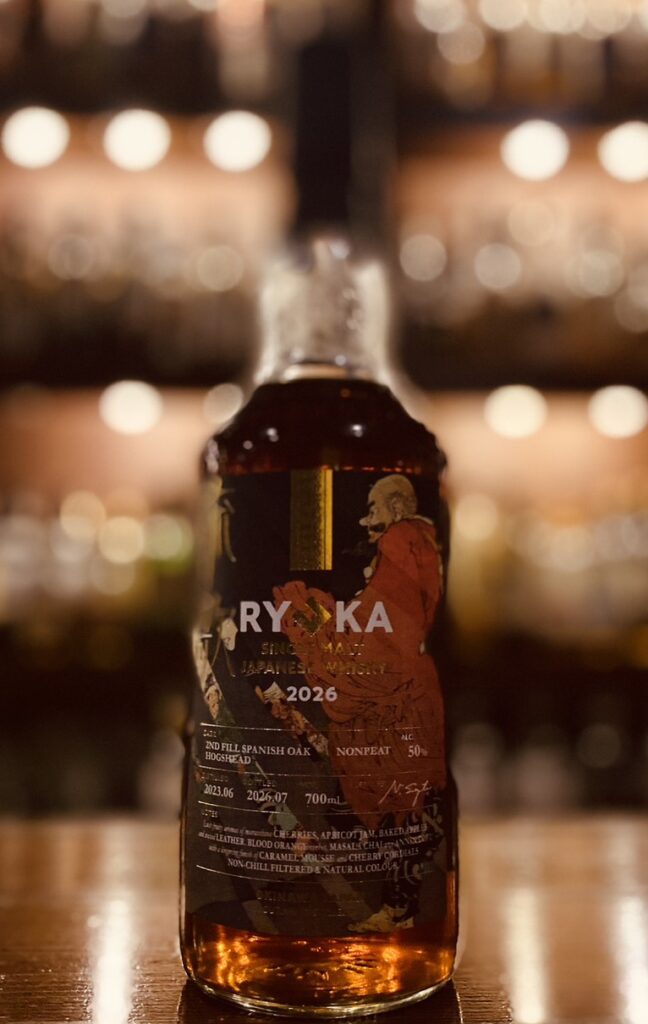
Ryuka, Ghost Series #26. Spanish oak, unpeated, limited to 328 bottles.
A whisky made in Okinawa, with a warlord from Hiroshima on the label.
Takakage Kobayakawa.
Third son of Motonari Mori, and the man who built Mihara Castle.
Through a chain of connections, that bottle has come to Bar Little Happiness.
Okinawa joins the Ghost Series
A little background, for anyone who doesn’t know the series.
There is a Belgian-born writer named Stefan Van Eycken.
Author of Whisky Rising.
Editor of Nonjatta, for years the definitive English-language source on Japanese whisky.
Japan editor for Whisky Magazine UK.
On the Japan panel for the World Whiskies Awards.
And the organiser of the whisky charity event Spirits for Small Change.
Since 2013, Stefan has been running the Ghost Series.
What the series looks for isn’t simply a good cask, but one that shows a side of the distillery its regular bottlings don’t — unexpected, and particular to itself.
Not the usual face. A side the distillery itself hadn’t yet put out into the world.
Every label comes from Yoshitoshi Tsukioka’s New Forms of Thirty-Six Ghosts.
Ghost prints by the man often called the last of the ukiyo-e masters, working through the end of the Edo period into the Meiji era.
Karuizawa, Chichibu — the series has lined up some formidable names.
And now Okinawa has joined them.
For a distillery no one had heard of, that is genuinely unusual.
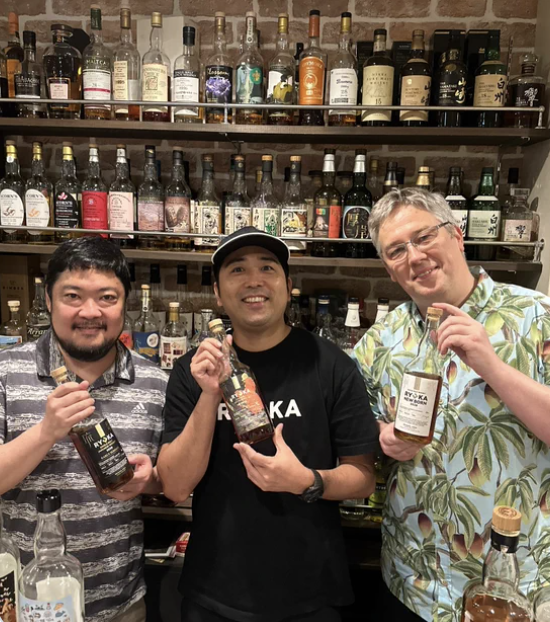
(Image via social media)
A blind tasting one night in Ikebukuro, and how the cask was chosen
It started in August 2025.
Someone from Suzaki Distillery walked into Aloha Whisky Bar in Ikebukuro, Tokyo.
They had two cask samples with them.
One of them stood out, with an aroma like blood orange, and its place in the series was decided on the spot.
A second-fill Spanish oak hogshead. Unpeated malt.
A cask that had held sherry once, now on its second use.
The wood doesn’t push forward the way new oak or a first fill would, so the fruit of the spirit itself comes through plainly.
And no peat smoke laid over it at all.
The choice was made by Stefan and David Tsujimoto of Aloha Whisky Bar.
It was picked to mark the 30th edition of Aloha Whisky Rising, the tasting event the two of them have been running together.
Decided right there.
At a bar counter, across a single sample, this is what happens.
I love this story.
Someone from a distillery puts a sample bottle in a bag, gets on a train, opens a door, pours — and a life changes right there.
The whisky world still runs at that kind of distance, hand to hand.
The waiting, and the strength they took off
When it was chosen, the spirit had been in cask a little over two years.
To be called Japanese whisky, it needs three full years.
That’s the voluntary standard set by the Japan Spirits & Liqueurs Makers Association in 2021, fully in force since April 2024.
In Okinawa’s climate, maturation moves fast.
At two years, they say, it was already there.
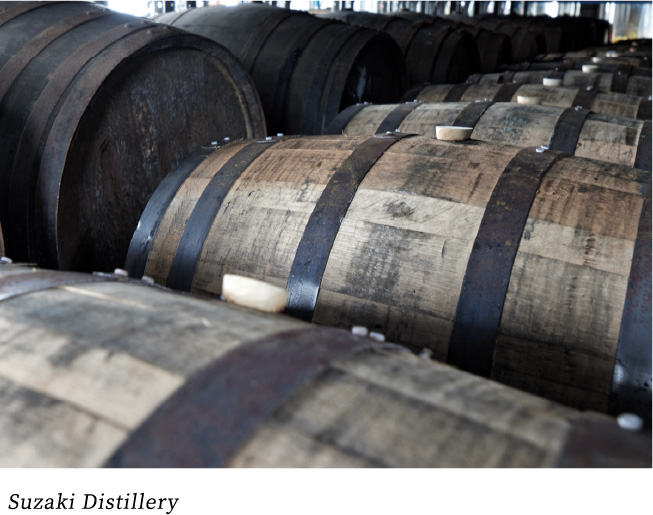
(Image via the distillery website)
At cask strength it was 64.2%.
In March 2026 they prepared three versions — cask strength, 57%, and 50% — and the distillery’s blender, Stefan, and Aloha Whisky Bar tasted them blind together.
All three chose 50%.
An angels’ share of 10% a year means the cask is giving up its components at extraordinary speed.
Three years there is nothing like three years on the mainland. At 64.2%, undiluted, it must have been enormously concentrated.
Which would have been wonderful in its own right.
I’d have loved to try it.
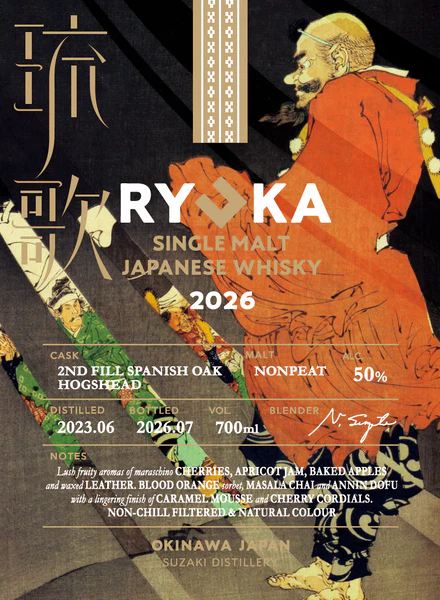
It reached three full years at the end of June 2026, and was bottled in early July.
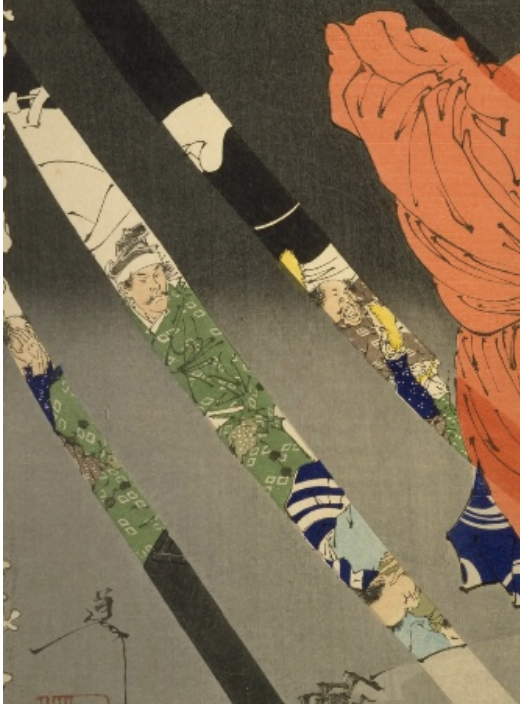
The label chosen was Takakage Kobayakawa Debating the Tengu of Mount Hiko.
One print from New Forms of Thirty-Six Ghosts, the late series by Yoshitoshi Tsukioka, the great ukiyo-e artist of the closing Edo and early Meiji years.
Toyotomi Hideyoshi had decided to invade Korea, and needed warships in quantity.
What he set his eye on for timber were the great camphor trees of Mount Hiko.
He ordered Takakage to go and fell them.
Mount Hiko is the kind of place where the mountain itself is an object of worship.
Naturally, the monks who guarded it were reluctant.
Takakage talked them round, and got his permission to cut.
And then it happened.
A gust of wind, and a great tengu appeared.
“From the day this mountain was made until now, no one has ever felled this tree. To cut it is an evil act, fearing neither gods nor buddhas.”
Takakage answered him.
Lord Hideyoshi governs this country in the Emperor’s stead. Mount Hiko lies within that country. To defy his order is to defy the country itself.
Takakage won the argument.
And from that day, the story goes, the great camphor trees were gone from Mount Hiko.
The print shows that exchange.
The tengu large in the foreground.
Behind him, lines running to show the wind, and through the gaps between them, Takakage and his men, small.
Suzaki Distillery
The whisky is made at Suzaki Distillery, part of Shinzato Shuzo.
Founded in 1846, it’s held to be the oldest surviving awamori distillery in Okinawa.
They began making whisky in 2020.
① A very high angels’ share
Over 10% a year.
In subtropical Okinawa the cask gives up its character powerfully and fast — and the contents disappear just as fast.
Someone once called it the distillery most loved by angels in all of Japan.
② A long fermentation
Where two or three days is normal, they run six or seven. Double.
The yeast finishes its work in the first two days; after that it becomes time for lactic bacteria to grow the fruit notes.
Which is to say they take twice as long as anyone else to build aroma.
③ A custom-built mash tun
The mash tun that draws the sweet liquid from the barley wasn’t made by a specialist whisky equipment firm, but by a manufacturer within Okinawa.
The stills are Italian.
Ryuka Ghost Series #26: tasting notes
Nose — maraschino cherry, apricot jam, baked apple, and a rich fruitiness with something of worked leather about it.
Palate — blood orange sorbet, masala chai, almond tofu.
Finish — long, with caramel mousse and cherry cordial sitting comfortably on it.
I’d love to get to Suzaki myself one day.
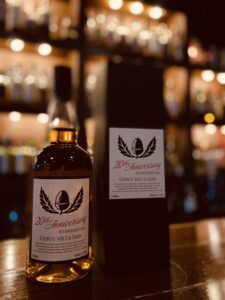
This year, Bar Little Happiness turned twenty.
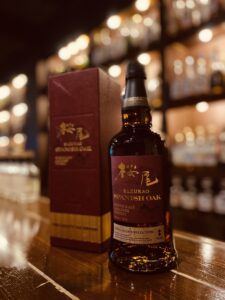
We released two 20th anniversary bottlings under the name “Traveling Lito” — one from Sakurao, one from Ichiro’s Malt.
I wanted them on the shelves of bars I’d long looked up to, so I got in touch out of the blue.
People I had never met.
No way of knowing whether anyone would reply. Reaching out took more nerve than I’d like to admit.
Aloha Whisky Bar was one of them.
Whisky and rum taste better when you know the hearts behind them.
Every encounter is meant to be. Welcome to the world of Rum & Whisky.
📍 Bar Little Happiness
5-14-1F Nagarekawa-cho, Naka-ku, Hiroshima
Mon–Sat: 19:00–24:30 / Sun: until 24:00
(Last entry approx. 1 hour before closing)
Open almost every day of the year
Reservations and enquiries via our official LINE 🥃
Latest updates on Instagram Stories ⭐️
🔗 Online shop: https://shop.little-happiness.jp
【About the author】
Mika Tanimoto — President, Little.m Inc. / owner-bartender
Owner of Bar Little Happiness, a rum and whisky bar in Hiroshima now in its twentieth year.
Since opening in 2006, she has worked as a specialist in passing on what moves her about whisky and rum.
Her knowledge runs across the back bar’s 1,000-plus bottles, from rare and hard-to-find releases to Sakurao, made here in Hiroshima.
• More than one bar: alongside the main bar, she owns and runs a casual sister venue, the Rum & Whisky Highball Bar.
• Online: an online shop sending selected bottles across Japan in small measures.
• Writing: her column, Notes on Whisky and Rum, distilled from twenty years behind the bar.