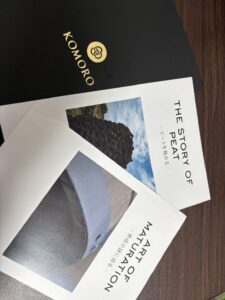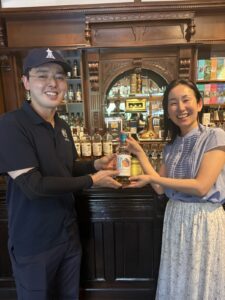

Komoro Distillery Whisky Academy: Peat, Maturation, and a Whisky World That Grows the More You Learn
2026.11.05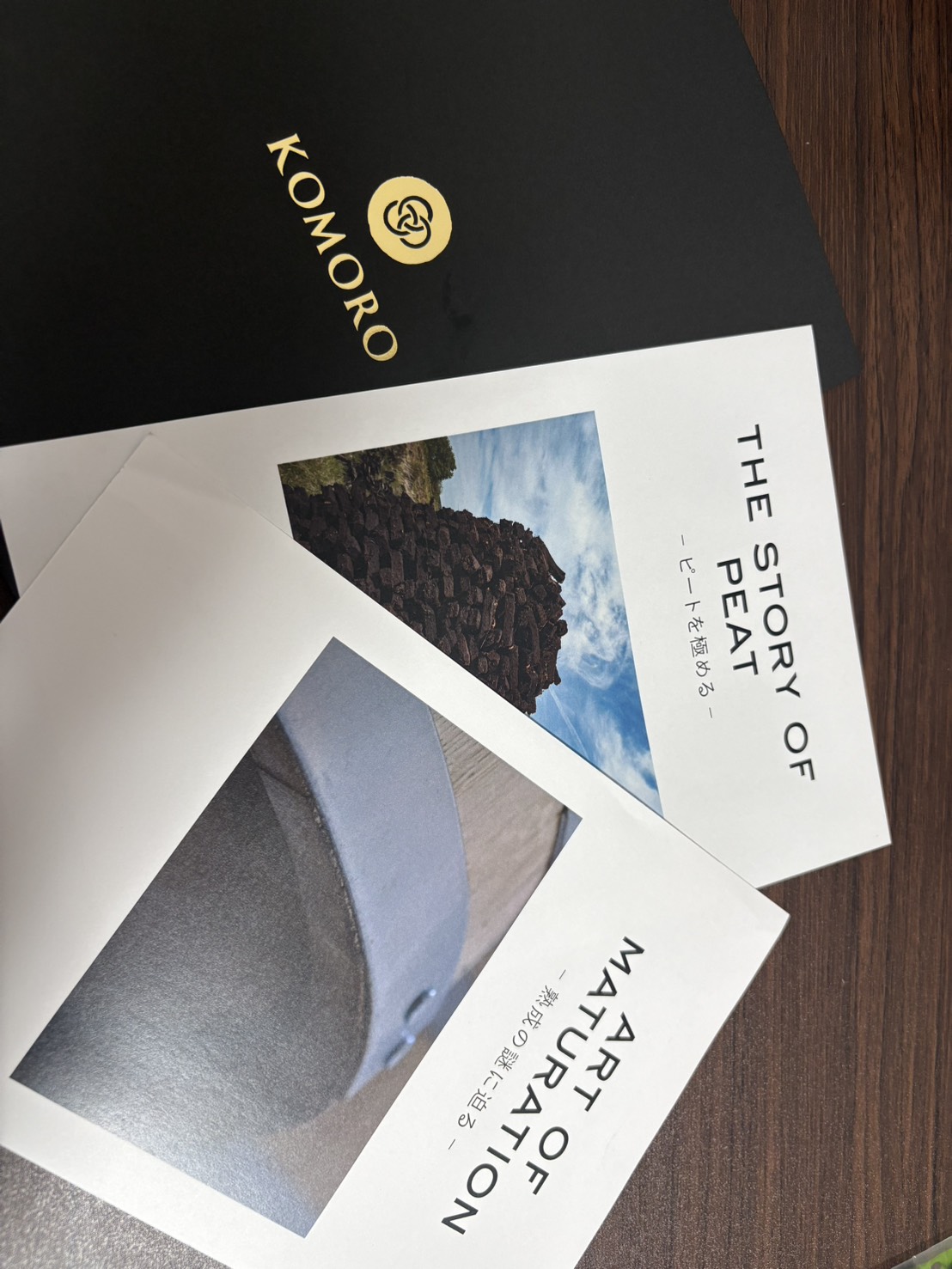
In short: I took two courses at Komoro Distillery’s Whisky Academy in Nagano — “The Story of Peat” (advanced, seven whiskies tasted blind) and “Art of Maturation” (intermediate, five whiskies). Each runs about 60 minutes and includes a tour of the production floor. Here is what the classes were like, what I learned about PPM, casks and maturation, and who I think should go.
I attended the Whisky Academy held at Komoro Distillery in Nagano Prefecture.
This time I took two courses: “The Story of Peat,” about peat, and “Art of Maturation,” about maturation.
In these courses you learn about whisky production and maturation in depth, with blind tastings along the way.
Each main session lasts about 60 minutes, and a tour of the production floor is included.
Here I share what the courses covered, how difficult they were, the atmosphere of the venue, and what I felt as a student — from my own perspective.

To Komoro Distillery, Ahead of Its First Release
November 2026.
I visited Komoro City, Nagano, for Komoro Distillery’s first release, “KOMORO ORIGIN.”
One of the things I was most looking forward to on this trip was the Whisky Academy.
When I visited Komoro Distillery before, I didn’t even know it existed.
Later, someone told me about it, and when I looked it up I found courses on all kinds of themes, including peat and maturation.
I had to take one!
The day I wanted was fully booked, so I moved my trip forward by a day and arrived in Komoro early.
A Beautiful Room for Learning, Overlooking the Pot Stills
First of all, the venue was wonderful.
The courses are held in a room that looks out over the production area through a wall of glass.
You learn about whisky while looking down on the pot stills.
As evening falls and it gets dark outside, the spotlit pot stills seem to float up beautifully.
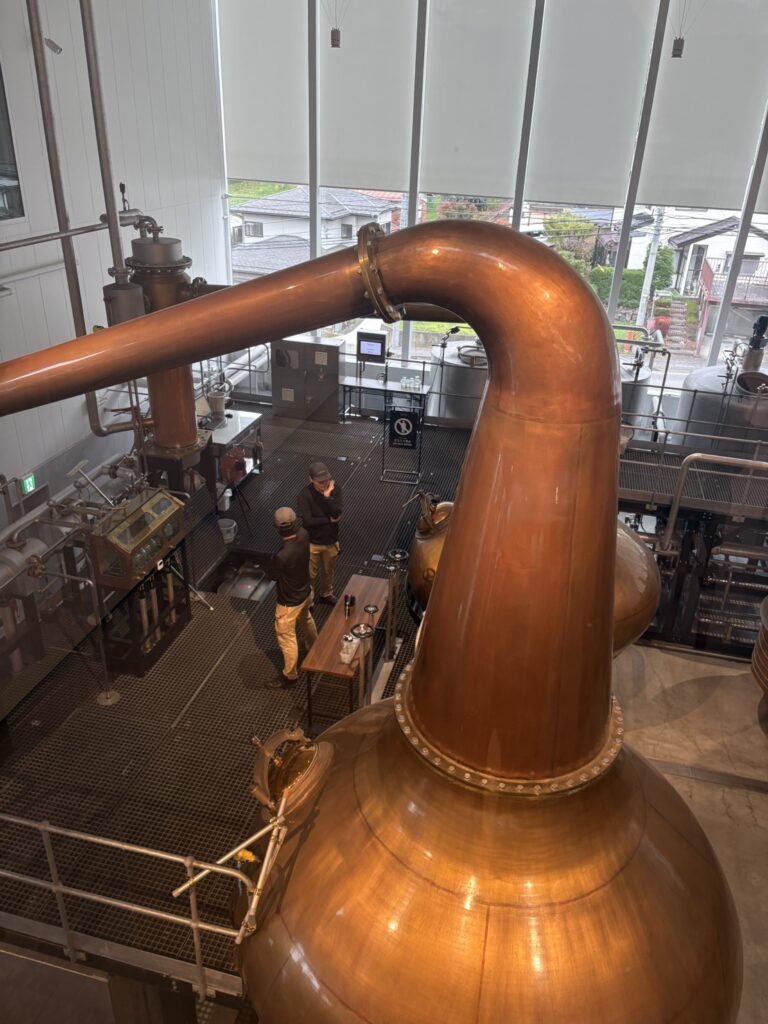
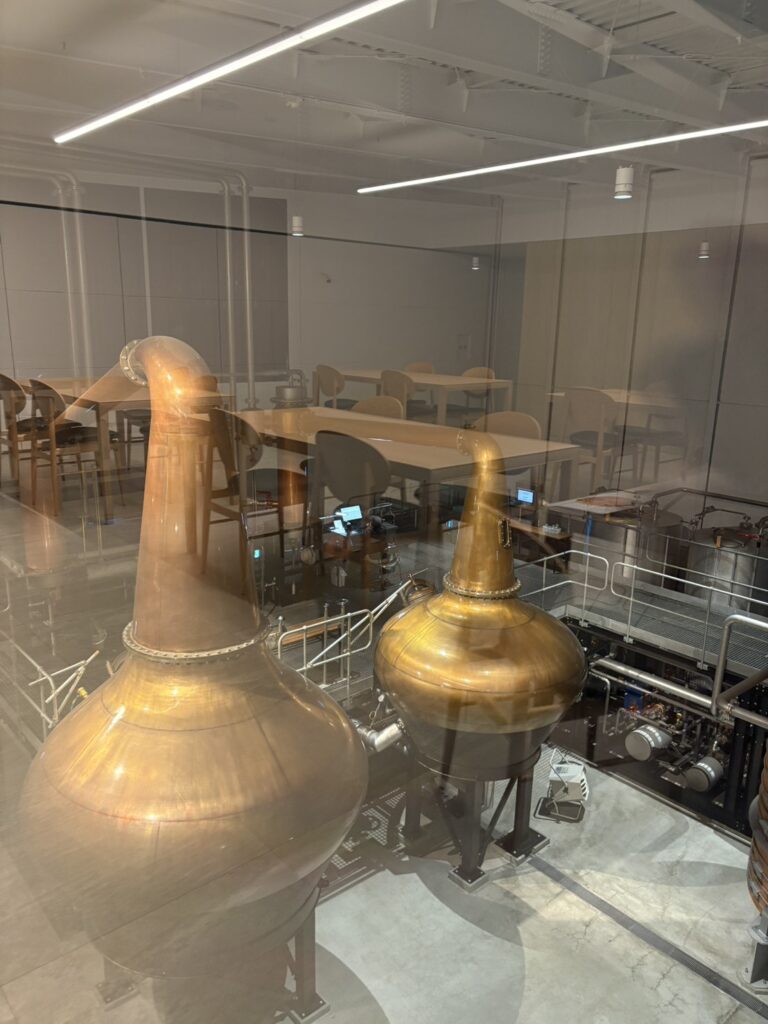
Just being there filled my heart — it was such a beautiful space.
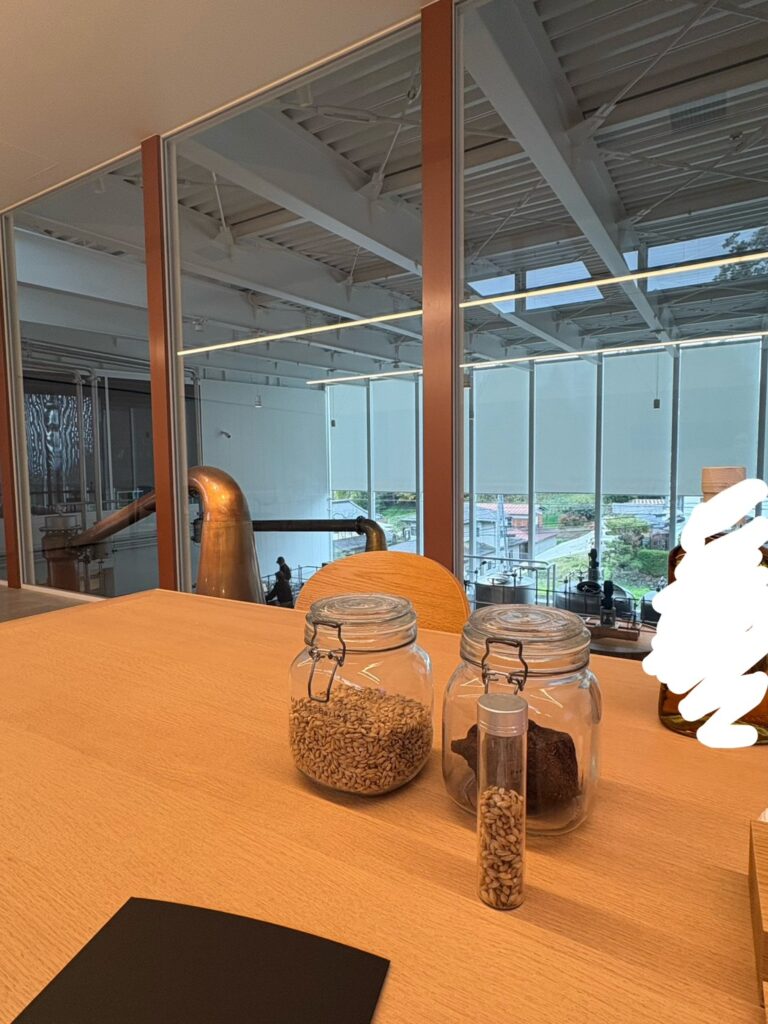
On the table, tasting glasses, handouts, water and crackers were set out in advance.
A tour of the production floor is included with the course.
I took the two courses back to back, and toured the production floor once — after the peat course and before the maturation course.
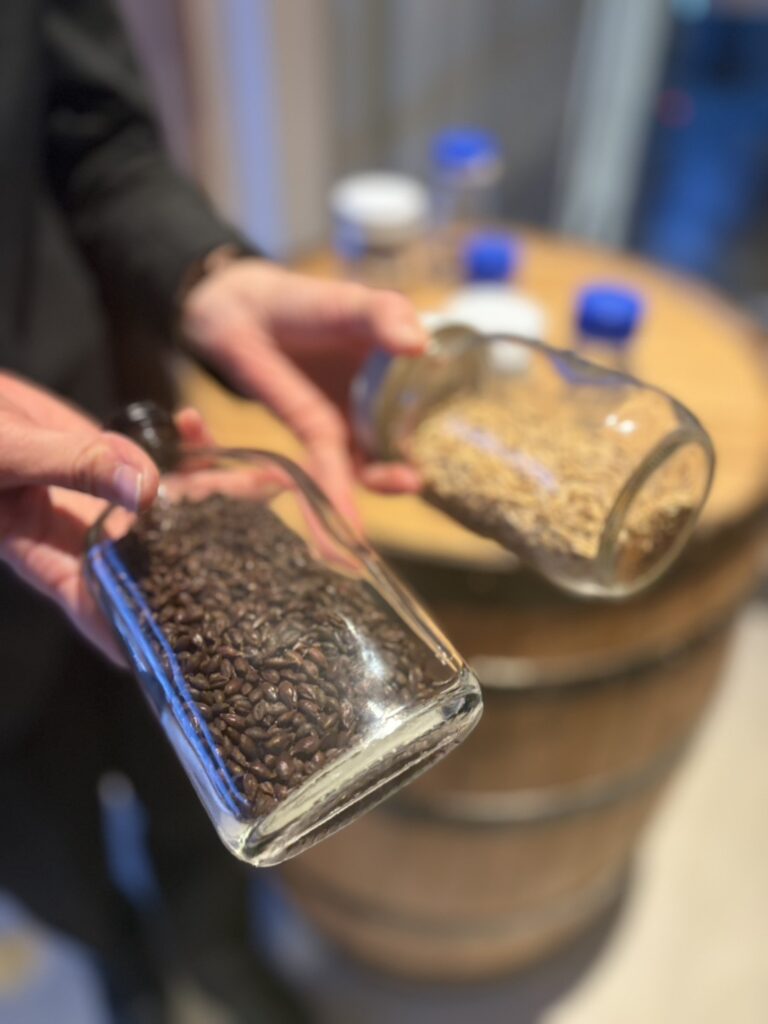
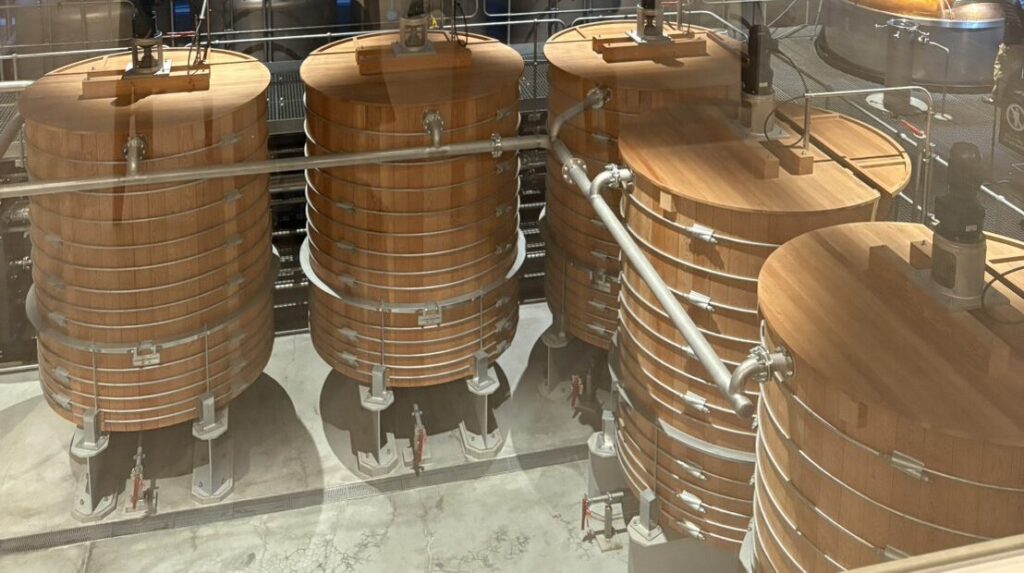
Both courses were taught by O-san.
Deeply knowledgeable, careful in explaining, and not the least bit pretentious.
Because of my work, people usually talk to me assuming I already know a fair amount about whisky, but O-san explained everything one step at a time, starting from the basics.
I was really grateful for that.
There are so many things I think I understand, or that have stayed vague.
In these courses I could review that knowledge and connect it with my own experience.
The Story of Peat|The World of Peat Was Far Wider Than I Thought
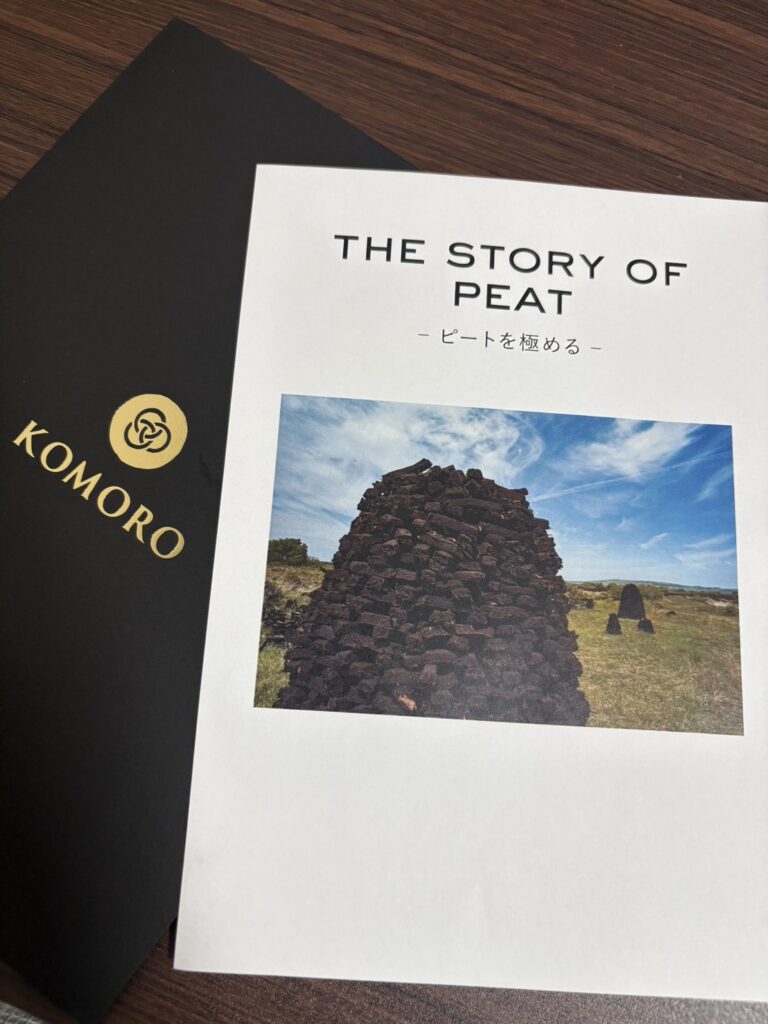
The first course I took was the advanced course on peat, “The Story of Peat.”
You taste seven whiskies blind while learning how peat forms, its aromas, and how production methods make a difference.
Luckily, I was the only student that day!
I had the instructor all to myself, and could take my time asking O-san the questions I’d been carrying for years.
Does Higher PPM Mean Smokier?
PPM is a number that comes up often when people describe peated whisky.
It measures the concentration of phenols in peated malt — but how smoky a whisky actually tastes isn’t decided by that number alone.
In the course, we compared whiskies with different PPM levels and learned why.
Even with similar malt, the character of the new make changes with the shape of the stills and the cut points — which part of the distillate is kept.
And after that, maturation changes the impression of the peat, too.
So many factors go into the glass we drink every day.
(Ever since Octomore came along, my questions about PPM had only grown.)
By Aroma Alone, I Lost Track of the Peat
What surprised me most this time was the blind tasting.
At first I was checking the differences in aroma, but the more I went back and forth, the less sure I became.
When we think of peat, we tend to picture obviously smoky whiskies.
But peat doesn’t only show up as strong smoke.
Sometimes it layers with other flavors and shapes a whisky’s character.
I always tell my guests that peat is also something that gives whisky depth.
Even so, when a guest says “I’d like a peated whisky,” I may have mostly suggested the obviously smoky ones.
I should be able to introduce peated whisky from many more angles.
That’s what I found myself thinking.
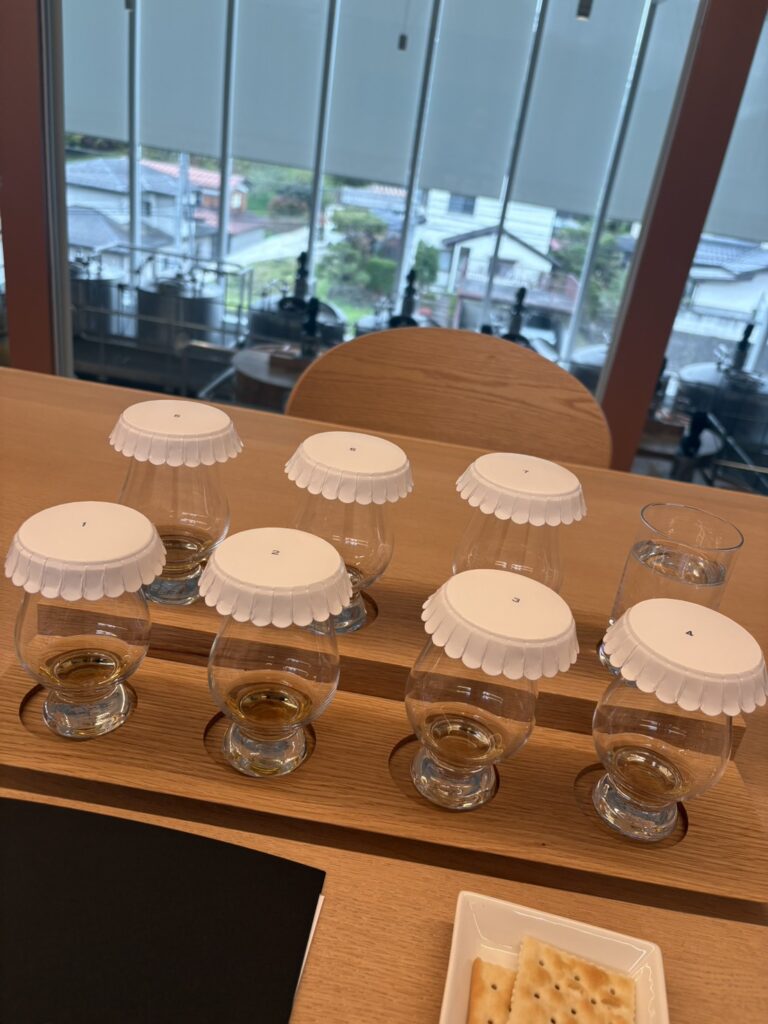
My Favorite Whisky — and I Couldn’t Tell!
Among peated whiskies, there is one I love above all.
I adore its fruity, citrusy aroma.
In the blind tasting, that was the only one I got right, lol.
When I nosed it I thought, “Is this it?” — but on the palate, I wasn’t so sure.
When the answer was revealed, I was surprised: it really was!
There were others too — whiskies I should know — that were completely different from the impression I usually have of them.
How much are we influenced by bottle design and by what we already know when we drink?
Without seeing the label, whiskies you think you know show you a different face.
Islay Peat vs. Highland Peat — What’s the Difference?
At the end of the course, I asked something I had long wondered about.
The difference between Islay peat and Highland peat.
A producer once told me that Highland peat is “powerful,” while Islay peat gives a “gentle, feminine impression.”
But another producer explained it differently.
So which is it?
According to O-san, words like “powerful” and “feminine” are interpreted differently by different people.
Not only the plants in the peat, but distillation and maturation also change the impression, so it can’t be decided simply by where the peat comes from.
Thinking about it that way, comparing them side by side and checking with your own senses is important for understanding the differences in peat.
By the way, the seven-whisky tasting held one more big surprise at the end.
I’ll keep which whisky it was a secret here.
I hope you’ll take the course and enjoy it yourself.
Drinking Blind, and Drinking With the Story
There’s one more thing this course made me think about.
In a blind tasting, you can face the aroma and flavor without being swayed by bottle design or prior knowledge.
But I also believe that knowing a whisky’s background can make that glass taste even better.
In fact, that’s what happened to me.
I originally didn’t often choose heavily peated whiskies for myself.
Even when I went to Islay, it was because I wanted to know the secret of why Islay whiskies are so loved.
After that, I still didn’t pursue peat very deeply.
That changed when I learned about Saburomaru Distillery’s company vision and the feelings of the people who make it — and I came to love drinking peated whisky.
“So this is the spirit in which this whisky was made.”
Thinking that, it tasted truly precious and delicious to me.
I’ve written about Saburomaru Distillery in Saburomaru Distillery: A Five-Part Visit to a Place That Breaks the Rules.
This blind tasting made me realize how much my knowledge and images influence the way I drink.
At the same time, knowing the makers’ feelings can be a big reason to fall in love with a whisky.
That’s why I want to take even more care with the words I share with my guests.
Not only how strong the peat is, but what kind of whisky the makers are aiming for, and how they create that flavor.
I want to be able to introduce whiskies more deeply, including that background.
By the way, Komoro Distillery’s peat is about 25 ppm. I’m told the number comes from Dr. Jim Swan’s birthday, December 25.
I heard this story from Ian earlier and wrote about it in Gentle peat to burn at Christmas – Komoro Distillery’s aging and blending philosophy.
Art of Maturation|Unraveling the Mystery of Maturation
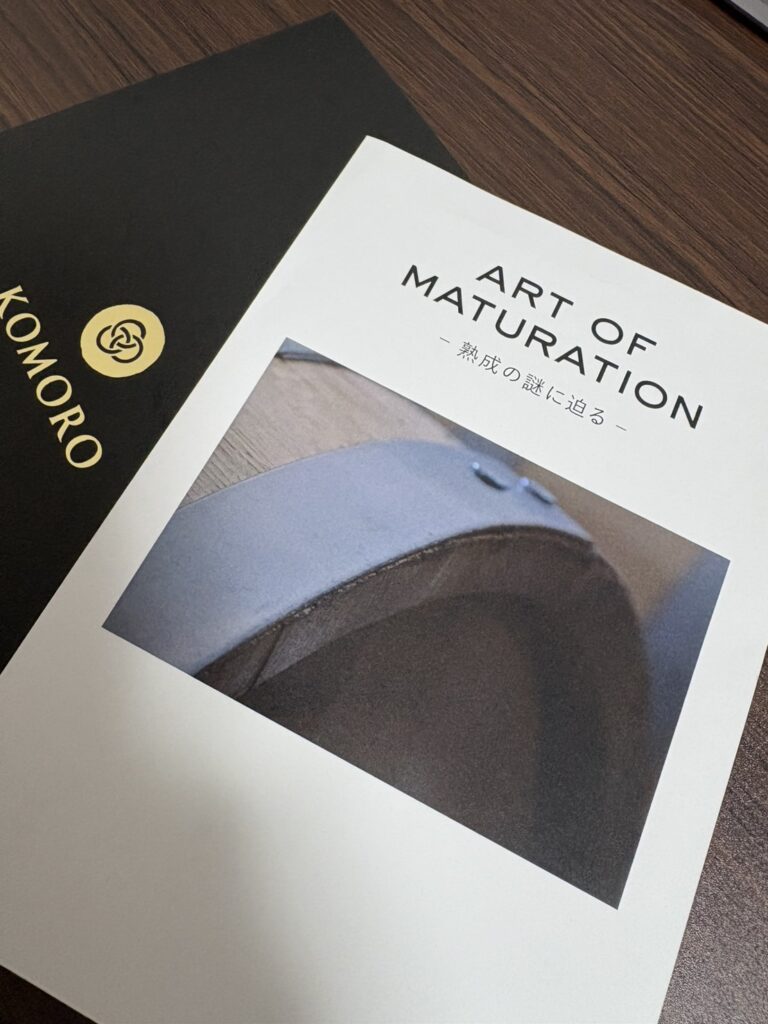
Next I took the intermediate course on maturation, “Art of Maturation.”
In this one, you compare five whiskies while learning how age, cask type and maturation environment make a difference.
Fruit Aromas That Change With Maturation
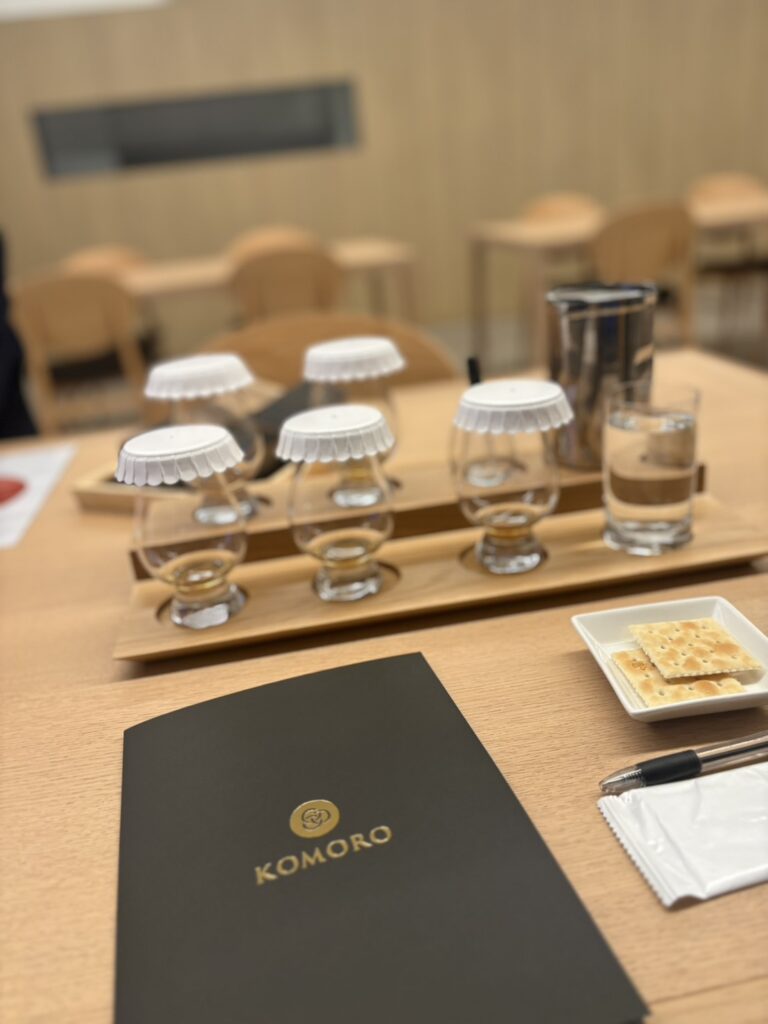
First, we compared whiskies of different ages blind.
I picked up a fresh, apple-like aroma and a sweet, vanilla-like aroma.
O-san explained that maturation shifts the balance between the spirit’s own character and the flavors from the cask, and that fruit aromas move from fresh fruit toward something more like ripe fruit.
We also checked for ourselves how adding water changes the aroma.
I love these ripe-fruit aromas.
The same fruit aroma takes on a different expression with maturation.
Learning by comparing side by side makes it so easy to understand.
Toasting, Charring, and STR Casks
What I found especially interesting this time was the talk about cask-making techniques.
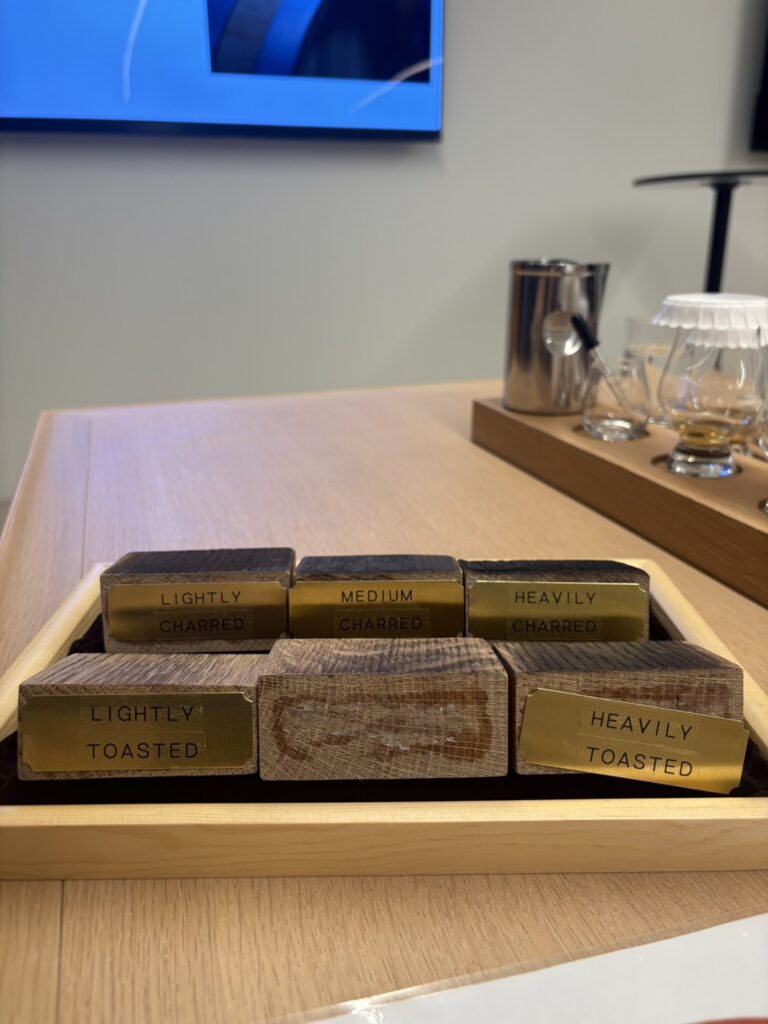
“Toasting” and “charring” — both heat the inside of the cask.
Toasting heats the wood to encourage the formation of flavor compounds.
Charring uses a stronger fire to carbonize the inside of the cask, and the charred layer also absorbs undesirable flavor compounds.
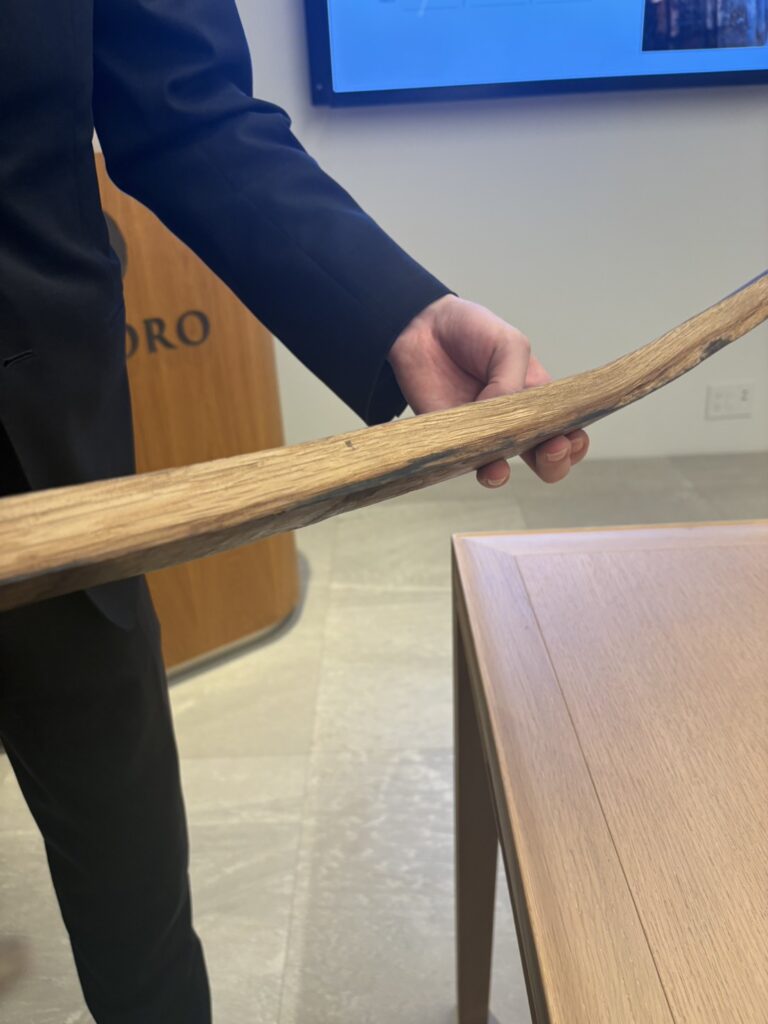
In the course, we learned by watching footage of cooperage work and looking at wood processed in different ways.
And then, STR casks.
STR is a technique in which the inside of a red wine cask is shaved (Shaving), heated (Toasting), and charred again (Re-charring).
Rather than using a red wine cask as it is, reworking the surface of the wood prepares it for maturation.
Dr. Jim Swan was deeply involved in this technique.
And one of those who inherited it is Komoro Distillery’s master blender, Ian Chang.
Of course, I already knew about the relationship between the two of them.
But learning the actual technique made me feel I understood that connection more deeply.
I’ve also written about what Ian carried from Kavalan to Komoro in an earlier article, separate from this course: Legacy — What Ian Chang Brought from Kavalan to Komoro.
A technique someone created through trial and error is passed on to the next maker.
And the person who inherits it refines it further and makes new whisky.
I love this side of the whisky world.
Mizunara Casks — a Choice Born of Its Time
The talk about Mizunara casks also stayed with me.
Today, Mizunara is known as one of the woods that symbolize Japanese whisky.
Its history of use is tied to the material shortages of wartime.
Mizunara also takes a very long time to grow, and it’s a difficult wood to work into casks.
Understanding the nature of the wood, and establishing how to use it through repeated trial and error.
Even cask types we now hear about all the time have that kind of history.
There’s Still Much We Don’t Know About Maturation
And what excited me most was hearing that much about maturation is still not fully explained by science.
What happens inside the cask, and why does whisky change into those aromas and flavors?
Even after a long history of research, there are things we still don’t know.
That’s exactly why each distillery keeps experimenting to give shape to its own philosophy, I thought.
Adapting their methods to the local environment, improving step by step, and passing it on to the next generation.
I’m strongly drawn to that work by the makers.
How Does the Place of Maturation Affect Flavor?
We learned that, beyond cask type and age, the changes also differ with the temperature and humidity of the place where the whisky matures.
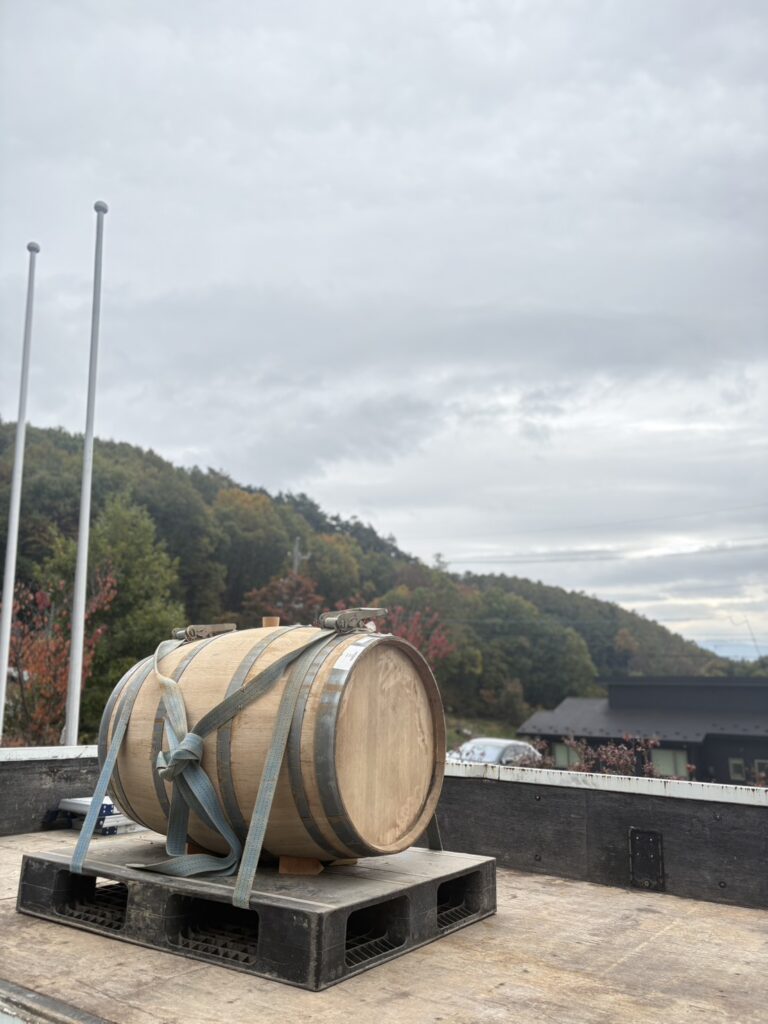
So I asked a question I’d long wondered about.
The “salty, maritime” note we sense in whiskies matured at seaside distilleries.
Is that really the influence of the sea?
Or do we sense it because we know the distillery is by the sea?
O-san explained that information we know in advance may influence how we perceive flavor.
On the other hand, the local environment — such as the brewing water and fermentation — may also play a part in a whisky’s character.
How much maturing by the sea itself affects that aroma — we didn’t reach a conclusion from this talk alone.
That only made me want to find out more.
I want to visit distilleries in such environments and learn more deeply.
And Sakurao Distillery, close to home for me, has two different maturation environments: Sakurao by the sea and Togouchi in the mountains.
I’ve explained the difference to my guests before.
But if I organize what I learned this time, I think I can share their appeal even more deeply.
The Joy of Seeing What I Knew Come Together
For 20 years, I’ve visited distilleries of all kinds.
The first distillery I visited overseas was on Islay, Scotland, in 2009.
Back then I knew nothing at all, and I didn’t understand English. (I still don’t understand English at all, lol.)
I asked for an interpreter, but no one who spoke Japanese could be found, so I was shown around by local guides.
Even when I visited distilleries, I simply enjoyed the atmosphere and was happy just to be there — I understood almost nothing.
That’s a good memory in its own way, but I think it would have been even more fun if I’d known more.
I’ve also written about my memories of Islay from those days in My Own “Land” from the King of Islay: Laphroaig and Bar Little Happiness.
If I visited Islay again now, I’m sure I’d see different things.
The questions I want to ask have changed a lot, too.
For example, what a distillery decided “not to do” after all its trial and error.
To understand what kind of whisky they want to make, I want to ask not only what they chose, but also what they didn’t choose.
I feel a distillery’s philosophy shows there, too.
These days, every time I visit a distillery, I write a blog post to organize what I heard and what I felt.
But for many of the distilleries I visited before, I never had that time.
Now, I might be able to understand more deeply the makers’ attention to detail that I couldn’t notice back then.
At this Whisky Academy, I felt knowledge I’d learned separately suddenly click together, all at once.
I want to keep learning because I want to become someone who can receive the makers’ feelings more deeply.
And because I want to share what I receive with my guests, in my own words.
Who I’d Recommend Komoro Distillery’s Whisky Academy To
Both “The Story of Peat” and “Art of Maturation,” the courses I took, were specialized.
The peat course in particular is easier to follow if you already know a fair amount about whisky.
But even if you don’t understand everything, it can spark interest in things you didn’t know.
If you love whisky, I think you’ll want to try many more whiskies.
And for those who already know a lot, there’s the pleasure of organizing what you’ve learned and deepening your understanding.
When I took them, the classes were tiny: just me in the peat course, and two of us in the maturation course.
I couldn’t get the day I wanted and took the courses a day early — and as a result, in a small group, I could ask all the questions I’d had for a long time.
At the end, I also received certificate cards.
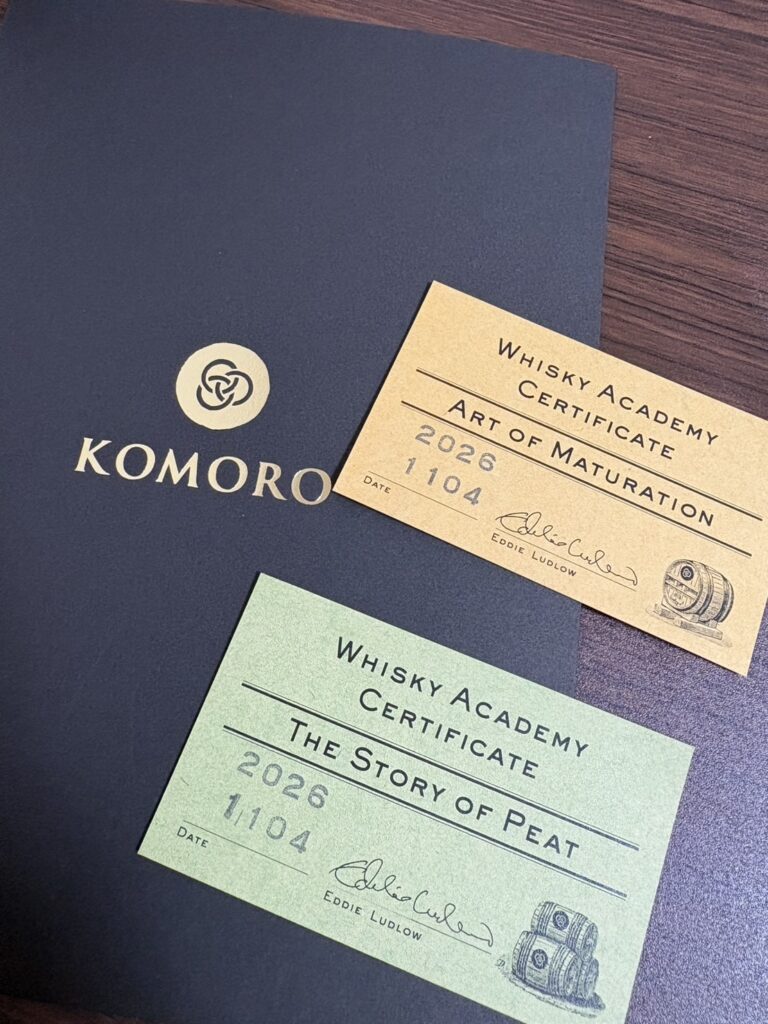
My recommendation is to take the peat and maturation courses back to back.
What I learned about distillation and maturation in the peat course carried over into the maturation course, and deepened my understanding.
Across the two courses, I tasted twelve whiskies in total.
Of course, everyone’s tolerance for alcohol is different, so please enjoy at your own pace.
Above all, O-san’s classes were so much fun!
O-san answered every question carefully, and new questions and interests kept springing up even while I was in class.
The Whisky Academy offers courses on many other themes, too.
The More I Learn, the More I Want to Know
Even after 20 years in whisky, there’s still so much I don’t know.
This course helped me sort out things that had been vague, and brought many new discoveries.
From now on, when I visit distilleries, I’m sure I’ll be able to ask different questions than before.
And when I introduce whiskies to guests at Little Happiness, I want to convey the appeal of each bottle more deeply than ever.
Above all, the time spent learning was itself so much fun!
O-san, thank you for such a wonderful time of learning 💛
Komoro Distillery Whisky Academy|Course Information
The Story of Peat
- Level: Advanced
- Tasting: 7 whiskies
- Main topics: how peat forms, PPM, and differences in flavor by origin and distillation process
Art of Maturation
- Level: Intermediate
- Tasting: 5 whiskies
- Main topics: age, cask types, cooperage techniques, maturation environment
Each main session runs about 60 minutes. A tour of the production floor is included.
Taking the two courses back to back, I toured once between them. Please check how tours are handled for each course when you book.
For the latest dates, prices and booking information, please see Komoro Distillery’s official website.
Official website: https://komorodistillery.com/whisky-academy/
*This article is based on my experience taking the courses in November 2026.
*So that you can enjoy the surprises and discoveries when you take the courses yourself, I’ve deliberately left out some details, such as the whiskies in the blind tastings and their answers.
Related Articles
- Who Is Ian Chang? What the World-Class Blender Behind Kavalan and Komoro Distillery Told Me
- Ian Chang Tasting|The Night Whisky Was Our Only Common Language
- Komoro Distillery: New Make That Smells of Peaches, and Water That Takes Fifty Years to Surface
- Gentle peat to burn at Christmas – Komoro Distillery’s aging and blending philosophy
- “You Don’t Need Experience” — Ian Chang, from Kavalan to Japan (Part 4, final)
- Legacy — What Ian Chang Brought from Kavalan to Komoro
- What Is Kavalan? Taiwan’s World-Class Whisky and the Story of Ian Chang
- The “Harmony” I Witnessed at Komoro Distillery: Ian Chang and the Road to a Japanese Whisky Powerhouse (Nagano, Japan)
[About the author]
Mika Tanimoto
CEO, Little.m Inc. / Owner-bartender
Since 2006, I have run Bar Little Happiness, a whisky and rum bar in Nagarekawa, Hiroshima. I visit distilleries in Japan and around the world and write about the people who make the spirits. Recipient of the Hiroshima City Excellent Skilled Worker Award.
“Whisky and rum taste even better when you know the hearts of the people who make them.”
[Visit the bar] 📍 Bar Little Happiness
Rolling Nagarekawa 1F, 5-14 Nagarekawa-cho, Naka-ku, Hiroshima
Mon–Sat 7:00 pm – 12:30 am / Sun 7:00 pm – 12:00 am (closed when I travel to visit distilleries)
No cover charge, no reservation needed