
GaiaFlow Shizuoka Distillery Visit|Wood-Fired W and Karuizawa’s K
2026.11.15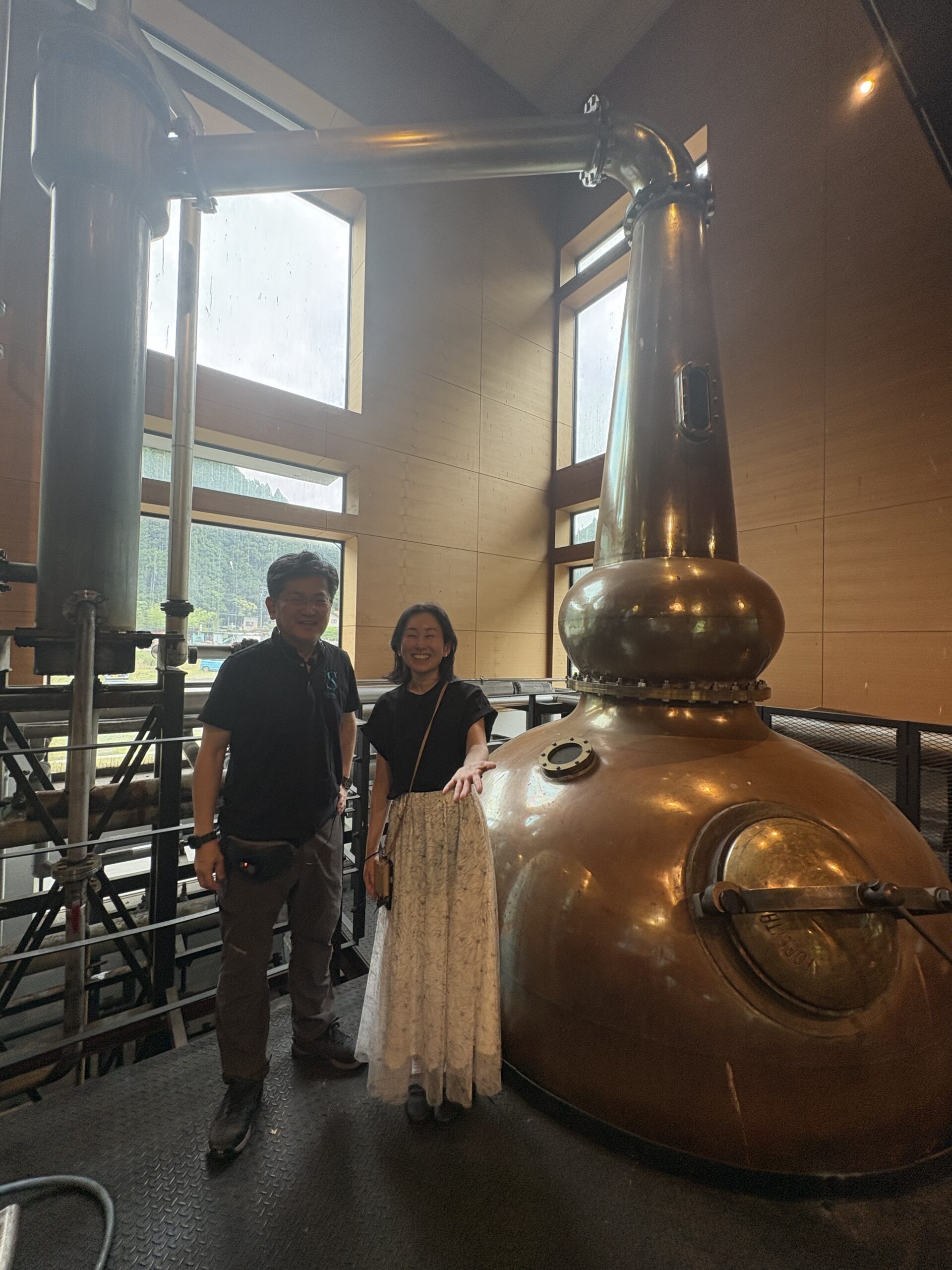
GaiaFlow Shizuoka Distillery|Wood-Fired Flames and a Still from Karuizawa
“Rather than a flashy flavour, I think it would be wonderful to make a whisky you never tire of — one that makes you want just one more glass.”
That is what Taiko Nakamura, CEO of GaiaFlow Shizuoka Distillery, told me in a warehouse lined with casks.
Peat that hits you sharply. Sherry that lands with a bang.
Use enough distinctive spirit, and that kind of obvious character is relatively easy to express. But a whisky that, through balance, makes you want “one more glass” is not easy to make, he said.
Shizuoka Distillery has two stills with very different personalities: “W,” heated directly by a wood fire, and “K,” inherited from Karuizawa Distillery.
The spirits they produce are astonishingly different.
And at this distillery, what Mr. Nakamura is chasing is a whisky you never tire of.
I wanted to know more about what lies behind that.
In June 2026, I visited Shizuoka Distillery, just before the 10th anniversary of its production licence.
I have lost count of how many times I have been here.
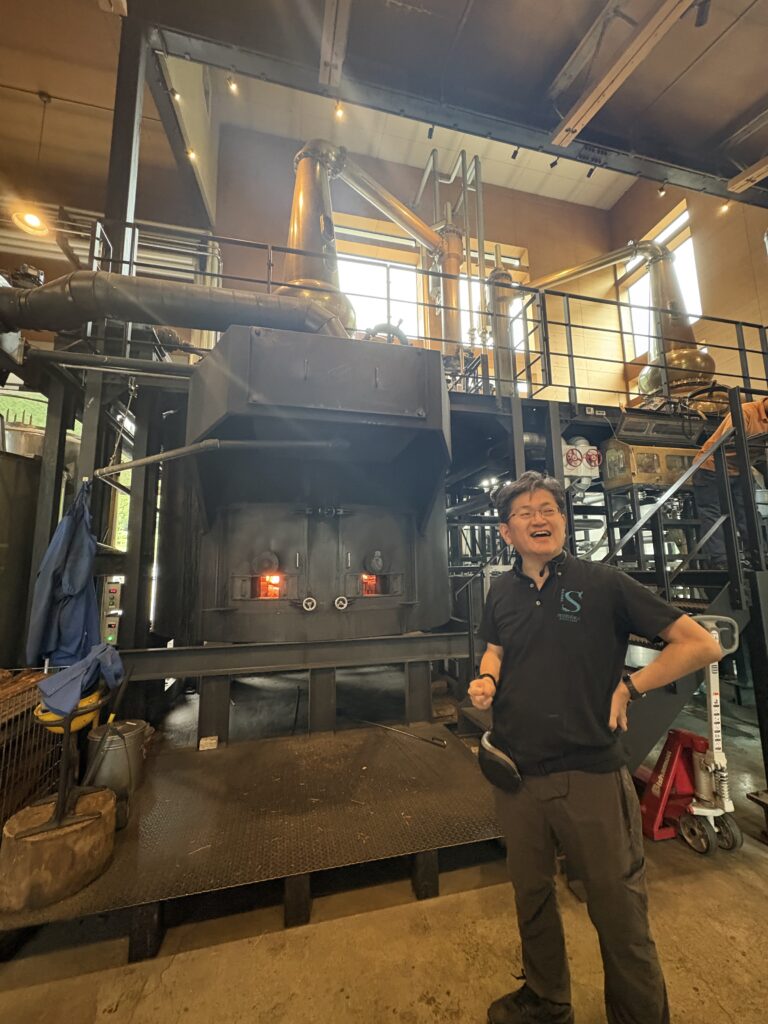
Since Before Shizuoka Distillery Existed: My Connection with Taiko Nakamura
I first met Mr. Nakamura before Shizuoka Distillery was built.
At the time, he was a whisky importer, handling independent bottlers such as Asta Morris and Blackadder.
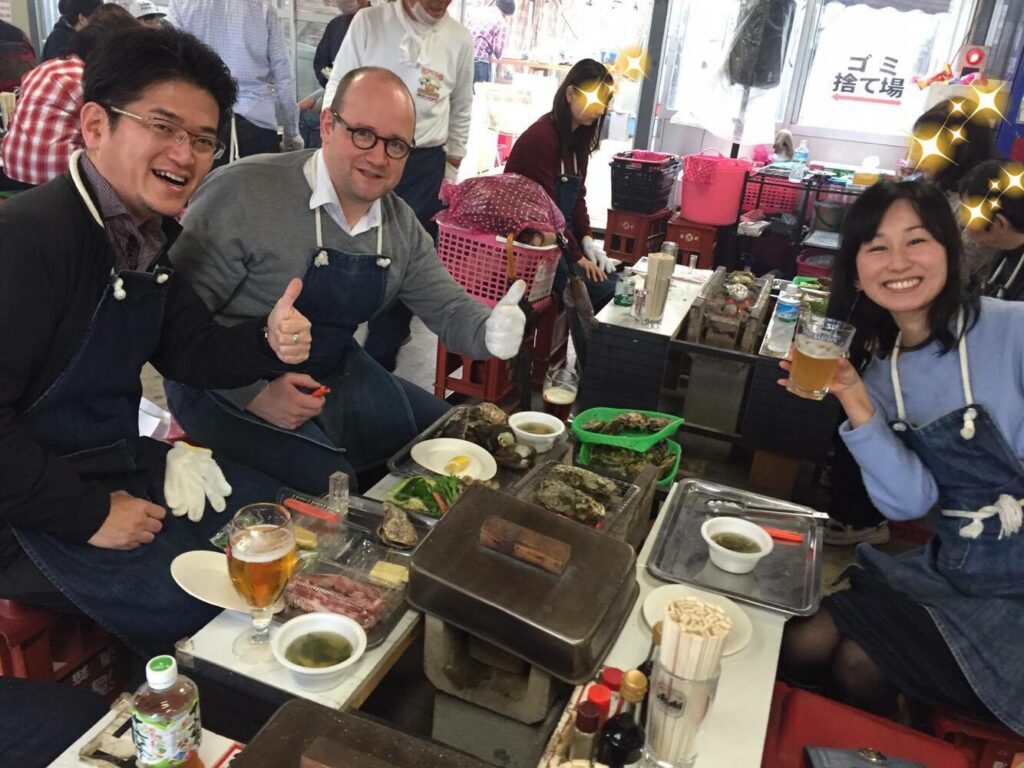
He once came to Hiroshima with Bert of Asta Morris, and I took them to an oyster hut.
It was also Mr. Nakamura who arranged our Little Happiness private bottling, Asta Morris Fettercairn 10 Years 2010–2016.
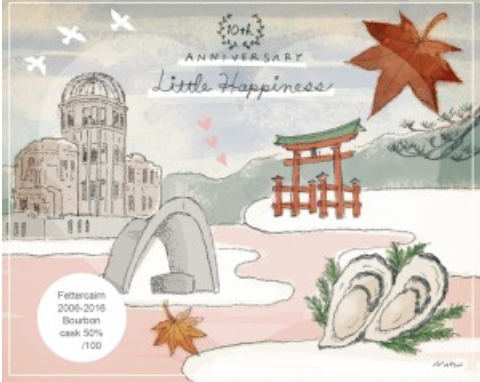
Ten years have passed since then. The last bottle of our 20th anniversary, too, was born from my connection with Mr. Nakamura.
Before Shizuoka Distillery opened to the public, I visited with the staff and guests of Little Happiness (Bar Little Happiness), and Mr. Nakamura showed us around himself.
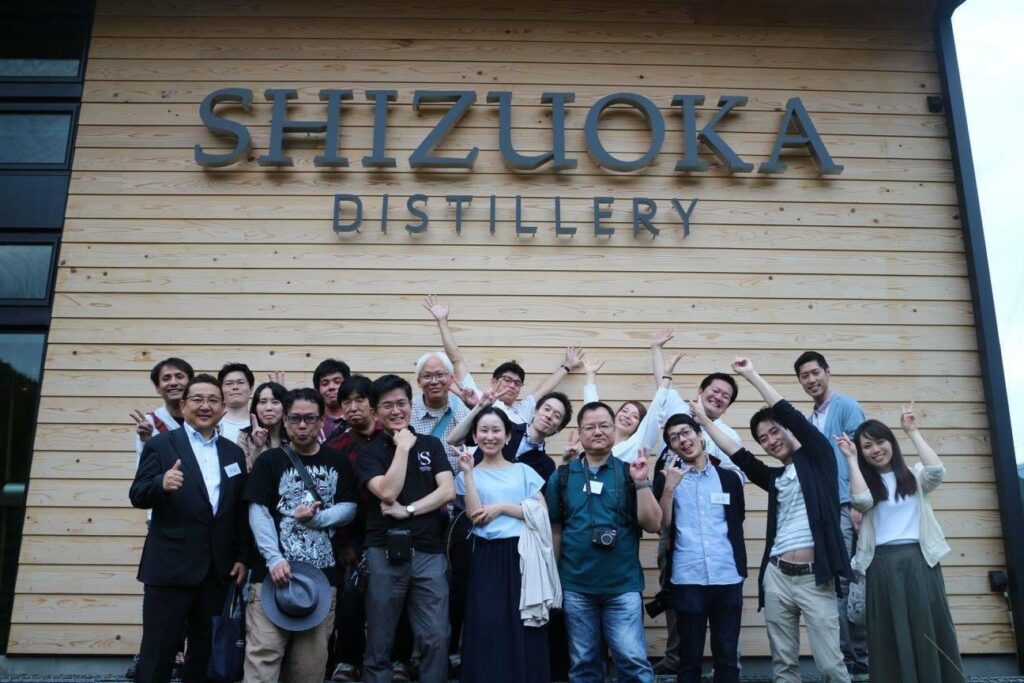
He has also held a seminar at the counter of Little Happiness in Hiroshima.
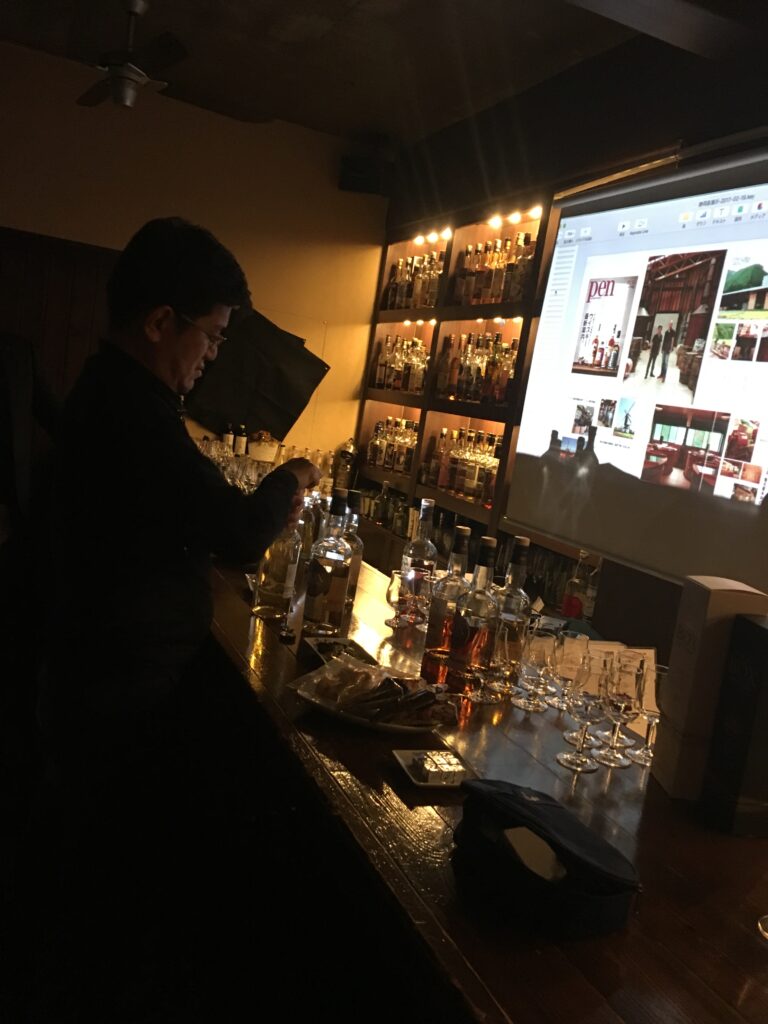
Not every moment was a happy one.
When I collapsed and was hospitalised, he said this to me:
“One day this will make a good story, so take some photos.”
At the time, I was hooked up to tubes and not allowed to eat or drink. I didn’t even have the energy to take a photo.
During the pandemic, he also welcomed one of our Little Happiness staff as a trial student for the whisky school he was preparing to open.
I scraped together the travel money to send them, and I still remember their smile when they came back and said, “It was so much fun.”
Before the distillery was built, and after.
I am so happy that our connection has continued like this.
A Challenge from Another Industry, in His Forties
Mr. Nakamura was the third-generation head of a precision parts company founded by his grandfather.
He decided to make whisky in 2012.
The trigger, he says, was a visit to Kilchoman Distillery on the island of Islay in Scotland.
Even a small distillery can deliver its whisky to the whole world.
Moved by that possibility, Mr. Nakamura resolved to build a distillery himself.
He was already in his forties.
While working toward the distillery, he was also involved in importing and selling whisky.
Whisky is not finished the moment it is distilled; you have to wait years for it to mature.
When he went to the local tax office to explain his plan, the staff apparently looked at him in disbelief.
A business owner carrying a family company had leapt into a whole new world in his forties.
I love hearing stories like this.
Why did this person decide to do it?
What did they value, and what did they choose?
I am drawn to the lives of the makers behind the finished whisky.
Showing How Whisky Is Made
Shizuoka Distillery was designed with a visitor route built in from the start.
You can walk through the whisky-making process without getting in the way of production.
There is a bar on the second floor, from which you can look out over the pot stills.
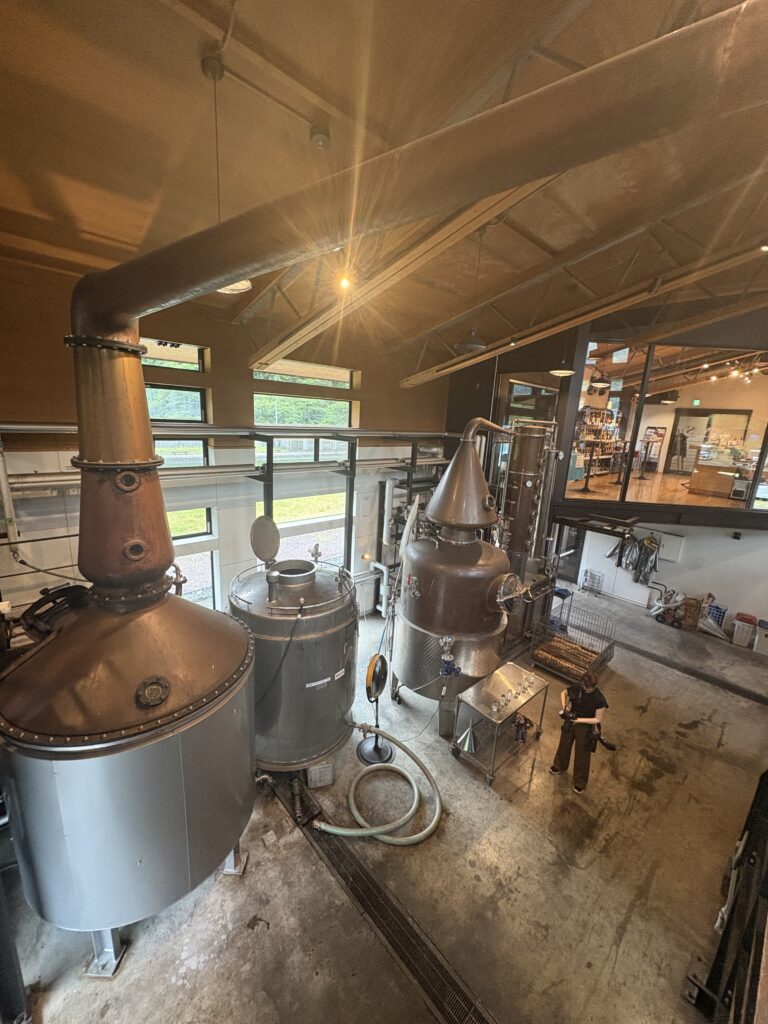
The idea came to him, he says, when he visited Kavalan Distillery in Taiwan.
Today there are many distilleries where the tour itself is a pleasure, but when Shizuoka Distillery was built, I think a distillery designed this carefully around the visitor’s experience was still rare.
Letting people see the makers at work.
A place for that was prepared from the very beginning.
Shizuoka Cedar and Oregon Pine: The Air That Protects the Wooden Washbacks
The fermentation room is lined with wooden washbacks made of Shizuoka cedar and Oregon pine.
Beyond the windows, the green of the mountains.
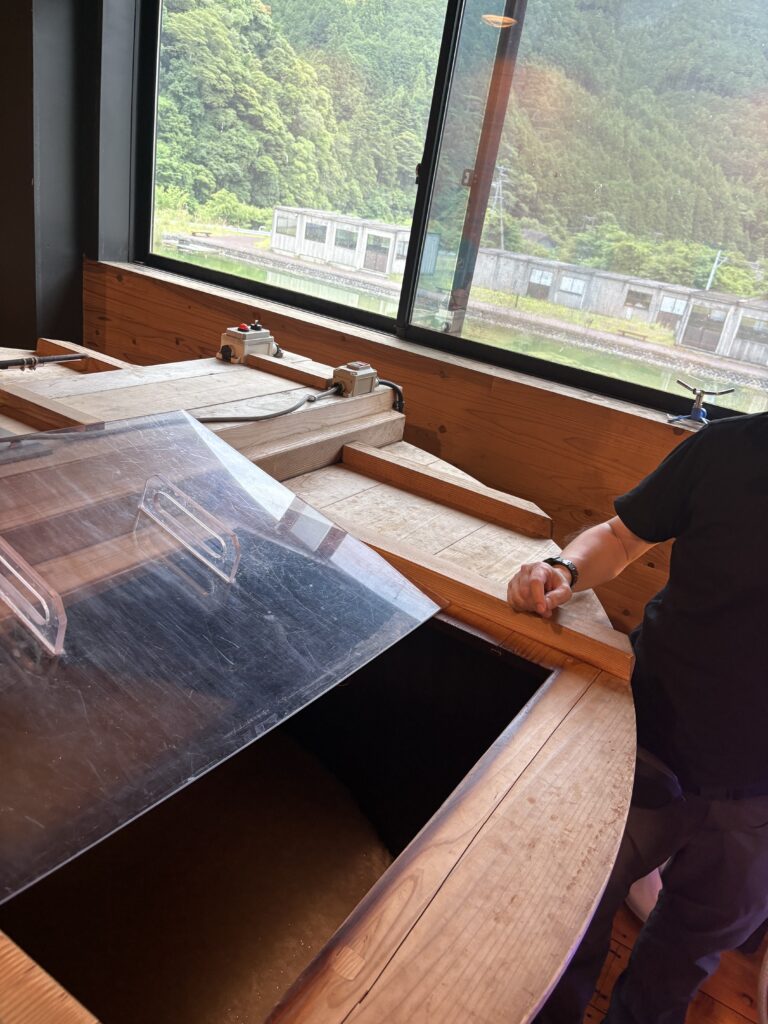
What Mr. Nakamura explained to us was the structure beneath the washbacks.
The washbacks stand slightly raised off the floor, and there are louvred vents at the edge of the floor to let air escape.
Even when a wooden washback is soaked through on the inside, it can rot if the outside is poorly ventilated, he told us.
I heard that some distilleries have actually had to replace damaged wooden washbacks.
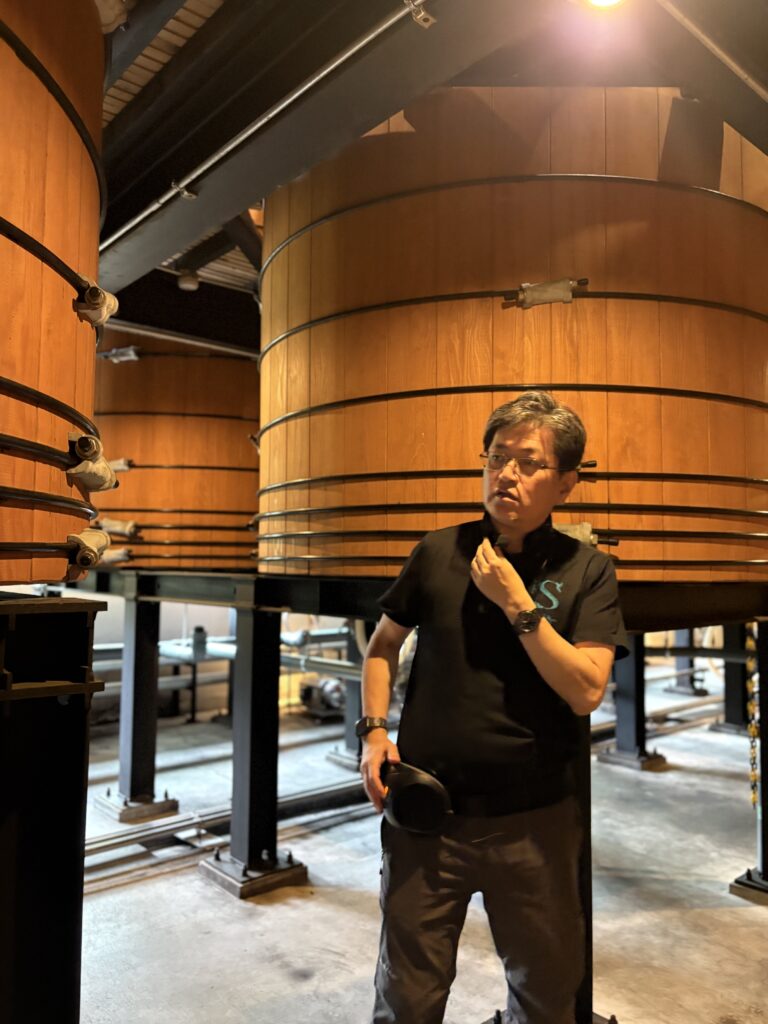
In Shizuoka, they make sure air flows under the washbacks as well.
They also use fans to dry them.
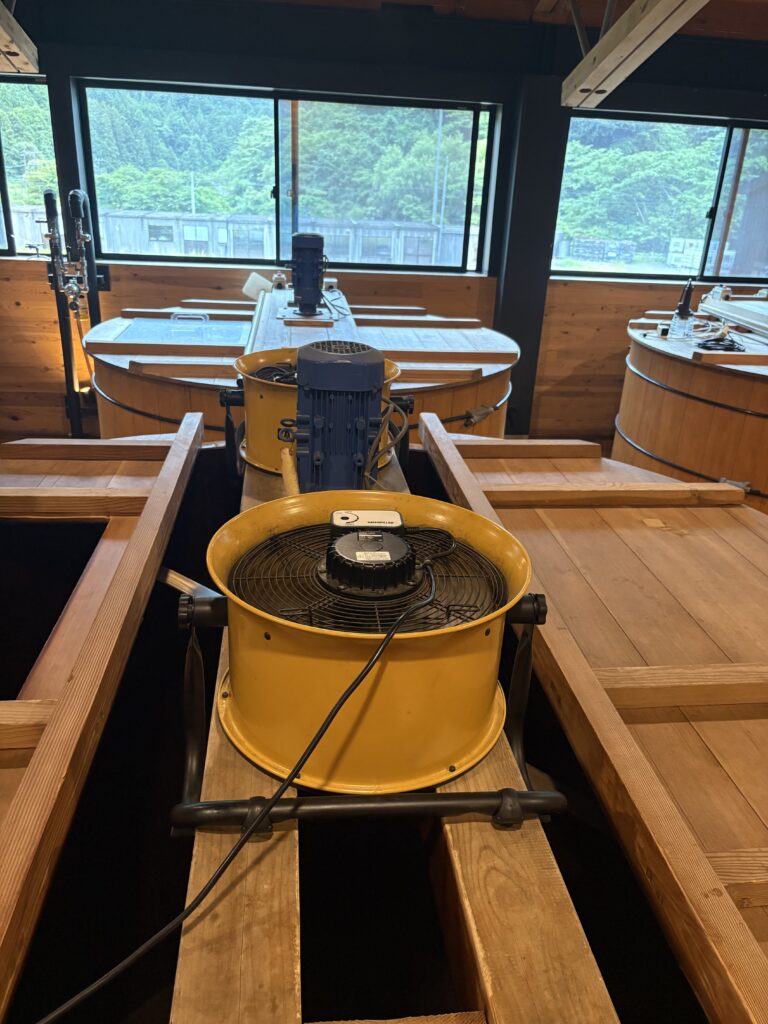
So this is the kind of care wooden washbacks need.
The aroma of the fermenting wash is fascinating, too.
According to Mr. Nakamura, early in fermentation there are notes of nori seaweed and the seashore, which turn into tropical fruit, and then into something a little like miso.
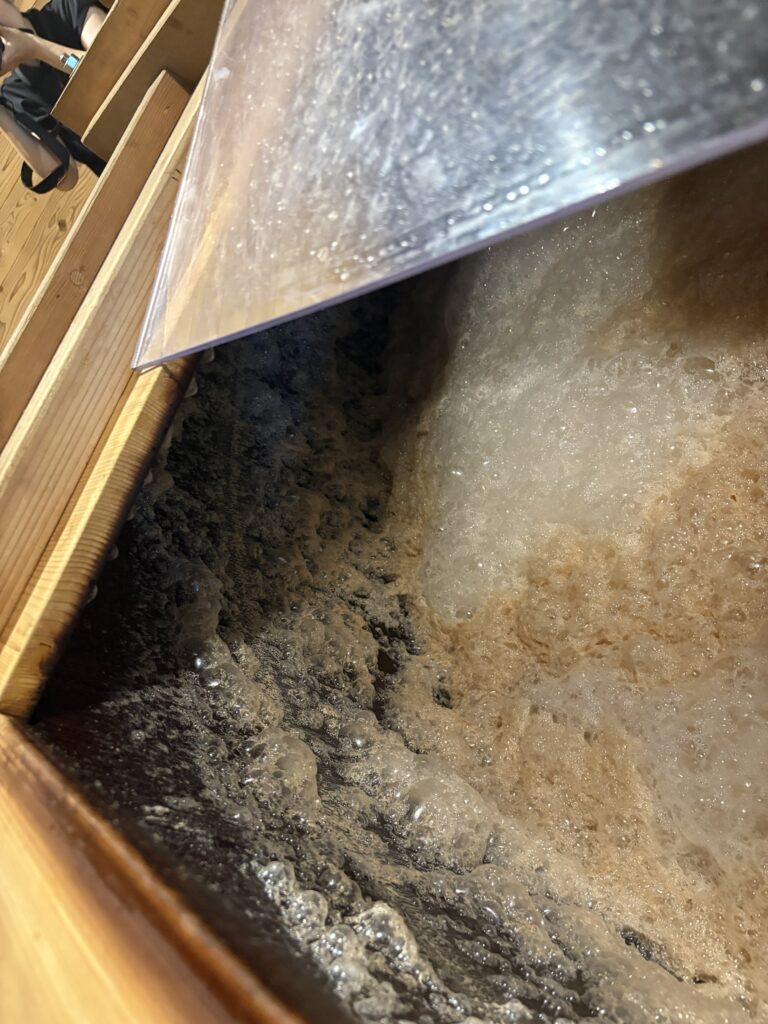
Among the washbacks in the same room, the aroma differs depending on how far fermentation has progressed.
So much change, even before it becomes whisky.
Feeding the Fire: Pot Still “W”
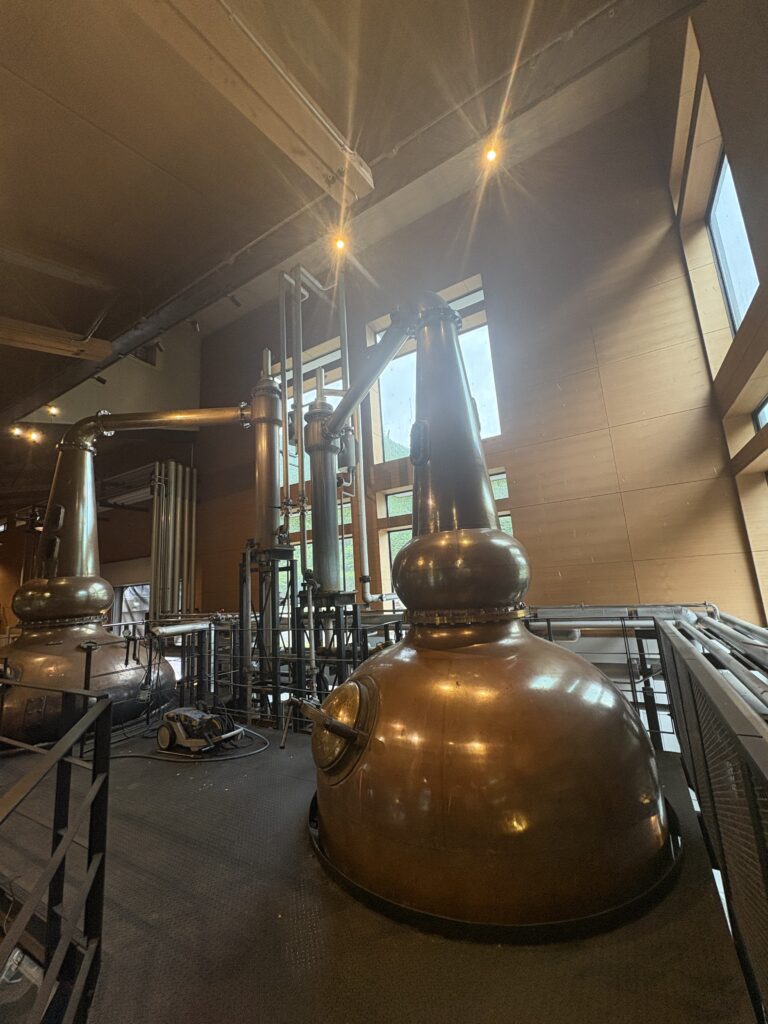
One of the defining features of Shizuoka Distillery is “W,” a pot still heated directly by a wood fire.
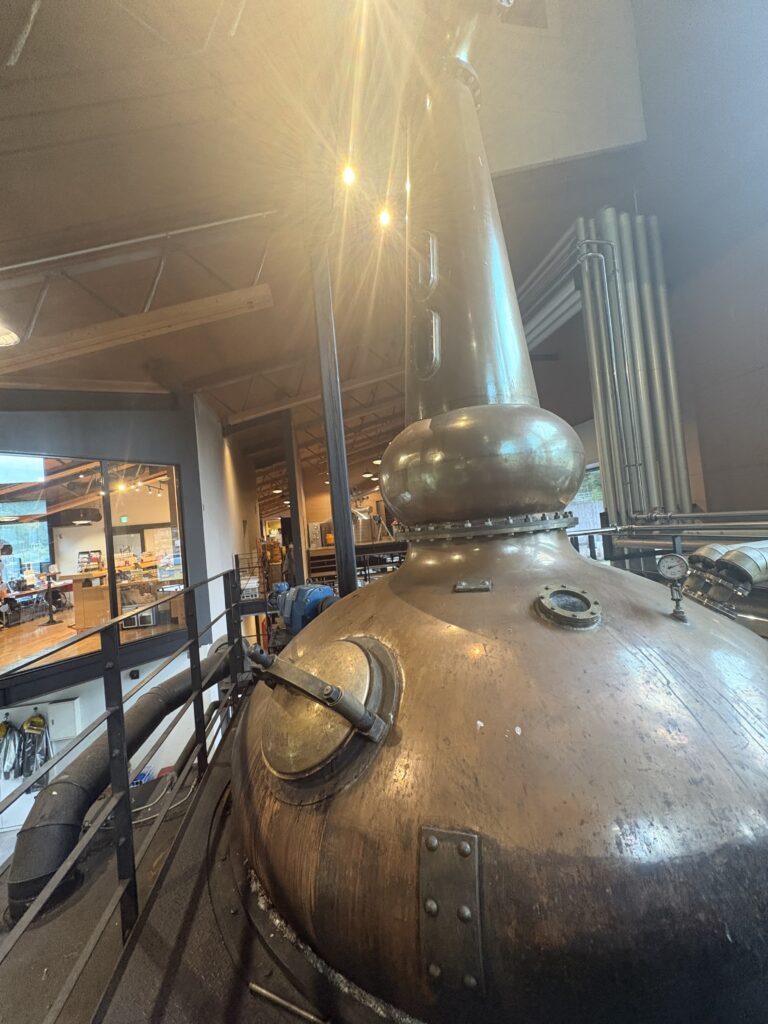
It was ordered from Forsyths in Scotland, and it uses firewood as its heat source.
Most whisky distillation today uses indirect heating with steam, but W burns wood directly beneath the pot.
At first, the manufacturer apparently recommended steam heating.
Direct firing requires a thicker copper base, which costs more money and effort.
Even so, Mr. Nakamura chose wood-fired direct distillation.
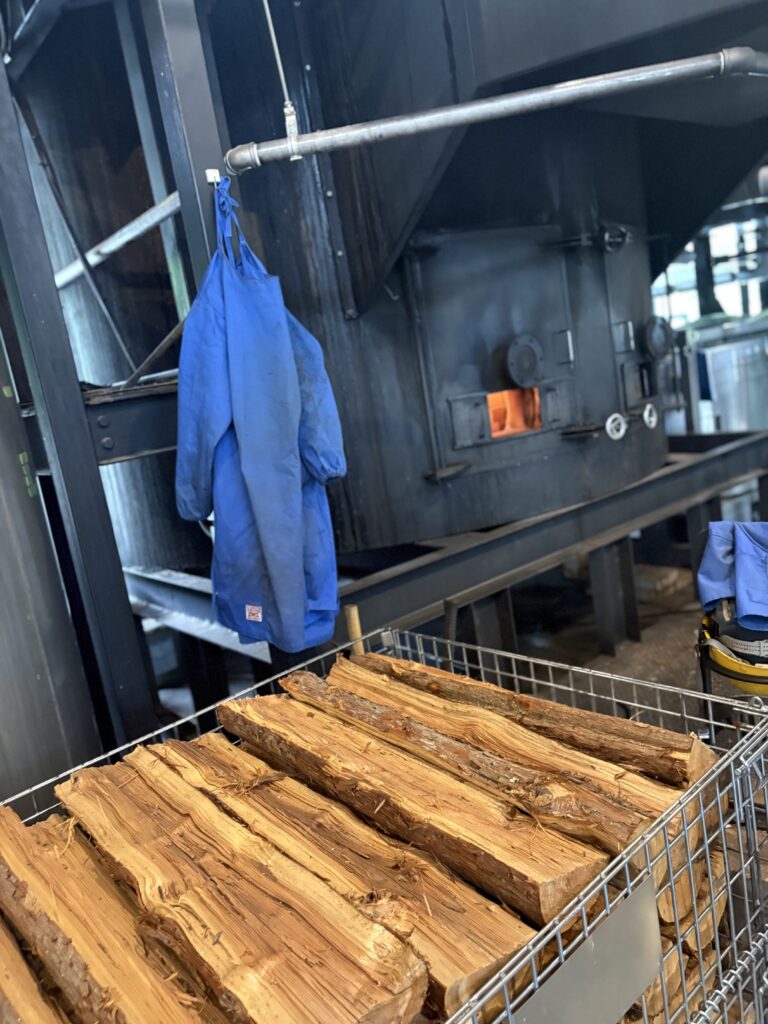
The wood they burn comes from local forest thinnings.
Forestry thrives in the area; they bring logs to the distillery and split them themselves.
But unlike hardwoods, which are easy to use as firewood, what grows nearby is softwood such as cedar and cypress.
With almost no precedent, they tested everything one by one: length, thickness, how to split it, and how long to dry it.
Softwood burns out quickly, so during distillation they add wood about three or four times an hour.
The people doing the work wear fire-resistant suits and helmets.
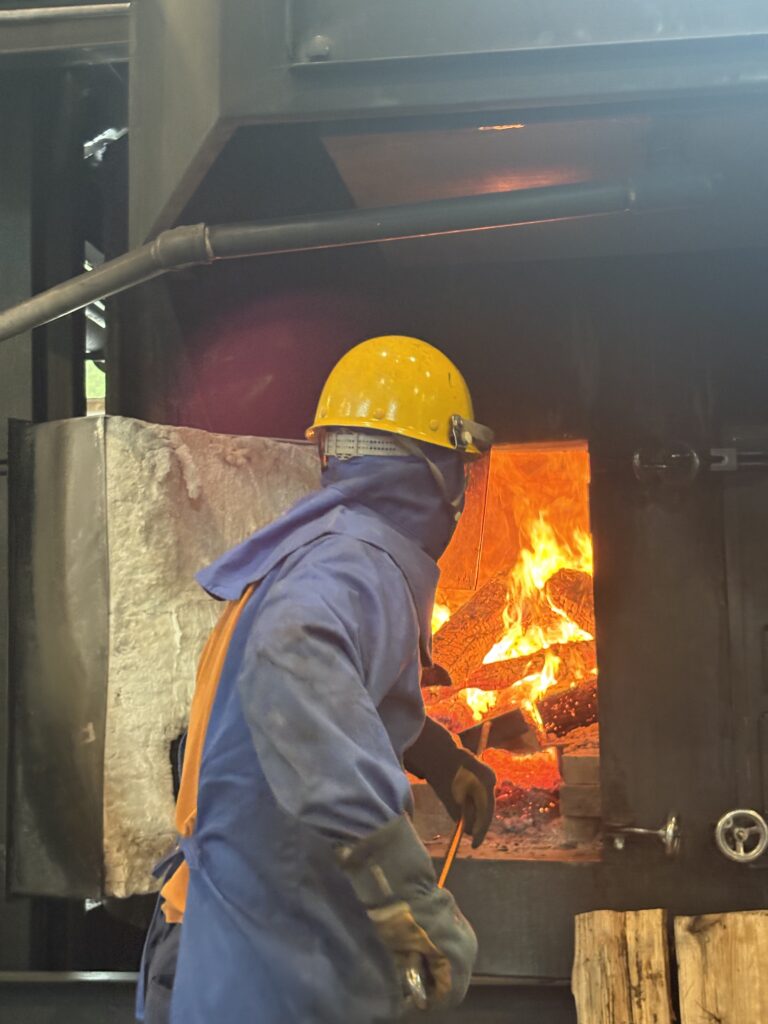
I crouched down at the foot of W myself.
Peering in through the vent, I could see the wood burning on the grate.
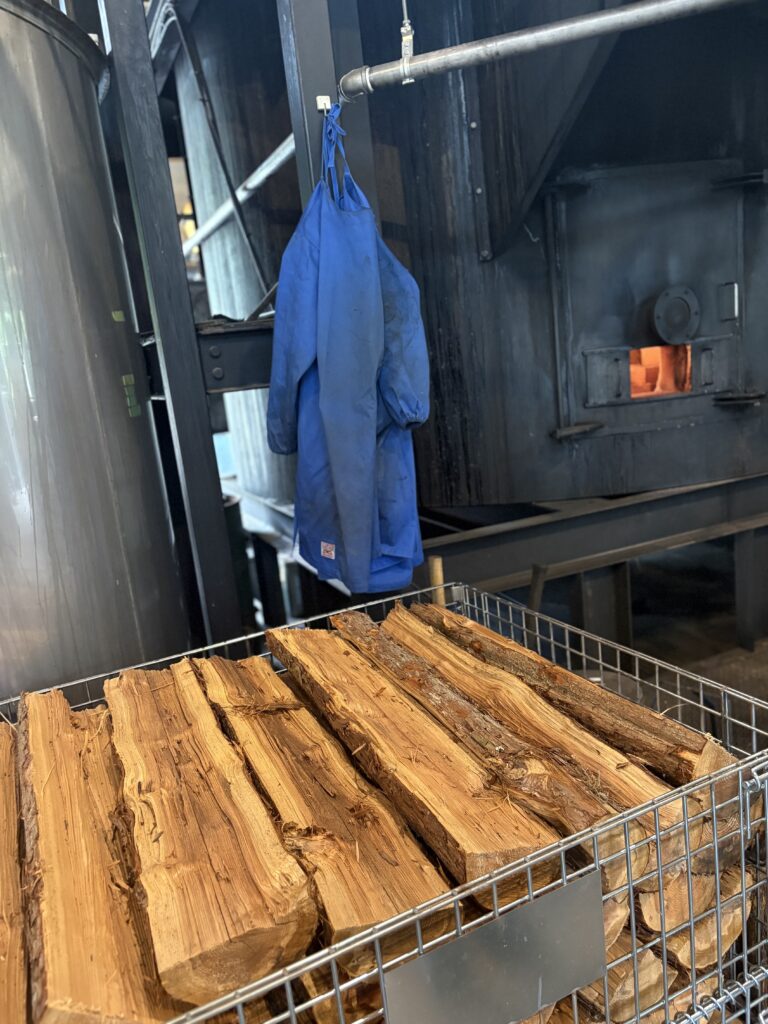
They really are making whisky with this fire.
It is obvious, of course, but seeing it with my own eyes, I was somehow moved.
When they first started distilling, smoke filled the building, and by the end of the day people would be coughing.
Now there is equipment to collect the smoke and send it outside.
When a condenser wears out, they rebuild it without changing the specification.
Reaching their ideal new make also took years of trial and error.
“We’ve failed a lot, you know.”
Mr. Nakamura told us that as well.
The ventilation of the washbacks, the way the wood is split, the system for letting the smoke out.
One after another, things come up that you would never know just by looking at the finished equipment.
The spirit from W is weighty, with a long finish.
Beyond that fire, spirit like that is being born.
Pot Still “K,” from Karuizawa
The other wash still, “K,” has an entirely different story.
Karuizawa Distillery once captivated whisky fans all over the world.
Its production equipment was put up for auction in 2015, and Mr. Nakamura won the bid.
Of the four pot stills there, the parts in the best condition were gathered and rebuilt into a single still that could be used again in Shizuoka. That is K.
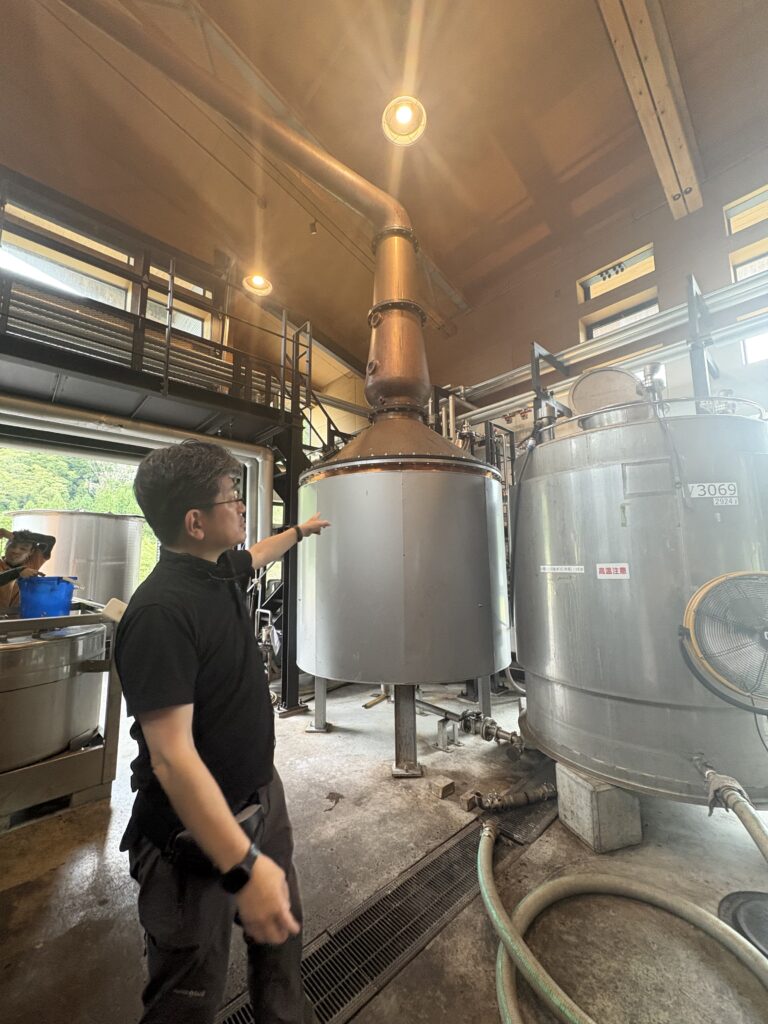
While W is heated by a direct wood fire, K is heated indirectly by steam.
Because the still is small, one batch is distilled over two days.
In contrast to W, the spirit it produces is fruity and light.
Even with the same malt and the same wash, the character of the spirit changes greatly depending on the still, he explained.
The red malt mill that crushes the malt is another thing inherited from Karuizawa.
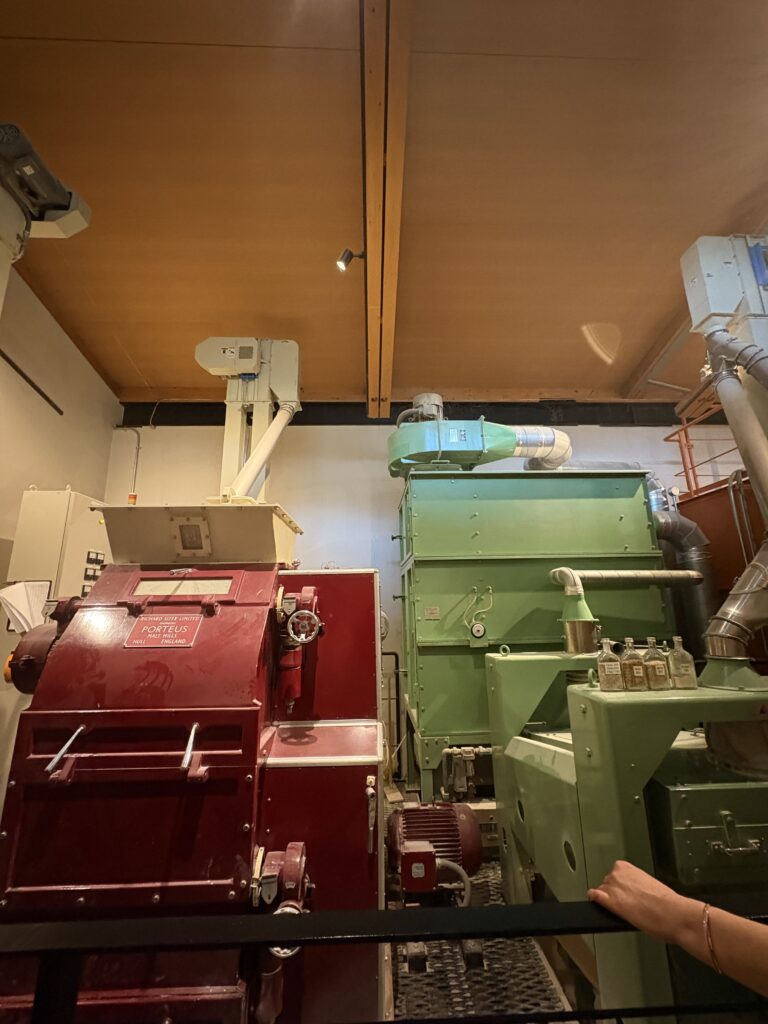
During the tour, I spotted the letters “NOV 89” on the nameplate attached to the machine.
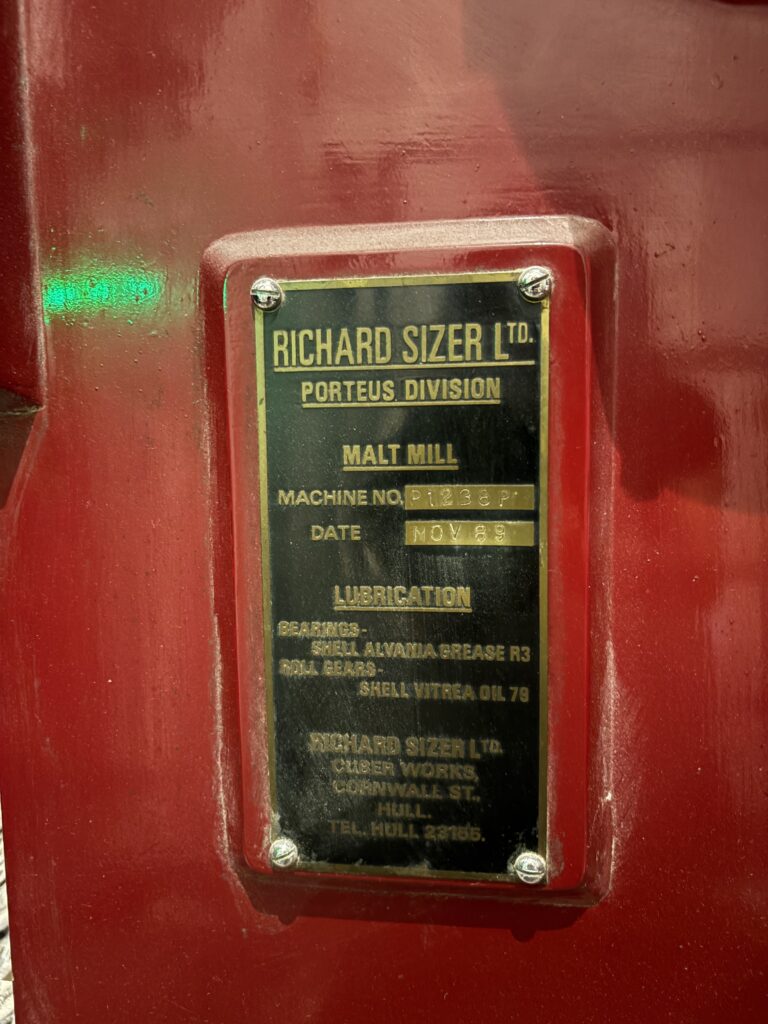
November 1989.
I couldn’t take my eyes off it.
A machine once used in Karuizawa is now crushing malt in Shizuoka.
Equipment from a distillery that whisky fans around the world longed for is creating new spirit in another place.
Aiming for “One More Glass”
W, made over a wood fire: weighty, with a long finish.
K, inherited from Karuizawa: fruity and light.
Shizuoka Distillery has spirits of such different character.
What Mr. Nakamura aims for is a whisky you never tire of, one that makes you think “just one more glass.”
Yet at Shizuoka Distillery, there are also spirits sleeping in the casks that are far more individual than you would ever imagine from the regular releases.
This time, in the warehouse, I was allowed to taste an astonishingly powerful peated spirit made in the wood-fired W.
A world entirely different from “never tiring of it.”
Even so, I was strongly drawn to its character.
And that day’s encounter would lead to the final commemorative bottling of Little Happiness’s 20th anniversary.
To be continued|Shizuoka Distillery 6 Years|Bar Little Happiness 20th Anniversary “Traveling Lito”
Whisky and rum taste even better when you know the hearts of the people who make them.
Every encounter is meant to be. Welcome to the world of Rum&Whisky.
[About the author]
Mika Tanimoto
CEO, Little.m Inc. / Owner-bartender
Since 2006, I have run Bar Little Happiness, a whisky and rum bar in Nagarekawa, Hiroshima. I visit distilleries in Japan and around the world and write about the people who make the spirits. Recipient of the Hiroshima City Excellent Skilled Worker Award.
“Whisky and rum taste even better when you know the hearts of the people who make them.”
[Visit the bar] 📍 Bar Little Happiness
Rolling Nagarekawa 1F, 5-14 Nagarekawa-cho, Naka-ku, Hiroshima
Mon–Sat 7:00 pm – 12:30 am / Sun 7:00 pm – 12:00 am (closed when I travel to visit distilleries)
No cover charge, no reservation needed