
What Is a “Beer Cask Finish”? Kanosuke Single Malt IPA CASK FINISH
2026.10.05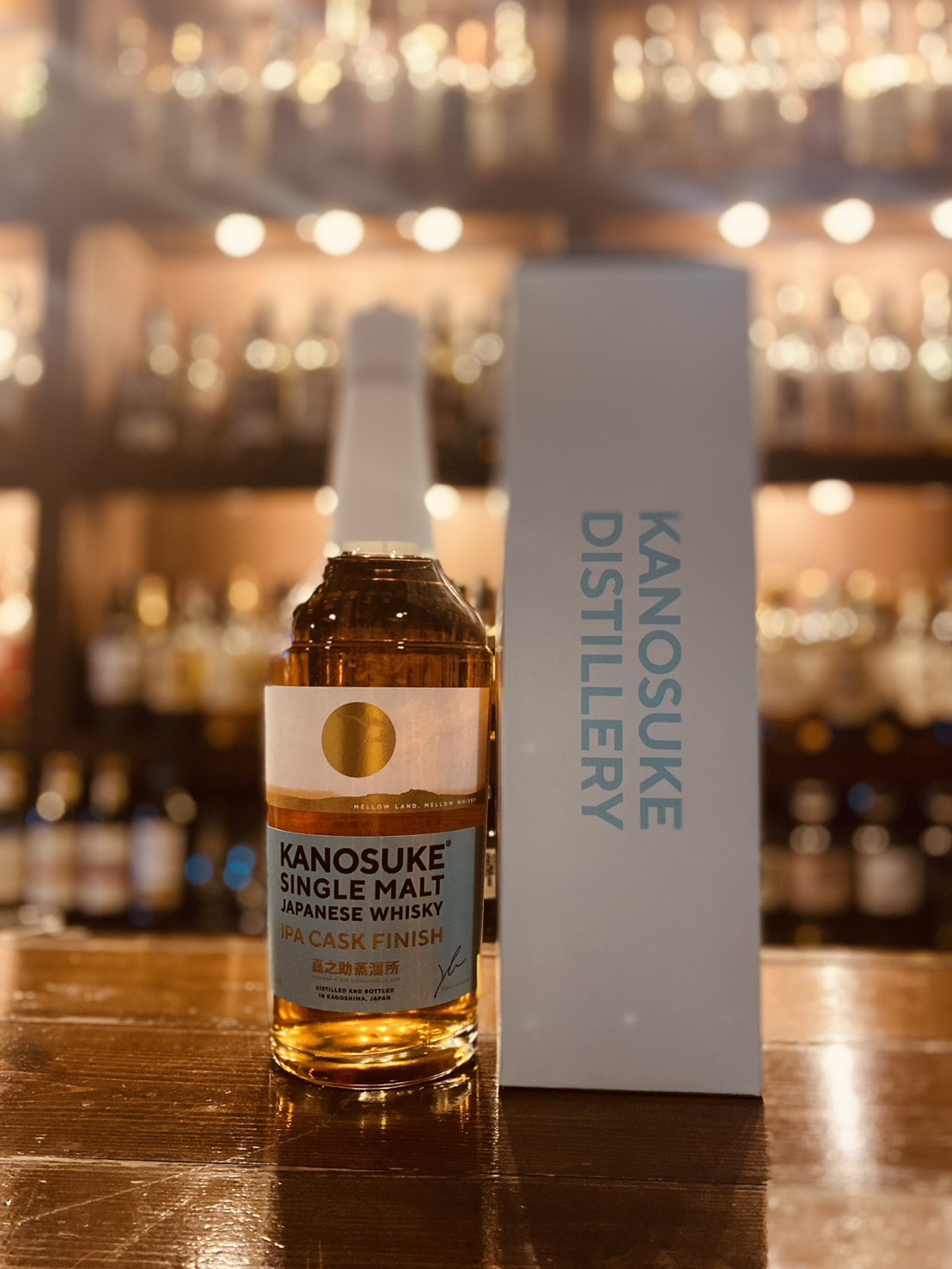
In short: what is a beer cask finish? Unlike sherry or wine casks, which can be bought through traders, IPA casks have no market — a distillery must send its own casks to a brewery and get them back. Kanosuke Single Malt IPA CASK FINISH (April 2026) layers hop citrus onto shochu recharred cask spirit using two double IPA casks. Plus Hiroshima’s own “Barrel Relay” between Sakurao and Hiroshima Neighborly Brewing. By Mika Tanimoto, Bar Little Happiness, Hiroshima.
A column by Mika Tanimoto, Bar Little Happiness (Nagarekawa, Hiroshima)
“With IPA casks, you can’t just make the cask itself.”
Words from Ryota Jinno, chief blender at Kanosuke Distillery (quoted from the distillery website).
Not a sherry cask, not a wine cask — an “IPA cask.”
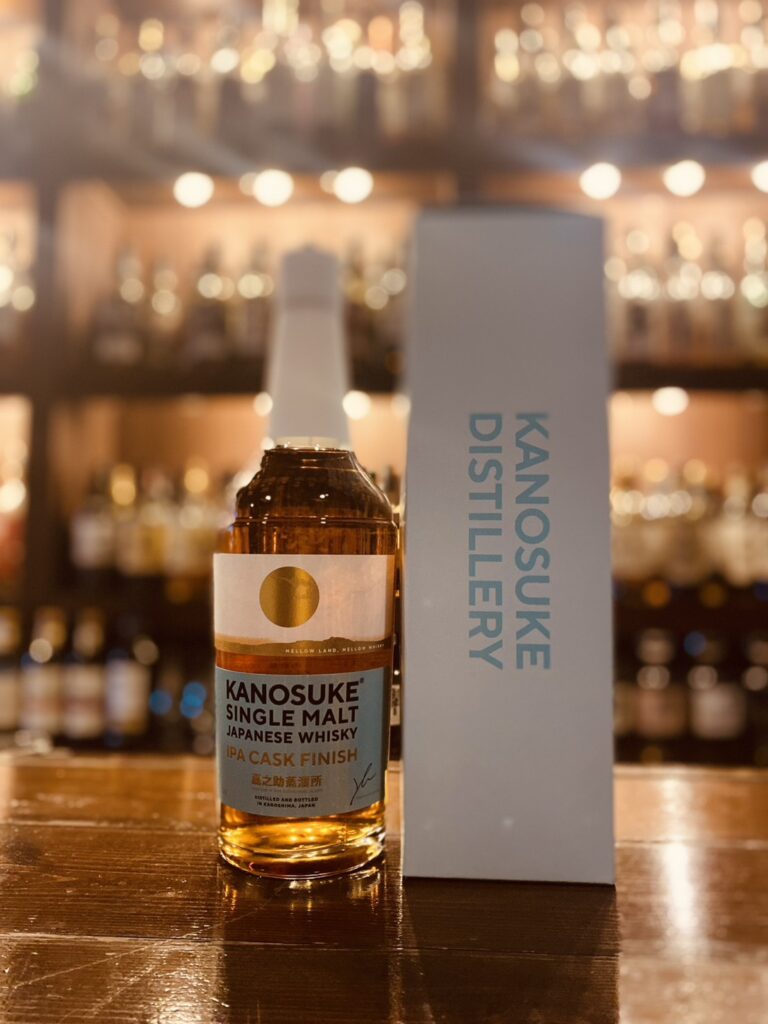
Kanosuke Distillery’s “Single Malt Kanosuke IPA CASK FINISH”
I first met this bottle at a recent seminar where Mr Ishihara of Kanosuke Distillery was speaking.
I was given a sample, and the moment it touched my tongue —
“What is this citrus?!”
I had been eagerly waiting for its release ever since.
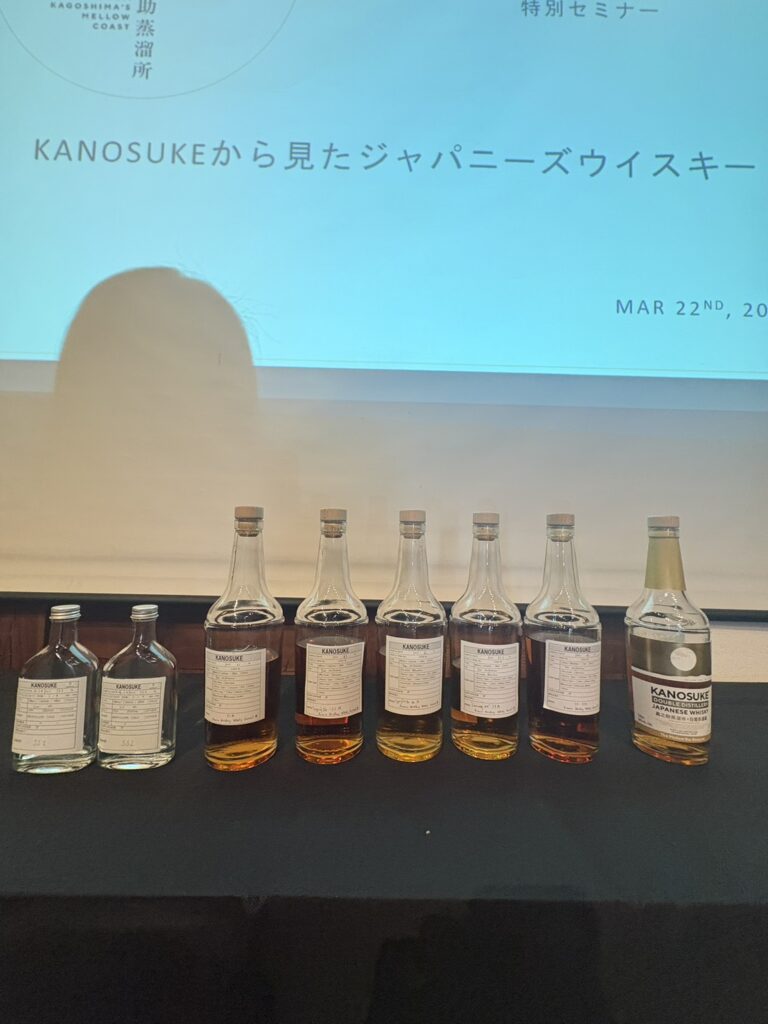
And as I looked into it, I realised that the world of “beer cask finishes” has a fundamentally different structure from the cask world we have known until now.
That is today’s story.
What is a beer cask finish, anyway?
In the whisky world, there is a process called “finishing.”
After its main maturation, whisky is moved into a different cask as a final touch, to take on the flavour of whatever that cask held before — a bit like make-up.
Sherry casks, wine casks, rum casks, port casks.
There are so many choices of cask for finishing.
Each cask carries its own memories.
Whisky distilleries are all incredibly dedicated to research.
They experiment with finishes in all kinds of ways to bring out their own character.
Even looking only at the last few years, the range of cask choices has grown extraordinarily.
Let me share my surprise when I learned that an “IPA cask” is something fundamentally different from a sherry or wine cask.
From casks you “buy” to casks you “make together”
Sherry casks and wine casks can be “sourced” through trading companies, I am told.
There are established routes for buying empty casks from sherry producers in Spain and châteaux in Bordeaux.
So distilleries can plan their products and buy casks accordingly.
But for IPA casks, no such market exists.
Why?
Because in most cases, beer is not something you age in casks for a long time.
“Barrel-aged beer” is itself a new category — and historically, the story went the other way: ageing beer in whisky casks.
A structure where “casks that have aged beer come onto the market and whisky distilleries can buy them” has not yet taken shape.
So how is an IPA cask born?
First, the whisky side prepares its own casks.
They entrust them to a brewery. The brewery ages beer in those casks.
Once the beer is emptied out, the casks return to the distillery.
Only after this round trip does an “IPA cask” become an “IPA cask.”
The cask travels between the distillery and the brewery.
In other words, an IPA cask is not something you buy from someone — it is something you build together with a brewery.
If sherry and wine casks are “cask sourcing,” IPA casks are “cask co-creation.”
If the distillery and the brewery don’t share the same aspirations, the project can’t even begin.
Mass production is difficult in principle.
The continuity of the product depends on the relationship with the brewery.
That is what it comes down to.
Recently, IPA casks have started to appear in core ranges even from big producers, so perhaps something new is happening.
Maybe one day bottles like this will come from Japan’s big names such as Suntory and Nikka too. I imagine that future.
This story was already under way in Hiroshima — Sakurao × Hiroshima Neighborly Brewing
In fact, this kind of cask co-creation with a local brewery had already been happening in my home town, Hiroshima.
In spring 2022, Hiroshima’s “SAKURAO BREWERY & DISTILLERY (Sakurao Distillery)” entrusted empty bourbon casks used to mature Sakurao single malt to the Hiroshima craft brewery “HIROSHIMA NEIGHBORLY BREWING.”
The brewery aged an imperial stout in those casks for about 10 months and released it as a limited “Barrel-Aged Imperial Stout.”
Then the casks, emptied of stout, went back to Sakurao Distillery, where spirit that had slept for 2 years in the Sakurao warehouse was filled into them for one more year.
The result was “Sakurao Single Cask 2020, 3 Years, Stout Cask Finish, Hiroshima Barrel Relay #1.”
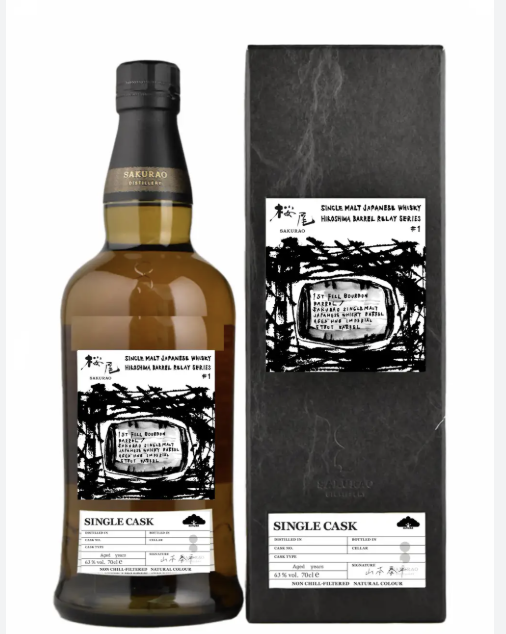
Roasty cacao and dark chocolate, citrus like orangettes and marmalade, and a finish of coffee beans. The stout cask had soaked deep into Sakurao’s young spirit.
A bottle made by a cask travelling within Hiroshima: Sakurao → brewery → Sakurao.
True to the project name “Hiroshima Barrel Relay,” the cask passes from hand to hand among local makers.
Sadly this bottle has already sold out, but at the counter I used to tell guests, “This is a bottle that could only have been born in Hiroshima.”
Whisky and beer — two crafts raising each other up.
Movements like this are spreading all over Japan.
A round-trip cask — how an IPA cask is born
Let me describe the actual flow a little more concretely.
- Kanosuke Distillery prepares shochu recharred casks
- Whisky is emptied from those casks, and the empty casks are entrusted to a brewery
- The brewery ages double IPA and imperial IPA in those casks
- Once the beer is emptied, the casks come back to Kanosuke Distillery
- Kanosuke gives its whisky additional maturation in those casks
In the cask wood, shochu, whisky, beer and then whisky again build up like layers.
Inside one cask, many layers stack up and marry together.
Why IPA? — the hop aroma takes the lead
There are so many styles of beer.
Stout, porter, pale ale, pilsner, IPA.
Why did Kanosuke choose “IPA” among them?
The key is hops.
IPAs — especially double IPAs and imperial IPAs — are beer styles that use a vastly larger amount of hops.
The aroma compounds in hops, reminiscent of citrus and tropical fruit, soak into the cask wood through long contact.
Stouts and porters are also used abroad as casks for finishing whisky,
but there the stars are the roasted notes and chocolate aromas of roasted malt. The brightness of hops is more restrained.
Kanosuke chose IPA because they wanted the cask to leave a “bursting citrus aroma.”
There was a clear design intention from the start: “to layer hop aromas onto the mellow texture of the shochu recharred casks.”
Kanosuke Single Malt IPA CASK FINISH — the thrill of the first sip
I still remember the moment I took a sip of the sample at the seminar.
“What happens when you put a grapefruit-like hop aroma on Kanosuke’s mellow texture?”
I tilted my glass wondering that.
Where it landed went beyond what I had imagined.
Fresh citrus from the hops, and honey!!
I thought, “Seriously, this is delicious!”
When it was released, there was a limit of two bottles per person, so I bought two —
and I loved it so much I even bought more later!
The key malt is spirit from shochu recharred casks, the symbol of Kanosuke.
I wrote about shochu recharred casks in detail in another article: Kanosuke Distillery, Mr Ishihara’s “connections” and the structure of the whisky industry.
Please read that too if you like.
For the finish, I am told two double IPA casks with different characters were used.
A heavier type and a lighter type.
Combining two contrasting casks gives the aroma a three-dimensional quality. A fine attention to detail.
Tasting notes
Nose: Fresh green apple, cotton candy, malt, cinnamon bark
Palate: Lime, hops, honey
Finish: Refreshing sweetness and gentle bitterness
It works neat, on the rocks or as a highball!
Enjoy distinctive Japanese craft finishes at Bar Little Happiness
At Bar Little Happiness, you can enjoy by the glass Kanosuke IPA CASK FINISH and other distinctive finishes from Japan’s craft distilleries.
Kanosuke in Kagoshima: “shochu recharred cask × IPA cask.” Sakurao in Hiroshima: a Bordeaux red wine cask finish.
The present of Japanese craft whisky should come to life in three dimensions.
Frequently asked questions
Q1. What is a beer cask finish?
It is a technique of giving whisky additional maturation in casks that previously aged beer (especially IPAs or stouts).
Aromas from the hops and malt pass into the whisky, creating flavours that go in a different direction from sherry or wine casks.
Q2. How are IPA casks different from sherry or wine casks?
For sherry and wine casks, there are established supply routes for buying casks from around the world through trading companies.
IPA casks, on the other hand, do not yet have a large cask market. Especially for craft-sized distilleries, they come into being through a co-creation process: entrusting their own casks to a brewery and getting them back after the beer has aged.
The relationship between the distillery and the brewery itself is engraved into the cask.
Q3. What kind of whisky is Kanosuke Single Malt IPA CASK FINISH?
Released in April 2026 as a small batch available only at the Kanosuke Distillery shop and online shop.
Its key malt is spirit from Kanosuke’s signature shochu recharred casks, finished in two double IPA casks with different characters.
You can enjoy flavours where freshness and sweetness coexist, reminiscent of green apple, lime, honey and cinnamon bark.
Q4. Why are IPA beers chosen for whisky cask finishes?
Because IPAs use a lot of hops, and their aroma compounds, reminiscent of citrus and tropical fruit, soak easily into the cask wood.
Compared with stouts and porters, IPAs are better at leaving a bright citrus aroma in the cask.
Q5. Where can I drink a beer-cask-finished whisky?
At Bar Little Happiness in Nagarekawa, Naka-ku, Hiroshima, we serve Kanosuke Single Malt IPA CASK FINISH. We pour it one glass at a time, while talking about its design philosophy and the background of the casks.
We have entered an era where a whisky’s character is also judged by which cask it matured in, with whom, and with what aspirations.
The beer cask finish is one new answer to that.
For Japanese whisky to keep its uniqueness in the world, this kind of “individuality through collaboration” will surely become more and more important.
Casks are no longer something you buy, but something you make together.
This bottle from Kanosuke quietly showed me the entrance to that world.
About Kanosuke Single Malt IPA CASK FINISH
You can enjoy this bottle at Bar Little Happiness. It is a small-batch release available only at the Kanosuke Distillery shop and online shop; at the bar we serve it from a single glass.
You can also take some home in a small sample bottle (sold by measure). It is popular with guests who are short on time, who can’t drink much, or who want to take home a souvenir of their trip.
Every encounter is meant to be. Welcome to the world of Rum&Whisky.
“Both whisky and rum taste even better when you touch the feelings of the people who make them.”
Related articles
- Kanosuke Distillery: Mr Ishihara’s “connections” and the structure of the whisky industry
- Single Malt Sakurao Bordeaux Red Wine Cask (DISCOVERY)
- Kameda, Niigata: Mizunara Expression “Hyakusei Fuma”
- Saburomaru Distillery reports: the complete series
[About the author]
Mika Tanimoto
CEO, Little.m Inc. / Owner-bartender
Since 2006, I have run Bar Little Happiness, a whisky and rum bar in Nagarekawa, Hiroshima. I visit distilleries in Japan and around the world and write about the people who make the spirits. Recipient of the Hiroshima City Excellent Skilled Worker Award.
“Whisky and rum taste even better when you know the hearts of the people who make them.”
[Visit the bar] 📍 Bar Little Happiness
Rolling Nagarekawa 1F, 5-14 Nagarekawa-cho, Naka-ku, Hiroshima
Mon–Sat 7:00 pm – 12:30 am / Sun 7:00 pm – 12:00 am (closed when I travel to visit distilleries)
No cover charge, no reservation needed