
Kanosuke Distillery and the “Industry Structure” of Whisky: Brand Advocate Ishihara-san and a Story of Connection (Kagoshima, Japan)
2026.10.05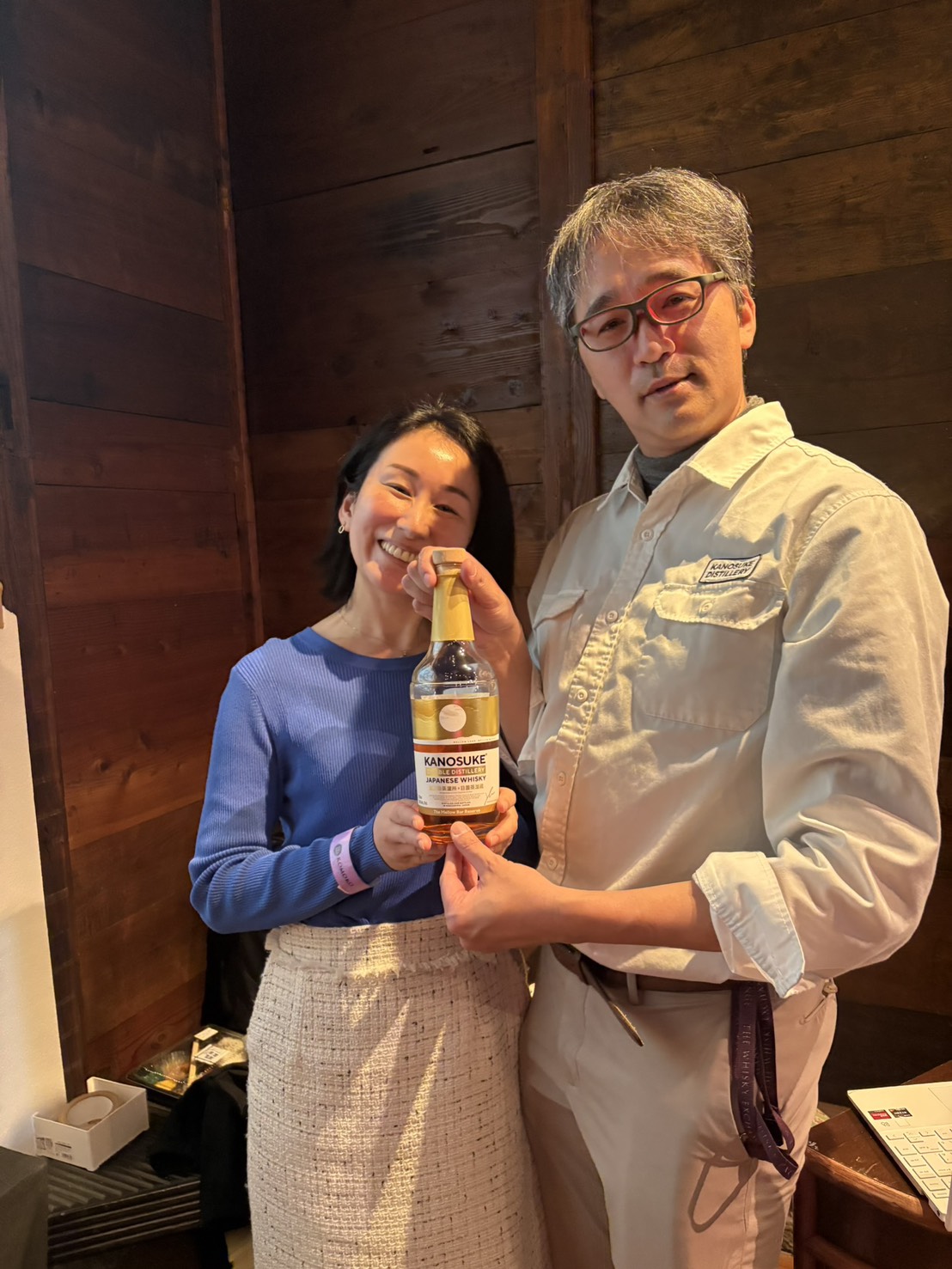
In short: at Komoro Distillery Festival 2026, Ishihara-san, brand advocate of Kanosuke Distillery (Hioki, Kagoshima, Japan), explained whisky through “industry structure”: Scotland divides the work and trades spirit like car parts, while a Japanese distillery must make everything in-house. Kanosuke’s three stills, worm tubs, water-jacketed washbacks, varied warehouses and recharred Mellow Kozuru casks — and the “connection” that brought Ishihara-san to Kanosuke. By Mika Tanimoto, owner of Bar Little Happiness in Hiroshima.
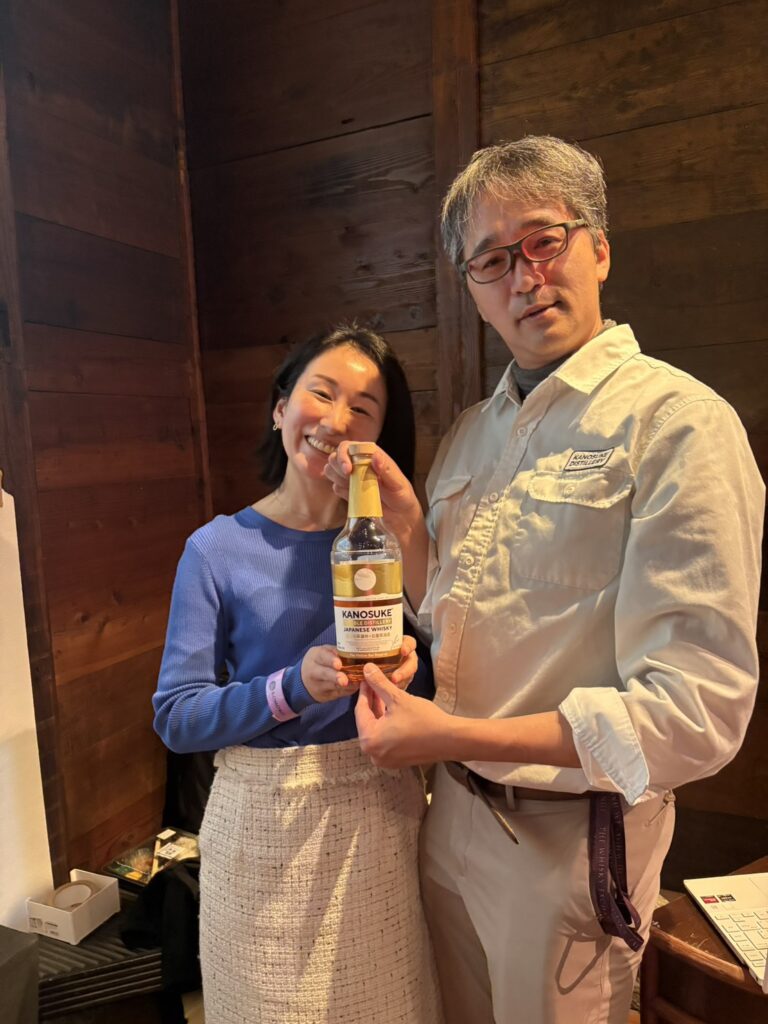
My biggest reason for attending Komoro Distillery Festival 2026 was to hear Ishihara-san of Kanosuke Distillery speak.
I joined the three-distillery cross talk and a seminar by Kanosuke alone — and before I knew it, I had become quite an expert on Kanosuke there in Komoro.
Here I bring together the view of “whisky’s industry structure” that made so much sense to me at the seminar, Kanosuke’s one-of-a-kind features, and the “connection” behind the brand advocate, Ishihara-san.
Kanosuke Distillery: a “mellow” temptation born from shochu tradition and innovation
Kanosuke Distillery’s backbone and philosophy
Kanosuke Distillery is in Hioki, Kagoshima Prefecture, and is run by Komasa Brewery, which has more than 140 years of history.
Its origin lies in the dream of the second generation, Kanosuke Komasa: “I want to spread shochu to the world.”
Inheriting that wish, the current president, Yoshitsugu Komasa, founded the distillery “to make whisky with the skills built up in shochu-making, and use it as a gateway to share shochu and the appeal of Kagoshima with the world.”
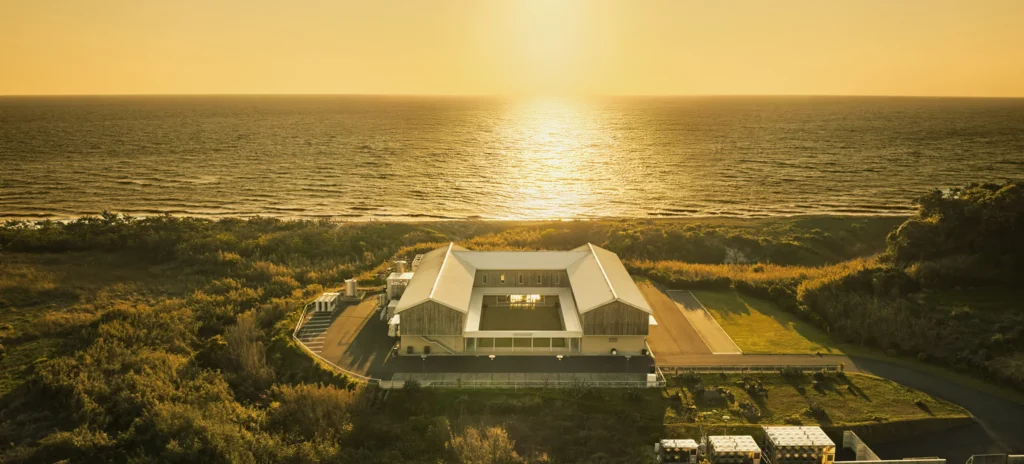
(Borrowed from their website ↑)
Scotland’s “division of labour” vs. Japan’s “do it all yourself”
At this festival, listening to Ishihara-san, Kanosuke’s brand advocate, what struck me most was a unique perspective: “seeing whisky-making as an industry structure.”
Drawing on experience in finance at a logistics company and managing auto parts overseas, Ishihara-san explains whisky-making by comparing it to “assembling a car.”
- Scotland (division of labour):
Just as a car factory gathers the steering wheel, tyres and engine from separate specialist factories to build one car, many distilleries exchange and trade spirit with each other to create complex flavours.
That lets a single distillery focus on “a specific role (part).”
- Japan (one company does it all):
In Japan, exchanging spirit with other companies is not common.
Just as it would be hard for Suntory to get spirit from Nikka, the situation is: “Within one company, you have to make the steering wheel, the engine and the tyres all yourself, and build a Lexus.”
Because of this structural difference, Japanese distilleries need “the ability to create many types of spirit in one place” (tsukuri-wake).
The careful “tsukuri-wake” that shapes Kanosuke
The body and complexity of Kanosuke’s whisky come from thorough equipment for making a variety of “parts” in-house.
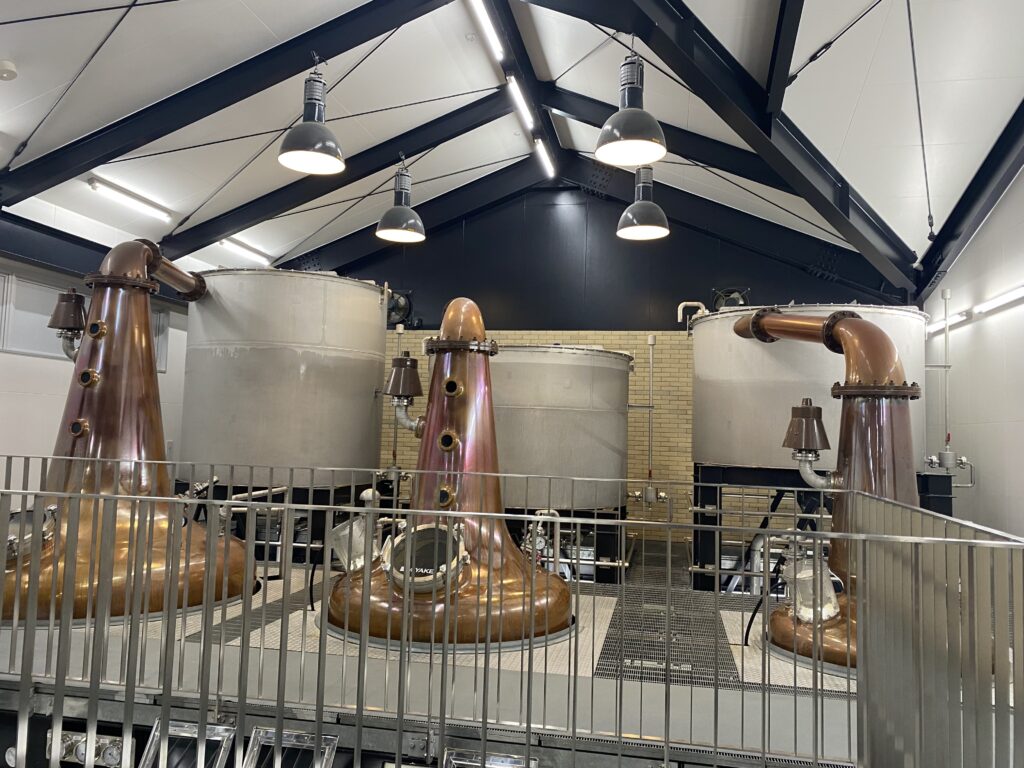
- Three stills:
Using three stills with different neck shapes and lyne arm angles, they make a wide range of spirits, from powerful to floral.
- Traditional worm tubs:
They use “worm tubs,” a traditional cooling system close to that of shochu-making.
Because the contact area is small, it creates a muscular, powerful spirit that clings richly to the tongue.
- The art of temperature control:
Using the know-how of “controlling temperature” built up in shochu-making, the washbacks are fitted with special water jackets.
By deliberately raising the temperature during fermentation to activate lactic acid bacteria, they draw out Kanosuke’s rich, creamy, “mellow” spirit.
- A variety of maturation environments:
“Terroir,” exposed to the sea breeze; “Legacy,” a half-underground warehouse for mellow maturation; “Community,” which uses a former elementary school gym — by changing the environment, they raise different characters.
Cask maturation packed with “shochu pride”
Kanosuke’s identity lies in “recharred casks” that were used for Mellow Kozuru, the company’s own cask-aged rice shochu.
Matured in these casks, the whisky shows American oak sweetness followed by a unique spicy finish reminiscent of “koji” — this is the true source of Kanosuke’s “Japanese nuance.”
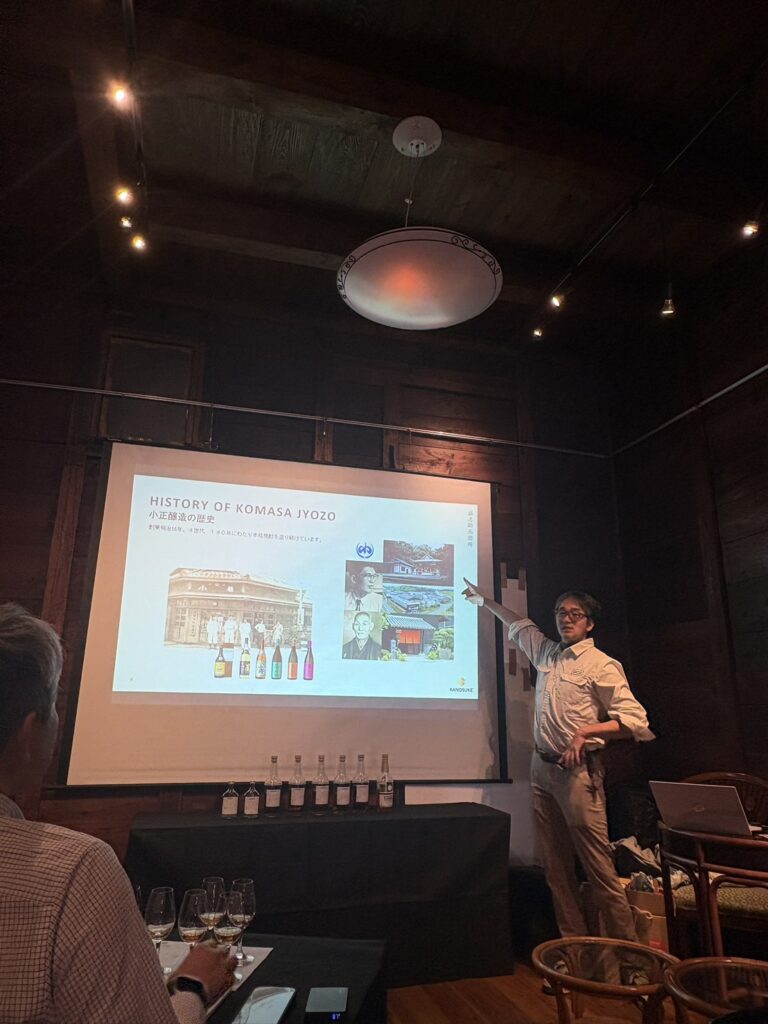
Why did the president call on Ishihara-san? A business philosophy tied by “connection”
Ishihara-san, the face of the brand, has a very unique background.
An expert in logistics and finance, with a deep love of whisky inherited from a father during a childhood spent in the UK.
The deciding factor: English, finance and whisky, all in one
When Kanosuke Distillery decided to partner with Britain’s Diageo, what it needed was “English good enough to deal with the world as an equal,” “the ability to manage complex financial and production plans,” and above all “a deep love of whisky.”
Ishihara-san was the person chosen for having all three.
The number “400”: a bridge between production and finance
An episode Ishihara-san shared symbolises this strength.
In an online interview, without even the president present, the task given was very demanding: “Based on the annual business plan, create a monthly cash-flow plan.”
Ishihara-san asked us:
“What comes to mind when I say ‘400’?”
It is a rough guide to how much alcohol you get from one tonne of malt.
Even with financial knowledge, you can’t calculate cash flow accurately unless you know the realities of whisky production.
Being able to see whisky as an “industry structure” and logically explain “how much cash one tonne of malt turns into” was what decided the hire.
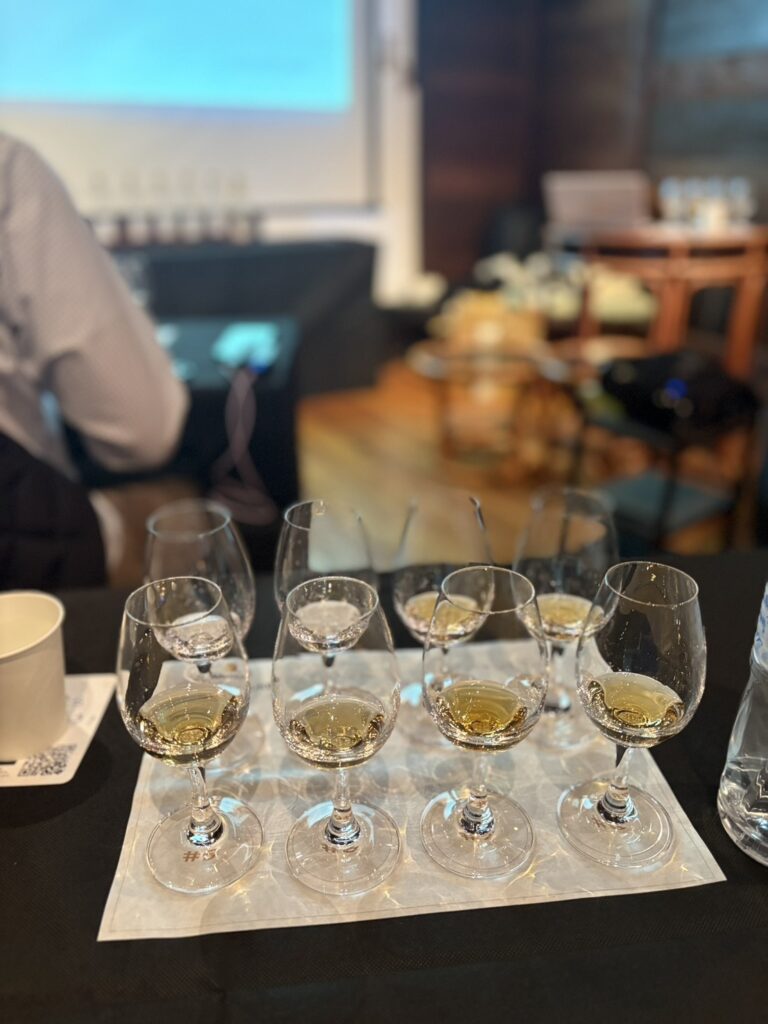
The humility of “there were no other offers,” and a destined match
When I asked Ishihara-san, “Didn’t you have other offers?”, the humble answer was, “No, there weren’t any.”
But someone with this much expertise and such deep love can’t be easy to find.
Komasa Brewery’s corporate philosophy is “creating joy together.”
Even in tough negotiations with the world, at its root lie respect and joy for the makers.
I think the president chose Ishihara-san as “the best companion” to embody this philosophy.
Childhood memories with a father, a meeting with Ian Chang in Tokyo in 2013, and exploring whisky as a hobby.
Every dot connected into one line at Kanosuke.
Listening to Ishihara-san, I felt that this is exactly what “connection” (go-en) means.
Touching Ishihara-san’s feelings in Komoro, I came to love Kanosuke even more.
What alcohol brings us is warm encounters between people, and “connections” that carry on across time.
May this wonderful connection add colour to your time at the bar, too!
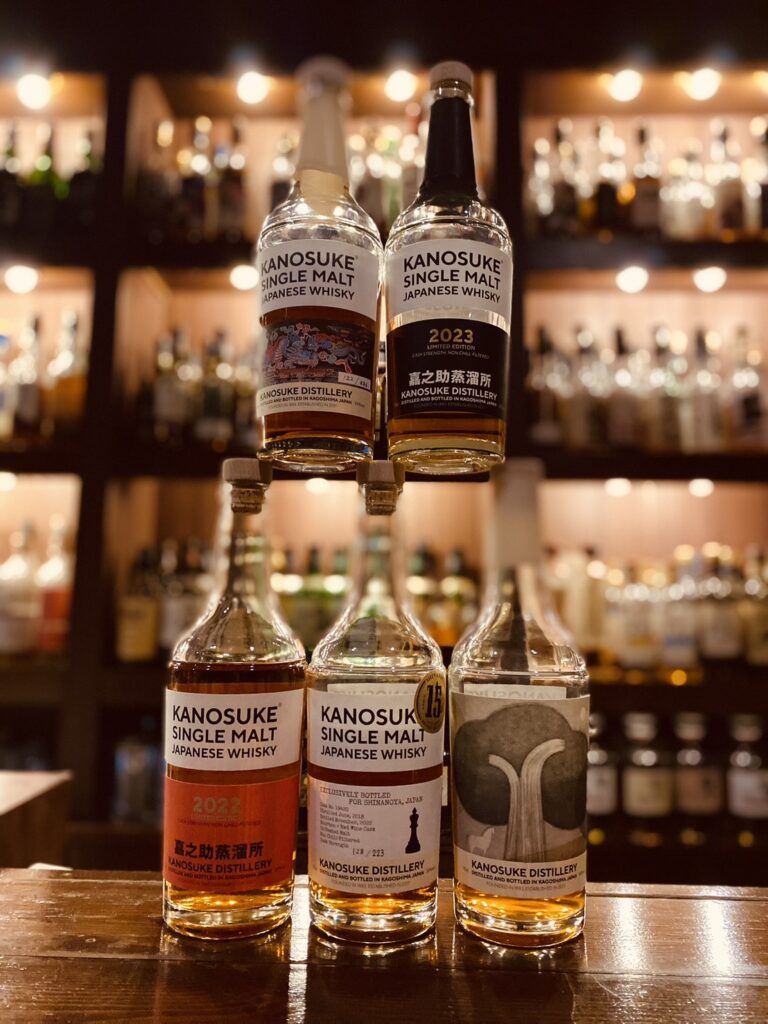
At Bar Little Happiness, we have Kanosuke whisky ready and look forward to seeing you.
[About the author]
Mika Tanimoto
CEO, Little.m Inc. / Owner-bartender
Since 2006, I have run Bar Little Happiness, a whisky and rum bar in Nagarekawa, Hiroshima. I visit distilleries in Japan and around the world and write about the people who make the spirits. Recipient of the Hiroshima City Excellent Skilled Worker Award.
“Whisky and rum taste even better when you know the hearts of the people who make them.”
[Visit the bar] 📍 Bar Little Happiness
Rolling Nagarekawa 1F, 5-14 Nagarekawa-cho, Naka-ku, Hiroshima
Mon–Sat 7:00 pm – 12:30 am / Sun 7:00 pm – 12:00 am (closed when I travel to visit distilleries)
No cover charge, no reservation needed