
Ikawa Distillery and Juzan: Whisky That “Lives with Water” in the Southern Alps (Shizuoka, Japan)
2026.10.05
In short: Ikawa Distillery sits at about 1,200 metres in the Southern Alps of Shizuoka, Japan, at the very top of the Oi River, four hours by car into the mountains. It is run by Juzan, a forestry company whose parent is a paper maker, which for half a century didn’t know how to make use of its vast mountain land — until it chose whisky: water clean enough for wasabi, mizunara oak from its own forest, and a cool, wet climate. A story about water, dams and living with nature. By Mika Tanimoto, owner of Bar Little Happiness in Hiroshima.
“Why make whisky this deep in the mountains?”
I scooped up water that had just sprung from the ground and drank it from my palm.
Cold, clear, and without the slightest off-note.
Getting to the distillery took a whole four hours by car.
All along that long road, Hirai-san, who guided us, kept telling us about these mountains.
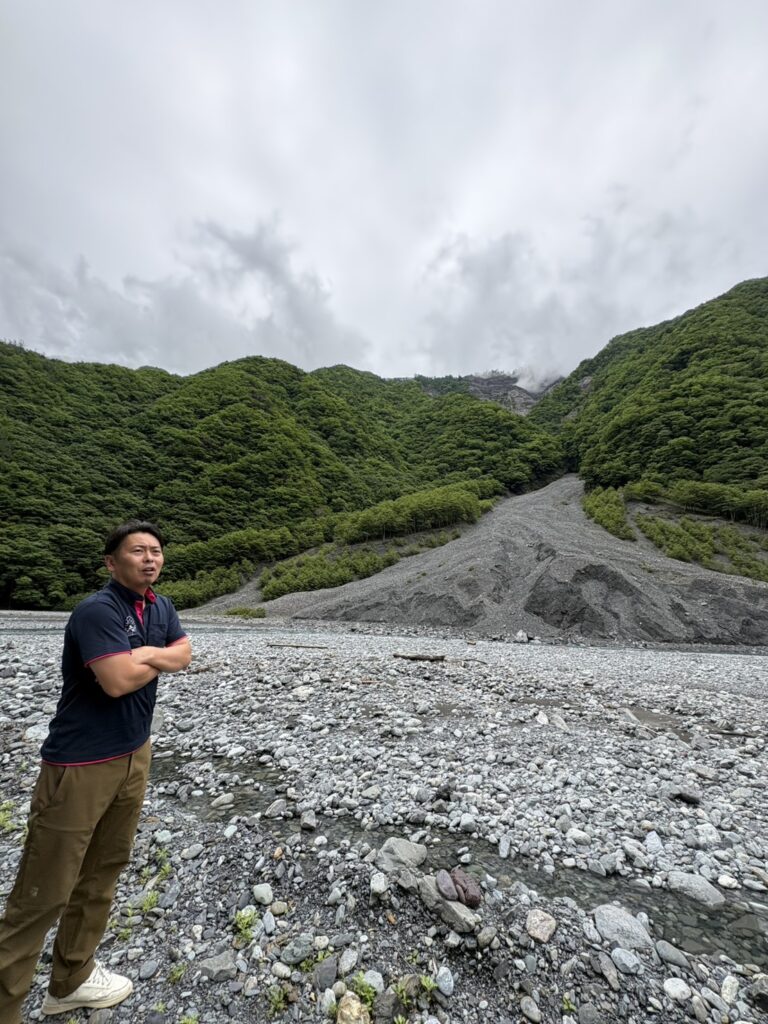
In front of me, a huge collapse — “Akakuzure.”
A drop of about 1,000 metres.
Big enough to fit all of Disneyland inside.
And what you can see is only a small part of it, I was told.
These Southern Alps were once the bottom of the sea; they say the mountains were pushed up when the Izu Peninsula collided about a million years ago.
Even now, they keep growing a few millimetres every year.
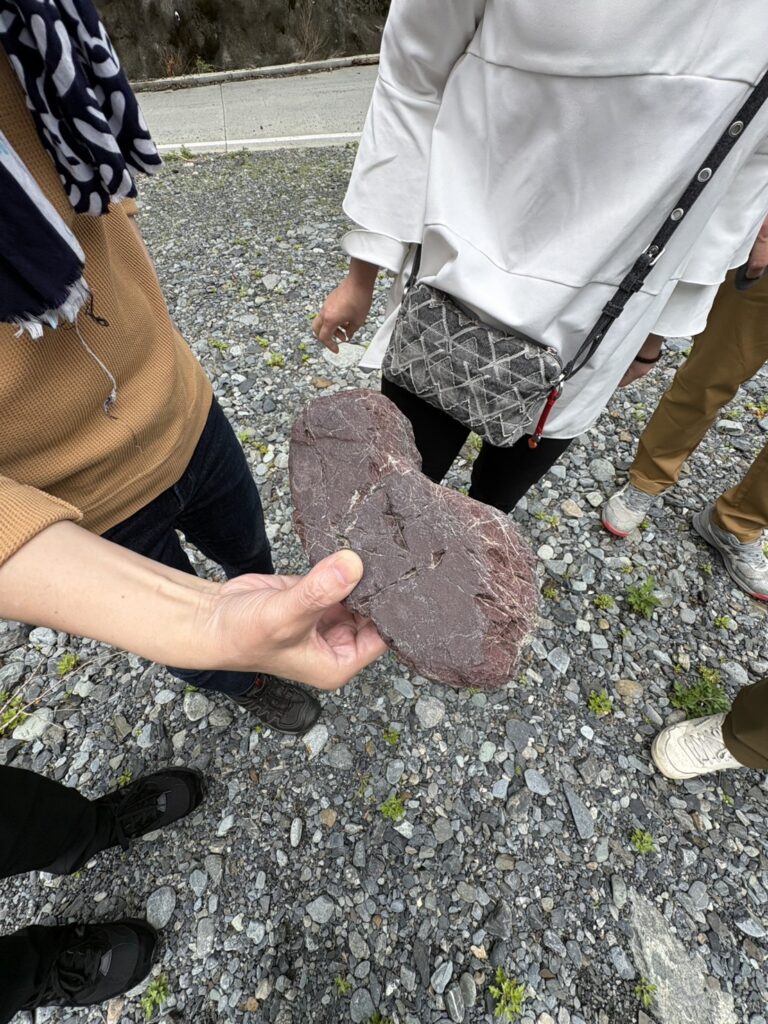
The red stones at my feet are traces of creatures that once lived in the sea.
Collapsing and rising at the same time, these mountains are still moving.
At my feet, Fuji thistles. On the rough slopes, “pioneer trees” are the first to put down roots.
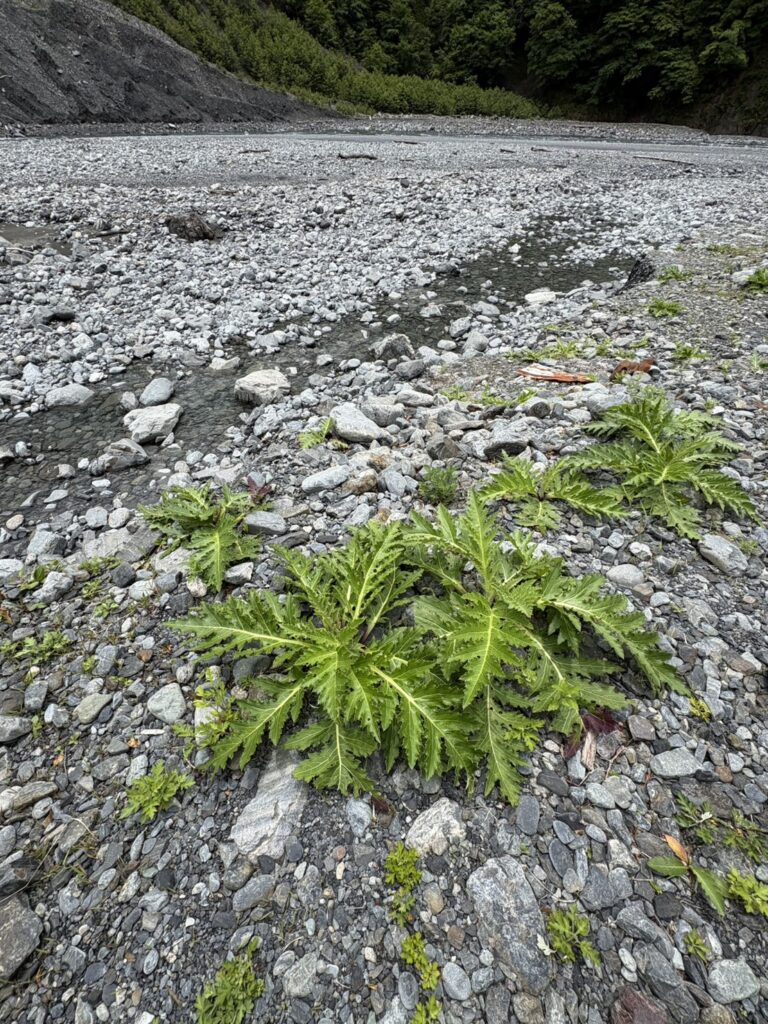
Little by little, soil forms, and eventually it becomes a forest.
As we climbed, listening to stories like this, the question I first had slowly changed shape.
“Why make whisky this deep in the mountains?”
By the time we arrived, the question had become:
“It’s whisky precisely because it’s these mountains.”
“For half a century, we didn’t know how to make use of these mountains”
Ikawa Distillery is run by a company called Juzan.
Its roots are in forestry.
And its parent company is a paper maker that also runs hydropower.
A vast company-owned estate in the Southern Alps, holding several peaks of around 3,000 metres.
But how could they sustainably protect and make use of this precious nature…
For half a century, they couldn’t find the answer.
“For more than half a century, we didn’t know how to make use of these mountains.”
What they had inherited was simply too big.
They knew they had to protect it.
But just protecting it won’t keep people’s lives going.
There was a time when they tried to sell the water.
But plain water doesn’t easily convey its value.
At the end of that long question, the answer they reached was whisky.
Bottling this land whole
When they decided to make whisky, things that had been separate until then connected into one line.
Water.
The area around the distillery is the very top of the Oi River.
People have lived on this land for more than 135 years.
The reason: the water is good.
There used to be wasabi fields here.
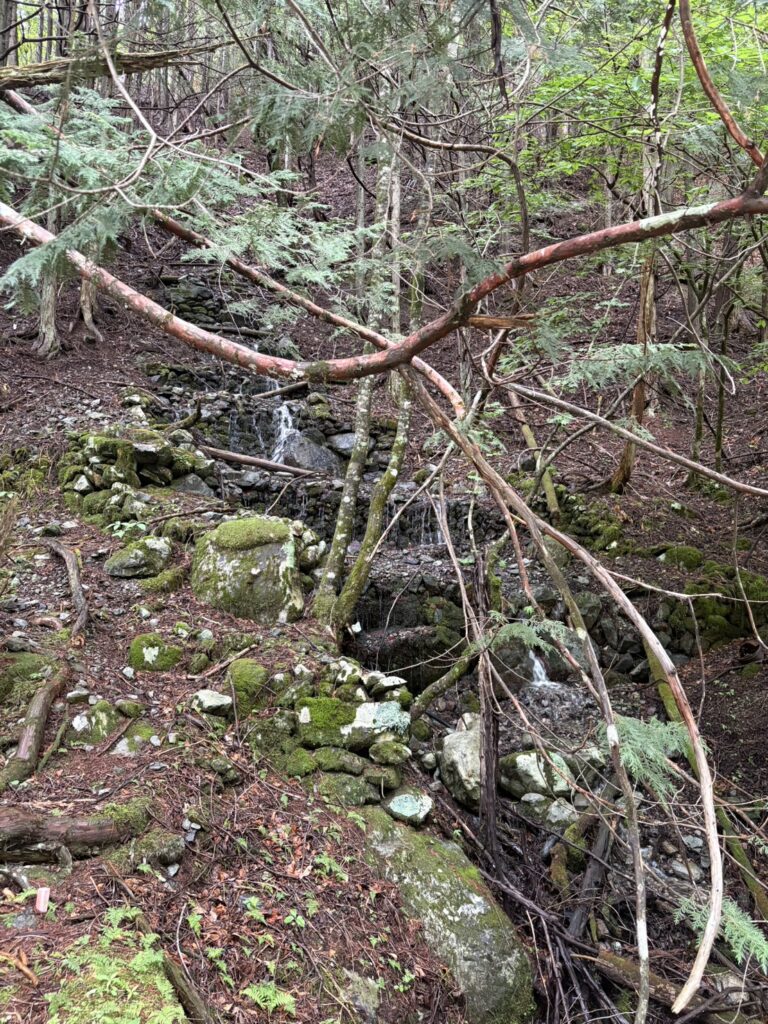
Wasabi grows only in clean water.
Before building the distillery, they surveyed dozens of spots in the mountains, and only here was there no E. coli or the like.
So the mashing water is used almost untouched — just treated with UV light to meet health-centre standards.
That clear cupful I drank on the way.
That becomes the mashing water, just as it is.
Wood.
Whisky needs casks.
Usually mizunara oak is cut down for building timber, but in these mountains it was left standing.
In forestry, logs were carried by floating them down the river.
But mizunara is so dense that it sinks, so it couldn’t be floated.
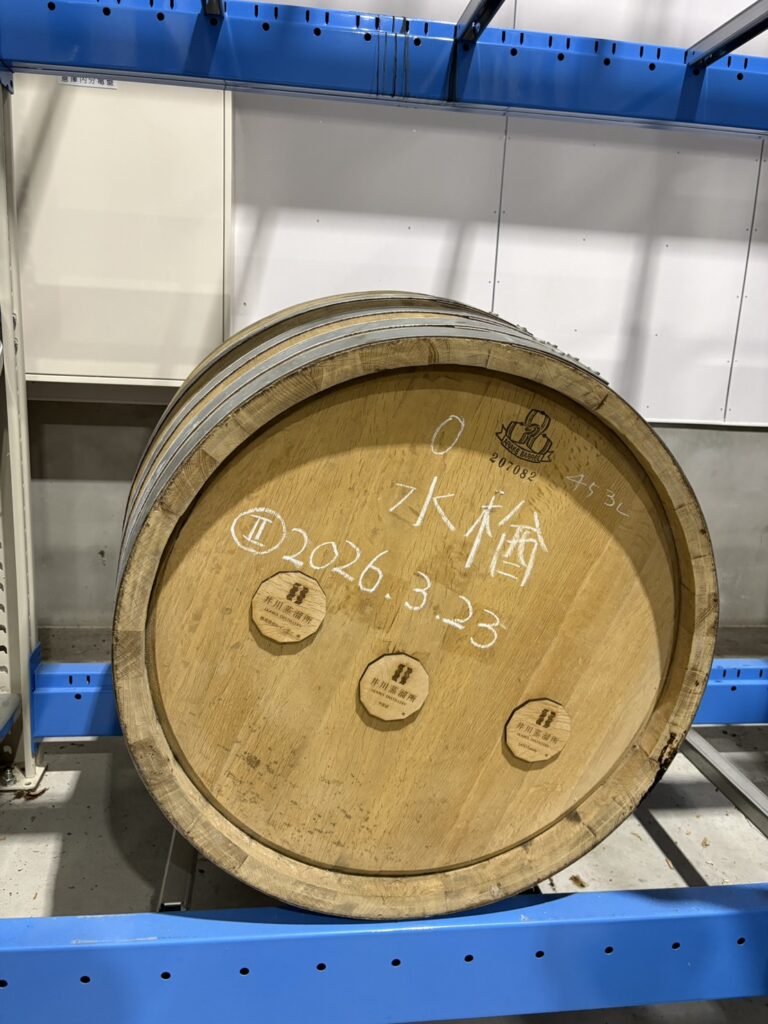
Thanks to that history, they can now make casks from mizunara in their own forest.
Altitude.
The distillery stands on high ground at about 1,200 metres.
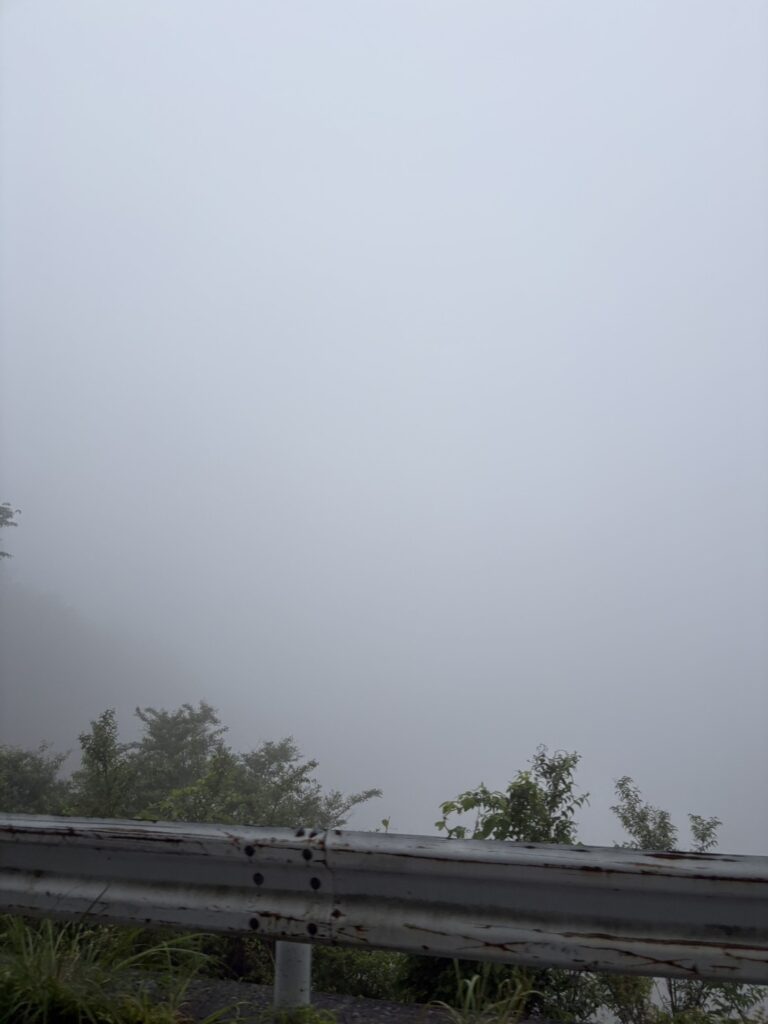
Clouds collide from the west, bringing lots of rain: a cool, humid environment.
As a place for maturation, it creates an individuality like nowhere else.
Mash with this land’s water, fill into casks of this land’s wood, and let it sleep on this land.
Seal the terroir whole inside a bottle.
“This, we can do.”
And so whisky-making began.
Water goes round. Dams, and our future
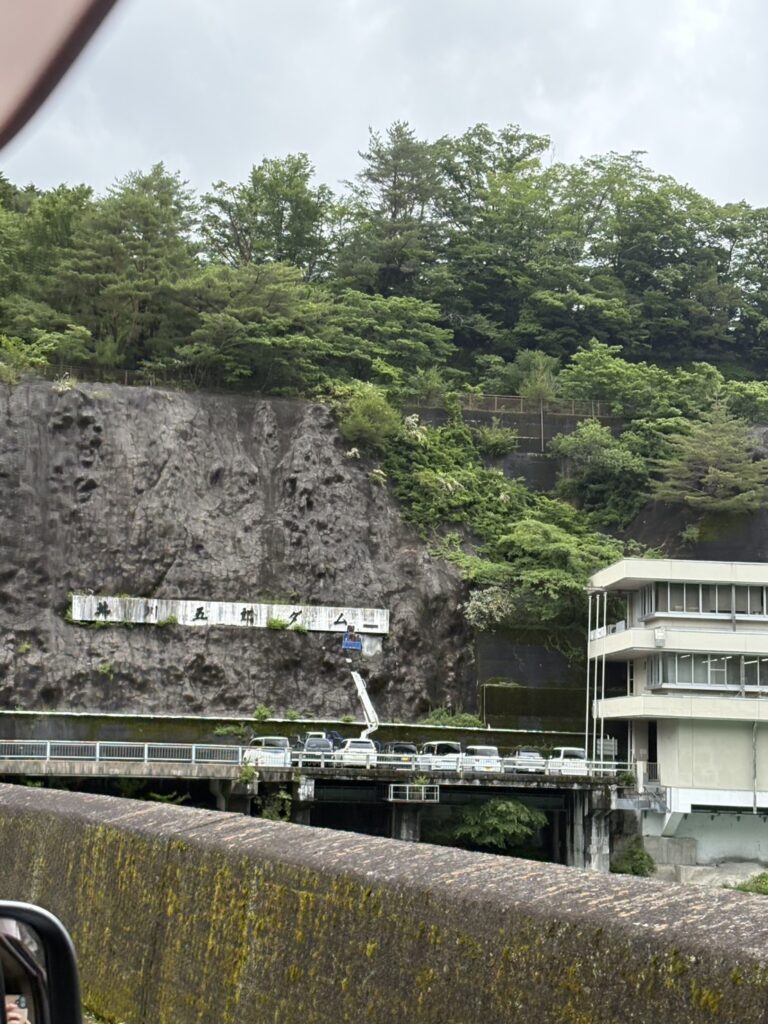
On the way to Ikawa Distillery, we passed several dams.
Many of Japan’s dams were built in the “dam rush” 70 to 80 years ago, I was told.
But dams are not renewable facilities.
They slowly fill with sediment flowing down from upstream.
Trying to dredge it is like scooping out sediment with an ear pick.
For our children, grandchildren, and the generation after that, a time will come when dams reach the end of their lives.
That’s what Hirai-san told me.
Thanks to these dams, we use water for daily life and get water for industry.
Water that the forest has made over thousands of years is delivered by the dams to people downstream.
That water eventually flows out to sea, becomes nutrients for the sea, supports fishing, turns into rain clouds, and comes back to the mountains again.
“I want people to face water.”
Those words from Hirai-san.
One reason for making whisky this deep in the mountains is to give people a chance to learn about this cycle of water.
A glass of whisky is connected to everything — the forest, the dams, the sea, and our lives.
That’s what they want to convey.
That the water that comes out whenever we turn on the tap is not forever.
How this country will face nature from now on.
Up in the mountains, I felt I had been handed that question.
A forest left untouched, and maitake mushrooms
Juzan’s approach to the forest is basically “don’t touch it,” I was told.
Once you intervene, unless you keep intervening forever, the strength of the forest itself declines.
So they don’t go out of their way to cut healthy trees.
The mizunara that become casks can’t be mass-produced either.
They use only trees that have fallen.
Each one is a long span of time in itself.
By the way, maitake mushrooms grow on mizunara trees, and apparently some people raise their own “my maitake.”
The blessings of the mountain were right next to daily life.
I nodded deeply, too, when I heard that many of the awards this distillery has received are in the environmental field.
One form of people and nature living together in the forest.
That is the whisky here.
People and nature living together
The person who embodied this more than anyone was Hirai-san, who had been beside me all along, talking about the mountains.
The business card I was given said “Visiting Professor, Shizuoka University.”
“Wow! What’s your field?” I asked, and the answer made me groan in admiration.
Five years since the distillery’s construction was planned.
Hirai-san had come to know this land deeply.
Seeing that, the university reached out, I was told.
Not a specialism learned at a desk, but knowing these mountains and this region, and talking about them, became the title of visiting professor.
That’s why, I understood.
The depth of those mountain stories that went on for four hours without a break.
And how Hirai-san had melted into the community of this land itself.
Whisky told by someone who knows the mountains had real depth.
…..
When the distillery was launched, they posted a job ad on their website for just one week — and more than ten people applied.
That many people raised their hands for a challenge this deep in the mountains.
In that fact, too, I felt the pull of this place.
Here’s another little story.
Apparently there’s a rule that the president must climb this mountain on 7 August of the year they take office.
The character of a company that lives with the mountains shows through.
Leaving the distillery, the four-hour road already felt short.
The dams we passed so many times on the way.
That clear mashing water.
Mountains still moving, collapsing and rising.
All of it flows into one whisky.
Why does a paper company make whisky up in the mountains?
Surely it’s to hand down these mountains, this water, and the life of the region that water nourishes to the next generation.
Even the water we casually drink every day has a source, a forest, and an unimaginable amount of time.
If a glass of whisky can be a chance to remember that…..
I felt there could be no richer drink.
Coming next
By the way, visits are possible only from around April to November.
Even for bar professionals, tours are offered only about four times a month.
Depending on the weather, it’s not unusual to have to turn back on the way.
What’s more, part of the road is private land.
You can’t drive in with your own car. You could get lost in the mountains, so please don’t try to visit unannounced.
Precisely because it isn’t a place you can casually drop by — next time, I’ll show you the whole journey.
Every encounter is meant to be. Welcome to the world of Rum&Whisky.
“Whisky and rum taste even better when you touch the hearts of the people who make them.”
[About the author]
Mika Tanimoto
CEO, Little.m Inc. / Owner-bartender
Since 2006, I have run Bar Little Happiness, a whisky and rum bar in Nagarekawa, Hiroshima. I visit distilleries in Japan and around the world and write about the people who make the spirits. Recipient of the Hiroshima City Excellent Skilled Worker Award.
“Whisky and rum taste even better when you know the hearts of the people who make them.”
[Visit the bar] 📍 Bar Little Happiness
Rolling Nagarekawa 1F, 5-14 Nagarekawa-cho, Naka-ku, Hiroshima
Mon–Sat 7:00 pm – 12:30 am / Sun 7:00 pm – 12:00 am (closed when I travel to visit distilleries)
No cover charge, no reservation needed