
In a Storehouse at the End of a Mountain Road, Rum Becomes Terroir|Visiting Boso Oigura Distillery
2026.11.05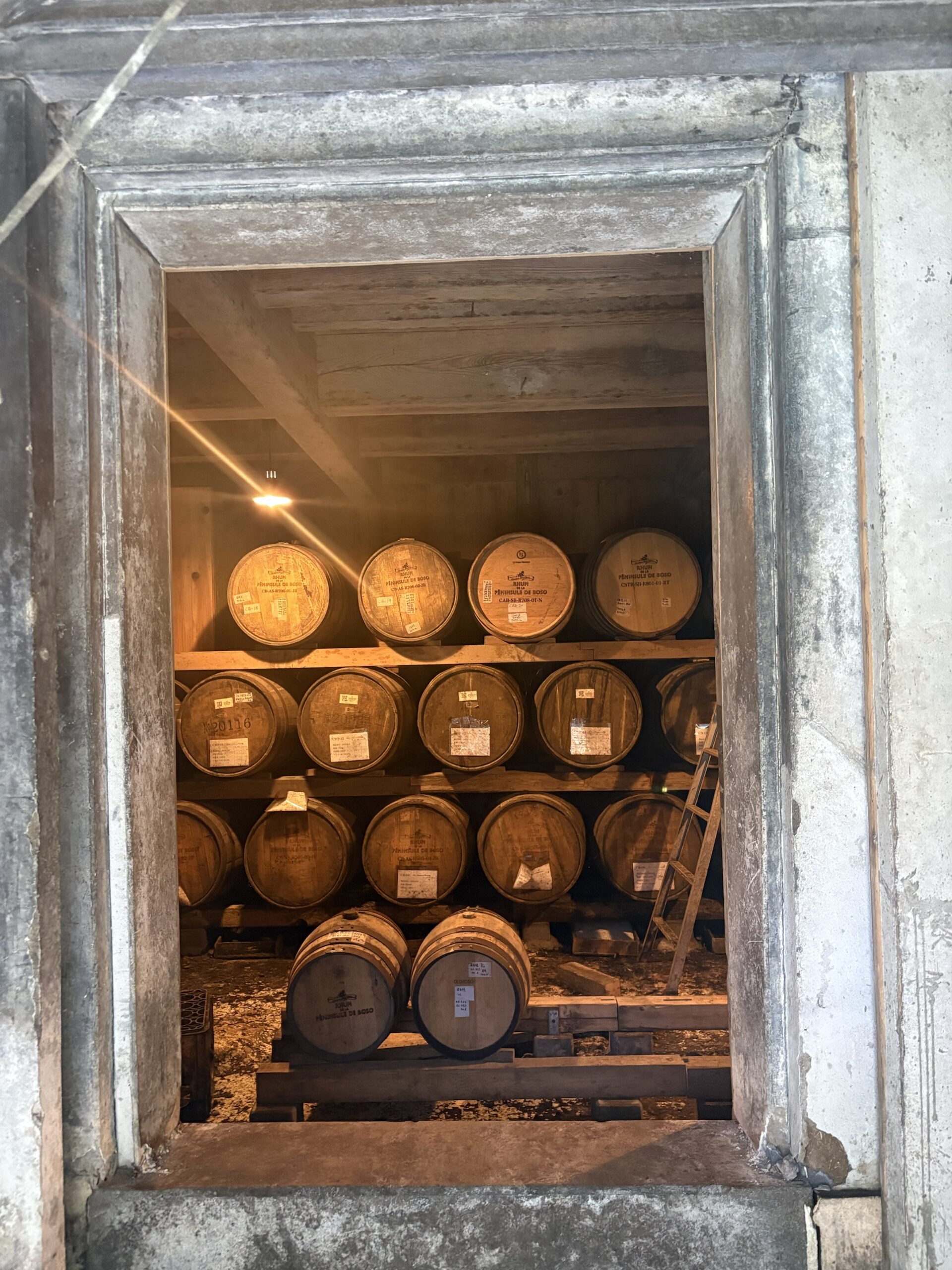
In short
- Agricole is rum made by fermenting fresh sugarcane juice as it is. The juice can’t be stored, so it can’t be made if the fields and the distillery are far apart. Thanks to the Kuroshio Current, the Minamiboso coast is frost-free — the best place in the Kanto region to grow sugarcane.
- The agricole made from this field’s sugarcane won Gold at IWSC 2024 — the first for a rum by a Japanese producer. Fermentation proceeds slowly in two stages: it starts with the land’s native microbes and is finally handed over to yeast.
- What Mr. Aoki calls the hardest part is cask aging. Pairing agricole with bourbon casks makes it monotonous, he says. The rum ages slowly in the storehouse of a 150-year-old farmhouse.
The Aqua-Line was jammed after an accident.
Watching the sea out the window, I realized I had never spent this long in Chiba.
Past the outlet mall in Kisarazu, past the Costco sign, the buildings gradually thinned out.
Somewhere past Kimitsu, the scenery became real mountains.
Chikura, Minamiboso. About thirty minutes beyond the end of the road, climbing a narrow mountain lane where trees close in from both sides, a yellow sign stands ahead.
“Boso Oigura Distillery”
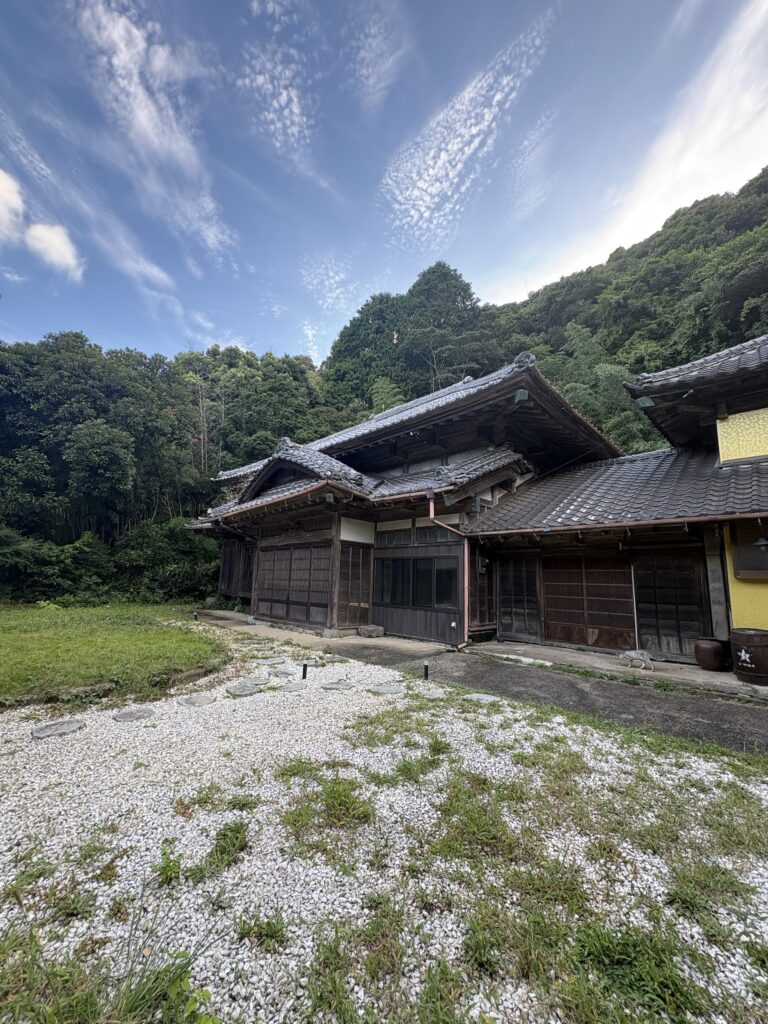
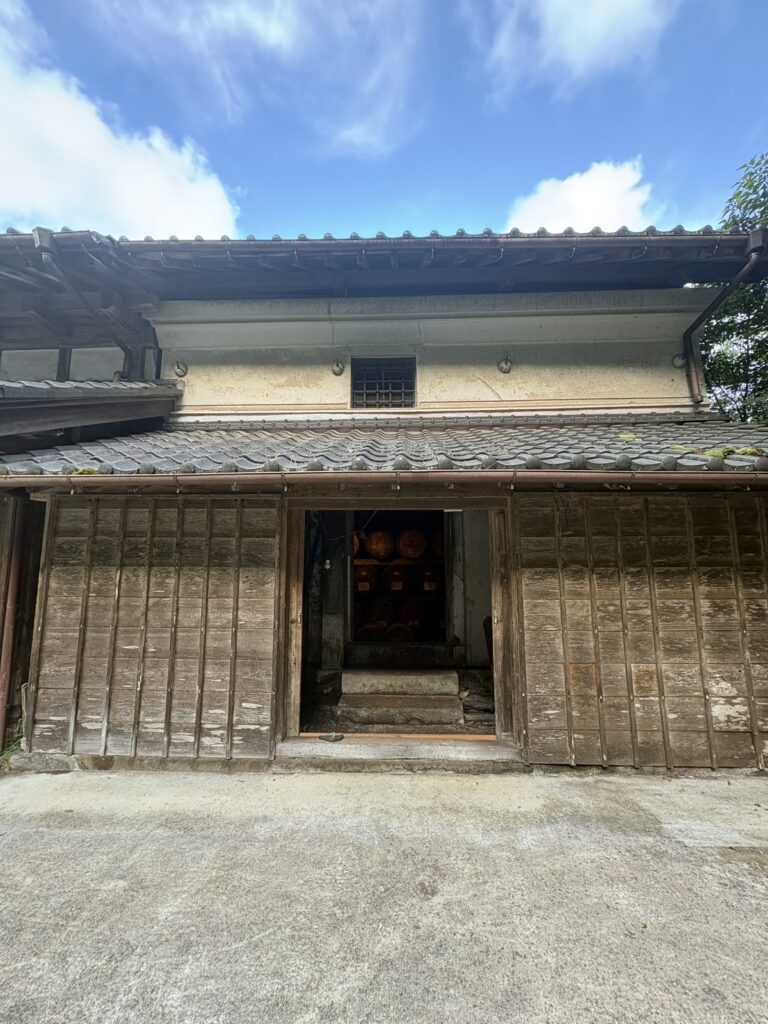
It was a 150-year-old farmhouse with an impressive nagaya-mon gate. The mountain rises right behind it.
A yellow noren curtain hangs at the gate.
One large character.
A kanji I had never seen: the “sake” radical with the character for millet. They say it was created especially for rum.
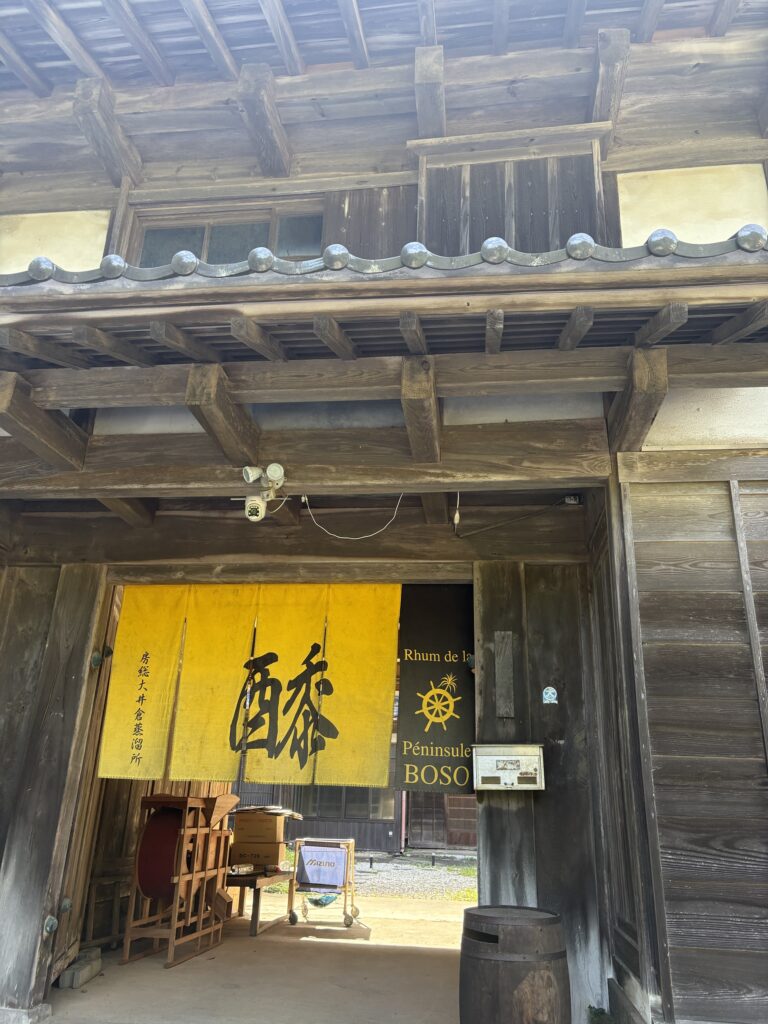
When I stepped out of the car, I could smell the mountain.
All I could hear were insects and a bird calling somewhere far away.
On the mat by the entrance, a cat lay stretched out.
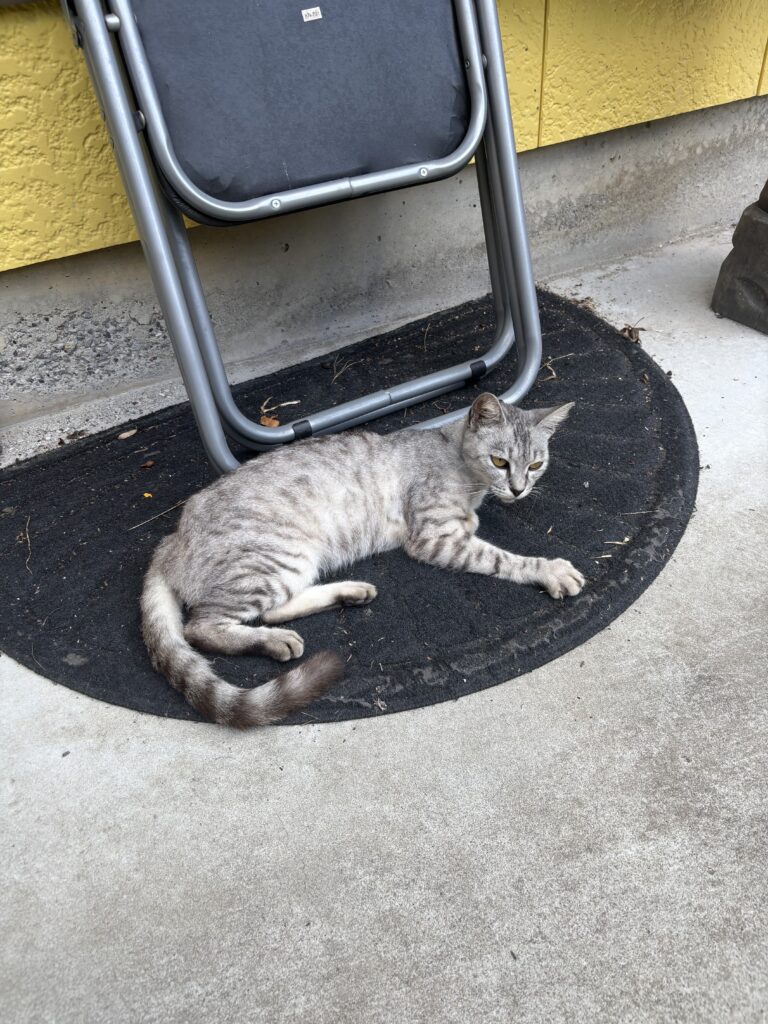
In a place like this, a rum that won a world-class award is being made.
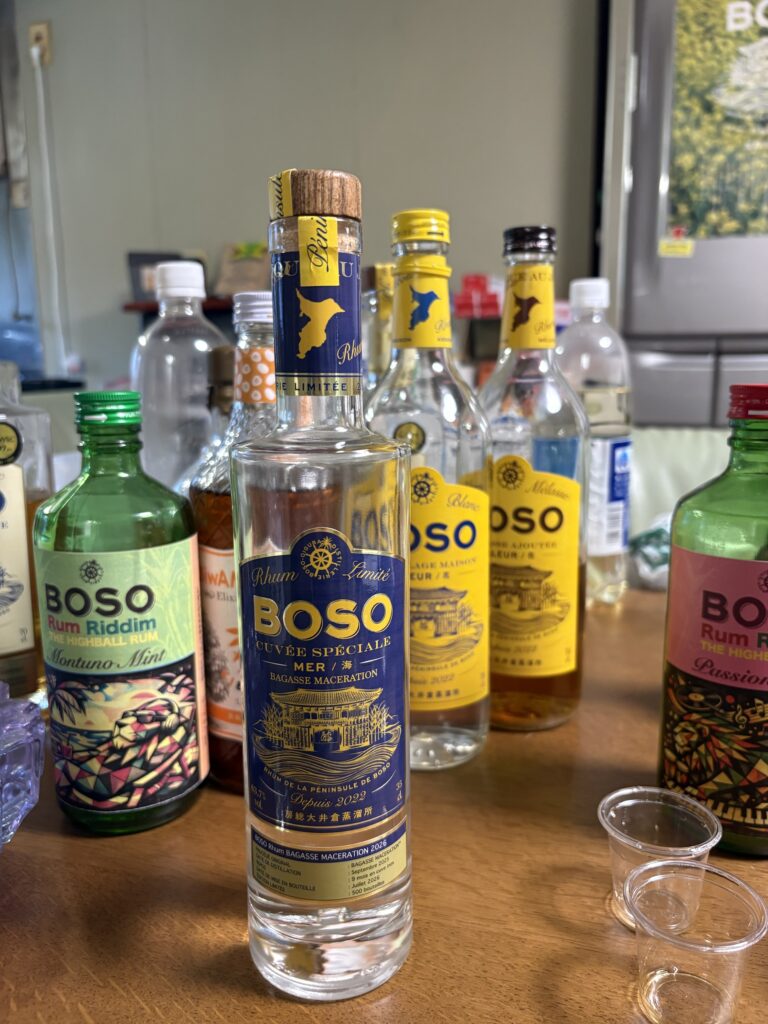
The first thing served when I arrived was a cola
In the room he showed me into, Mr. Aoki first opened his laptop and fixed the text on a label.
When that was done, he called over a young staff member and began tasting a liqueur that had just been finished.
It was a rum-based cola.
“The theme is making a rum and coke that isn’t sweet.”
Poured into glasses with one ice cube each, everyone took a sip. The vanilla still stands out.
A little astringency lingers. The orange is weak. The cinnamon seems weaker than before, too.
“But if you push the cinnamon too much, it just becomes cinnamon.”
“That’s the thing.”
Nothing should stick out; as a whole it should simply, softly be cola. That was where they landed for the moment.
I had a glass too, and it was ridiculously good.
This was five minutes after arriving at the distillery.
Barely past the greetings, he let me taste it, showing me everything as it was — where they were unsure, and where they were proud. I thought he probably doesn’t have the idea of hiding things at all.
A land without frost
Why rum in Boso in the first place?
Along the Minamiboso coast, the Kuroshio Current flowing offshore keeps frost away even in midwinter.
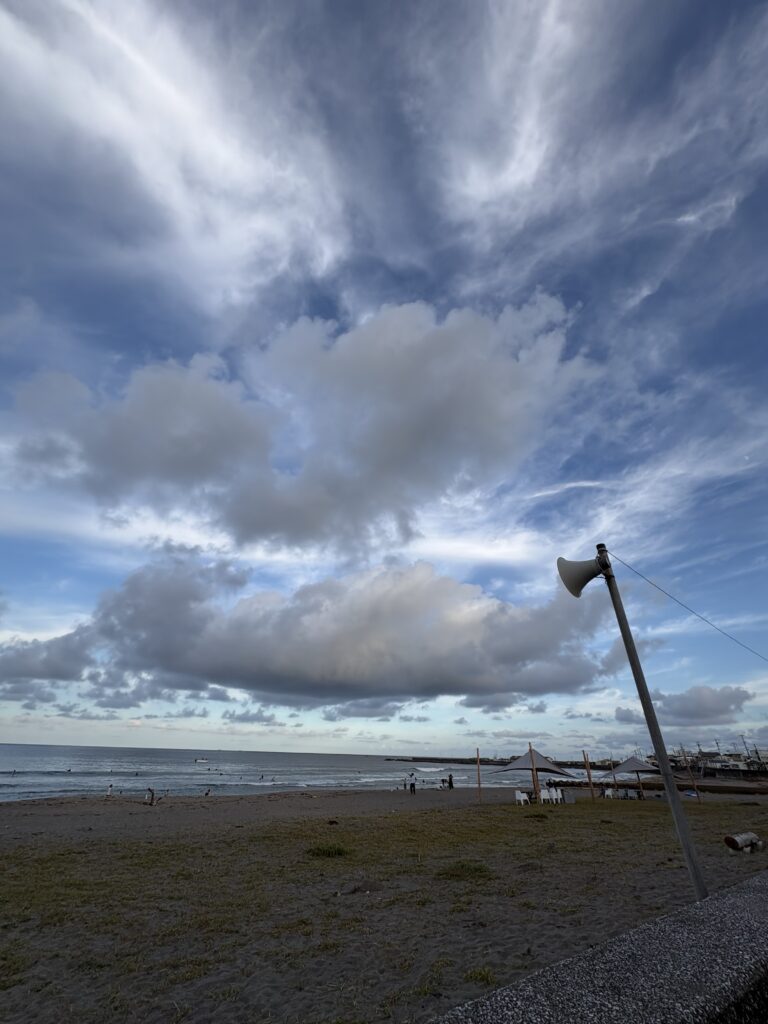
This frost-free belt is the best place in the Kanto region to grow sugarcane.
Mr. Aoki’s fields have now grown to more than two hectares.
They grow sugarcane only for rum, using their own natural farming method without pesticides or chemical fertilizers, which they have even named the “Boso Environmental Farming Method.”
If all you want is to make rum, you don’t need fields.
You can buy molasses, a by-product of sugar production, and make it. Ninety percent of the world’s rum is made that way.
They started from the fields anyway because they had decided to make agricole.
Agricole is a method that ferments the juice of freshly harvested sugarcane as it is.
It accounts for only about ten percent of the world’s rum. And the juice starts to change the moment it is pressed. It can’t be stored.
In other words, it simply can’t work if the fields and the distillery are far apart.
It isn’t that the region decides the flavor; unless you are in that place, you can’t make it at all.
I thought this is where it differs a little from terroir in the wine world. It isn’t a choice — it’s a precondition.
In the homeland of agricole,when I visited La Mauny in Martinique, I remember sugarcane fields stretching to the horizon. They are doing the same thing as that Caribbean island, in the mountains of Boso.
The agricole made from this field’s sugarcane won Gold at the UK’s IWSC 2024 — the first for a rum by a Japanese producer.
All smiles, and that is what he is actually doing.
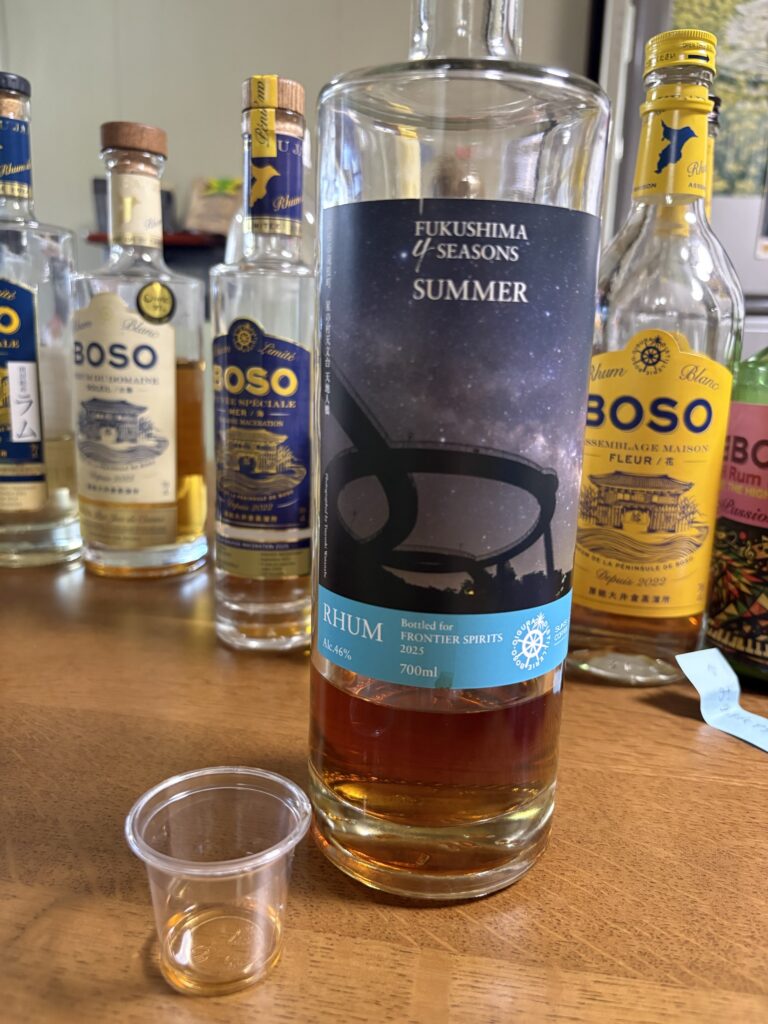
“Creating a story of microbes”
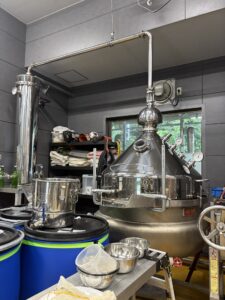
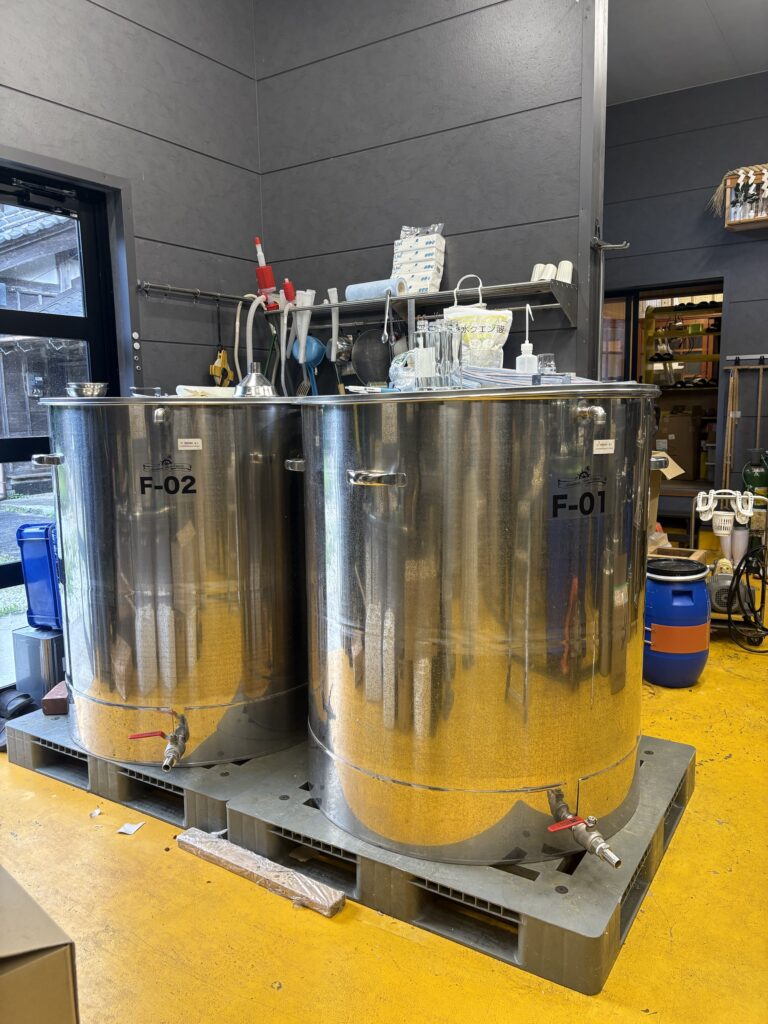
The fermenters are just small tanks in a row, each numbered: F-01, F-02.
They don’t rush that fermentation.
“As natural as possible. We let the native microbes get the fermentation going first, then finish with Saccharomyces.”
Saccharomyces is the yeast that plays the lead role in alcoholic fermentation.
In other words, instead of bringing in the lead from the start, they first let the microbes that already live on this land do the work, and then hand it over. Two stages.
Agricole can ferment in as little as two or three days, they say.
Put the lead in from the beginning and run it all at once, and it’s fast. But then the aromas don’t come out.
“How slowly we can ferment it, and create a story of microbes.”
That’s what he always talks about with Mr. Tsutsui, he said. That is where the real contest is, Mr. Aoki told me.
The word “contest” came up.
He talks as if he’s playing, all smiles, yet there isn’t a single place where he cuts corners.
That gap gave me chills more than once.
Bagasse, the sugarcane fiber left after pressing, isn’t thrown away here either.
It becomes compost for the fields, goes to local dairy farmers as feed in exchange for manure, and also fuels the wood boiler used for distillation.
And they found a way to use it in the production itself.
That method involves a patent, so I won’t write about it here.
But in the end, this too is a story about the land. It is a cycle that only works with the pressed fiber of this field’s sugarcane.
The storehouse was wonderful
Then I was shown to the aging warehouse.
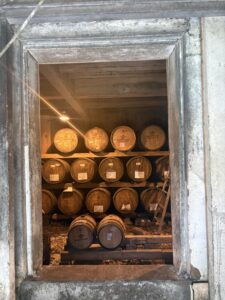
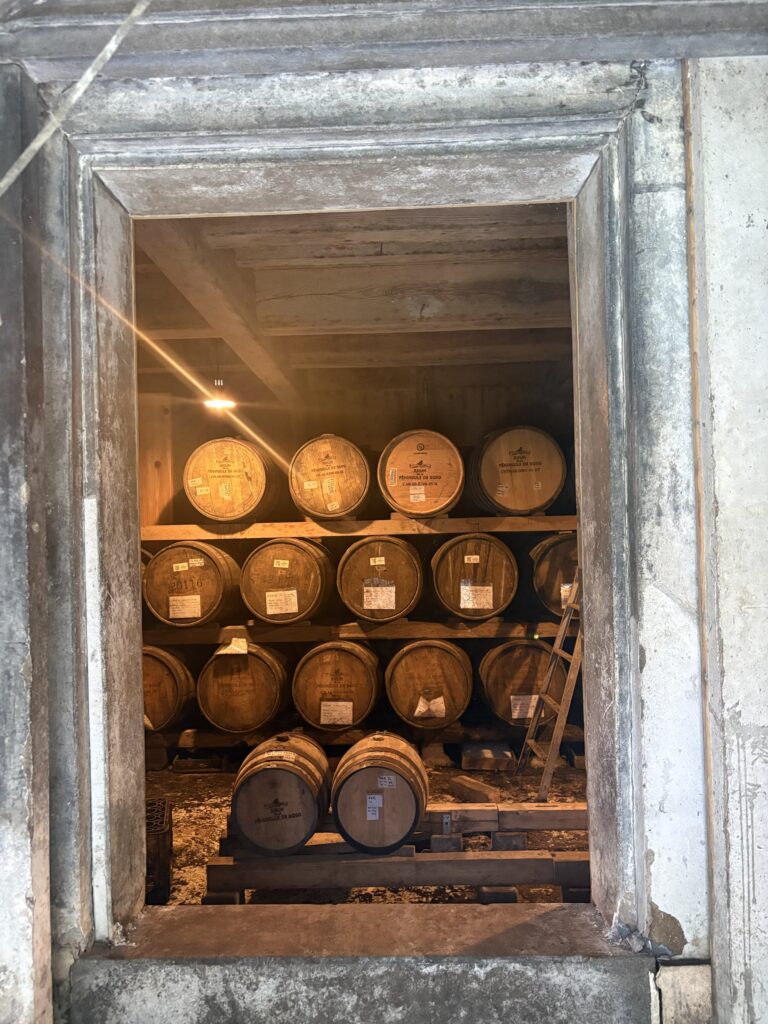
It’s an old storehouse on the property.
The entrance is small.
There is just a square opening in the thick plaster wall, big enough for one person to stoop through.
Up two stone steps, then duck your head to enter. Peeking in from outside, I could see casks stacked under a bare light bulb.
The moment I bent down and stepped inside, cool air wrapped around me, as if the heat outside were a lie.
And the smell of casks. Sweet, damp, a little musty — that smell.
The only light is a bare bulb.
You can feel like you’re inside the warehouse! Please watch to the end
The floor is bare earth.
Railway sleepers are laid across it, and the casks rest directly on them.
This is called dunnage style, the oldest way of doing it.
There’s no temperature or humidity control. The storehouse itself does that.
Each cask had a handwritten paper label: the filling date, the name of the spirit, the volume, the ABV.
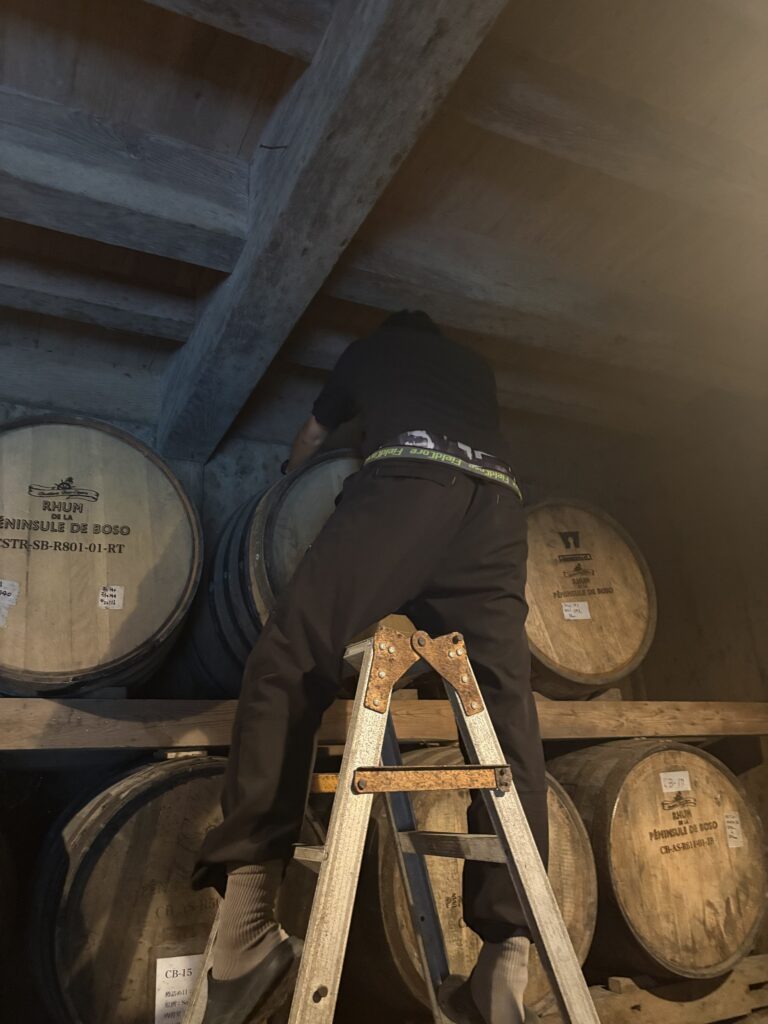
To check the high casks, he uses a wooden stepladder.
He climbed it to check the casks on the upper tier.
“At our scale, this is the only way that works.”
As he said it, Mr. Aoki seemed to like this environment.
In recent years, more distilleries manage their warehouses with data.
That is wonderful technology in its own right. But he went on:
“Maybe natural aging and complete control should be kept separate. There’s that thing that chance creates, you know?”
Even chance is on his side.
I thought this storehouse was truly wonderful.
Because it’s a place where the same thing can never be made twice.
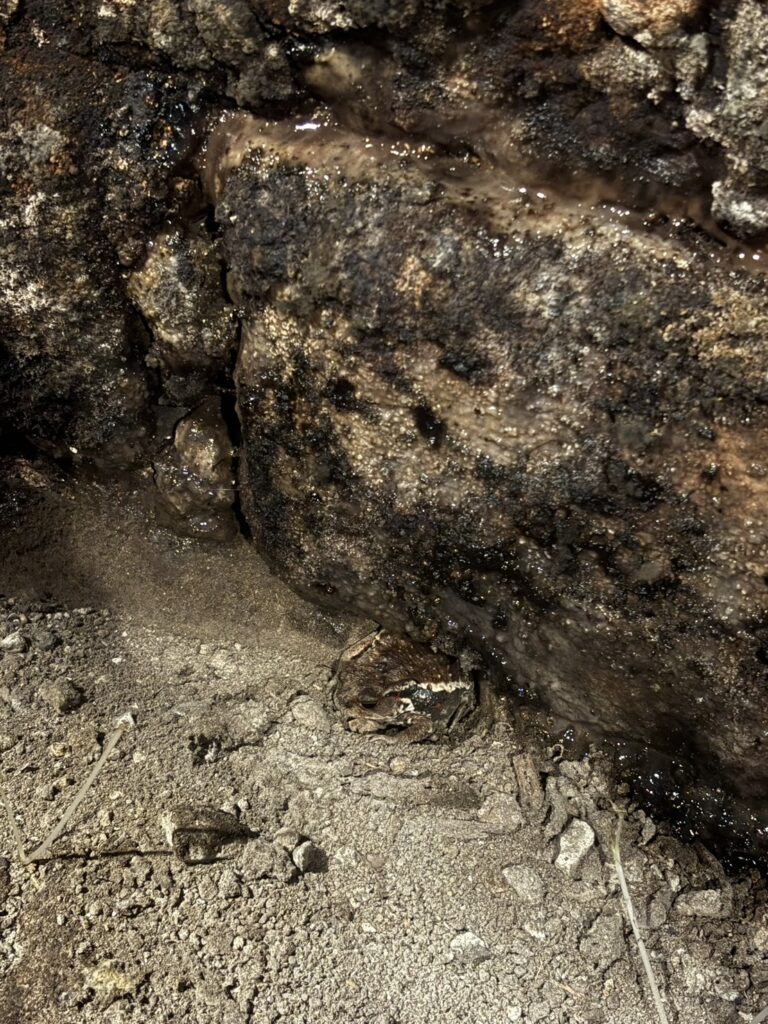
And in a damp gap between the stones,
a single frog sat perfectly still.
Only the casks come from outside
Inside that storehouse, there was a phrase Mr. Aoki said again and again.
“Cask aging is the hardest.”
His reason surprised me.
“We started aging with whisky in mind, but it’s completely different.”
Starting with a whisky mindset simply didn’t work, he said.
Pairing agricole with bourbon casks makes it monotonous.
Only after trying it, he told me, did he truly understand why agricole makers around the world use cognac casks.
He was talking about missing the mark, yet his face didn’t look frustrated. It was the face of someone already thinking about what to do next.
The soil, the microbes, the pressed fiber — they all belong to this land.
Only the casks come from outside.
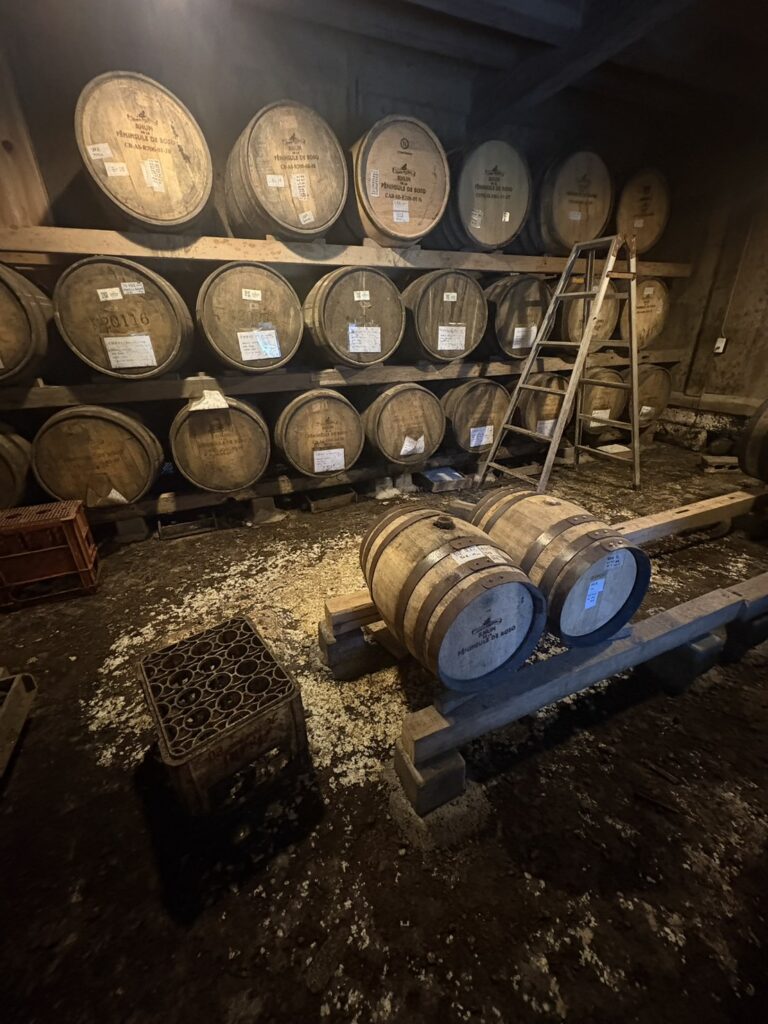
Aging warehouse
Sherry PX casks. STR.
Ratafia: agricole cut with sugarcane juice.
Amburana casks. There was even a PTF cask from Saburomaru.
He gave them one of his own ester-rich casks and received it in exchange, he said.
And then, the high-ester spirit.
The moment I brought my nose to the glass, I gasped.
Amazing. It can be done in Japan, too.
If you served this and called it Jamaican rum, probably no one would notice.
Japanese rum is right in the middle of getting interesting. More makers, more ways of thinking — no one knows what will come next. The overall pictureI introduce by region here.
Among them, I wanted there to be one bottle that goes all in on its land.
Sugarcane grown in a frost-free land, pressed on the spot, fermented with that land’s microbes, asleep in this old storehouse — and it becomes this aroma.
The word terroir rang out beautifully.
I have no memory
That night, we drank at Mr. Aoki’s restaurant.
Mr. Aoki, his staff, and me.
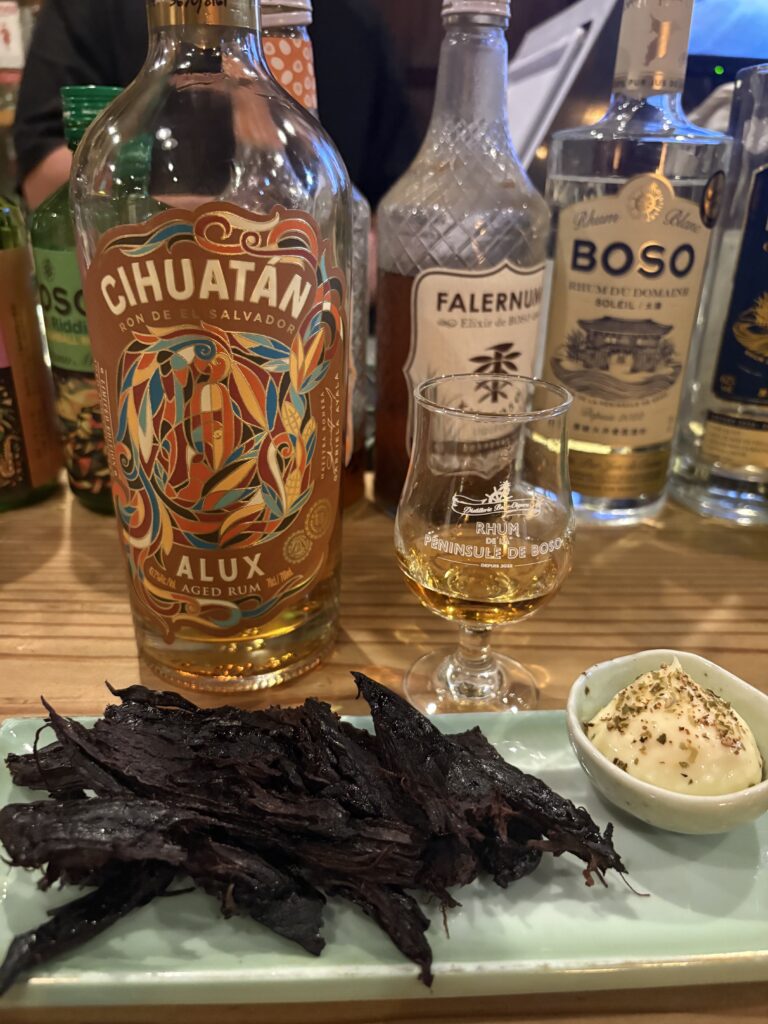
To be honest, I don’t really remember what we talked about.
I hardly took any photos, either.
I think I was having too much fun to take them.
Before I knew it, it was the middle of the night.
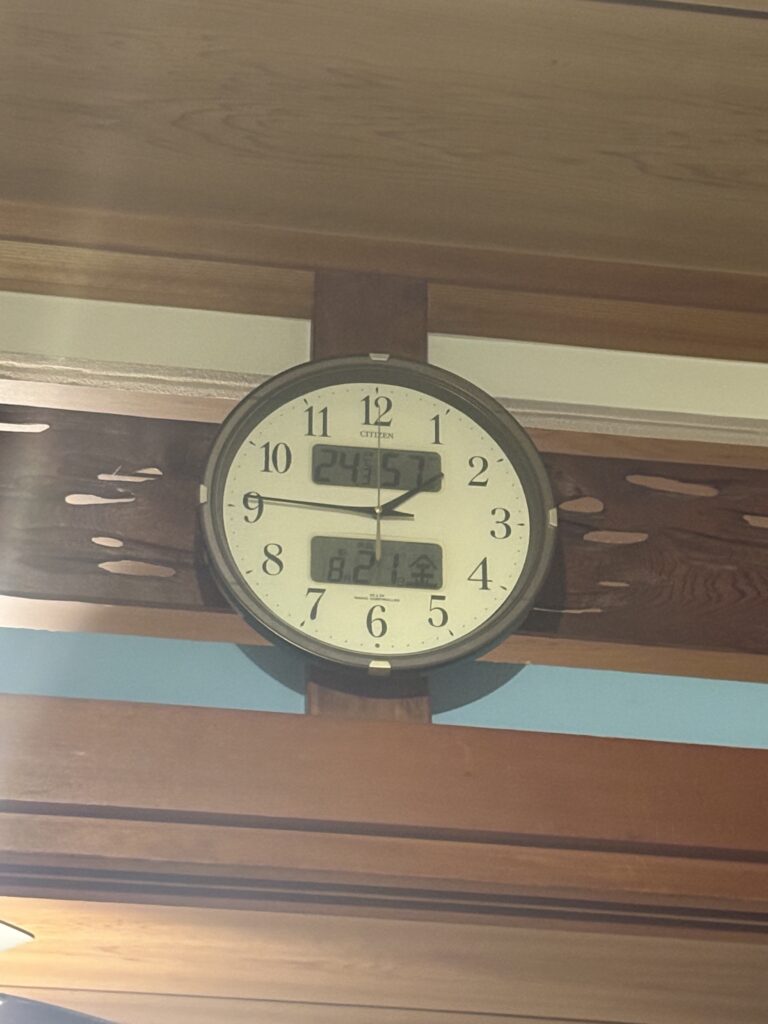
I feel like we talked about rum, and I also feel like we talked about nothing related at all.
Probably much more of the latter.
He is someone who enjoys life to the fullest, finds every day fun, and laughs, “Look what we made.”
This is just my own imagination, but deep down I sensed a fighting spirit and a drive to improve stronger than anyone’s.
He looks like he’s playing, but he’s going for the win.
He would never put it that way himself. What he said again and again in the storehouse was this:
“Cask aging is the hardest, isn’t it.”
I think he is still on the way.
And I think that’s why the drinks that night tasted so good.
Spirits are terroir
The soil of the fields, the air of the storehouse, the frog living there, the personality of the maker — all of it becomes flavor.
And so does the night spent with that person.
From now on, every time I drink BOSO Rhum, I think I’ll remember the smell the moment I ducked through that small entrance, and that hazy night.
This spirit tastes better by exactly the amount of those memories.
It became a page of my life.
I will definitely go to see him again.
Mr. Aoki, thank you for a wonderful time!
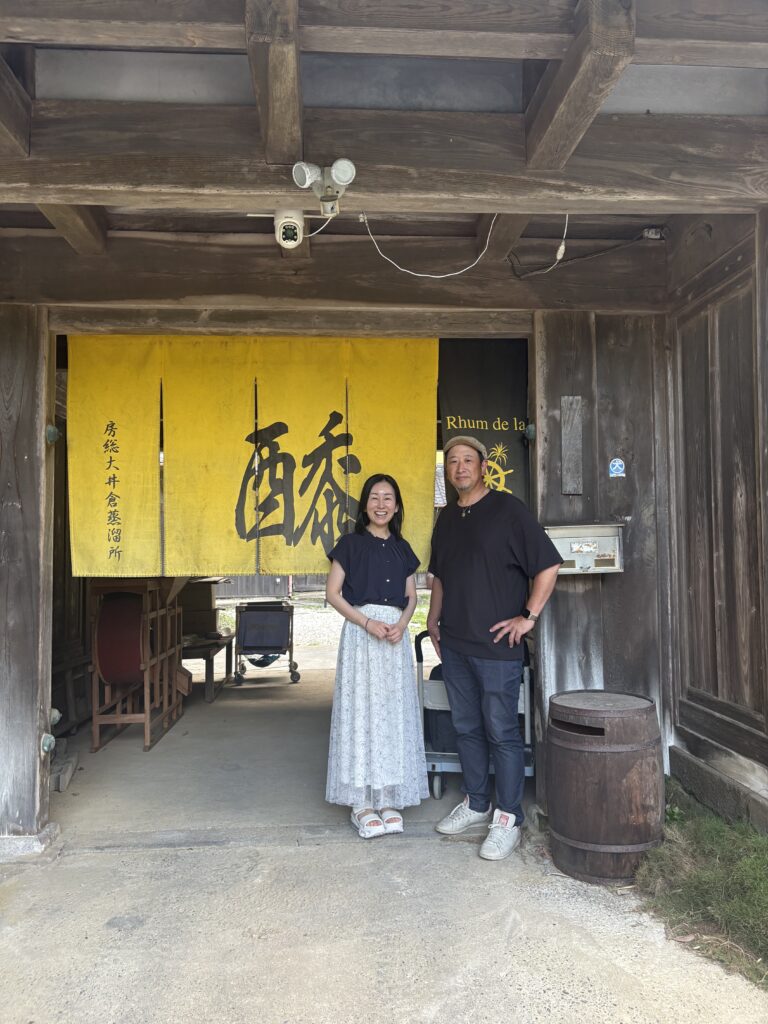
Whisky and rum both taste better when you touch the makers’ passion.
Every encounter is meant to be. Welcome to the world of Rum & Whisky.
Read this too!
Making Rum in a School-Lunch Kettle|Visiting Taisei Aoki of Boso Oigura Distillery
I write about how this distillery was born, through the story of its head, Taisei Aoki.
[About the author]
Mika Tanimoto
CEO, Little.m Inc. / Owner-bartender
Since 2006, I have run Bar Little Happiness, a whisky and rum bar in Nagarekawa, Hiroshima. I visit distilleries in Japan and around the world and write about the people who make the spirits. Recipient of the Hiroshima City Excellent Skilled Worker Award.
“Whisky and rum taste even better when you know the hearts of the people who make them.”
[Visit the bar] 📍 Bar Little Happiness
Rolling Nagarekawa 1F, 5-14 Nagarekawa-cho, Naka-ku, Hiroshima
Mon–Sat 7:00 pm – 12:30 am / Sun 7:00 pm – 12:00 am (closed when I travel to visit distilleries)
No cover charge, no reservation needed