
Making Rum in a School-Lunch Kettle|Visiting Taisei Aoki of Boso Oigura Distillery
2026.11.05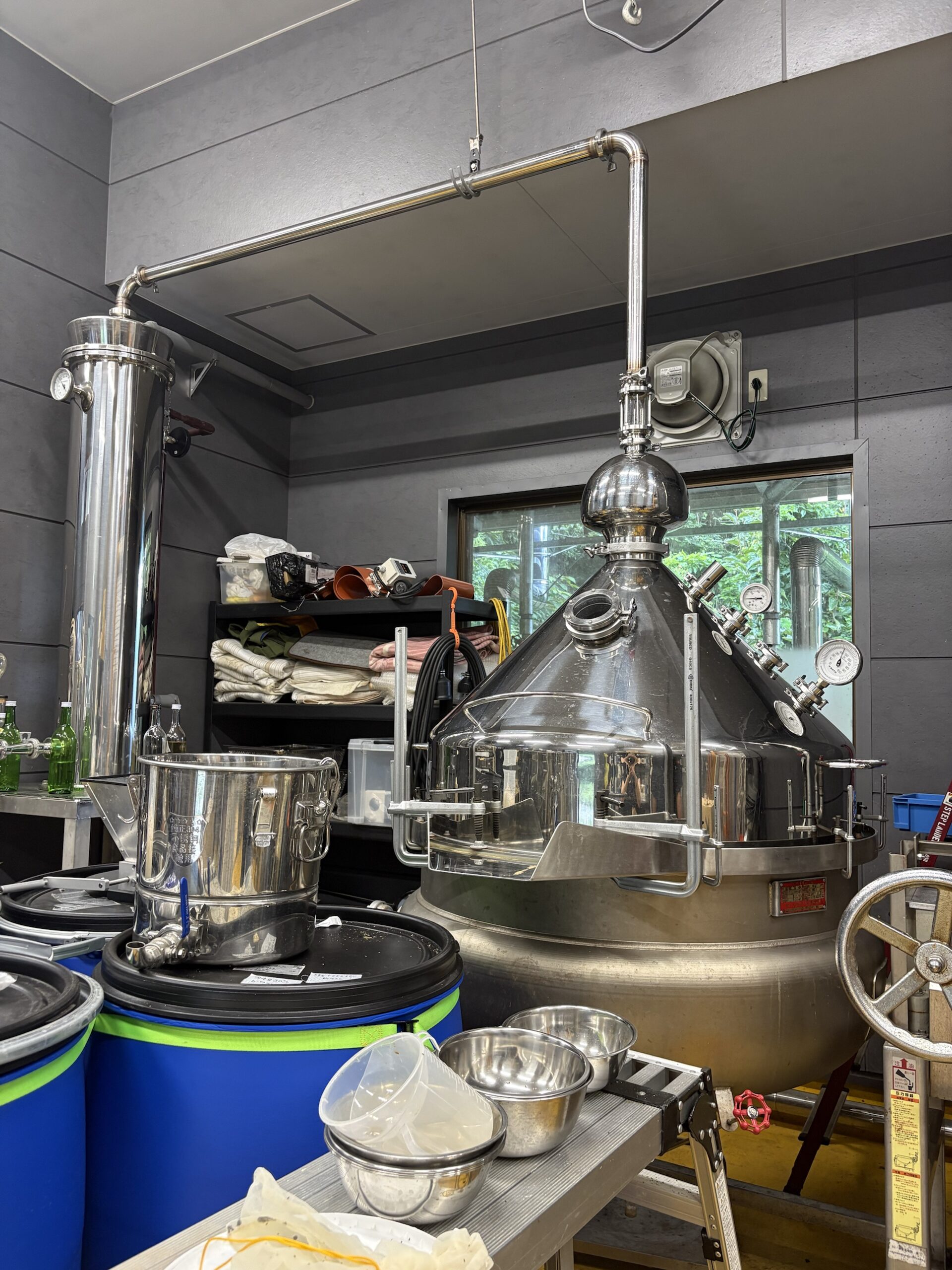
In short
- Boso Oigura Distillery (Minamiboso, Chiba) is a distillery where its head, Taisei Aoki, and his team handle everything from growing sugarcane to making rum. They say it is the first in Japan to produce rum in-house all the way from its own sugarcane.
- In 2019, they revived sugarcane growing, which had died out locally. A typhoon in the first year, and then the time during the pandemic when people from the industry brought rums from around the world to learn together, became the foundation of the business.
- There are two stills: a 500-liter hybrid by Kotobuki Techrex, and a handmade one they designed themselves based on a rotating kettle used for school lunches. They also collect their own yeasts — from sugarcane, fruit, and even acorns.
Minamiboso, Chiba Prefecture.
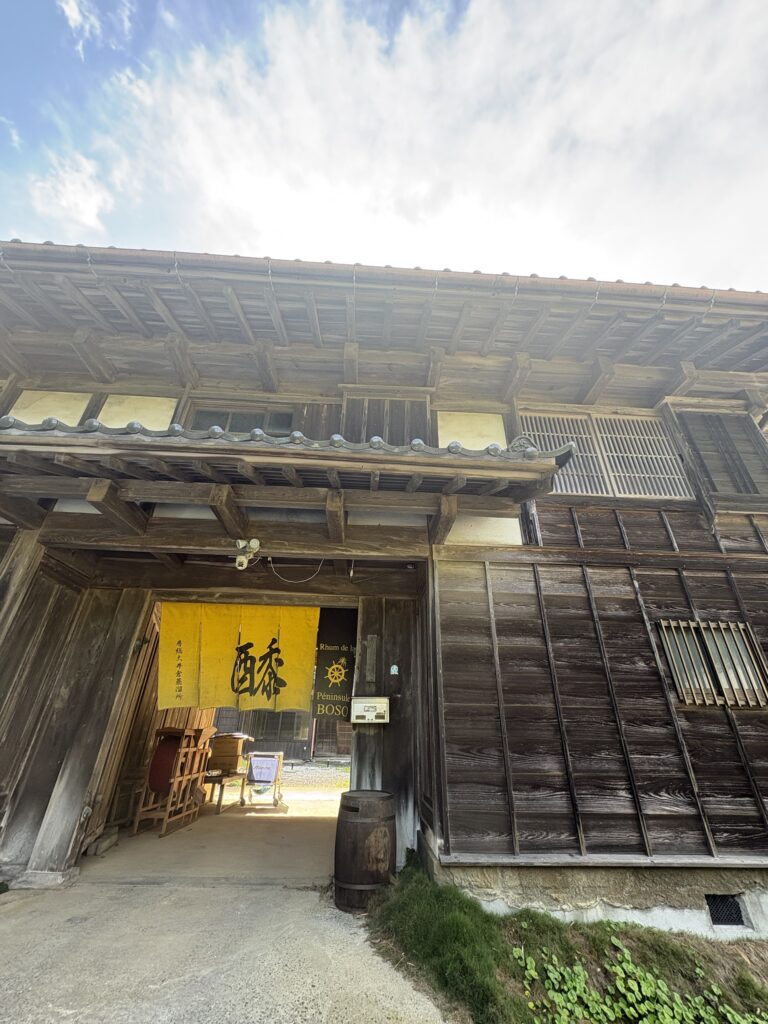
Deep in the mountains stands Boso Oigura Distillery, which handles everything from growing sugarcane to making rum.
I wanted to go so badly that I contacted its head, Taisei Aoki.
From Tokyo to Minamiboso is about two hours by car.
I was planning to go by train, but Mr. Aoki happened to have business in Tokyo, and he said, “I’m driving back, so I’ll give you a ride.”
I gratefully accepted — even though at that point I had never once met him.
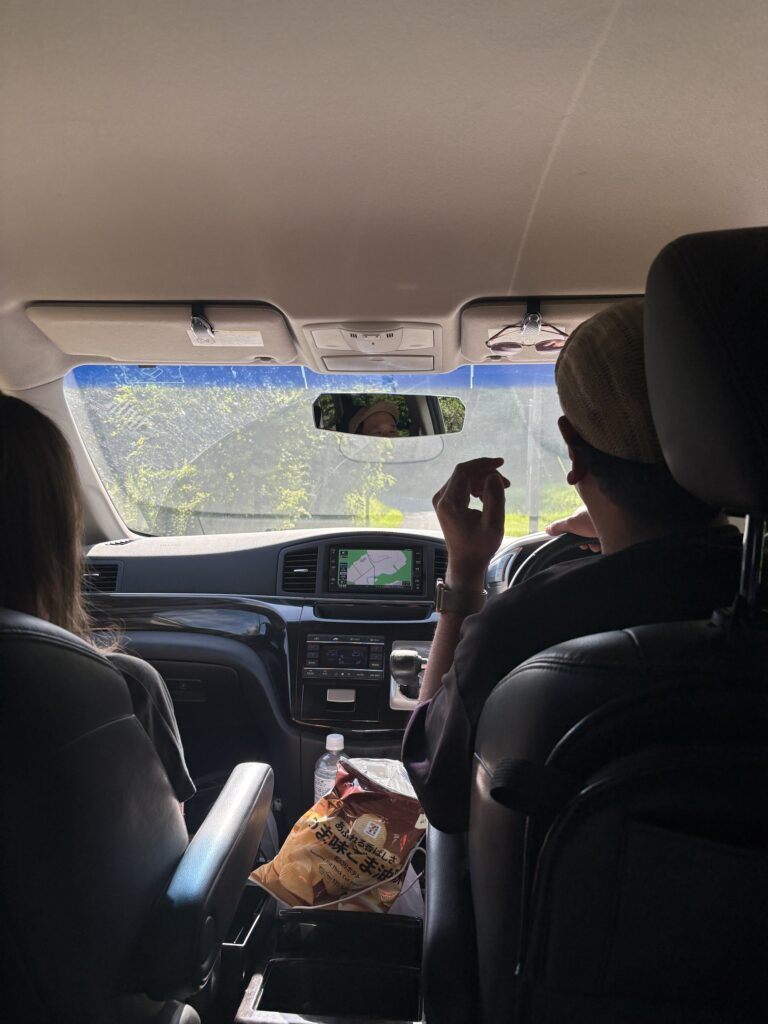
Five minutes into the drive, I was already laughing.
Arranging labels, tomorrow’s shipments, a change in headcount for the next day’s event. Work kept pouring into the moving car, and he handled all of it, then came right back to our conversation.
And the moment the talk turned to rum, he lit up as if on fire.
Before we even reached the distillery, I understood.
Of course people gather around this man.
He came home to run a music festival
Mr. Aoki originally worked on music festivals.
He came back to his hometown of Minamiboso to put on a festival, too.
After that, he began helping with the family business: Chidori, a sushi and Japanese restaurant in Chikura that has been run for three generations.
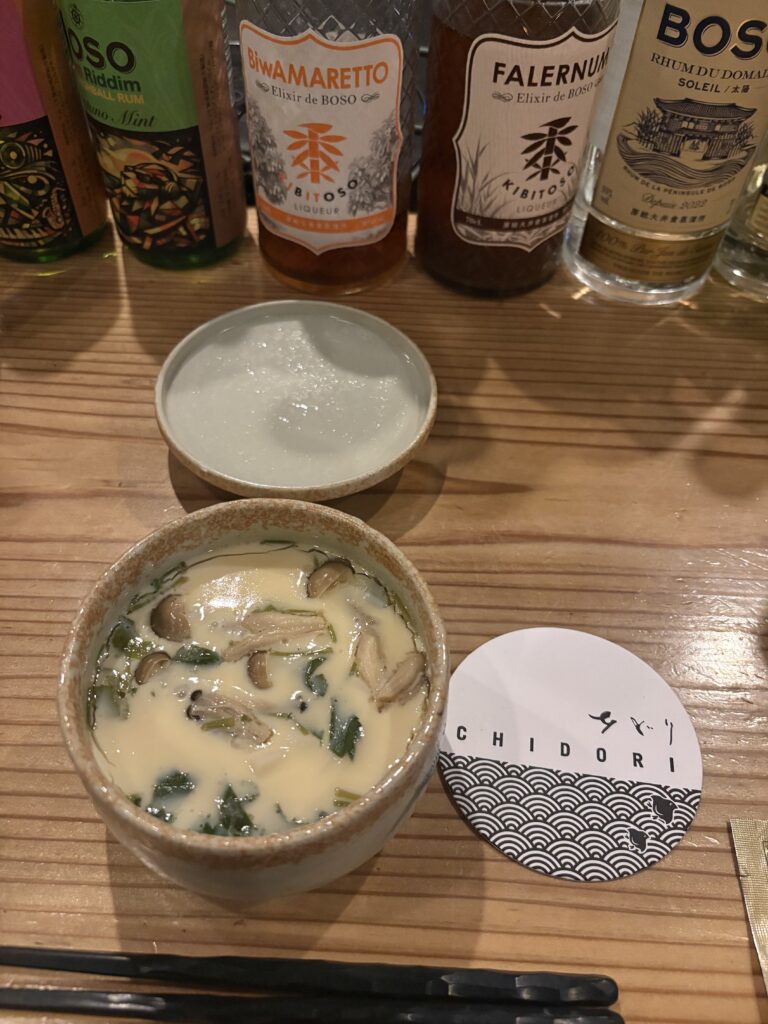
He hadn’t trained as a sushi chef, so he helped out while working as a fisherman.
Take over the family business and settle down. That was supposed to be the path.
But in 2017, when he renovated the second restaurant as part of the business succession, he built a bar inside it.
“Because there was no bar in town.”
That was the only reason.
What had been a banquet room became a space with a counter. It’s called “Bar Chidoriashi.”
And while drinking at that bar, the conversation turned to this:
Shall we make our own spirit?
Starting by reviving the fields
Sugarcane used to be grown in Minamiboso.
But with nowhere to sell it, at some point nobody grew it anymore.
Mr. Aoki and his friends brought that sugarcane back.
Having decided to make rum, they started over from the fields.
It began in 2019, when local elderly residents asked, “Why don’t you grow sugarcane with us?” and they rented about a quarter acre to start trial cultivation.
They say producing rum in-house all the way from their own sugarcane is a first in Japan.
What each of Japan’s rum distilleries is doing now,I’ve summarized by region here.
“The town used to grow sugarcane, but there was no output, so people quit. We brought it back.”
From the fields.
And he says it as casually as if he were stopping by a convenience store.
Twisted, but still standing
In the first year after planting, the 2019 typhoon hit.
That typhoon caused heavy damage in this area.
The newly planted sugarcane was twisted by the wind.
Even so, they say it grew strong.
“I took photos and announced that we were turning this into a business, and more and more people came to join us.”
Thinking to head out with a camera right after the fields were hit says everything about his drive.
And he turned it into a declaration that he was starting a business.
A photo of sugarcane, bent but still reaching for the sky. People saw it, and they moved.
“Everyone had time on their hands because of COVID.”
After the typhoon came COVID.
Bars and restaurants came to a standstill.
Nobody could travel to the sugarcane regions of Okinawa or Kagoshima.
And so, they say, people began gathering in Boso.
“Everyone had time on their hands because of COVID.”
People from restaurants, people from the drinks trade, people interested in making spirits.
They all came carrying rums from around the world.
“Everyone brought their knowledge and rums from all over the world, and we’d drink together.”
In a seaside town, Jamaican rums, Martinique rums, and bottles no one had ever seen lined up one after another.
They opened them one by one, tasted, and talked.
What is rum? What are esters?
“We had more time than you’d think.”
A few months in which professionals from across the industry kept digging into a single theme, with no deadline and no thought of profit.
Most people never get time like that in a lifetime.
Two disasters — a typhoon and a pandemic — brought it.
To be precise, I think Mr. Aoki turned them into something fun.
After that, they won the grand prize at a business contest, and the project began in earnest.
Building a still from a school-lunch kettle
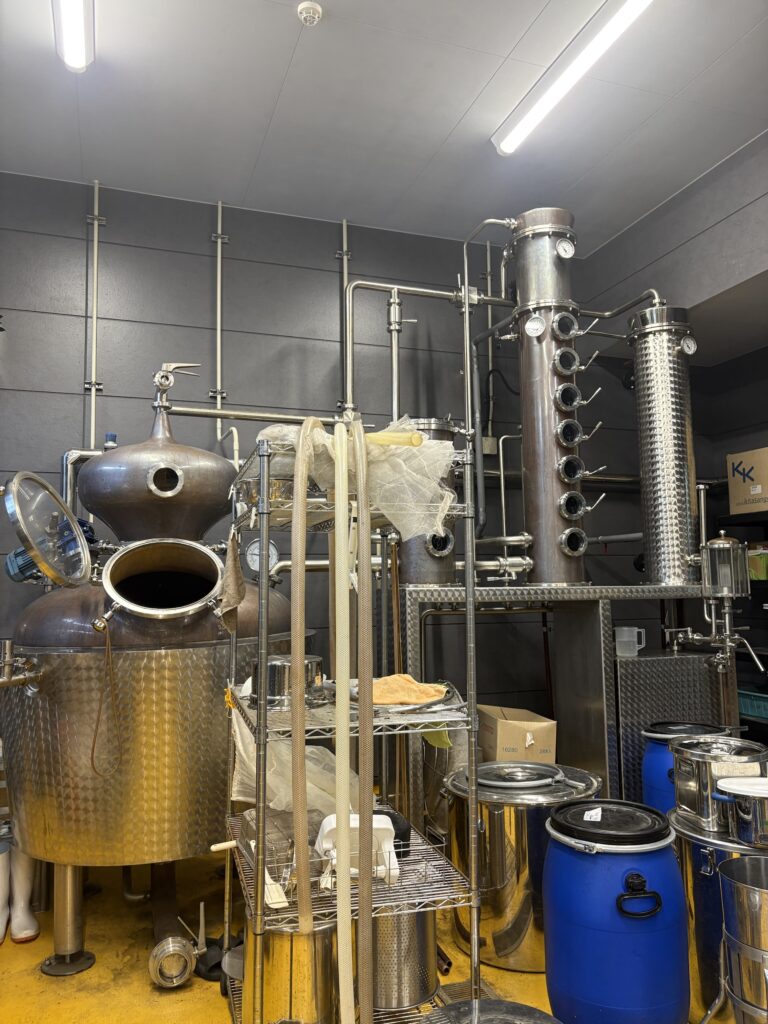
The distillery has two stills.
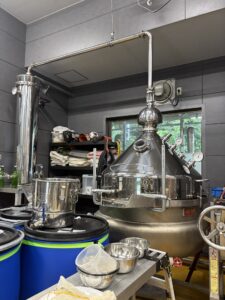
One is a 500-liter hybrid by Kotobuki Techrex.
The other is handmade.
Its base is a rotating kettle — the kind used to cook school lunches.
They say it started with casual talk from one of the members.
He makes taro shochu in the Republic of Palau — a shochu he is still making today.
He couldn’t ship a still there, so he makes it in a kettle.
A story from another country, heard over drinks.
That they actually went and built one — I think that’s just who these people are.
“We realized a steam rotating kettle could do it, and since it’s a cooking kettle, you can control the temperature precisely.”
It opens wide, so maintenance is easy.
Hang a basket inside and you can add ingredients.
Put a copper catalyst in the knob on top and you can even remove sulfur compounds.
It looks like it was built on a whim, but the logic holds up.
“We designed and built it ourselves.”
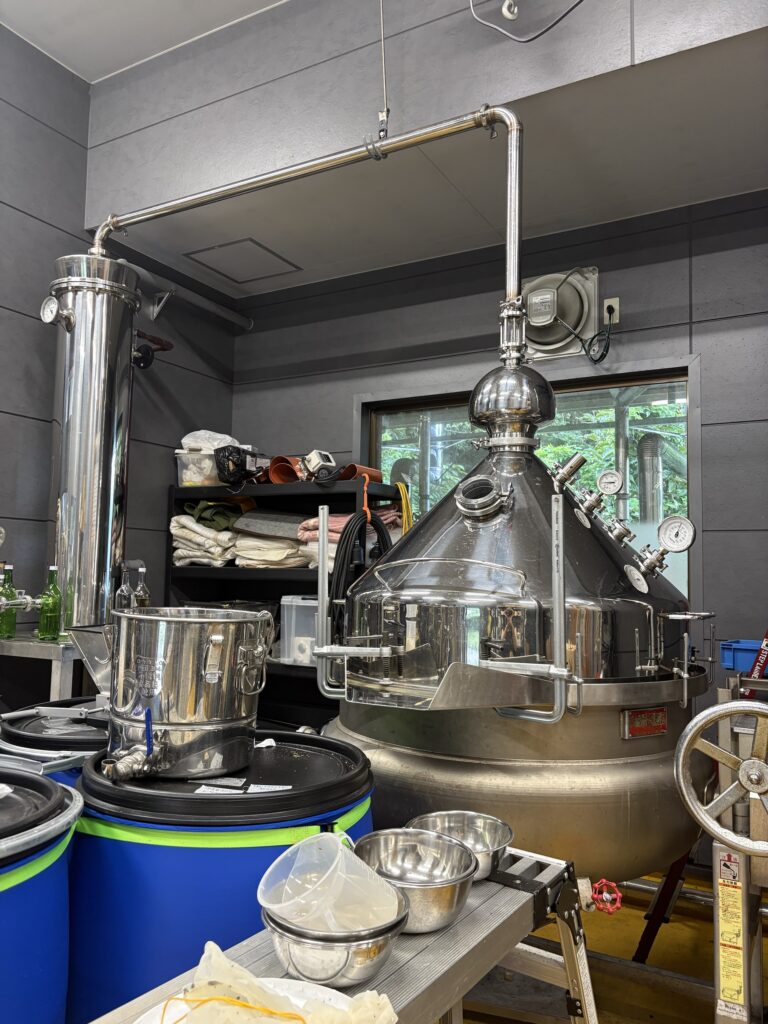
Bar-room chatter became a still unlike any other in the world.
That’s the kind of place this is.
Collecting yeast from acorns
They collect their own yeasts, too.
“Everything started out handmade! We collect all our yeasts ourselves.”
From seaweed. From sugarcane. From fruit.
I heard there is even a yeast taken from acorns.
Acorns.
Sometimes they ferment with sugarcane leaves left on top and the lid off.
Just to see what happens with only the yeasts living on the leaves.
I wonder what happens if we try it.
It looked to me as if that curiosity alone had brought them this far.
“All of that built up into the foundation of the distillery today.”
There is a master of yeast collecting, too.
He is one of the founding members, and his friends apparently called him “the man the microbes love.”
Alongside the man behind the rotating-kettle still, he is one of the two pillars of this distillery.
“Lots of things are tough.”
On the way home, I told Mr. Aoki
that being with him must be fun.
“No, no, no — lots of things are tough.”
He brushed it off lightly, and I laughed.
But look around him and you can tell.
A photographer who was his classmate from kindergarten through high school.
A young staff member who moved over from a shochu distillery.
A childhood friend, now a TV writer, who was with him from nursery school through university and grew up nearby.
People from the industry who came carrying rum.
They are all by Mr. Aoki’s side.
There is probably just one reason.
Because it looks like fun.
A school-lunch kettle becomes a still, acorns become yeast, and sugarcane returns to fields no one farmed anymore.
When you’re shown things like that one after another, you want to see what comes next.
“Look what we made.”
Mr. Aoki said that moment is what he enjoys most.
I’m sure lots of things are tough.
Even so, I think he is probably always having fun.
And people who see that face keep gathering around him.
Whisky and rum both taste better when you touch the makers’ passion.
Every encounter is meant to be. Welcome to the world of Rum & Whisky.
Read this too!
In a Storehouse at the End of a Mountain Road, Rum Becomes Terroir|Visiting Boso Oigura Distillery
I write about what I saw in the fields and the storehouse — “what can only be done in this place.”
[About the author]
Mika Tanimoto
CEO, Little.m Inc. / Owner-bartender
Since 2006, I have run Bar Little Happiness, a whisky and rum bar in Nagarekawa, Hiroshima. I visit distilleries in Japan and around the world and write about the people who make the spirits. Recipient of the Hiroshima City Excellent Skilled Worker Award.
“Whisky and rum taste even better when you know the hearts of the people who make them.”
[Visit the bar] 📍 Bar Little Happiness
Rolling Nagarekawa 1F, 5-14 Nagarekawa-cho, Naka-ku, Hiroshima
Mon–Sat 7:00 pm – 12:30 am / Sun 7:00 pm – 12:00 am (closed when I travel to visit distilleries)
No cover charge, no reservation needed