

Five Makers, Handmade Japanese Rum: Inside the Production of “ACOU RUM” at Oyama Jinshichi Shoten, Ibusuki (Part 2)
2026.10.05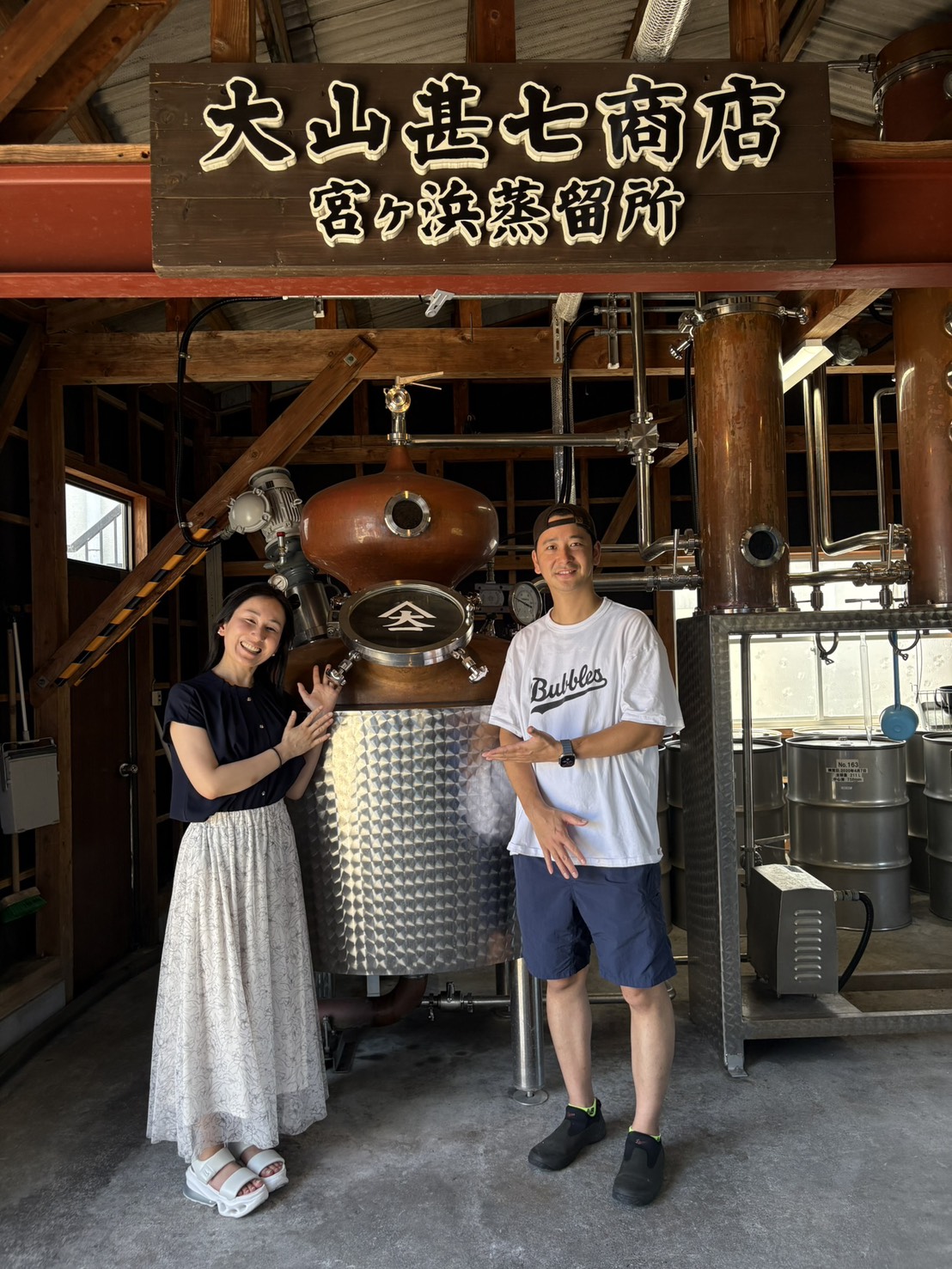
In short: inside Oyama Jinshichi Shoten in Ibusuki, Kagoshima, Japan, where ACOU RUM is made by just five people. Every sweet potato is sorted by hand, 200-year-old clay jars are still in use, and the rum is distilled in a 500-litre copper still in a former garage — about 15 distillations per batch — rather than in the shochu still. About 200 casks mature in a warehouse by the sea, plus a 137-bottle single cask made from 100% Ibusuki molasses. Part 2 by Mika Tanimoto, owner of Bar Little Happiness in Hiroshima.
“It’s hard on my staff, but quality comes first.”
President Oyama said this in front of the still.
→ [Part 1: How Japanese rum “ACOU RUM” was born — visiting Oyama Jinshichi Shoten in Ibusuki]
In Part 1, I wrote about how the Japanese rum “ACOU RUM” came to be at Oyama Jinshichi Shoten in Ibusuki, Kagoshima Prefecture.
In Part 2, we finally go inside the brewery.
What I saw was a brewery of astonishingly small scale, taking astonishing care.
Five makers — and the president is one of them
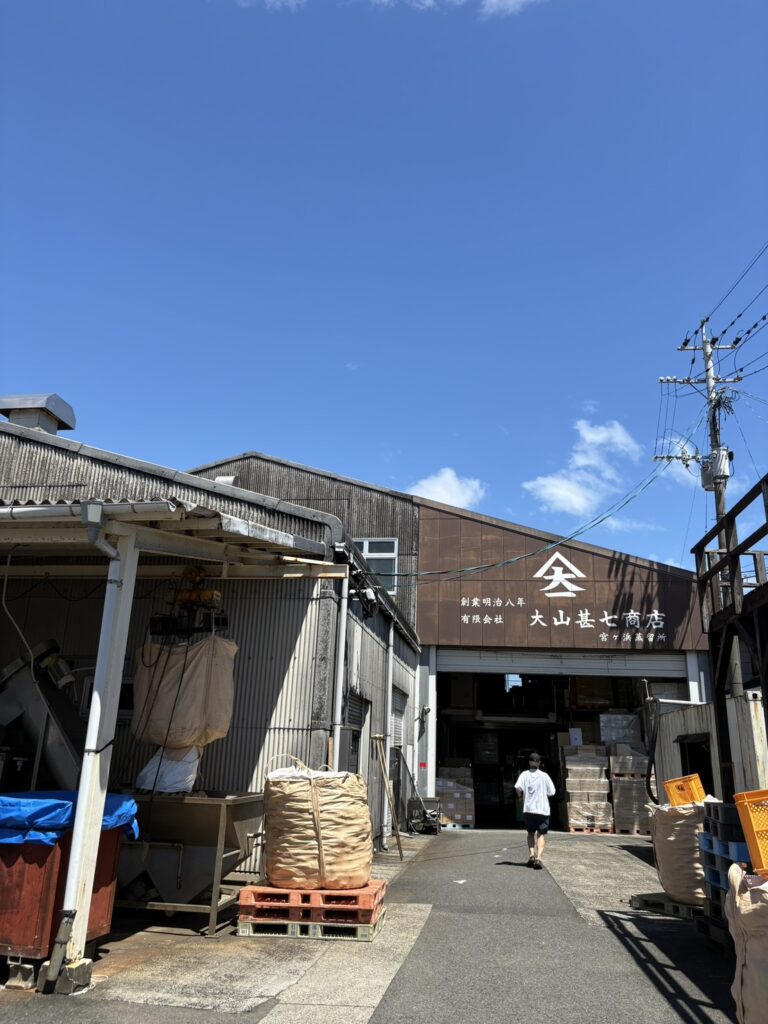
Oyama Jinshichi Shoten has just five makers.
Shochu, spirits, rum — these five make it all.
Sales, and going out to events, too — all these five.
President Oyama is one of them.
While running the company, he develops the products himself and does the final blending himself.
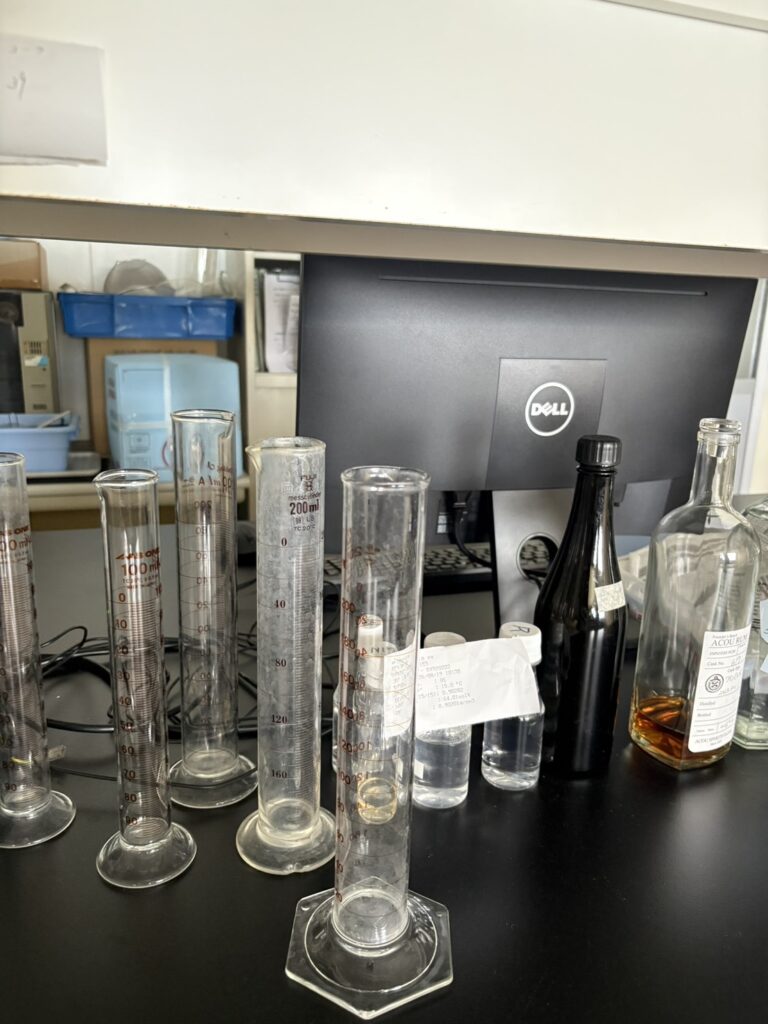
Someone who studied fermentation and microorganisms at Tokyo University of Agriculture, experienced the “selling side” at a liquor trading company, then came back to the brewery — he is standing on the floor and making it.
I think it really matters that the president understands the making.
In the end, by human hands
At Oyama Jinshichi Shoten, they process 2,500 kilograms of sweet potatoes a day.
And every one of those potatoes is touched and sorted by hand.
Damaged spots, bad parts — removed one by one by hand.
Sweet potatoes are vegetables, so if they sit, they start to rot from any wound. Nothing that could become an off-flavour goes into the mash.
For this sorting, the former factory manager, who turns 80 this year, still comes to help.
He is the one I wrote about in Part 1, who alone stayed at the brewery through the ten-year suspension.
Even now, retired, he comes only for the sweet potato sorting, because “this is the most important part.”
Honestly, I thought they’d do it more roughly.
When I asked, “You touch every single one?”, the answer was, “We touch every one.”
And that isn’t the end.
One or two people also check every steamed potato again by hand.
Some things you can tell from raw potatoes; some you can’t until they’re steamed. Even the same variety differs in firmness and flavour from field to field.
Based on what they feel that day, they fine-tune how they steam the next day.
I think this is a way of working that’s hard for a large brewery.
“There may be no one else going this far,” President Oyama said.
In the morning, the koji is broken up by hand, and the progress of fermentation in the jars is checked by eye.
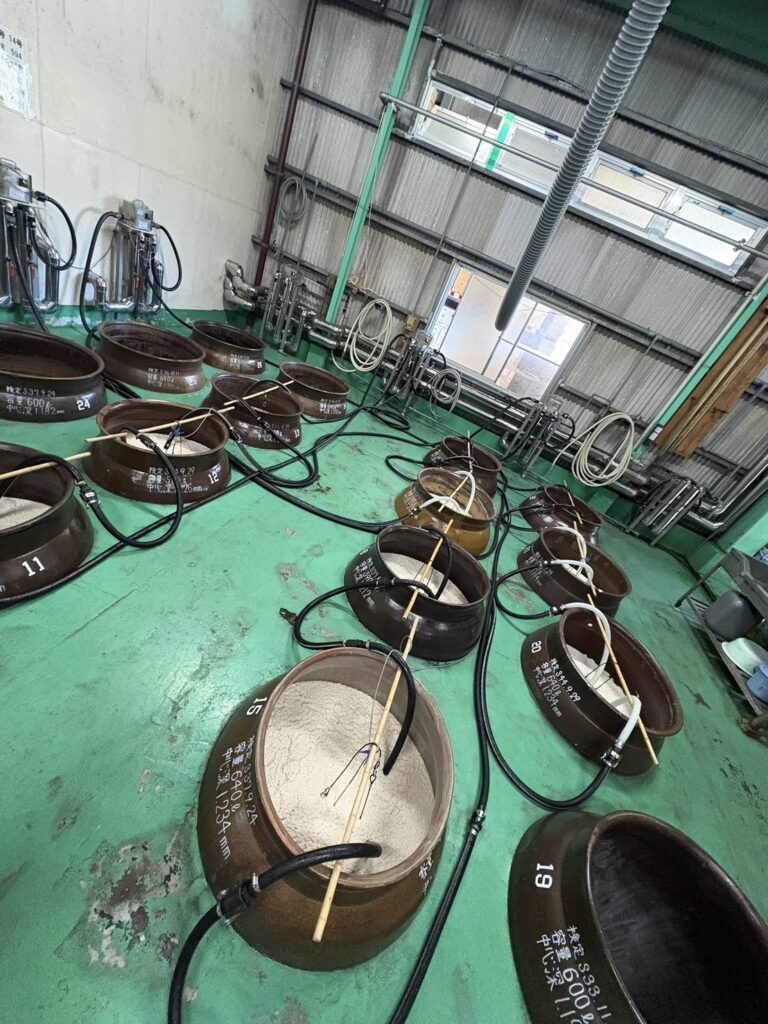
The jars, used for nearly 200 years, can no longer be made — there are no craftsmen left in Japan who can make them, I was told.
ACOU RUM is made in this brewery of handwork.
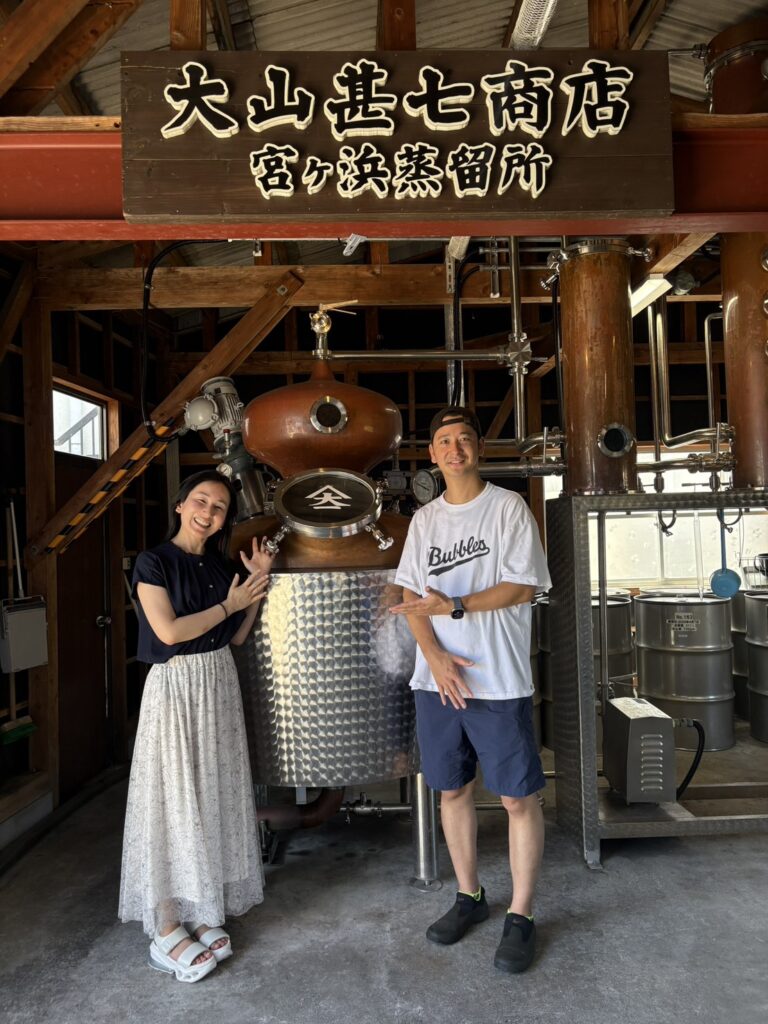
A 500-litre copper still in his father’s garage
The rum still sits in a small building in a corner of the brewery.
It was originally the garage for his father’s car.
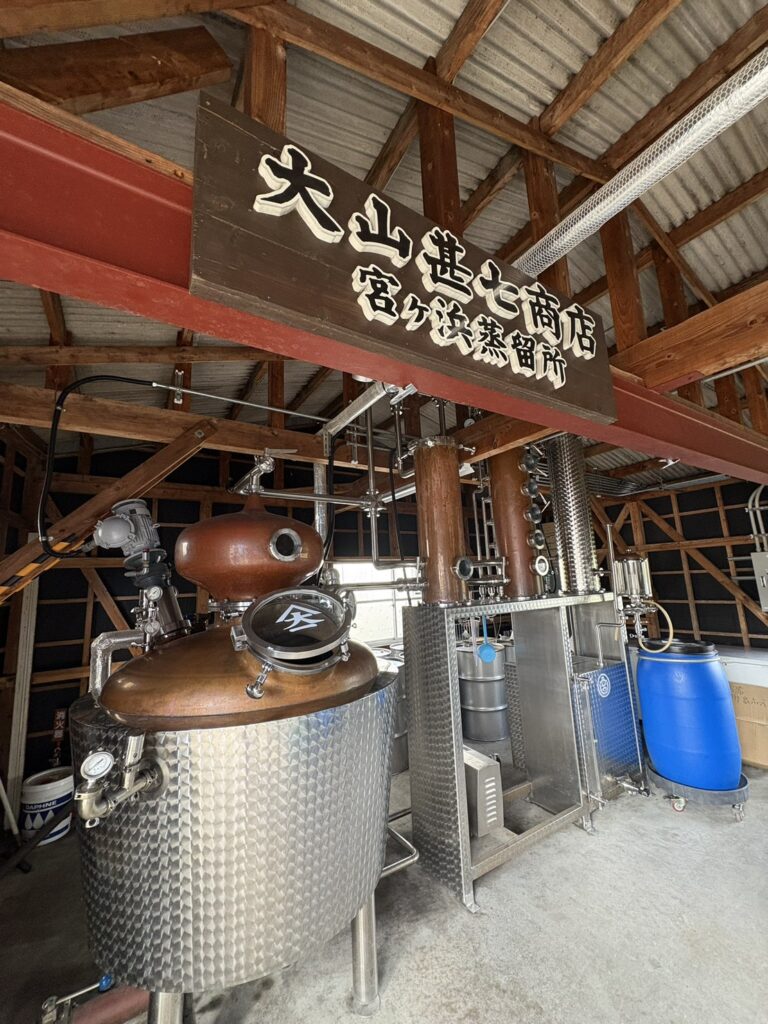
A copper still with a 500-litre capacity.
At first it wasn’t for rum — it was brought in to distil gin with herbs from a local herb garden.
It was ordered in 2020, during the pandemic, and arrived in 2021.
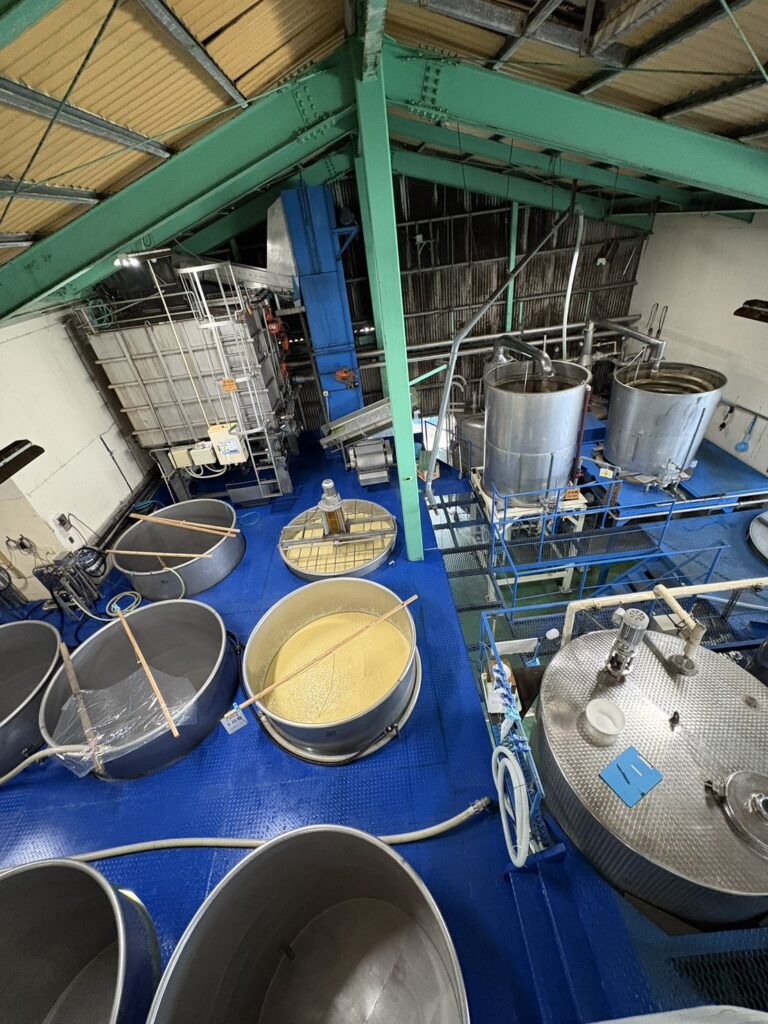
Meanwhile, one batch of rum is 5,000 litres. Fermentation happens in large shochu tanks.
Since the still holds 500 litres, the first distillation is run 10 times.
The second is about half the volume, so 5 times.
For one batch of rum, they distil about 15 times.
What’s more, the fermentation tanks and the still are in different buildings. They pull a long hose to carry the wash.
If you thought only about efficiency, you’d use the shochu still. In fact, they tried it once.
Shochu distillation is “direct heating,” blowing steam straight into the mash.
Sweet potato mash is thick and burns easily, so it is heated while being thinned with steam.
The copper still, on the other hand, uses “indirect heating” through an outer jacket.
“With direct heating, the spirit comes out as if wrapped in a layer of film. And I thought maturation would be very slow, too.”
So, even though it takes more work, the copper still it is.
I nodded deeply at this.
Drinking Japanese rums, I had felt that many had a certain shochu-like character.
Copper removes negative aromas. I’m sure this kind of flavour is what will resonate with whisky lovers.
The mashing water is the brewery’s own well water, coming from the mountains.
Raw materials and water — all from Kagoshima.
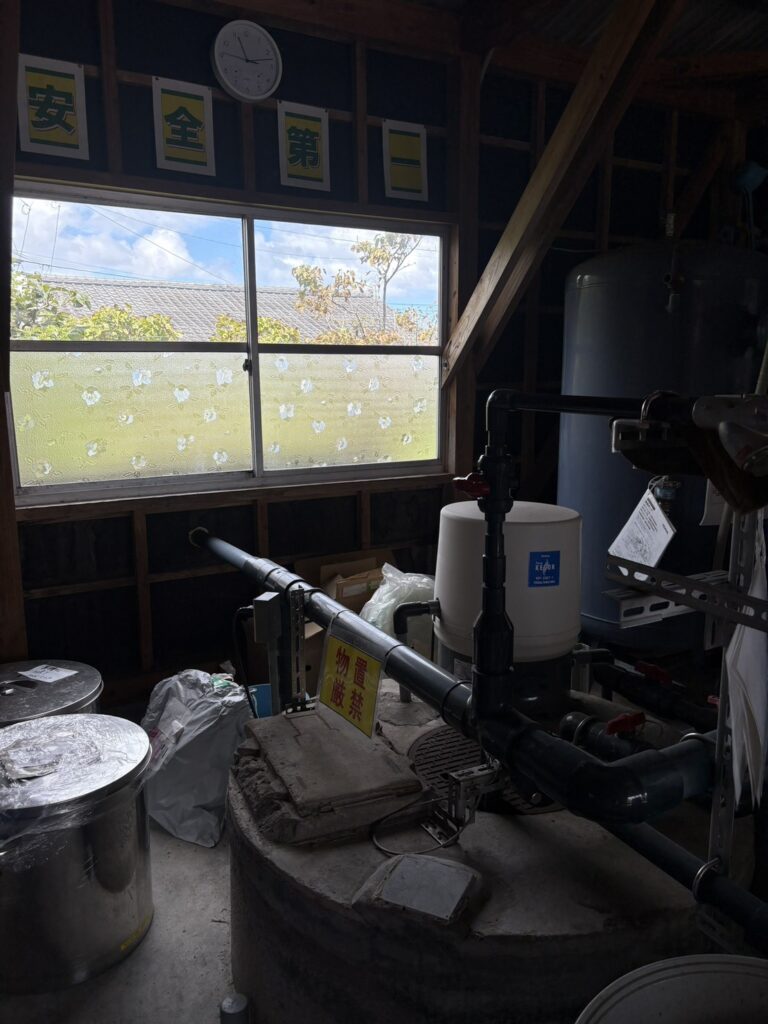
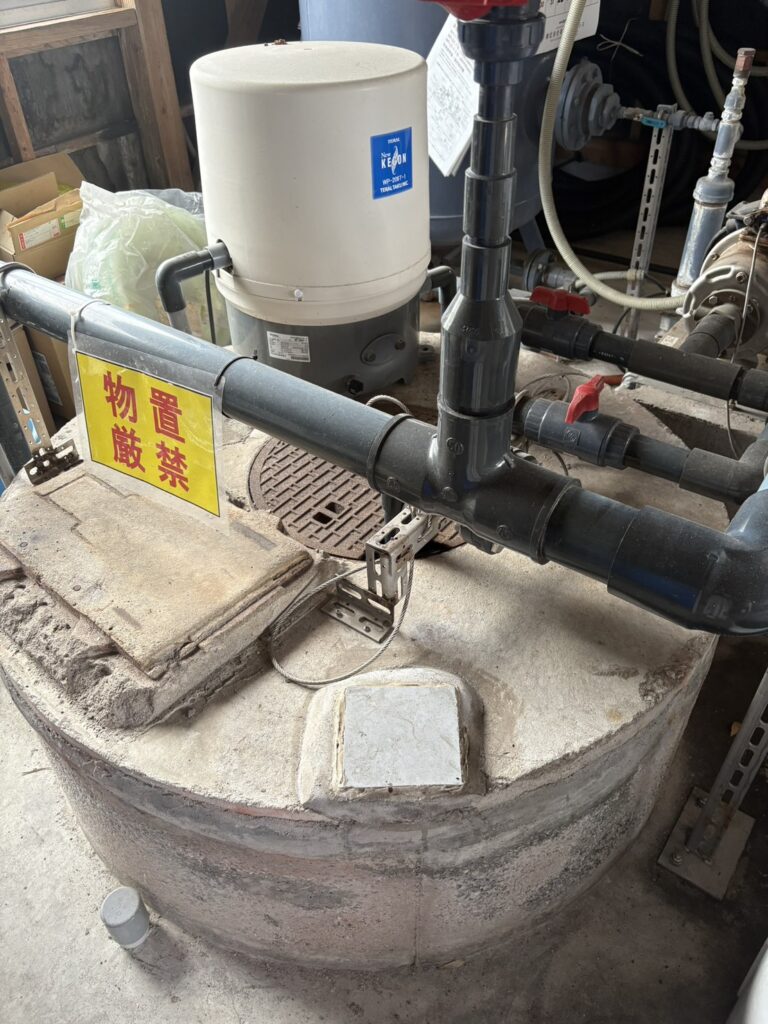
A warehouse where about 200 casks of rum sleep
The warehouse was built from scratch in 2017, when President Oyama returned to the brewery.
Because the sea breeze hits it, it already looks like an old building.
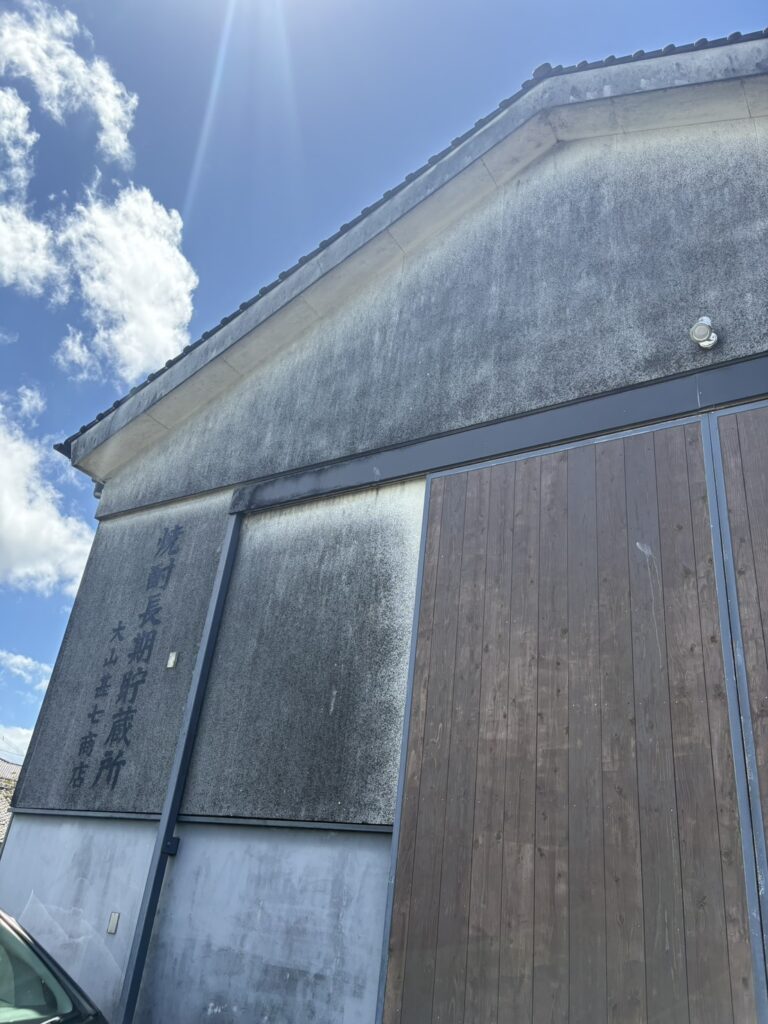
Inside, about 200 casks.
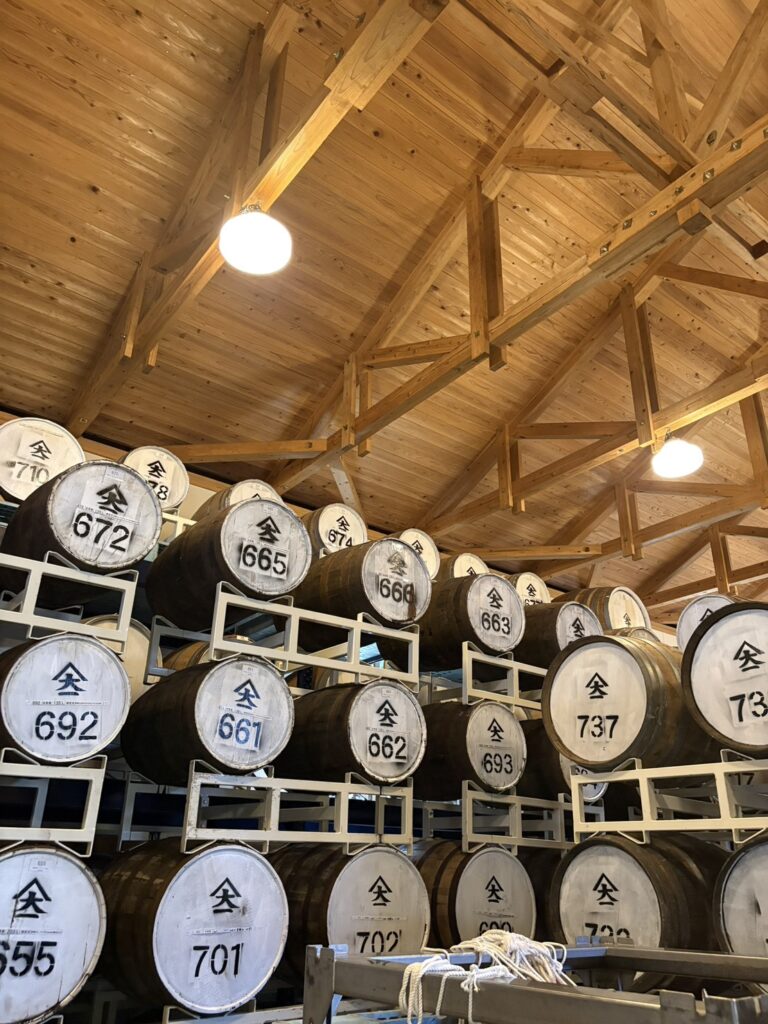
“Rather than releasing a standard product forever, I want to release the ones I like in limited runs of 300 or 500 bottles.”
That’s why they fill all kinds of casks.
Among what I tasted, one that stood out was a cask filled in a Laphroaig quarter cask.
Filled in 2023, only about three years old.
Just when the peat hits hard, it opens up into something floral and fruity.
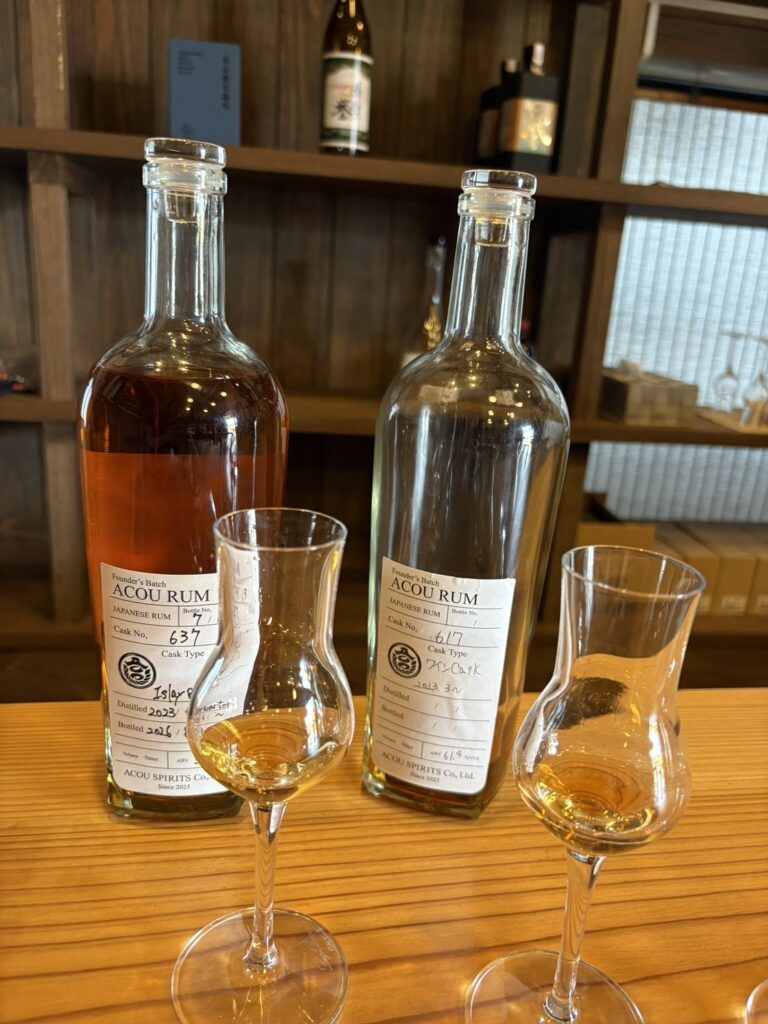
Hot Ibusuki matures spirits fast. In about four and a half years of maturation, around 20% evaporates, I was told.
There is no right answer in maturation.
That’s exactly why I can’t wait for “I want to release the ones I like”!!
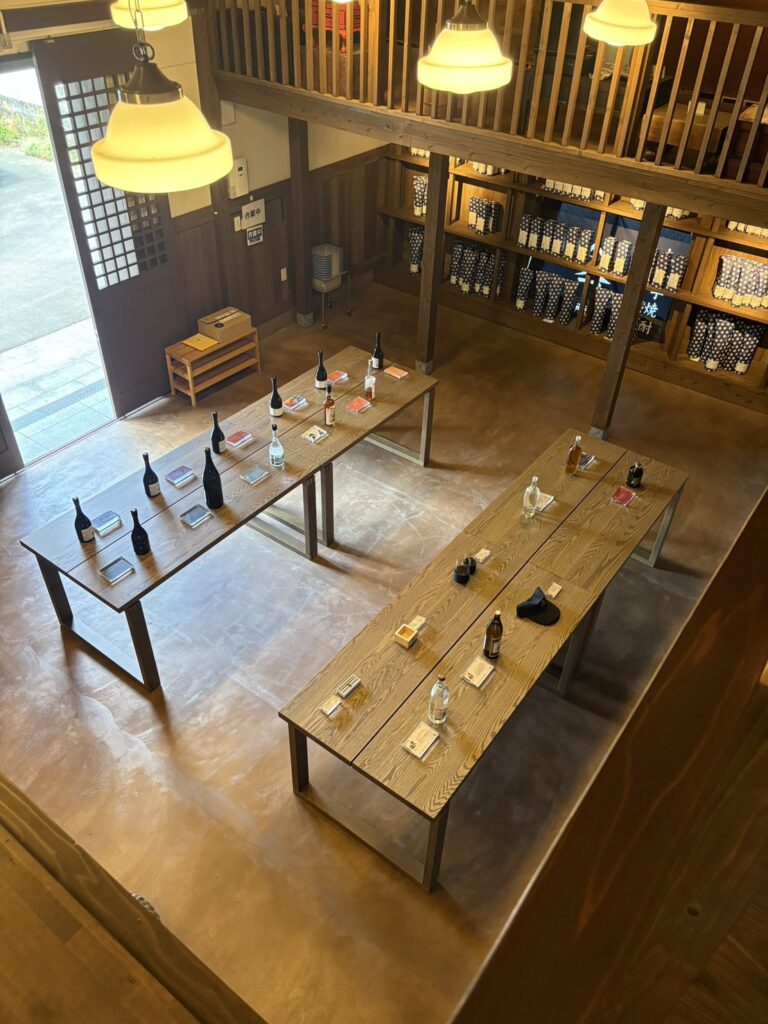
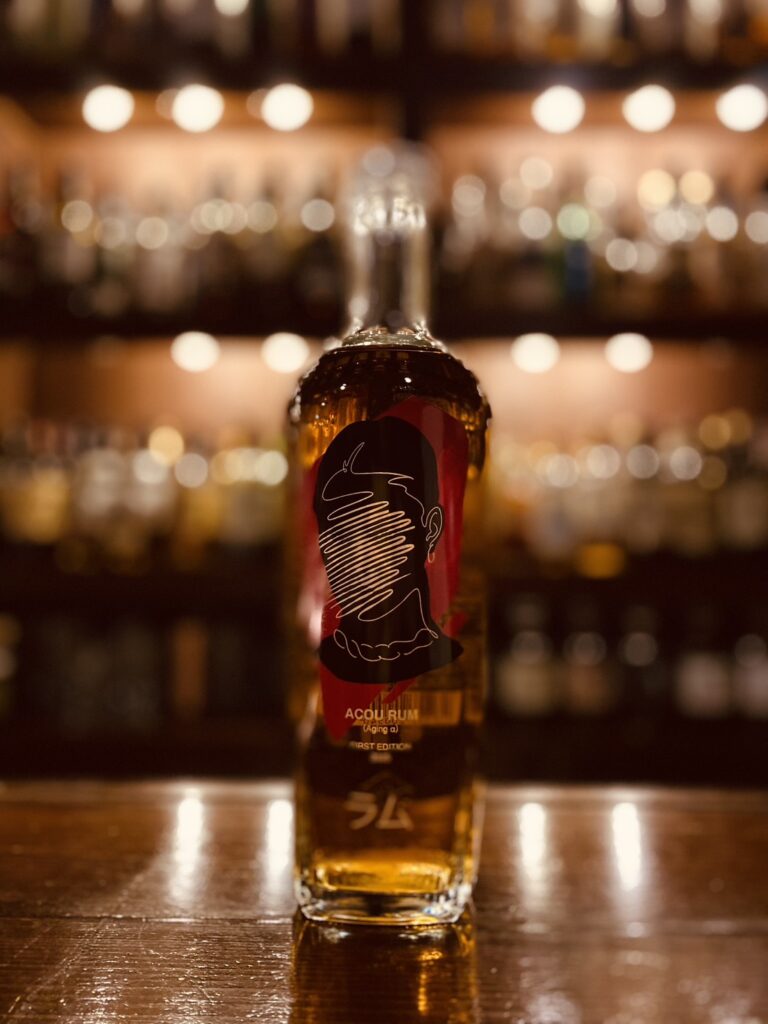
ACOU RUM White, Aged, and 137 bottles
The current releases are White and Aged.
White is a blend of a spirit made from molasses and a spirit made from Kagoshima brown sugar, each fermented and distilled separately.
Aged is brown-sugar based, mainly in bourbon casks, with just a little sherry cask and peated cask.
And there is one bottling not yet out in the world.
A single cask distilled from 100% Ibusuki molasses and matured in wood. Only 137 bottles.
It was bottled for the sugar cane farmers. (We have it at Little Happiness, too!)
In Part 1, I wrote that the farmers had started talking about the future.
A rum born from their own molasses — they must have been so happy!!
Careful rum-making
“We don’t make rum because we gave up on shochu.”
President Oyama said so clearly.
There is the handwork of a shochu brewery that touches every single sweet potato.
Five people protect that handwork.
A president who knows both making and selling stands on the floor himself.
This Japanese rum is packed with the care that only a small brewery can give.
Whisky and rum taste even better when you touch the hearts of the people who make them.
Every encounter is meant to be. Welcome to the world of Rum&Whisky.
[A note from Tanimoto] This article about ACOU RUM is based on my own visit, but it also includes some of my personal thoughts and interpretations. Please enjoy it as the musings of one rum lover.
[About the author]
Mika Tanimoto
CEO, Little.m Inc. / Owner-bartender
Since 2006, I have run Bar Little Happiness, a whisky and rum bar in Nagarekawa, Hiroshima. I visit distilleries in Japan and around the world and write about the people who make the spirits. Recipient of the Hiroshima City Excellent Skilled Worker Award.
“Whisky and rum taste even better when you know the hearts of the people who make them.”
[Visit the bar] 📍 Bar Little Happiness
Rolling Nagarekawa 1F, 5-14 Nagarekawa-cho, Naka-ku, Hiroshima
Mon–Sat 7:00 pm – 12:30 am / Sun 7:00 pm – 12:00 am (closed when I travel to visit distilleries)
No cover charge, no reservation needed