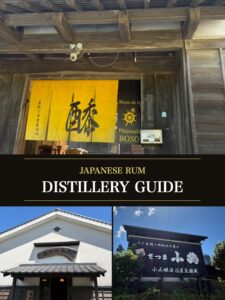

How Japanese Rum “ACOU RUM” Was Born: Visiting Oyama Jinshichi Shoten in Ibusuki, Kagoshima (Part 1)
2026.10.05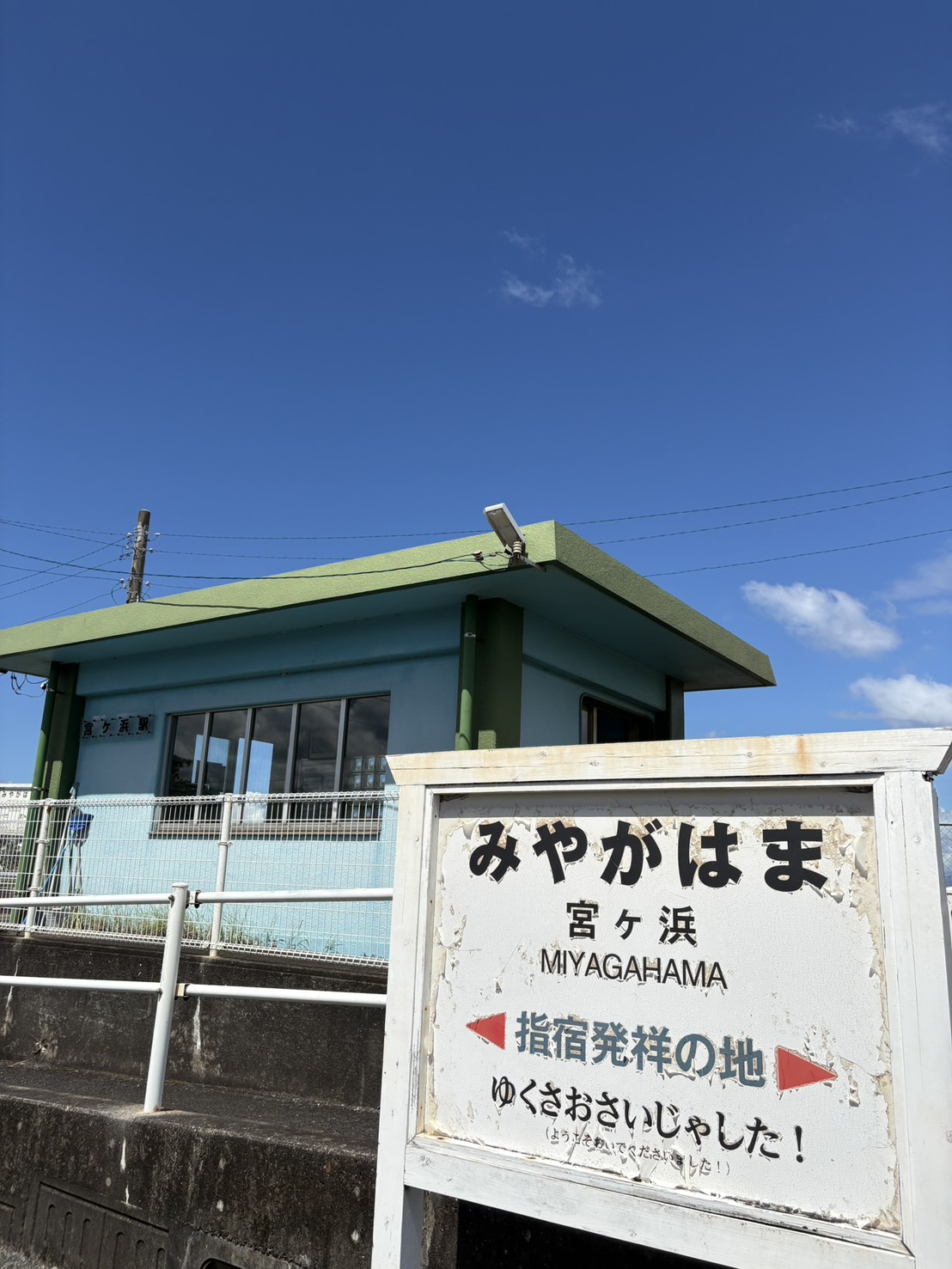
In short: ACOU RUM is a Japanese rum made by Oyama Jinshichi Shoten, a shochu brewery founded in 1875 in Ibusuki, Kagoshima, Japan. President Oyama, who studied fermentation at Tokyo University of Agriculture and worked six years at a liquor trading company, came home in 2017, met local farmers growing sugar cane without pesticides, and began making rum from the molasses left over from their brown sugar — buying all of it rather than taking it for free. The name comes from a great akou tree near the brewery. Part 1 by Mika Tanimoto, owner of Bar Little Happiness in Hiroshima.
Miyagahama, Ibusuki, Kagoshima Prefecture.
The Japanese rum made here is “ACOU RUM” from Oyama Jinshichi Shoten.
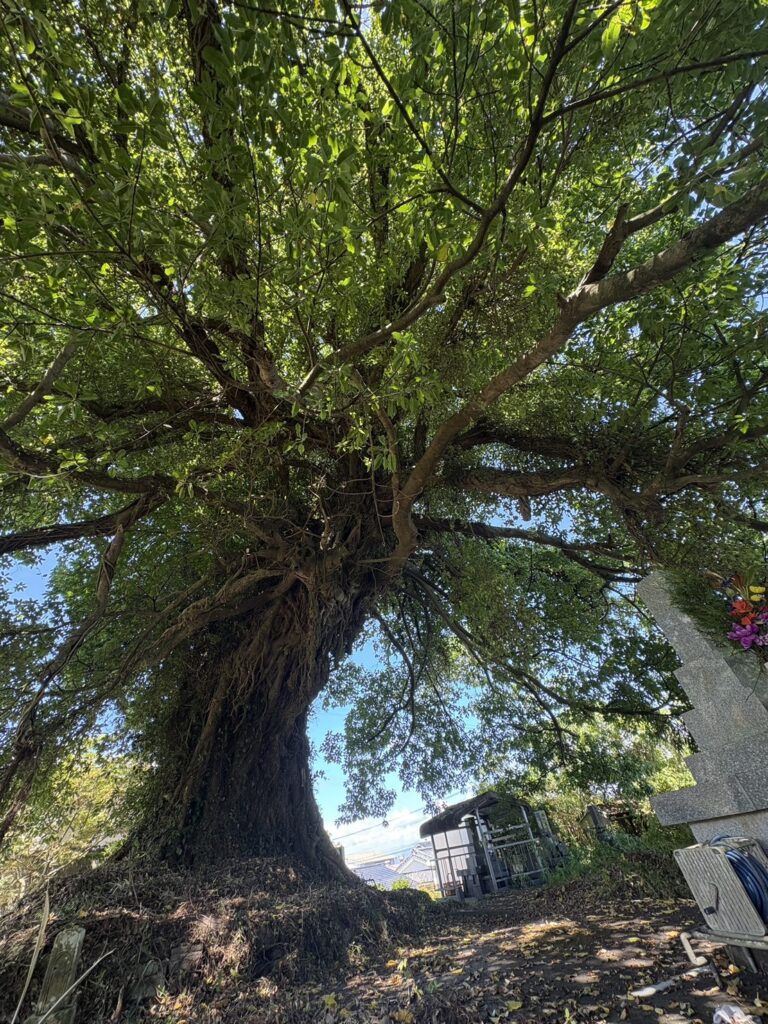
Its name comes from a great akou tree (a kind of fig) that has stood on this land for a very long time.
Why did Oyama Jinshichi Shoten, which has kept making shochu in Ibusuki, a town known for its hot springs, come to make Japanese rum?
This time, I asked President Oyama of Oyama Jinshichi Shoten how ACOU RUM was born.
As I listened, I found that at its beginning were the path President Oyama himself has walked, born and raised in Ibusuki, and his encounters with local people.
Oyama Jinshichi Shoten, a shochu brewery
Oyama Jinshichi Shoten was founded in Meiji 8, 1875.
The Oyama family originally ran a trading business in Miyagahama, right by the sea.
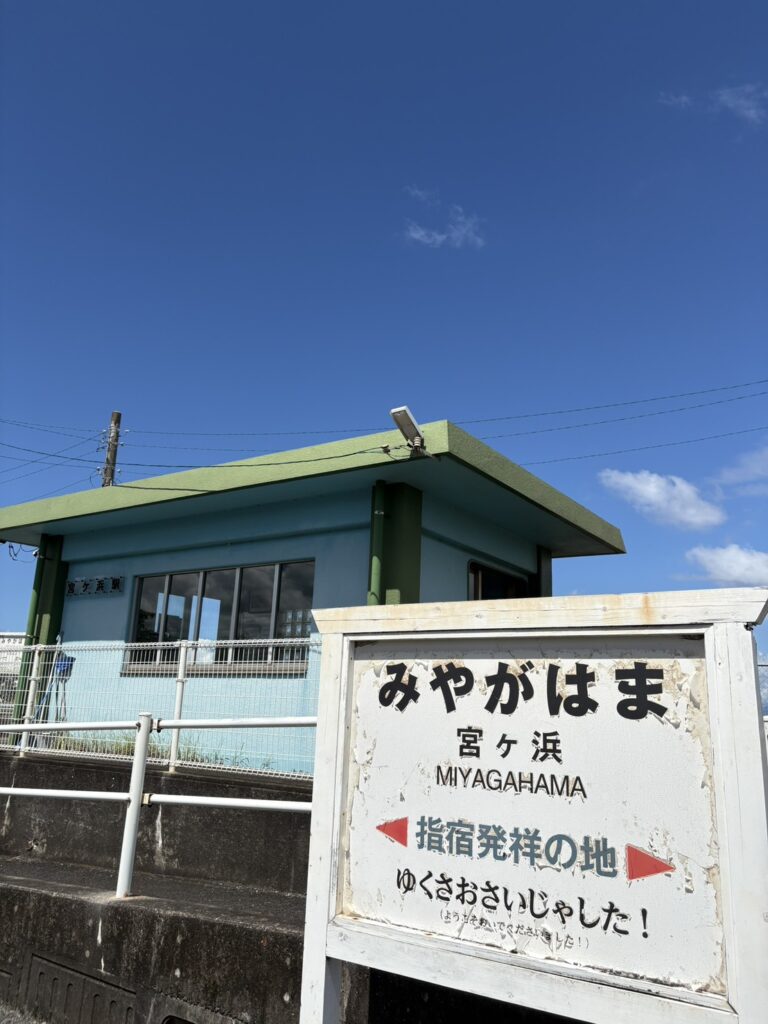
Back then it was one of the sea ports where Ryukyu ships came and went, and the family dealt in all sorts of goods, from cotton for futons to clothes.
Because they also made shochu on the side, the company is still called “Oyama Jinshichi Shoten” (“shoten” means shop or trading house).
Not “○○ Shuzo” (brewery), but the name “Shoten” remains.
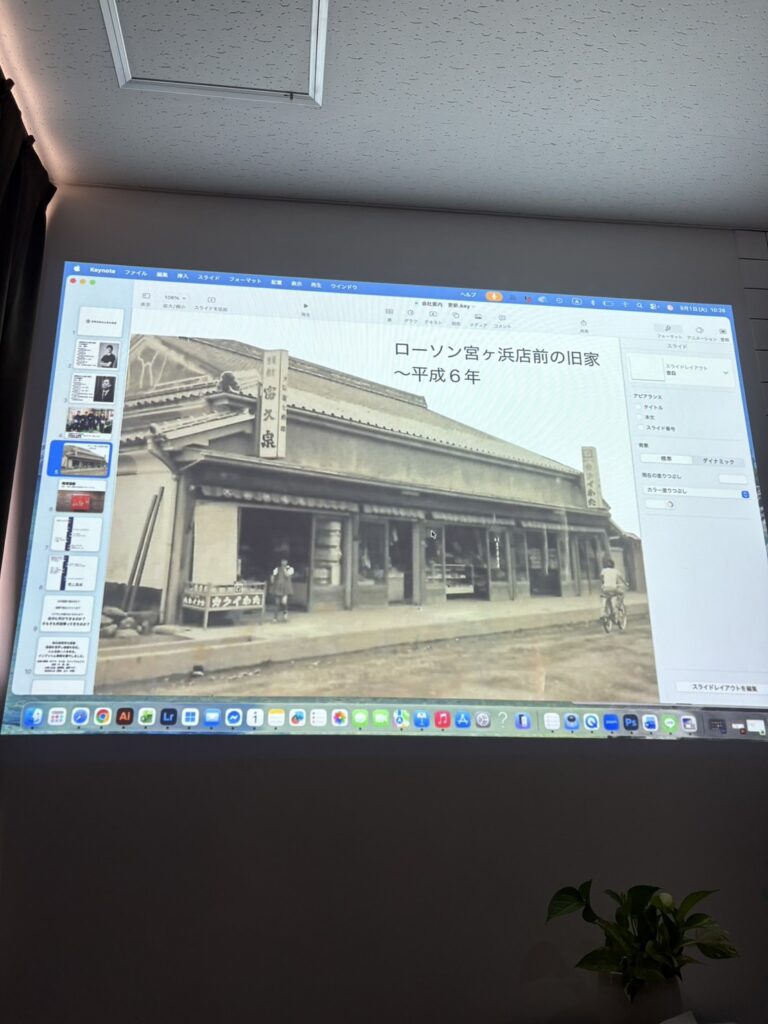
The large house that once stood here remained until 1994.
It even had something like a hidden room, I was told.
The image of the old merchant house lives on in the brewery’s name and in this land.
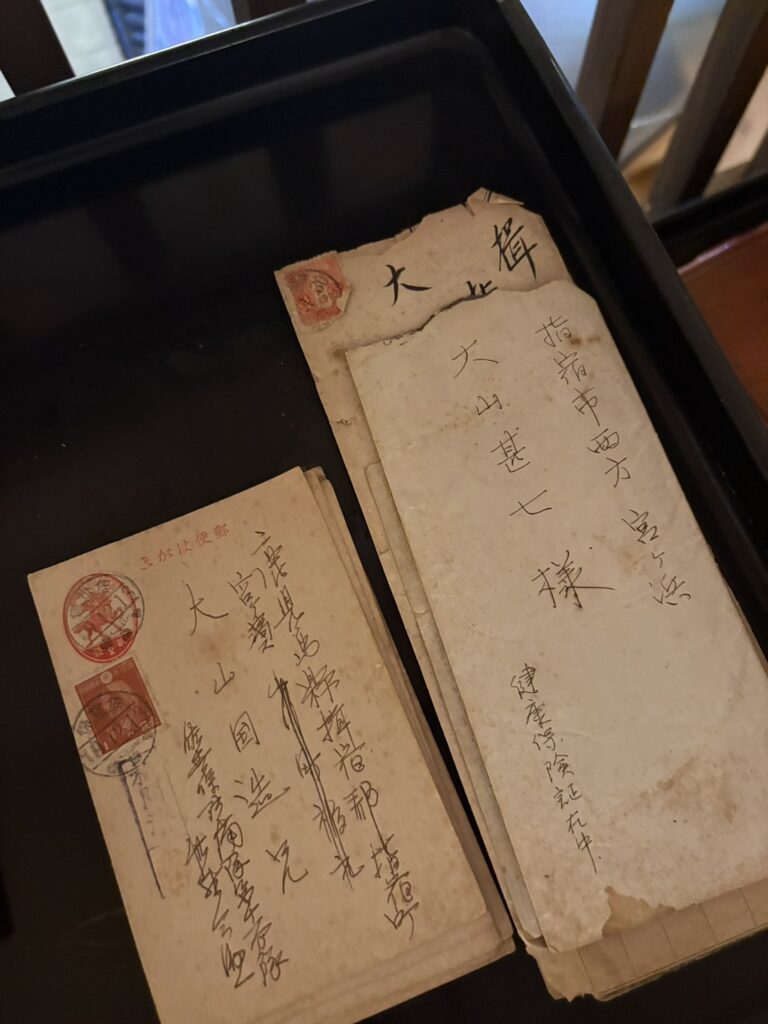
However, there was a time when shochu-making at Oyama Jinshichi Shoten stopped.
In 1989, they took on a large debt to rebuild the aging brewery.
According to President Oyama, it was right around then that liquor licence rules were relaxed, and alcohol became available at convenience stores and supermarkets.
Shochu sales were swept into a wave of price competition.
Then, in 1994, they suspended shochu-making.
A period of not making it continued for about ten years.
After that, the shochu boom came, and his father and the factory manager — the only one who had stayed on during the suspension — restarted shochu-making, just the two of them.
President Oyama was 16 at the time.
President Oyama said,
“If the shochu boom had come five years later, I probably wouldn’t have gone into it.”
At 16, just when he was deciding his path, his family’s shochu-making came back to life.
That event became what led President Oyama to the path of making alcohol.
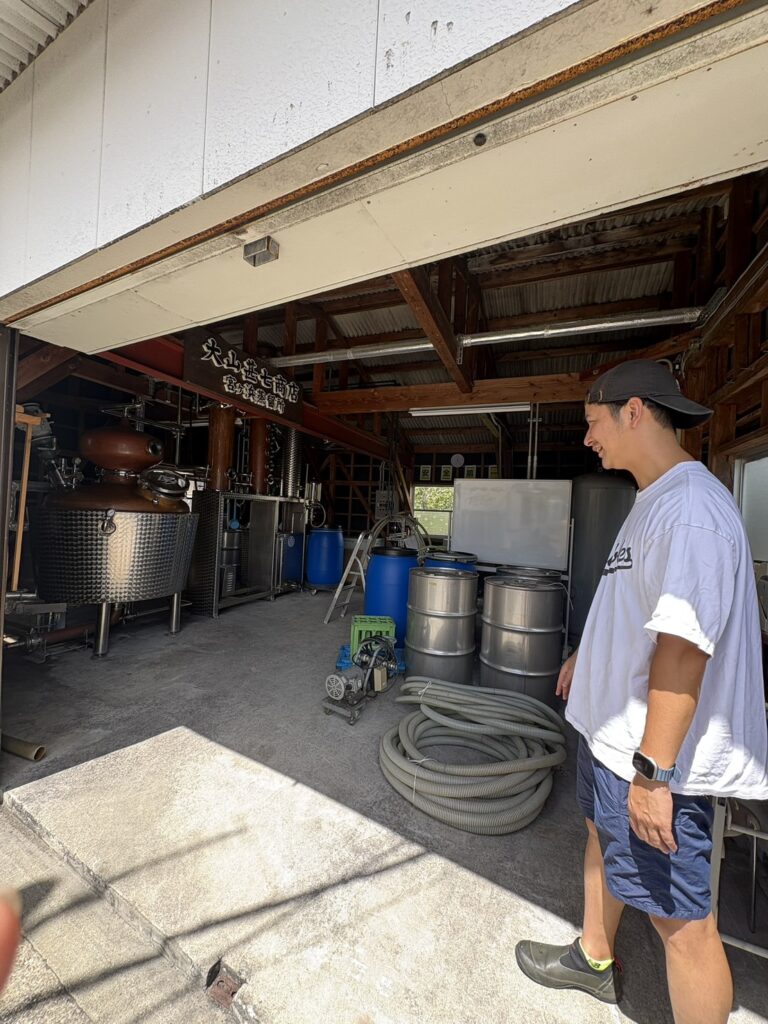
Tokyo University of Agriculture, then a liquor trading company
President Oyama was born in 1988.
He lived in Ibusuki until 18, then went on to Tokyo University of Agriculture.
At university, he studied fermentation and microorganisms.
After graduating, he joined a trading company in Tokyo that sells alcohol to bars and restaurants.
For about six years, this time, he experienced being “on the selling side.”
“Making” and “selling.”
Having experienced both, he came back to Ibusuki in 2017.
The experience of studying fermentation and microorganisms.
And the experience at a liquor trading company of knowing how alcohol is distributed and whom it reaches.
With both, he returned to his family’s brewery.
“What can we do in Ibusuki?”
After coming back to Ibusuki, President Oyama began meeting all kinds of people in the area.
People making katsuobushi (dried bonito).
People raising livestock.
People carrying on crafts handed down for generations.
People growing herbs by natural farming and distilling them.
Though he was born and raised there, by meeting people again and listening to them, he increasingly found himself thinking, “I didn’t know Ibusuki had things like this.”
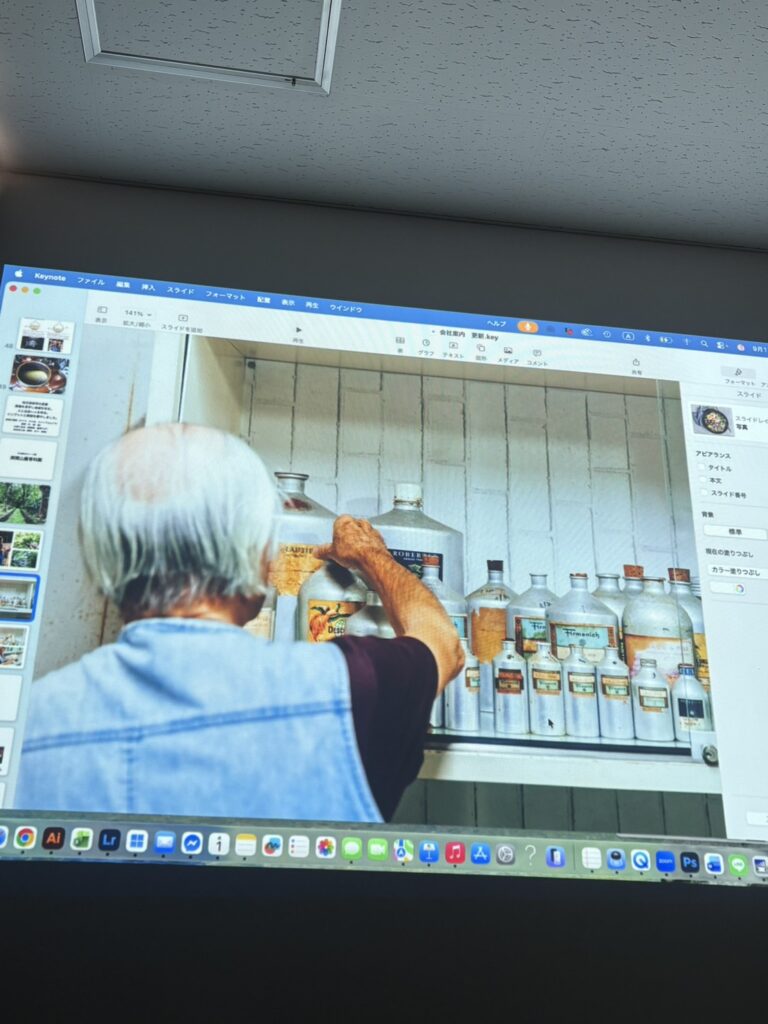
There were crafts that had continued for about 80 years.
From about 500 kg of leaves, only about 5 litres of essential oil can be extracted.
Even so, they keep making things that can only be made on that land.
Meeting people like that, little by little, he began to think,
“What can we do in Ibusuki?”
And going around the region, he met people growing sugar cane.
From sugar cane to Japanese rum
Those farmers had been growing sugar cane in Ibusuki for about 30 years by natural farming, without pesticides.
In the field, there is a small workshop.
There, they press the sugar cane, put the juice straight into a pot to boil off the water, and make brown sugar (kokuto).
What comes out of that is molasses.
The molasses produced in making brown sugar had nowhere much to go.
Seeing the molasses piling up, President Oyama thought,
“Could we make something with this, using our fermentation and distillation?”
That was his idea.
In warm Ibusuki, with the fermentation and distillation skills they already had.
That is where rum-making began.
The farmers even said,
“If you’ll use it, we’ll give you all of it for free.”
So I was told.
But instead of simply accepting that, President Oyama decided to buy all of the molasses.
“Free” doesn’t last.
There are people who make the spirit, people who make the raw material, and that relationship has to continue.
He believed that to make that happen, paying properly was necessary.
But that molasses alone isn’t enough to keep making spirits.
So, using Kagoshima-grown brown sugar as well, their Japanese rum took shape.
The name “ACOU RUM”
And one more thing that shows the connection with this land is the name “Acou.”
Right near the brewery stands a great akou tree.
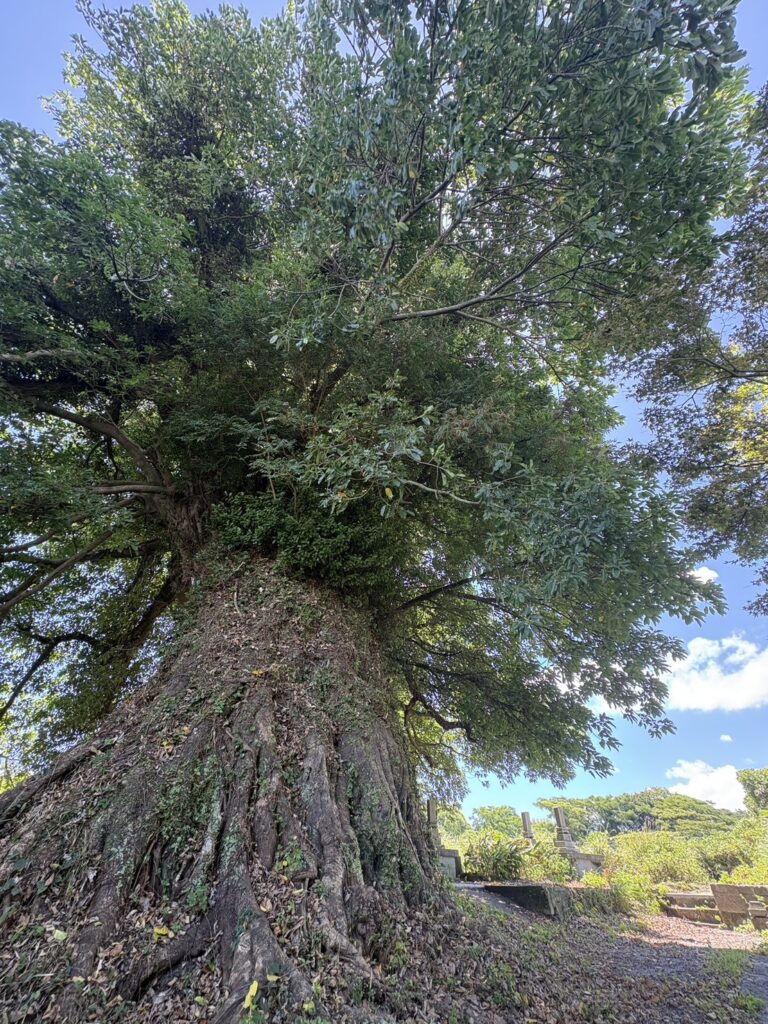
A tree that has stood on this land for a very long time.
For President Oyama, it had always been close by since childhood.
But some local children didn’t know about this tree, I was told.
So he gave the rum the name of a tree on that land.
“ACOU RUM.”
For locals, it’s a tree that has always been there.
But for people from far away, it may be something they are meeting for the first time.
In fact, last December, someone came all the way from Paris for ACOU RUM and visited to see this akou tree.
Letting people discover what exists on the land, through alcohol.
That meaning is also packed into the name “Acou.”
In the sugar cane fields, talk of the future began
There was one more thing from President Oyama’s story that stayed with me.
Farmers and young people started gathering in the sugar cane fields.
Before, when farmers got together, they mostly talked about the old days.
But after President Oyama started bringing young people along,
“How do we carry sugar cane forward from here?”
“How do we make use of what we grow on this land?”
they began talking about the future like that.
Hearing this, President Oyama himself said,
“I’m glad we made rum.”
Through rum born from sugar cane, new people gathered in the fields and began talking about the future.
That, too, is part of the story behind ACOU RUM.
How is Japanese rum made at a shochu brewery?
That is the story of how ACOU RUM was born.
So how is rum actually made at Oyama Jinshichi Shoten?
Oyama Jinshichi Shoten has the fermentation and distillation skills it has built up as a shochu brewery.
How do they use those skills to make rum?
Next time, I go inside the brewery and write about how ACOU RUM is made.
Whisky and rum taste even better when you touch the hearts of the people who make them.
Every encounter is meant to be. Welcome to the world of Rum&Whisky.
[A note from Tanimoto] This article about ACOU RUM is based on my own visit, but it also includes some of my personal thoughts and interpretations. Please enjoy it as the musings of one rum lover.
[About the author]
Mika Tanimoto
CEO, Little.m Inc. / Owner-bartender
Since 2006, I have run Bar Little Happiness, a whisky and rum bar in Nagarekawa, Hiroshima. I visit distilleries in Japan and around the world and write about the people who make the spirits. Recipient of the Hiroshima City Excellent Skilled Worker Award.
“Whisky and rum taste even better when you know the hearts of the people who make them.”
[Visit the bar] 📍 Bar Little Happiness
Rolling Nagarekawa 1F, 5-14 Nagarekawa-cho, Naka-ku, Hiroshima
Mon–Sat 7:00 pm – 12:30 am / Sun 7:00 pm – 12:00 am (closed when I travel to visit distilleries)
No cover charge, no reservation needed