

What Changed with Octomore 17? Is 17.1, 17.2 and 17.3 Less Peated Than Before?
2026.10.05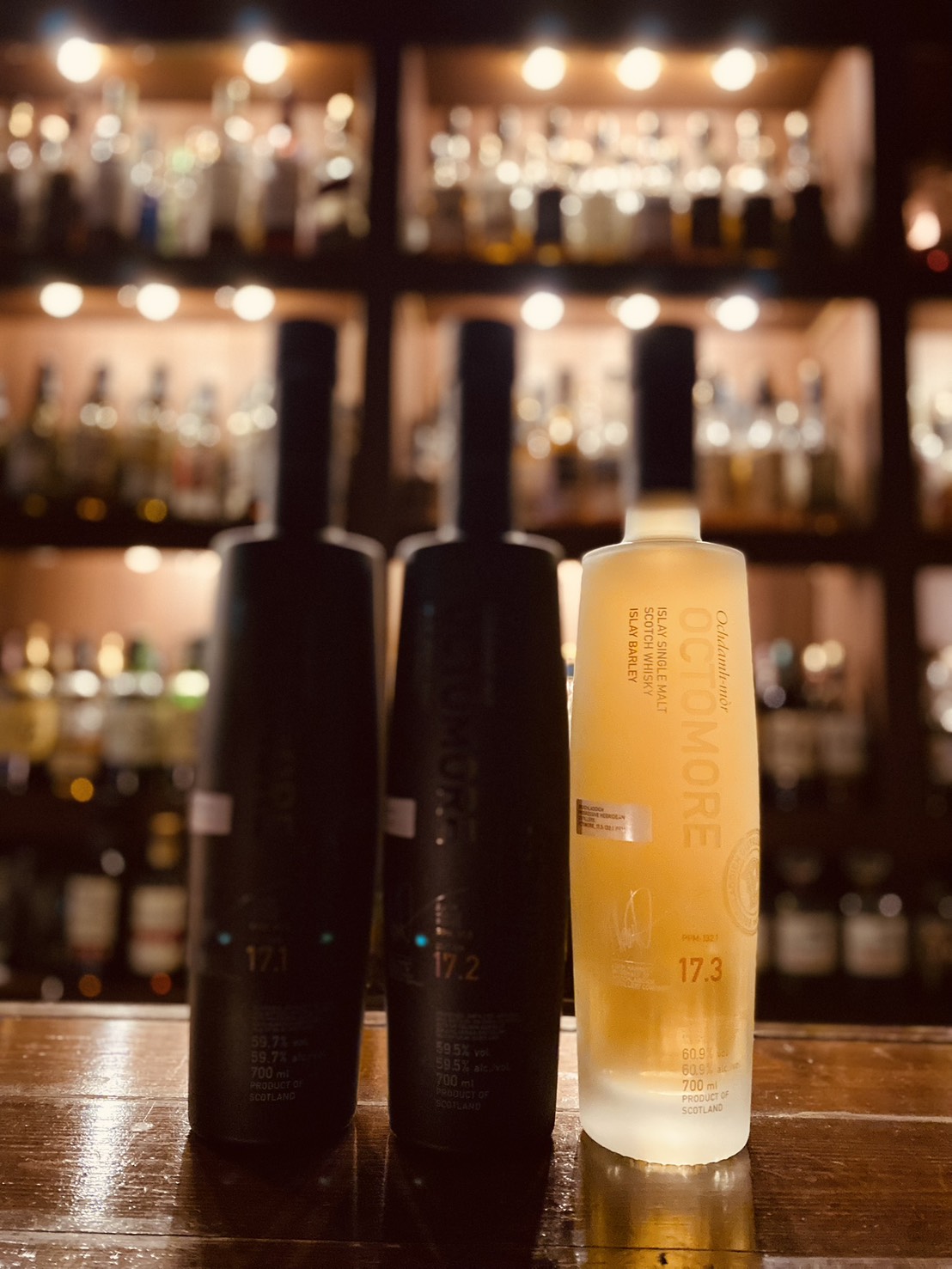
In short: what changed with Bruichladdich’s Octomore 17 series? 17.1 and 17.2 share the same 81.0ppm Concerto barley from mainland Scotland and differ only in casks; 17.3 (132.1ppm) is single farm, single field (Irene’s Field) and single vintage Islay barley. PPM has fallen since the 14 series — but the .3 was never simply “the highest PPM.” By Mika Tanimoto, Bar Little Happiness, Hiroshima.
This season has come around again!
Bruichladdich’s “Octomore,” which I look forward to every year.
This year it is the 17 series.
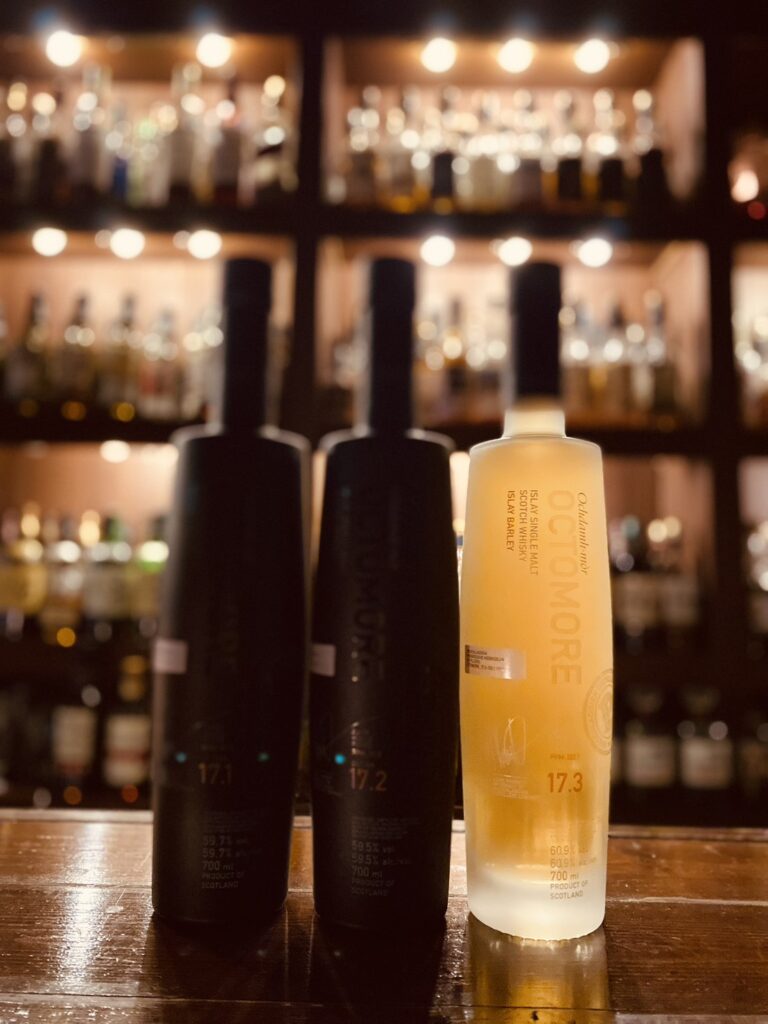
First, let’s look at the differences between 17.1, 17.2 and 17.3.
| 17.1 | 17.2 | 17.3 | |
|---|---|---|---|
| Age | 5 years | 5 years | 5 years |
| PPM (phenol level) | 81.0ppm | 81.0ppm | 132.1ppm |
| ABV | 59.7% | 59.5% | 60.9% |
| Barley | Concerto, mainland Scotland | Concerto, mainland Scotland | Concerto, Islay |
| Barley origin | Mainland Scotland | Mainland Scotland | Octomore Farm, Irene’s Field |
| Maturation | Fully matured in first-fill bourbon casks | Second-fill French oak → first-fill port barriques | First-fill bourbon casks + several second-fill European oak casks |
| Cask details | Bourbon casks only | 4 years in French oak that had held California red wine → bourbon → Octomore, then finished in port casks | Includes casks previously used for Ribera del Duero, Sauternes, ice wine, Syrah and more |
| Role | The benchmark Octomore | Same spirit, transformed by the casks | Single Farm, Single Field, Single Vintage |
17.1 is simply bourbon casks.
17.2 takes spirit from the same barley at the same PPM and finishes it with quite complex cask use.
And 17.3 uses different barley altogether.
It uses barley harvested at Octomore Farm on Islay — specifically from Irene’s Field.
And one more thing that catches the eye is the PPM.
17.1 and 17.2 are 81.0ppm.
Even 17.3 is 132.1ppm.
Compared with earlier Octomores, that is quite low.
So, here is the question:
“What has changed with this year’s Octomore?”
That is what this article is about.
What is Octomore, anyway?
Octomore is a super-heavily peated single malt made by Bruichladdich Distillery on Islay, Scotland.
It is the series in which Bruichladdich peats its malt especially heavily.
When it comes to Octomore, the first thing everyone wants to know is the “PPM (phenol level).”
Generally, the higher the number, the more phenolic compounds the barley contains, and the stronger the peat aroma of the spirit.
Octomore has put that number front and centre every year.
Over 100ppm is a given.
Numbers like 200ppm and even 300ppm have appeared.
“The most heavily peated whisky in the world.”
I think many people have that image of it.
I too check the PPM first whenever I see an Octomore.
How many ppm is it?
Is Octomore’s PPM really going down?
Let’s line up the numbers over the years.
| Series | .1 | .2 | .3 |
|---|---|---|---|
| 14 | 128.9ppm | 128.9ppm | 214.2ppm |
| 15 | 108.2ppm | 108.2ppm | 307.2ppm |
| 16 | 101.4ppm | 101.4ppm | 189.5ppm |
| 17 | 81.0ppm | 81.0ppm | 132.1ppm |
It is very clear.
From 14 to 17, the .1 and .2 went
128.9 → 108.2 → 101.4 → 81.0ppm
— steadily down.
And the .3 went
214.2 → 307.2 → 189.5 → 132.1ppm.
There is the standout 307.2ppm of 15.3, but after that the numbers drop, and 17.3 is 132.1ppm.
At least looking only at the numbers of the past few years,
“Octomore’s PPM is lower than before”
— I think it is fair to say that.
In the 17 series in particular, even the .3 is 132.1ppm.
For anyone who knows the 300ppm-plus Octomores,
“Huh? 132ppm?”
is the kind of reaction this number gets (laughs).
But was the .3 always “the one with the highest PPM”?
This is what I want to look at again this time.
The “.3” has always been something special in Octomore.
However,
“.3 = the highest PPM in the series”
is not what it means.
For example, in the 7 series,
7.1 was 208ppm, while 7.3 was 169ppm.
In the 12 series, too,
12.1 was 130.8ppm,
and 12.3 was 118.1ppm.
In other words, being a .3 does not automatically mean the highest PPM.
So what makes the .3 special?
It is about where the barley was grown.
What the Octomore “.3” means
For Octomore’s .3, Islay-grown barley has always been important.
From the early series, the idea was to use barley grown at Octomore Farm on Islay, and from there it developed towards tracing the farm, the field and the harvest year.
In other words, the .3 is not only a series chasing
“stronger peat”
but also
“where the barley comes from”
— a series made to show that.
In fact, specific fields have been featured in the .3 before.
9.3: “Irene’s Field.”
12.3: “Church Field.”
And 17.3: Irene’s Field again.
This 17.3 has been narrowed all the way down to
Single Farm
Single Field
Single Vintage
— that is how far it goes.
So if you look at the 132.1ppm of 17.3
and judge it only as “low PPM for a .3,”
you will miss a little of what this bottle is trying to do.
17.1 and 17.2: same PPM, same barley
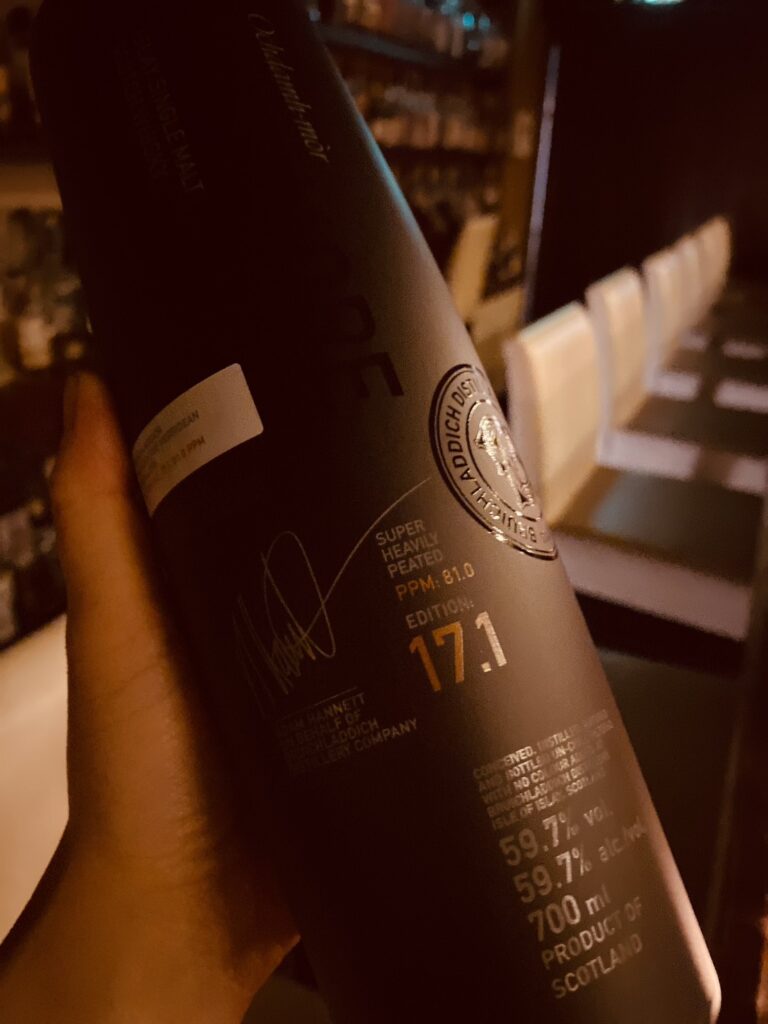
17.1 and 17.2 are both
81.0ppm.
The barley is also the same: Concerto barley from mainland Scotland.
In other words, the base spirit is the same.
So what is different?
The casks.
17.1 spent its full 5 years in first-fill bourbon casks.
It is the benchmark Octomore.
Official tasting notes
Smoke and charred notes, layered with the sweetness of vanilla milkshake, Scottish tablet and warm custard tart, opening up into pear drops and malt syrup.
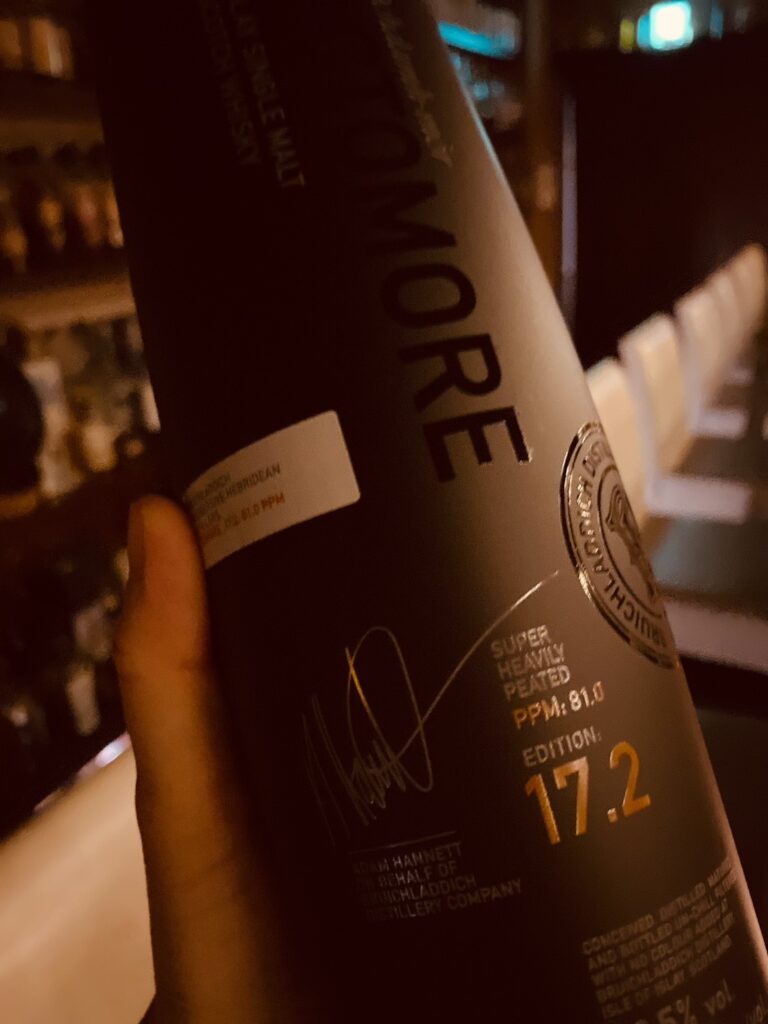
17.2, on the other hand, is quite complex.
First, second-fill French oak that had held California red wine.
Then bourbon.
Then Octomore.
It was matured for 4 years in casks with that history, and finally finished in first-fill port barriques.
Official tasting notes
Peppery spice layered with citrus and berry notes.
17.1 and 17.2 are a comparison that shows how far the flavour can change by changing the cask while keeping the PPM the same
— that is the idea.
This is what makes Octomore fun.
Looking only at the number “81ppm,” they are the same.
But change the cask, and of course the aroma and taste change too.
17.3: different from the barley up
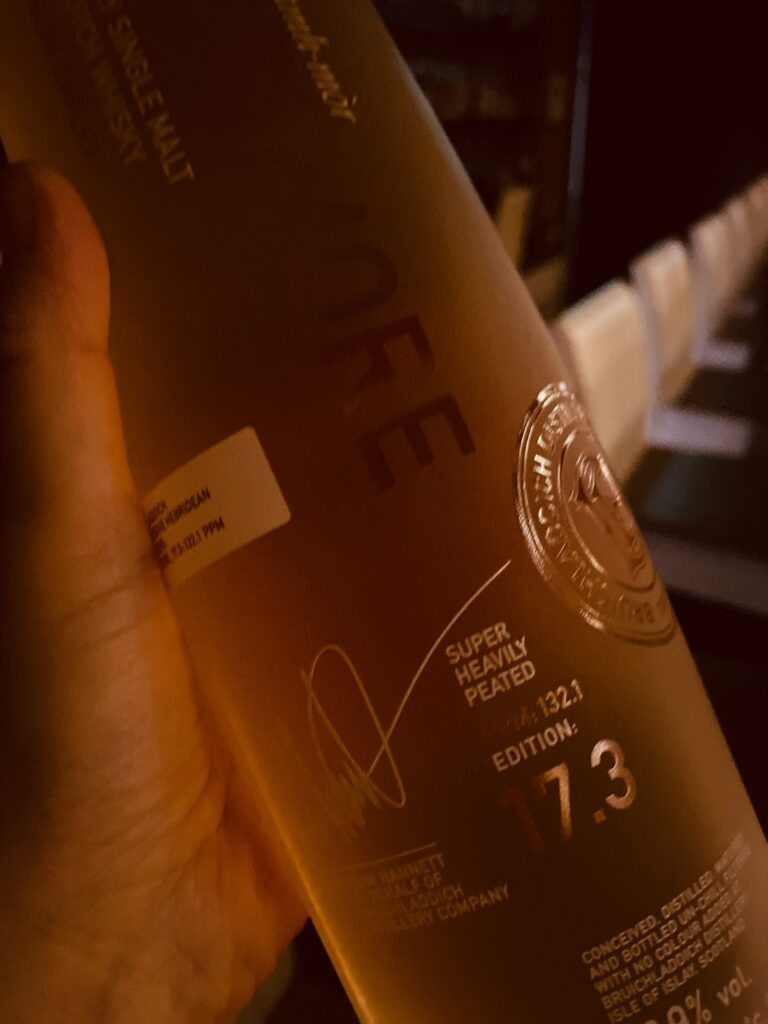
And then 17.3.
This one is 132.1ppm.
By the numbers alone, it is higher than 17.1 and 17.2.
But there is a bigger difference than that.
What it uses is
Concerto barley grown on Islay.
Barley grown in Irene’s Field at Octomore Farm.
The barley was harvested in 2019 and distilled in 2020.
Then matured for 5 years.
And the casks are not just one type, either.
In addition to first-fill bourbon casks, it combines second-fill European oak previously used for Ribera del Duero, Sauternes, ice wine, Syrah and more.
In other words, 17.3 is
not a bottle to judge by PPM alone, but a bottle to look at as a whole, from the field to the cask.
The ultimate traceability!
Official tasting notes
Powerful peat in harmony with elegance: salted caramel, smoked apple and toasted coconut, layered with sweet hints of praline and vanilla cream — a deep, layered palate.
Has Octomore 17 “gone soft”?
So, what is the verdict?
In terms of PPM alone, the 17 series is much gentler than before.
Especially
for people who were looking forward to the thrill of “Octomore means 300ppm-plus!”,
I think it may feel a little lacking.
I would love to drink a 300ppm-plus one again too (laughs).
But looking back at the history of the .3,
.3 = highest PPM
was never the case.
It is a series that has dug all the way down into Islay barley, the farm, the field and the harvest year.
Other changes at Bruichladdich right now
And not only Octomore — looking at Bruichladdich as a whole, there has been a small change recently.
The core “The Classic Laddie.”
What used to be a NAS (no age statement) whisky has now become
“The Classic Laddie 10 Aged Years.”
If you follow Bruichladdich, you will have noticed this change too.
Seen together with the PPM change in Octomore 17,
“Bruichladdich is changing a little”
— that is how it feels.
I found photos of Bruichladdich from 18 years ago
Come to think of it, while sorting through my photos, I found some very old pictures of Bruichladdich.
About 18 years ago.
The sculpture that stood at the entrance.
And a hand-fill bottle.
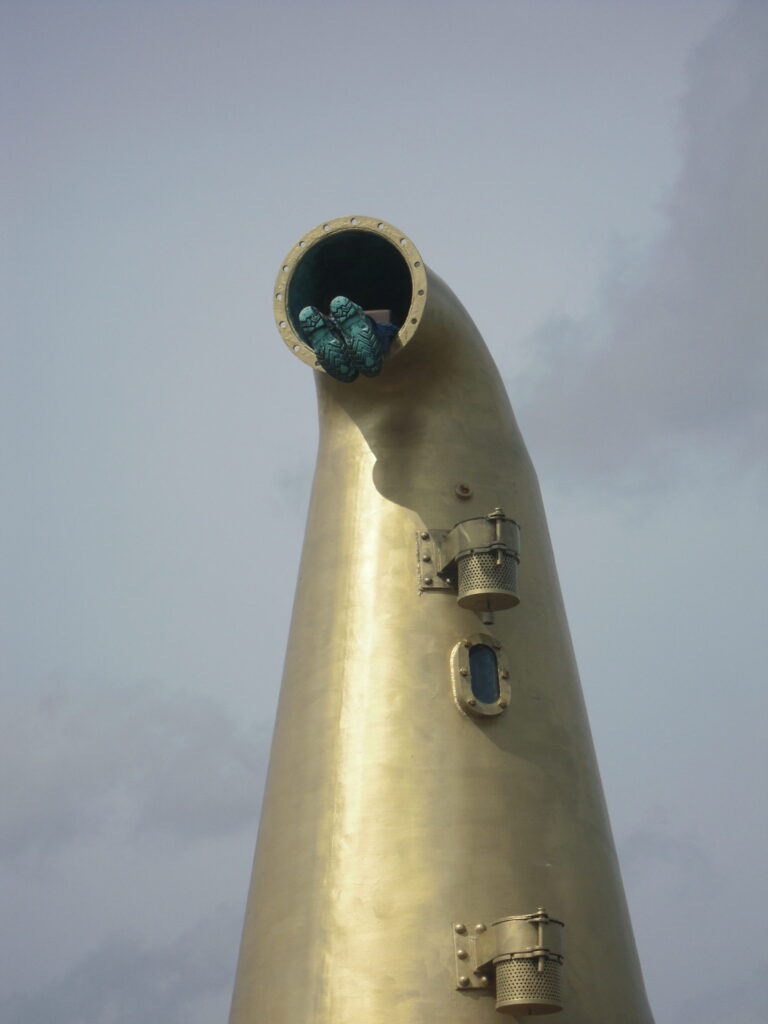
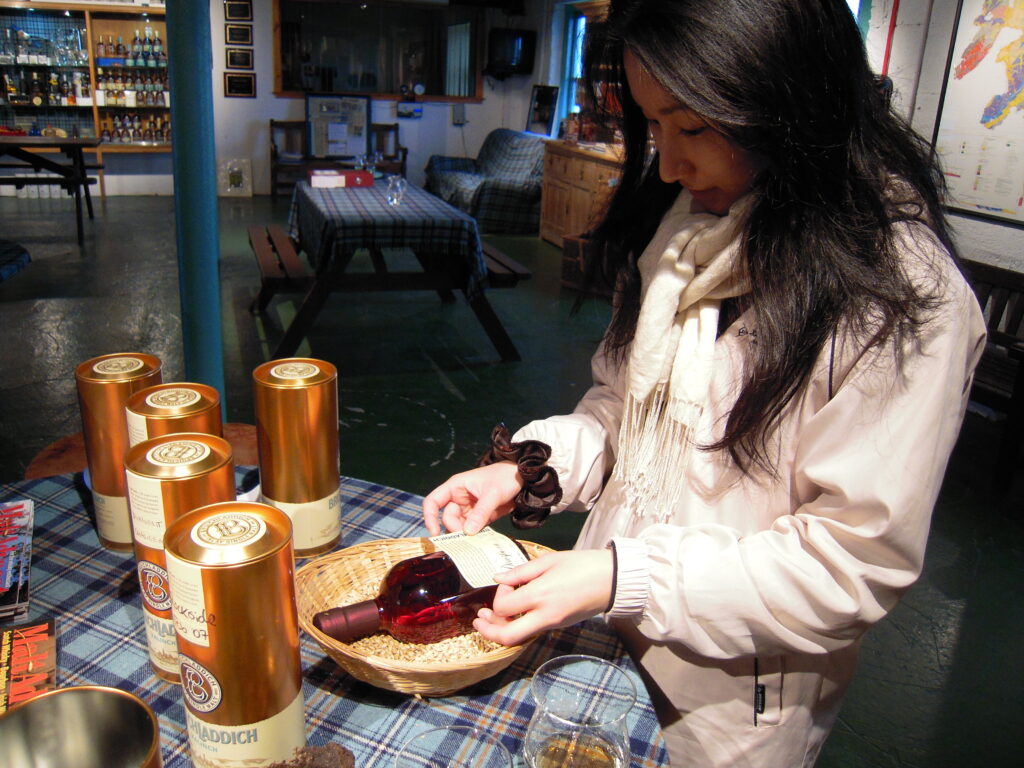
But I still can’t help hoping for an over-the-top, high-PPM Octomore (laughs).
While looking forward to next year, don’t miss this year’s Octomore 17 series!!
The Octomore 17 series is available at Little Happiness and as sample bottles in our online shop.
Online shop (in Japanese) ▶️
Both whisky and rum taste even better when you touch the feelings of the people who make them.
Every encounter is meant to be. Welcome to the world of Rum&Whisky.
🔗 Related article (in Japanese)
[About the author]
Mika Tanimoto
CEO, Little.m Inc. / Owner-bartender
Since 2006, I have run Bar Little Happiness, a whisky and rum bar in Nagarekawa, Hiroshima. I visit distilleries in Japan and around the world and write about the people who make the spirits. Recipient of the Hiroshima City Excellent Skilled Worker Award.
“Whisky and rum taste even better when you know the hearts of the people who make them.”
[Visit the bar] 📍 Bar Little Happiness
Rolling Nagarekawa 1F, 5-14 Nagarekawa-cho, Naka-ku, Hiroshima
Mon–Sat 7:00 pm – 12:30 am / Sun 7:00 pm – 12:00 am (closed when I travel to visit distilleries)
No cover charge, no reservation needed