
Setouchi Distillery Visit, Part 3: One Line Drawn by Two Brothers — an Answer Still Without a Name, Growing in Kure (Hiroshima, Japan)
2026.10.05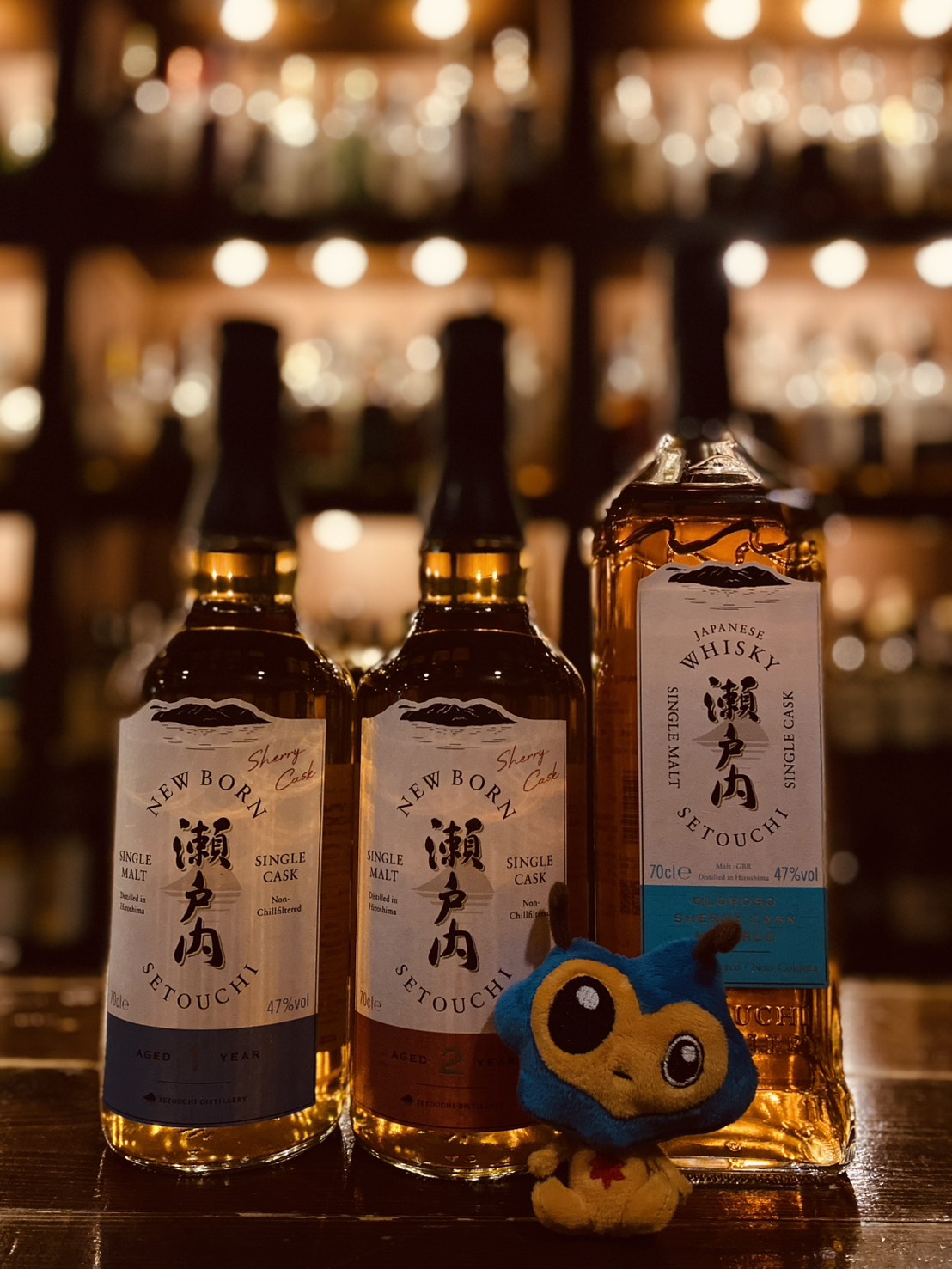
In short: in the final part of my Setouchi Distillery report (Kure, Hiroshima, Japan), the Seto Inland Sea climate — up to 40°C in summer and never below 10°C in winter thanks to the still’s heat — speeds up maturation, with angel’s share losses of over 20%. First-fill casks only, second-fill casks reused for umeshu, and every bottle released as a single cask at 47% ABV with a lot number. By Mika Tanimoto, owner of Bar Little Happiness in Hiroshima.
Part 1 ▶️ Two brothers chasing the lost aroma of old sherry-cask Macallan
Part 2 ▶️ A former MRI researcher’s blueprint: 90% sherry casks
The memories of the past the older brother kept chasing, and the blueprint for the future the younger brother designed.
Here in Kure, Hiroshima, their two passions finally become one line.
The trials of the Seto Inland Sea: the strength of “faster maturation” born from constraints
Kure has a Seto Inland Sea climate, which puts casks through a tough trial for whisky maturation, completely different from Scotland.
Summer temperatures can reach 40°C, and even in winter the heat from the distillery equipment keeps it from dropping below 10°C — an environment of extreme temperatures.
This environment brings an evaporation rate several times higher than in Scotland.
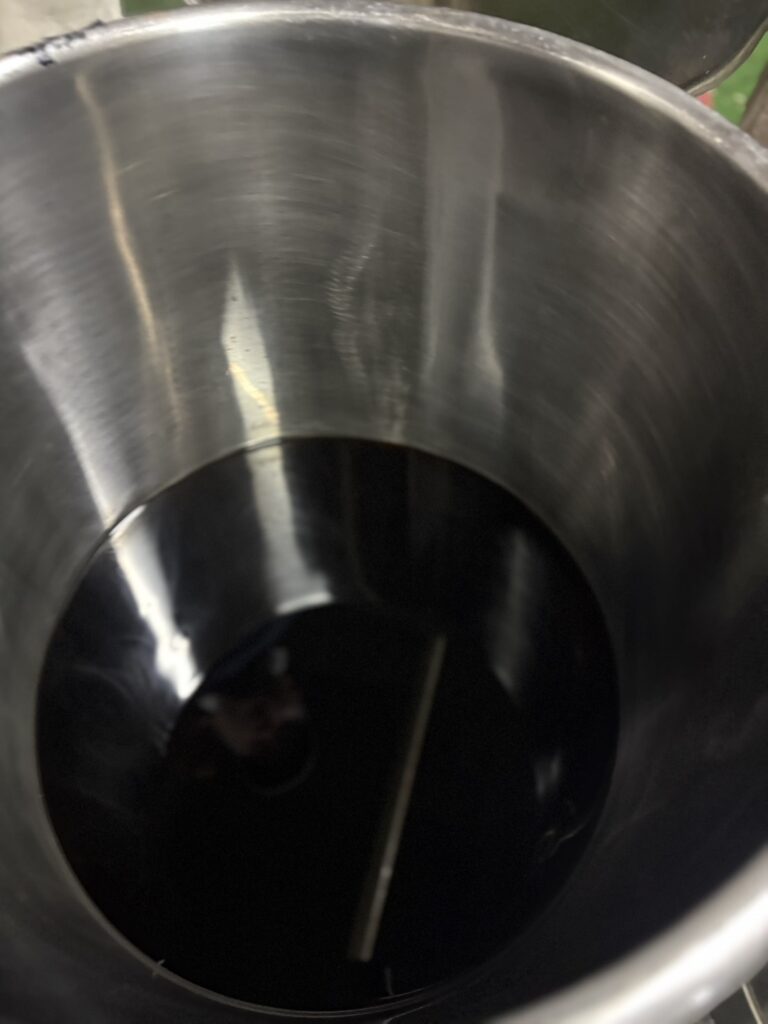
(The spirit had taken on quite a deep colour.)
When they bottled their spirit for the first time, they faced a harsh reality: this high evaporation had added up, and more than 20% of each cask’s contents had disappeared.
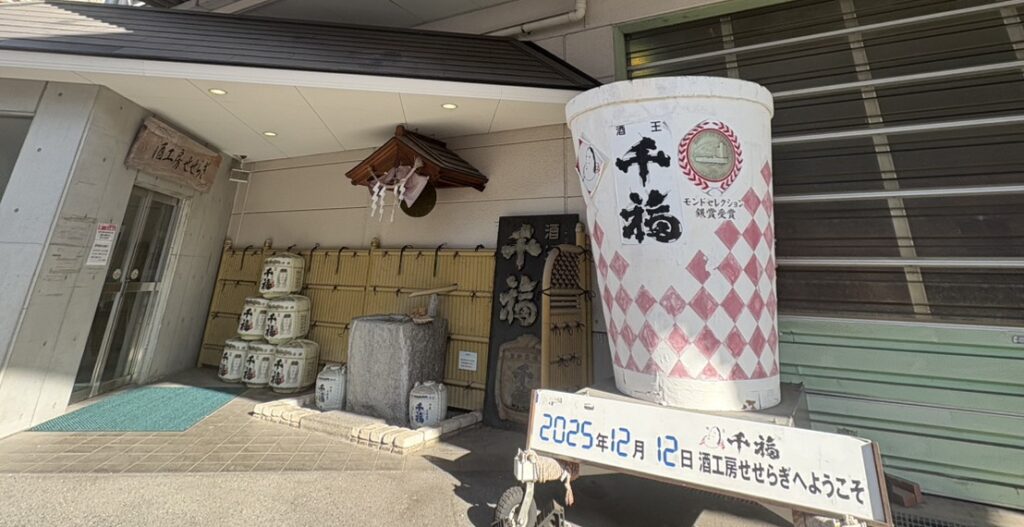
The building was originally a bottling plant. After its machines were broken in the Geiyo Earthquake in the 2000s, it stood empty — and the idea of making use of it led to a rare structure where the still house and the warehouse are one.
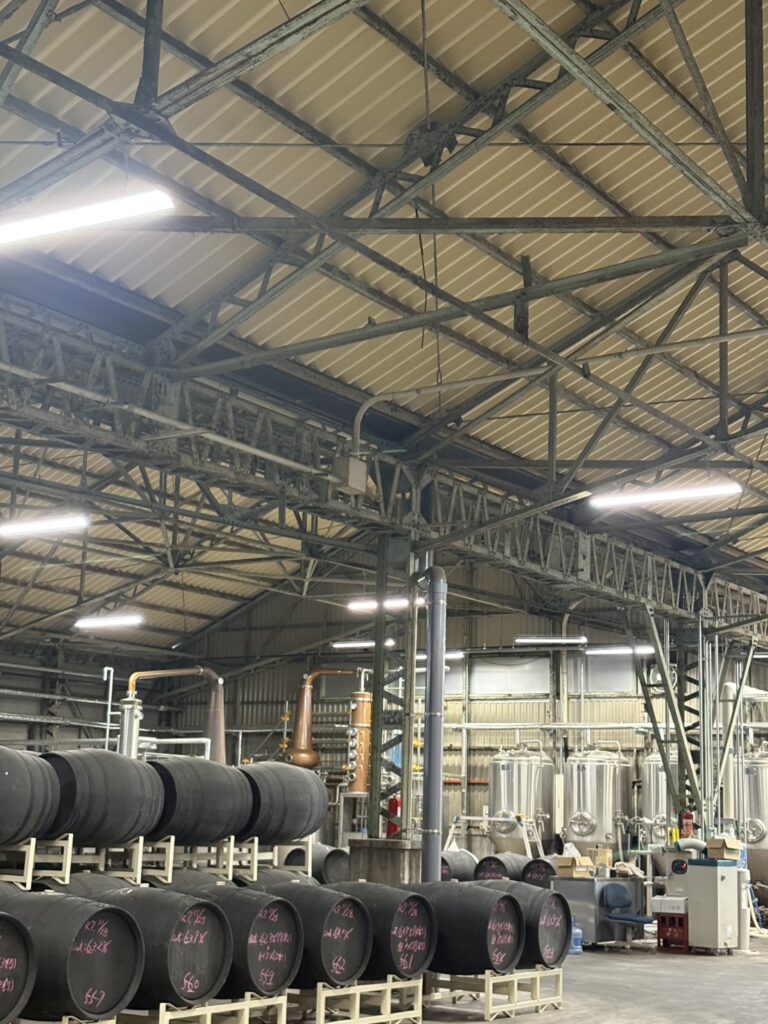
(The still stood right next to the casks.)
This all-in-one structure, born from the “constraints” of the site, became a new strength for them.
Because the heat from the equipment keeps it at 10°C or above even in winter, maturation progresses quickly.
Together, this heat and high evaporation encourage contact between spirit and wood, creating an environment for maturation in a short time.
They have released trial bottlings at one and two years old, actively pursuing the potential of short maturation in this environment.
An absolute commitment to quality in the cask
Their commitment to quality also shows in how they use casks.
As a rule, they make whisky only from “first-fill” casks, where the cask’s influence is strongest.
So what happens to the “second-fill” casks, whose flavour has weakened?
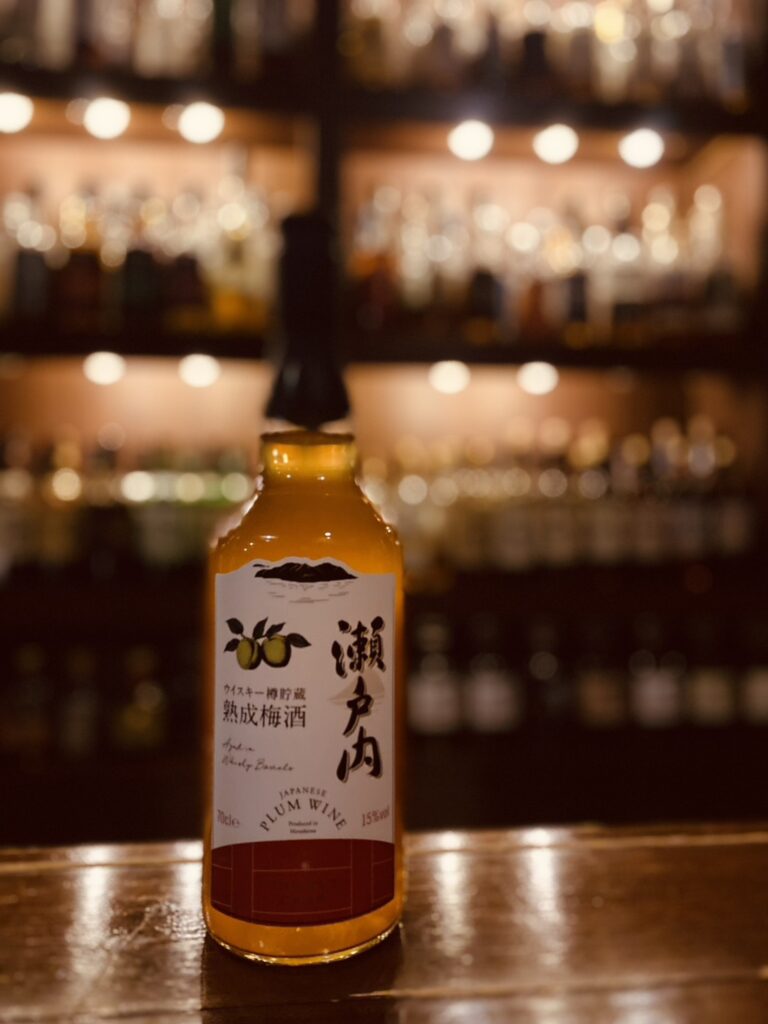
They don’t throw them away. Using their strength as a sake brewery, they use them to mature umeshu (Japanese plum liqueur).
This shows they balance an uncompromising attitude to whisky quality with sustainable brewing that wastes no resources.
“The answer the brothers believe in”
Making an ally of the warm climate, the whisky gains depth in a short time and is finally bottled at 47% ABV, every one as a single cask, reduced with water.
Whisky is usually a blend of spirit from several casks to achieve a consistent taste. Releasing it as a “single cask” and printing the lot number on the back label shows their confidence in “the different character and quality of each cask.”
So every time you buy a bottle, you may enjoy discovering a slightly different taste.
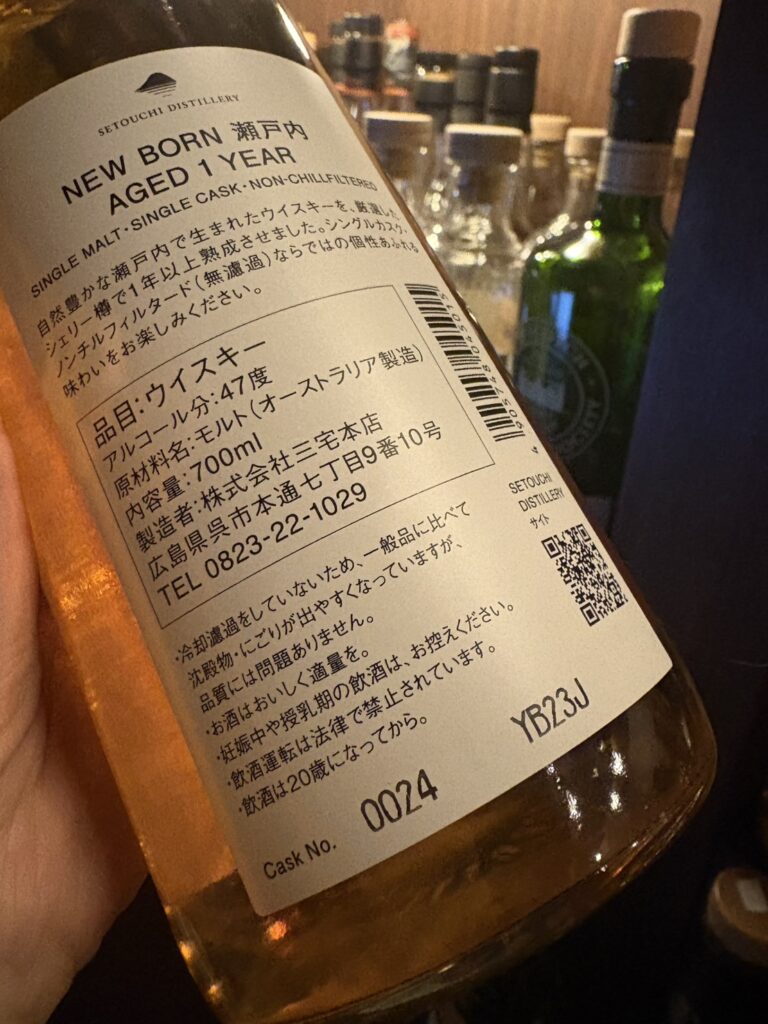
What they are trying to make is not a “sellable answer” swept along by market trends, but the very answer they believe in: recreating “a longing for the good old days” today.
Will the ultimate whisky they aim for be ready for the brewery’s 200th anniversary, 30 years from now?
At a small distillery in Kure, where the older brother’s memory and the younger brother’s blueprint cross, this whisky is slowly but surely drawing a new line in the history of Japanese whisky.
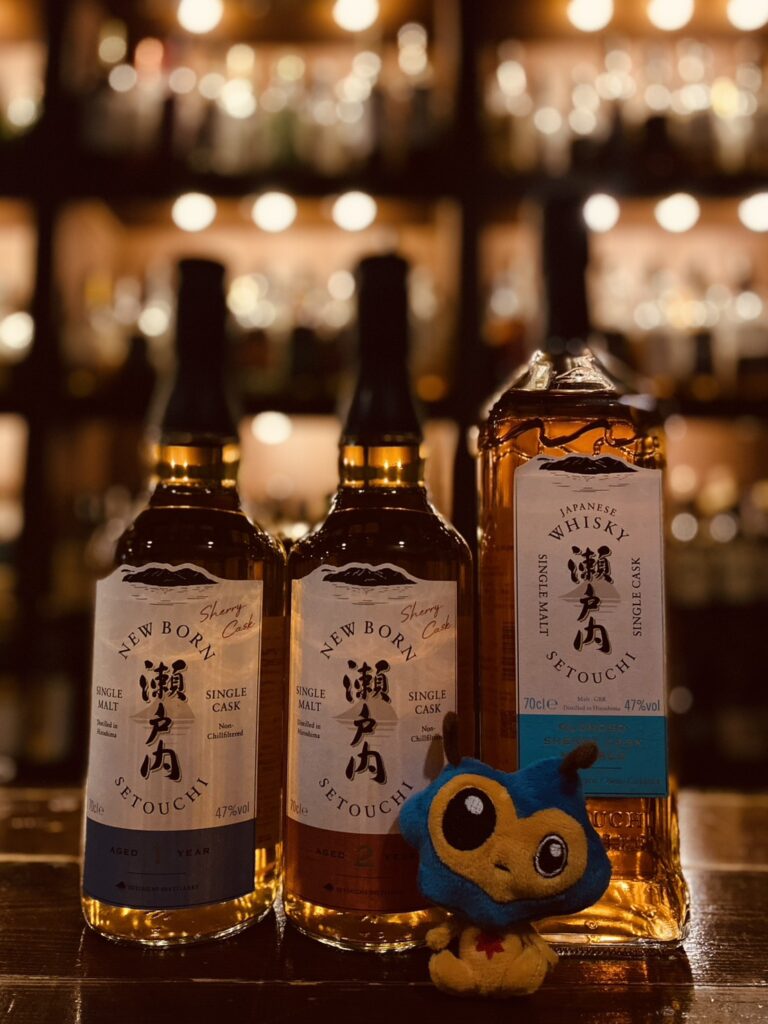
At Little Happiness, we have “New Born Setouchi (AGED 2 YEARS)”, “New Born Setouchi (AGED 1 YEAR)”, “Single Malt Japanese Whisky Setouchi” and “Whisky Umeshu.”
It is non-peated, so it is a smooth whisky. One year, two years, single malt…
Personally, I like the 2-year-old best 🥃
Every encounter is meant to be. Welcome to the world of Rum&Whisky.
[A note from Tanimoto] This article about Setouchi Distillery is based on my own visit, but it also includes some of my personal thoughts and interpretations. Please enjoy it as the musings of one whisky lover.
[About the author]
Mika Tanimoto
CEO, Little.m Inc. / Owner-bartender
Since 2006, I have run Bar Little Happiness, a whisky and rum bar in Nagarekawa, Hiroshima. I visit distilleries in Japan and around the world and write about the people who make the spirits. Recipient of the Hiroshima City Excellent Skilled Worker Award.
“Whisky and rum taste even better when you know the hearts of the people who make them.”
[Visit the bar] 📍 Bar Little Happiness
Rolling Nagarekawa 1F, 5-14 Nagarekawa-cho, Naka-ku, Hiroshima
Mon–Sat 7:00 pm – 12:30 am / Sun 7:00 pm – 12:00 am (closed when I travel to visit distilleries)
No cover charge, no reservation needed