
Miyagikyo Distillery Report, Part 1: “If Taketsuru Were Here Now” — Cherry Blossoms at Nikka’s Distillery Built with Nature (Sendai, Japan)
2026.10.05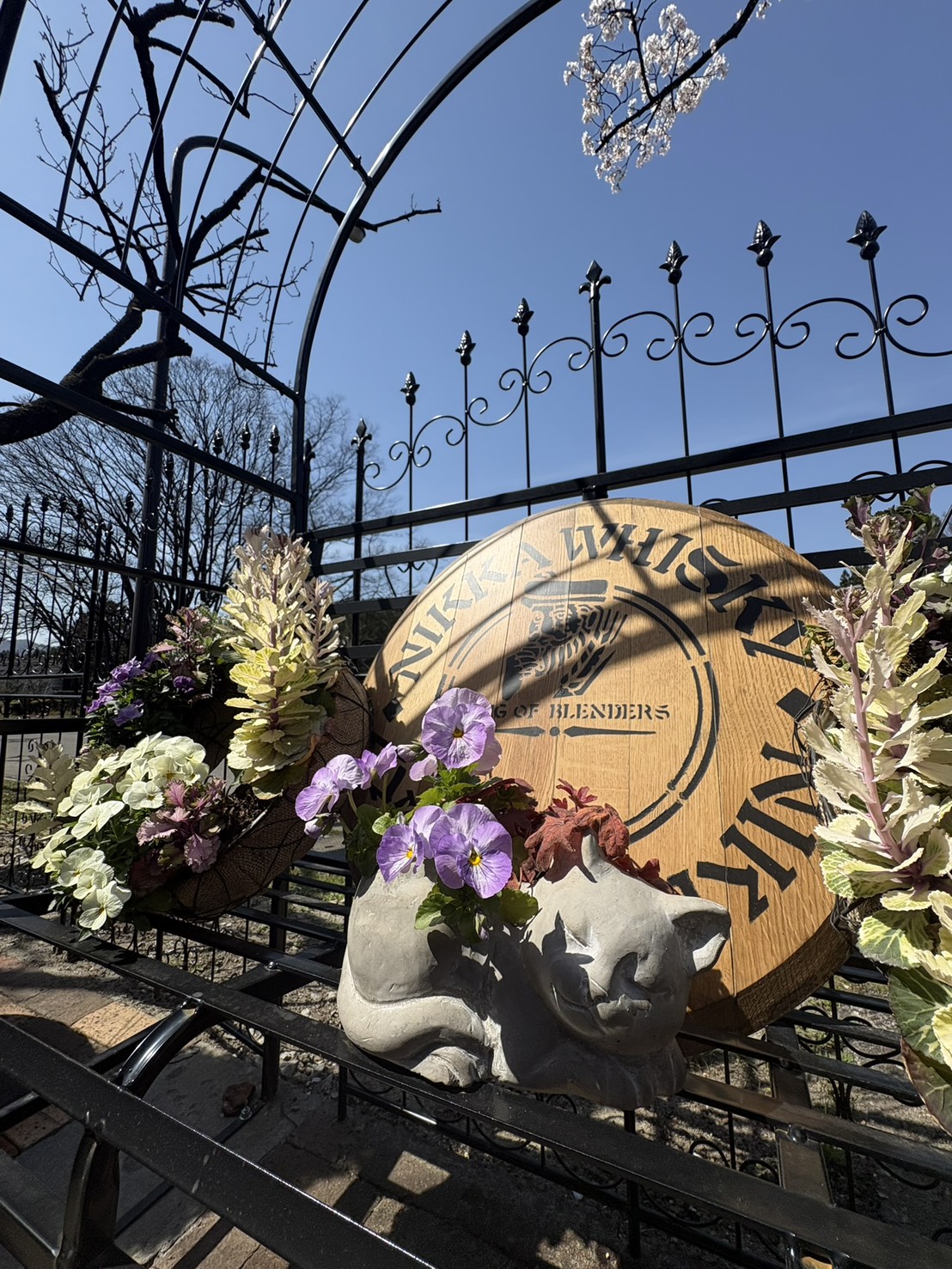
In short: a visit to Nikka’s Miyagikyo Distillery in Sendai, Japan, in cherry blossom season. Masataka Taketsuru’s four instructions — no power lines, no unnecessary tree felling, buildings that follow the land, red brick against the green — are still there, along with the river water he tasted with a Black Nikka mizuwari. Part 1 of my Miyagikyo report by Mika Tanimoto, owner of Bar Little Happiness in Hiroshima.
A column by Mika Tanimoto, Bar Little Happiness (Nagarekawa, Hiroshima)
Cherry blossoms and a sky without a single power line
In April, the cherry trees at Miyagikyo Distillery were in bloom.
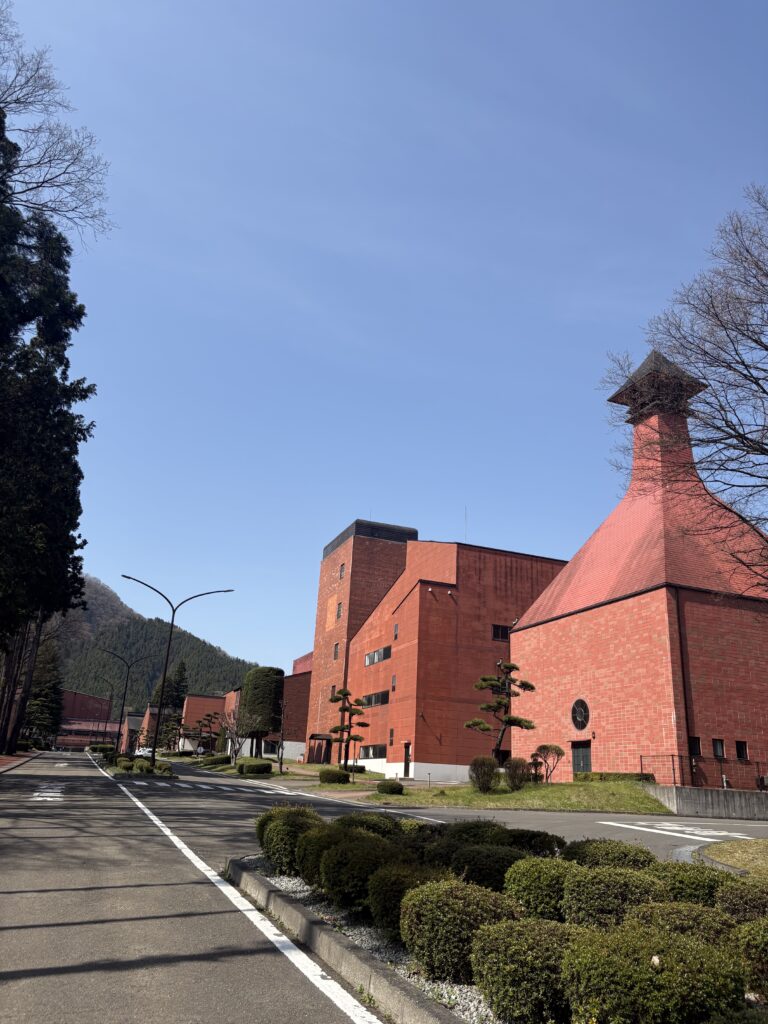
The moment I entered the grounds, I thought: the sky is so wide.
It is a sky without a single power line.
Mountains in view, red-brick buildings, cherry petals falling.
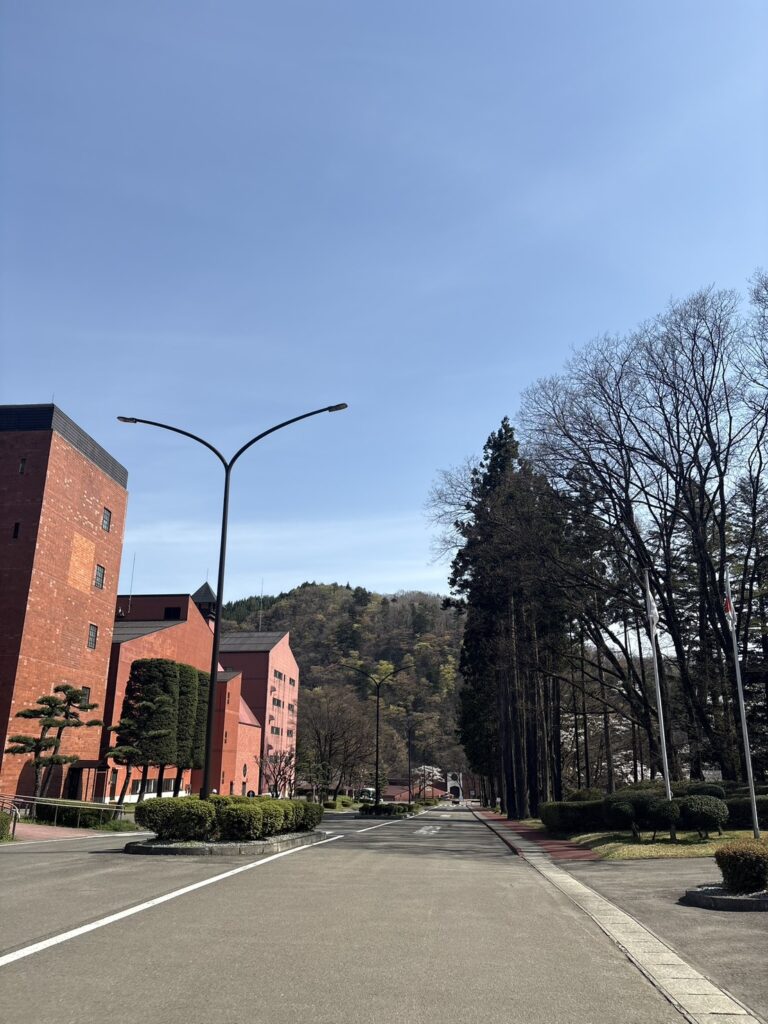
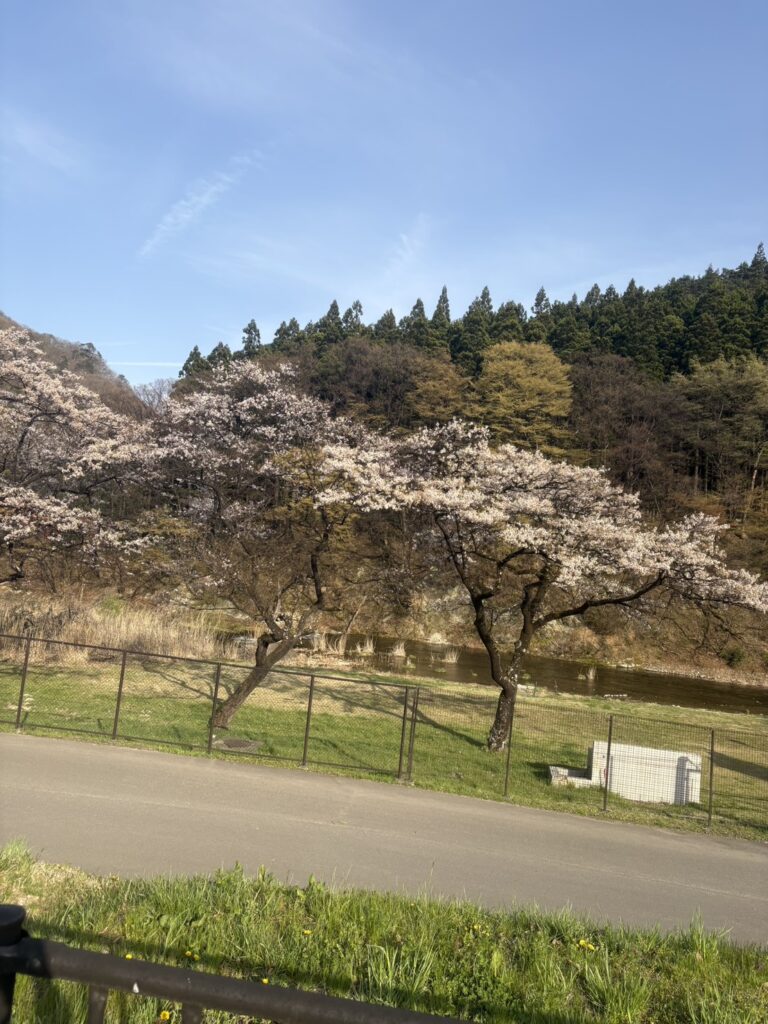
I thought, “This doesn’t feel like Japan,” and yet it felt somehow nostalgic.
It was a strange place.
Our guide, Mr. Sakamoto, told us as we walked:
“Mr. Taketsuru designed it so that Mt. Kamakura, shaped like a gorilla’s head, can be seen at the end of this main street.”
I looked, and there it was, the mountain sitting heavy and calm.
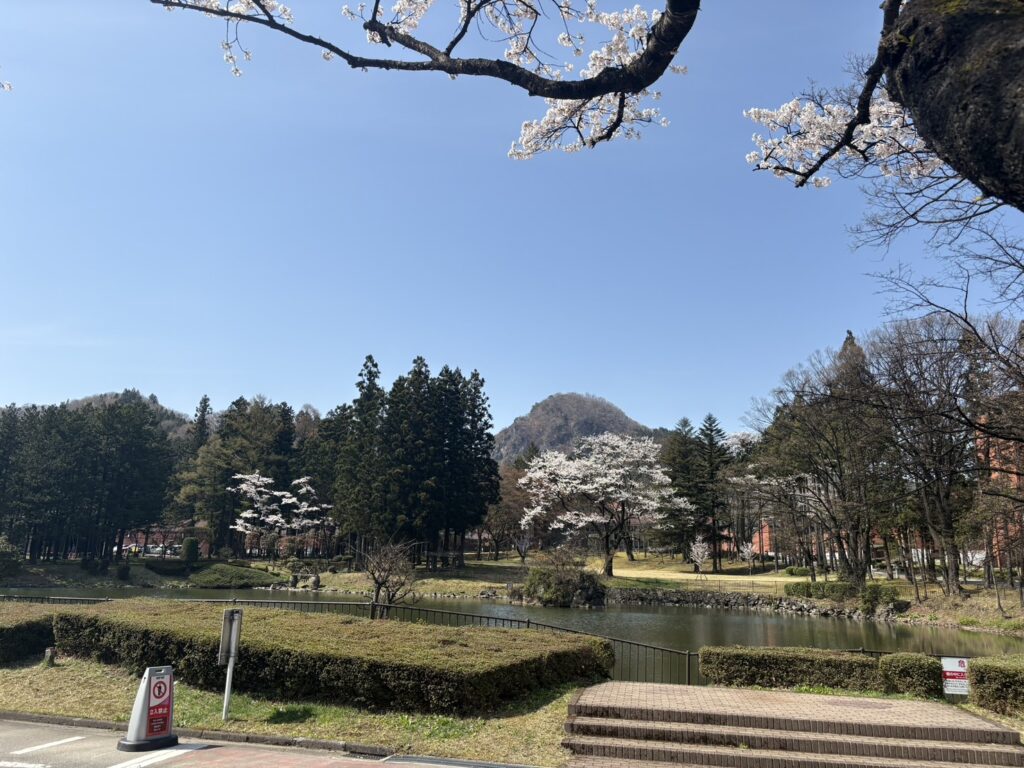
It was the first time I truly felt the meaning of shakkei, “borrowed scenery.”
This distillery covers an area equal to four Tokyo Domes.
And not a single power line runs above any of it.
Trees are not cut down more than necessary.
Buildings follow the natural rise and fall of the land.
Red brick, so it stands out against the surrounding green.
The four instructions Masataka Taketsuru gave when the distillery was built are still in place today.
This is not normal.
If you think about efficiency, the right answer is to flatten the ground and string up power lines.
But Masataka did not.
He was a man who carried his belief — “Whisky is not made by people. It is nurtured by nature.” — all the way into the design of the buildings.
Something the guide said stayed with me:
“From the moment you step in here, you fall under the illusion that the view is beautiful, because there are things you can’t see.”
I don’t think it is an illusion. This is intended beauty.
The water Taketsuru bet on: Nikkawa River and a Black Nikka mizuwari
Walking the tour, I kept thinking.
Masataka first came here in the 1960s.
His body was said to be worn out.
He was a man who kept drinking as much as a bottle of whisky a day.
Barely able to walk, he still went down to the banks of the Nikkawa River, made a mizuwari (whisky and water) with the Black Nikka in his pocket, and took a sip.
“Truly wonderful water. This is the place.”
What if Taketsuru were standing here now?
Cherry petals falling, crowds of visitors even on a weekday, and Mr. Sakamoto happily guiding them.
Mr. Sakamoto, it turns out, is a former firefighter who moved here from Osaka. After retiring, he thought, “I’ll just disappear somewhere,” and ended up here.
He told me he got goosebumps all over when he learned that his own roots connect to Yamanaka Shikanosuke, the samurai engraved on the Nikka emblem.
A single distillery can draw people in like this.
The place where Masataka bet everything on one sip of water has, decades later, become “I’m so glad I came” for people he never met.
There was a couple taking photos in front of the kiln tower.
There was a young man taking notes intently.
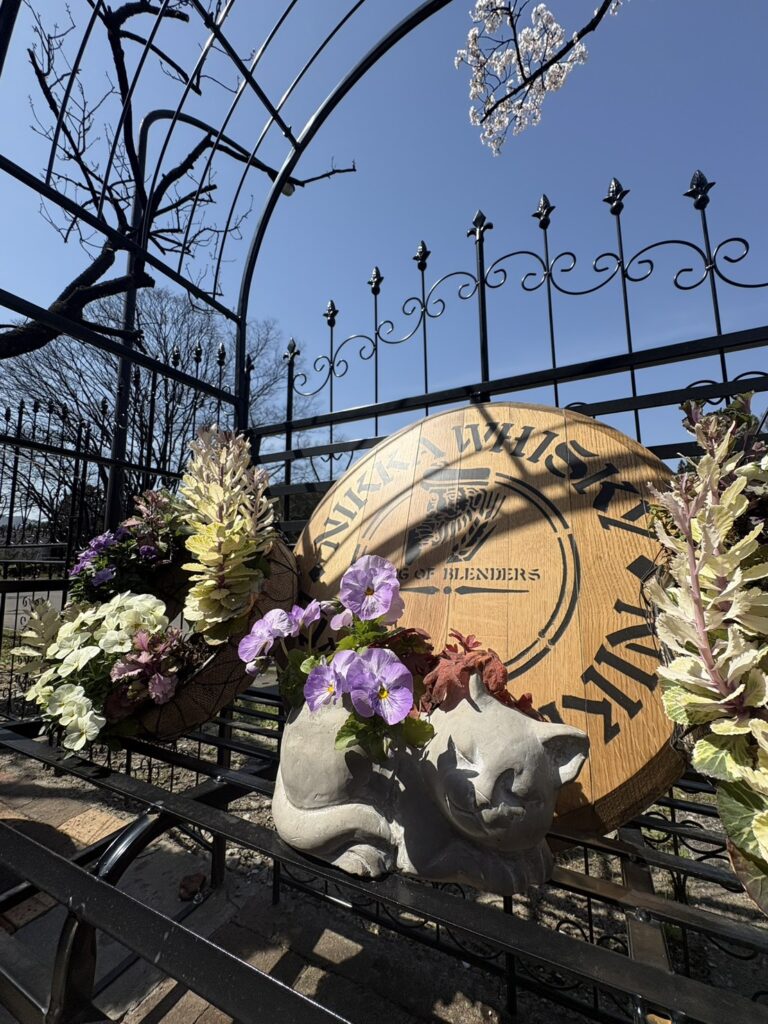
A vase in the shape of a cat sleeping blissfully, like a whisky cat.
And there was me, taking photo after photo of it, trying to get it just right.
What would Masataka say if he were here now, I wondered.
I’m sure he would make a big fuss again.
“I had no idea it would come to this!”
His eyes shining like a child’s — and then, probably, another sip.
Of the whisky he made, now loved all over the world 💛
The few hours I spent walking the distillery are still vivid in my mind.
From the moment Masataka said, “This is the place,” this place has never stopped moving.
From maker to maker, from cask to cask, and then into our glasses.
When I think that I am receiving one end of that long, long baton at my counter in Hiroshima, I find myself standing a little straighter.
▶️ Next time: an unbelievable coincidence behind this distillery’s name!!
*This article is based on what I saw and heard on my visit to Miyagikyo Distillery, what I already knew, and what I newly researched. It includes some of Mika Tanimoto’s personal views.
Every encounter is meant to be. Welcome to the world of Rum&Whisky.
“Whisky and rum taste even better when you touch the hearts of the people who make them.”
[About the author]
Mika Tanimoto
CEO, Little.m Inc. / Owner-bartender
Since 2006, I have run Bar Little Happiness, a whisky and rum bar in Nagarekawa, Hiroshima. I visit distilleries in Japan and around the world and write about the people who make the spirits. Recipient of the Hiroshima City Excellent Skilled Worker Award.
“Whisky and rum taste even better when you know the hearts of the people who make them.”
[Visit the bar] 📍 Bar Little Happiness
Rolling Nagarekawa 1F, 5-14 Nagarekawa-cho, Naka-ku, Hiroshima
Mon–Sat 7:00 pm – 12:30 am / Sun 7:00 pm – 12:00 am (closed when I travel to visit distilleries)
No cover charge, no reservation needed