
[Expo 2025 Report] The “Future of Life” Pavilion and the Hope of “the Freedom to Choose Vagueness”
2026.10.05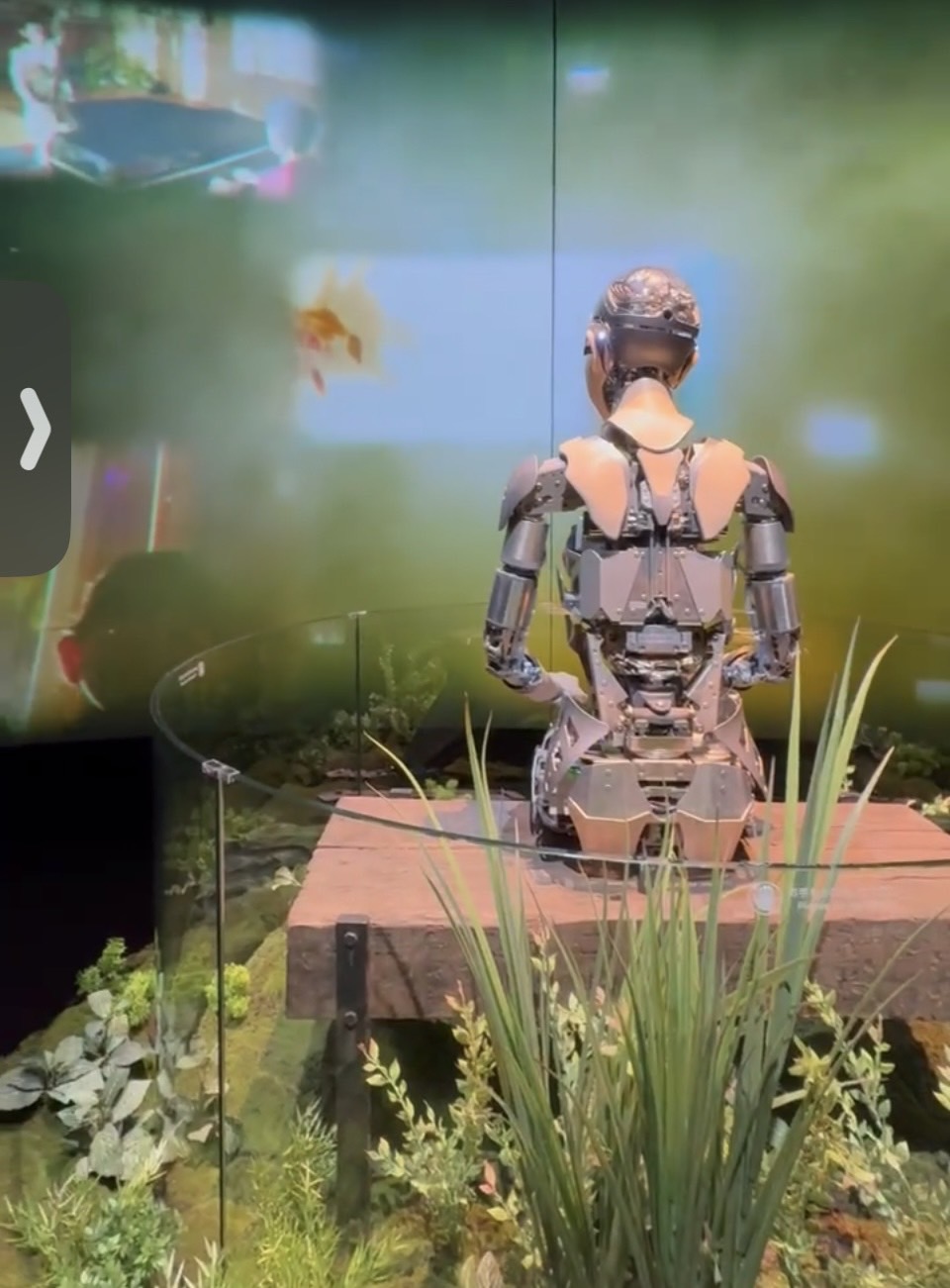
In short: at Expo 2025 Osaka, Kansai, Hiroshi Ishiguro’s “Future of Life” pavilion tells of a grandmother in 2075 who chooses not to move her memories into an android — then leaves her fate deliberately vague. It made a Hiroshima bartender think about “the freedom to leave things vague,” and why nights at a bar that are never recorded stay in our lives. By Mika Tanimoto, owner of Bar Little Happiness.
Related: null² pavilion / Dynamic Equilibrium of Life pavilion
When I visited “Future of Life,” one of the most talked-about pavilions at Expo 2025 Osaka, Kansai,
I received something, through my senses, about the future of technology and life.
What this experience reminded me of
was the memory of wordless time shared across the counter of the bar I run every day.
Even if you can’t remember the exact conversations from a night spent with someone,
sometimes only the air and the warmth come back to you.
I realised that this is the power of “things that stay deep precisely because they are vague.”
In this account, I write about what I learned from the exhibition space,
“the freedom not to record,” “the value of leaving things vague,” and the role a bar plays.
*The video sections contain spoilers. If you plan to go, please be careful not to open them.
What is the “Future of Life” pavilion? When technology touches life
This pavilion was supervised by robotics researcher Hiroshi Ishiguro.
Its theme is how science and technology relate to life,
and what they ask of us.
Mr. Ishiguro’s words left an impression:
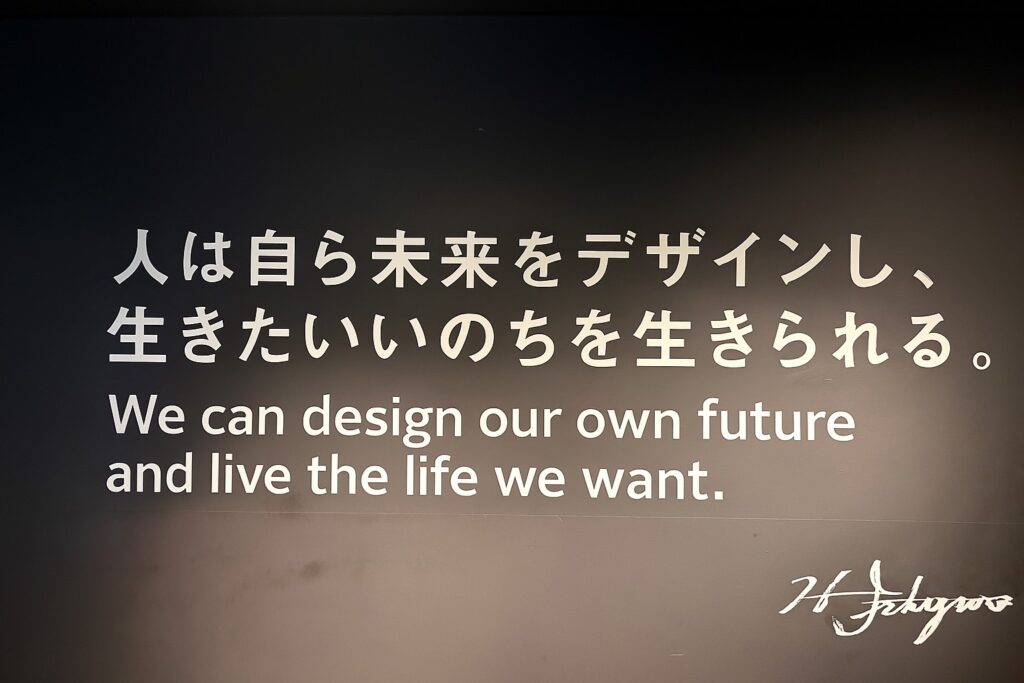
“People can design their own future and live the life they want to live.”
I felt that technological progress gives us back “the freedom to choose.”
[Experience] Quiet questions, as if wrapped in water
The exhibition is built so that narration reaches you through bone conduction — less like sound, more like touch.
Moving through a space like being wrapped in a quiet flow of water, you meet Jomon clay figures, Buddhist statues and dolls.
An introduction that makes you realise people have long tried to “give life a form.”
Then the stage moves to the future, and tells the story of a grandmother and grandchild living in 2075.
The two live peacefully, supported by technology.
But when the grandchild is injured and the grandmother falls ill, a choice about life is quietly presented.
“Move your memories into an android and live on?”
“Or live out your natural lifespan?”
The grandmother chooses “not to move them,” and no one denies her choice.
That silence conveyed the weight of life more than words.
A deep afterglow that brought tears to my eyes stays in the heart.
…Or so you think — a brilliant ending that leaves things vague
The story closes leaving the audience to think, “The grandmother must have ended her life as a human.”
…But in the next exhibition area, an unexpected sight was waiting.
Someone who seems to be the grandmother, playing the piano.
Is it an android? Were only her memories moved? Or is it something else —
no answer is given; it is left to the viewer.
This vagueness creates space for free interpretation and imagination.
The form of life 1,000 years from now — beings living in “a form they can choose”
In the final exhibit, an android with a flower-like structure instead of legs appears as if floating.
A future where technology has evolved and both form and way of being can be freely chosen.
But that future isn’t simply all-powerful — it asks us questions:
“How will you live?”
“What will you leave behind?”
“What will you choose not to leave behind?”
[Reflection] Hope lies not in what we can do, but in what we choose not to
Precisely in an age when we can do more, the choice “to deliberately not do” takes on meaning.
We could record every memory, but there is the freedom to choose to leave things vague.
Isn’t that an expression of love for the fundamental space within being human?
[The role of a bar] Nights that aren’t recorded become nights that stay in your life
Watching this exhibition, I found myself thinking again about the essence of the role a bar plays.
A bar is not a place for records.
Social media keeps photos and events, but what truly stays in your heart may be a feeling that quietly sinks deep inside, never shared with anyone.
Yet there, wordless time and sudden memories of warmth are surely alive.
“That night in Hiroshima — somehow I can’t forget it.”
If memories like that, vague and warm, could quietly stay in someone’s life —
that may be the role I want to play in this place.
[Summary] Because technology has evolved, choosing “vagueness” once again
I’m very positive about technological progress.
In fact, I’ve actively brought it into my own work from early on.
I feel real hope in the future that AI, robots and digital tools bring.
For me, recent technological innovation has given me many possibilities and choices.
That’s exactly why, now that we can choose,
I want to believe in a future that deliberately values vagueness.
As everything is clearly visualised, recorded and made efficient —
memories that never became words, feelings that can’t be explained, sensations shown to no one
can remain deeply, as living things.
That is a beauty we can choose again precisely because technology has evolved.
Not “it’s good because it’s analogue,”
but “beyond digital, there is value we still want to choose.”
In an age of ever more options, the will to choose anyway
is, I think, the value I truly want to cherish.
And the place where that value lives,
I believe, is a bar.
Not recorded, yet somehow stays in your heart.
A night you can’t explain to anyone, yet feel truly happened.
I hold hope for a future where we can believe in that.
Every encounter is meant to be. Welcome to the world of Rum&Whisky.
Mika Tanimoto, Bar Little Happiness
I bought “the scent of the future, 1,000 years from now.”
It was 4,000 yen! No one else was buying it, so you probably won’t come across it easily, lol.
If you’re interested, just ask.
[About the author]
Mika Tanimoto
CEO, Little.m Inc. / Owner-bartender
Since 2006, I have run Bar Little Happiness, a whisky and rum bar in Nagarekawa, Hiroshima. I visit distilleries in Japan and around the world and write about the people who make the spirits. Recipient of the Hiroshima City Excellent Skilled Worker Award.
“Whisky and rum taste even better when you know the hearts of the people who make them.”
[Visit the bar] 📍 Bar Little Happiness
Rolling Nagarekawa 1F, 5-14 Nagarekawa-cho, Naka-ku, Hiroshima
Mon–Sat 7:00 pm – 12:30 am / Sun 7:00 pm – 12:00 am (closed when I travel to visit distilleries)
No cover charge, no reservation needed